
Tested Applications
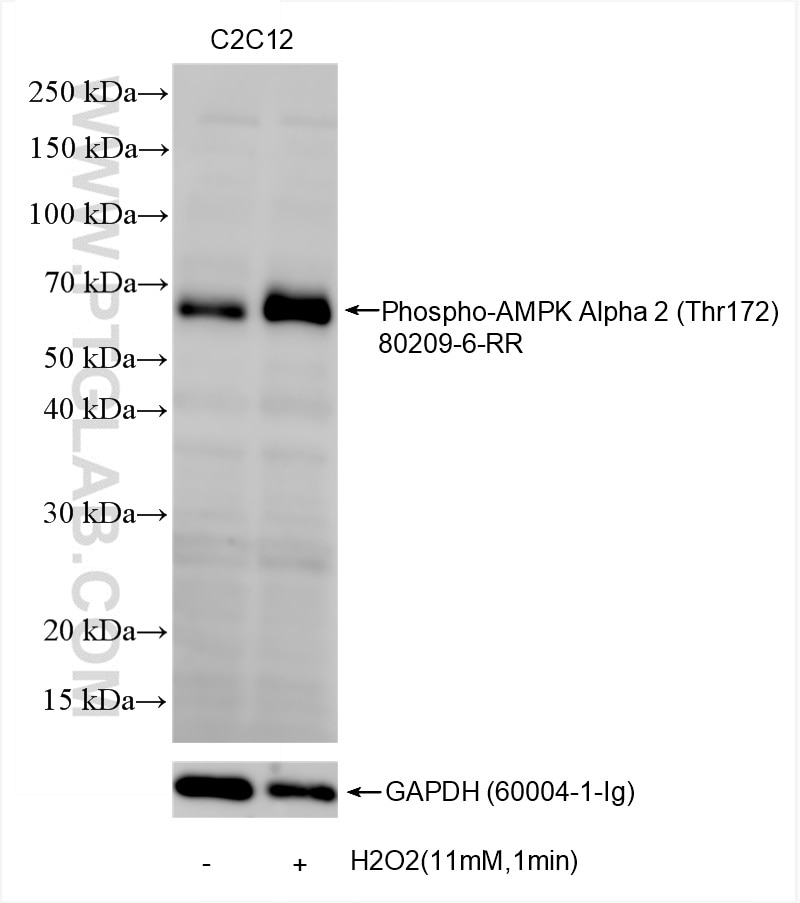
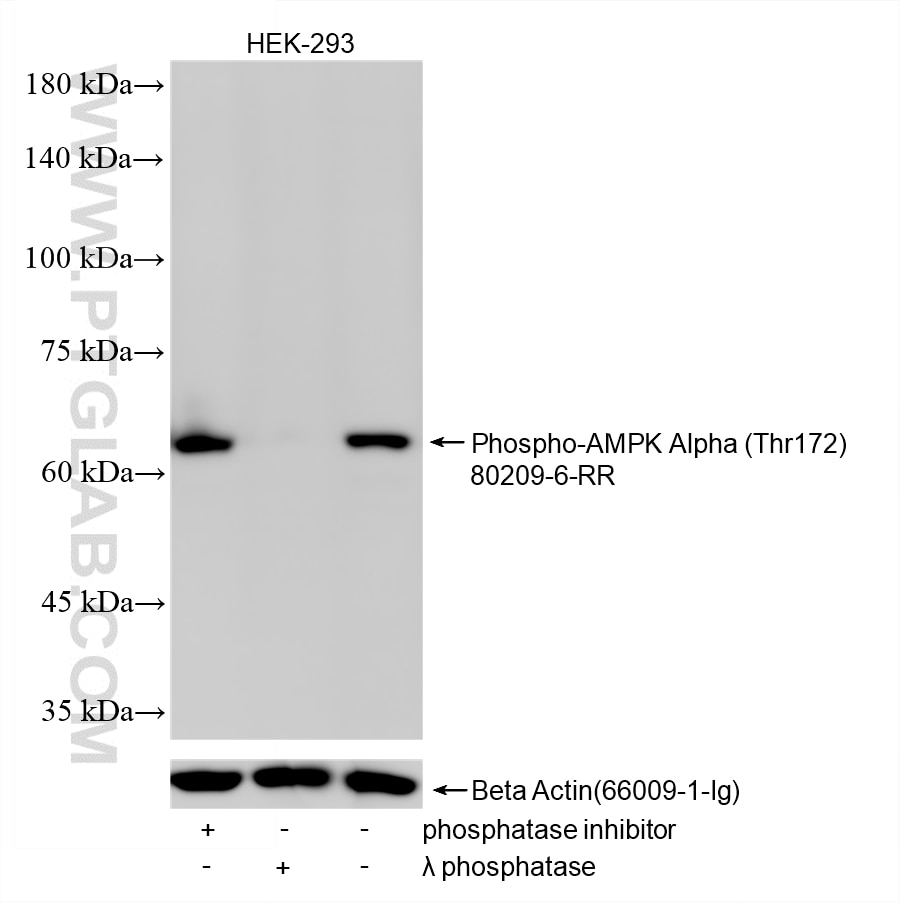
| Positive WB detected in | H2O2 treated C2C12 cells, HEK-293 cells |
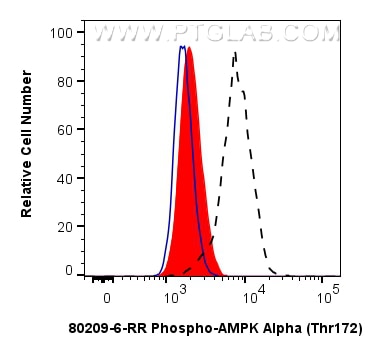
| Positive FC (Intra) detected in | HEK-293 cells |
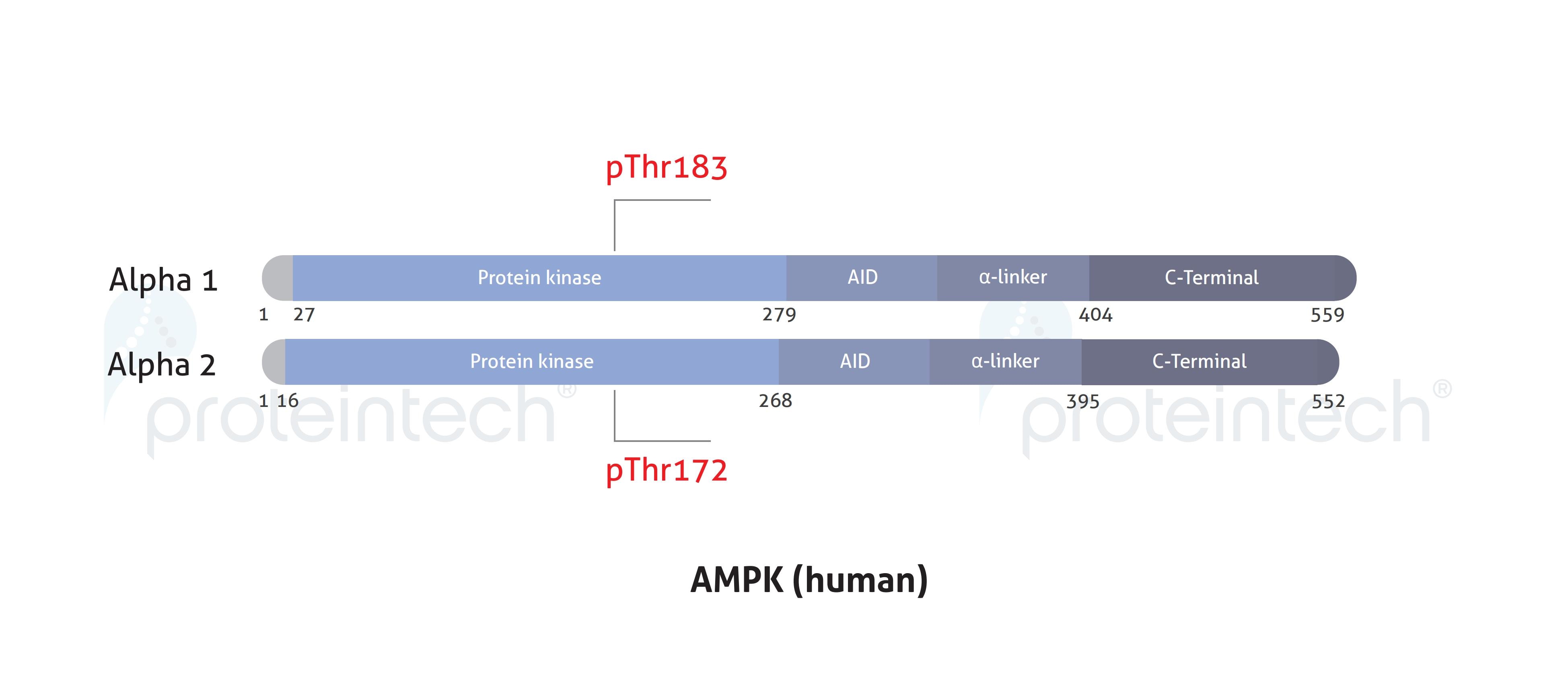
This antibody can recognize the phosphorylation sites of Thr183 in AMPK Alpha 1 and Thr172 in AMPK Alpha 2.
Recommended dilution
| Application | Dilution |
|---|---|
| Western Blot (WB) | WB : 1:1000-1:6000 |
| Flow Cytometry (FC) (INTRA) | FC (INTRA) : 0.13 ug per 10^6 cells in a 100 µl suspension |
| It is recommended that this reagent should be titrated in each testing system to obtain optimal results. | |
| Sample-dependent, Check data in validation data gallery. | |
Product Information
80209-6-RR targets Phospho-AMPK Alpha (Thr172) in WB, IF, FC (Intra), CoIP, ELISA applications and shows reactivity with human, mouse samples.
| Tested Reactivity | human, mouse |
| Cited Reactivity | human, mouse, rat, chicken |
| Host / Isotype | Rabbit / IgG |
| Class | Recombinant |
| Type | Antibody |
| Immunogen |
Peptide Predict reactive species |
| Full Name | protein kinase, AMP-activated, alpha 1 catalytic subunit |
| Observed Molecular Weight | 64 kDa |
| GenBank Accession Number | BC048980 |
| Gene Symbol | AMPK Alpha 1 |
| Gene ID (NCBI) | 5562 |
| RRID | AB_3743334 |
| Conjugate | Unconjugated |
| Form | Liquid |
| Purification Method | Protein A purification |
| UNIPROT ID | Q13131 |
| Storage Buffer | PBS with 0.02% sodium azide and 50% glycerol, pH 7.3. |
| Storage Conditions | Store at -20°C. Stable for one year after shipment. Aliquoting is unnecessary for -20oC storage. 20ul sizes contain 0.1% BSA. |
Background Information
AMPK is a serine/threonine protein kinase complex consisting of a catalytic α-subunit (α1 and α2), a scaffolding β-subunit (β1 and β2), and a regulatory γ-subunit (γ1, γ2, and γ3). Ubiquitous expression of AMPKα1-, β1-, and γ1-subunits in many tissues makes the α1β1γ1 complex a reference for AMPK assays to identify AMPK activators. AMPK is generally quiescent under normal conditions but is activated in response to signals and stresses that increase the AMP/ATP ratio, such as hypoglycemia, strenuous exercise, anoxia, and ischemia. An increase in the ratio of AMP/ATP activates AMPK by several mechanisms, including direct allosteric activation and covalent modification in which an AMP-dependent AMPK kinase (AMPKK) phosphorylates the α subunit on Thr172. Once activated, AMPK switches on catabolic pathways that generate ATP, while switching off ATP-consuming processes (e.g., biosynthesis, cell growth, and proliferation), and in doing so acts as an "energy gauge". (PMID: 27034026, PMID: 21980456, PMID: 27600021)
This antibody can recognize the phosphorylation sites of Thr183 in AMPK Alpha 1 and Thr172 in AMPK Alpha 2.
Protocols
| Product Specific Protocols | |
|---|---|
| FC protocol for Phospho-AMPK Alpha (Thr172) antibody 80209-6-RR | Download protocol |
| WB protocol for Phospho-AMPK Alpha (Thr172) antibody 80209-6-RR | Download protocol |
| Standard Protocols | |
|---|---|
| Click here to view our Standard Protocols |
Publications
What published studies show
| Species | Application | Title |
|---|---|---|
Antioxidants (Basel) Hyperosmolarity-Induced Oxidative Stress Leads to Senescence in Human Corneal Epithelial Cells (HCEPC) via DNA Damage, Metabolic Disturbance and Mitophagy Decline. | ||
Mol Med Celastrol improves endothelial function in diet-induced obesity mice via attenuating endoplasmic reticulum stress through the activation of AMPK pathway | ||
Int J Mol Med IDH2 lactylation regulates mitochondrial dysfunction injury induced by myocardial ischemia‑reperfusion via the AMPK signaling pathway. | ||
Cell Signal LncPRPD promotes porcine preadipocyte differentiation by inhibiting GLRX5 ubiquitination and suppressing the AMPK signaling pathway. | ||
Free Radic Biol Med Optineurin enhances the chemoresistance by activating mitophagy in acute myeloid leukemia with NPM1 mutation. | ||
Nutrients Total Flavonoids of Apocynum venetum Ameliorate High-Fat Diet-Induced Lipid Accumulation in Mice and Hepatocytes by Activating the AMPK Signaling Pathway. |





