
Recombinant Pig IL-10 protein (rFc Tag)
Species
Pig
Purity
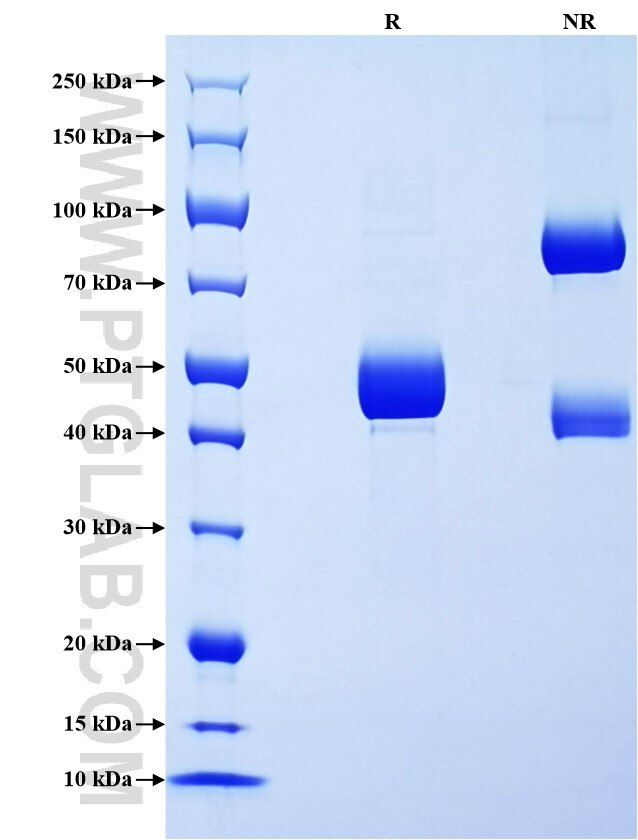
>90 %, SDS-PAGE
Tag
rFc Tag
Activity
not tested
Cat no : Eg4868
Validation Data Gallery
Product Information
| Purity | >90 %, SDS-PAGE |
| Endotoxin | <0.1 EU/μg protein, LAL method |
| Activity |
Not tested |
| Expression | HEK293-derived Pig IL-10 protein Ser19-Asn175 (Accession# P05109) with a rabbit IgG Fc tag at the N-terminus. |
| GeneID | 397106 |
| Accession | Q29055 |
| PredictedSize | 45.3 kDa |
| SDS-PAGE | 44-52 kDa, reducing (R) conditions |
| Formulation | Lyophilized from 0.22 μm filtered solution in PBS, pH 7.4. Normally 5% trehalose and 5% mannitol are added as protectants before lyophilization. |
| Reconstitution | Briefly centrifuge the tube before opening. Reconstitute at 0.1-0.5 mg/mL in sterile water. |
| Storage Conditions |
It is recommended that the protein be aliquoted for optimal storage. Avoid repeated freeze-thaw cycles.
|
| Shipping | The product is shipped at ambient temperature. Upon receipt, store it immediately at the recommended temperature. |
Background
Interleukin (IL)-10 is an anti-inflammatory cytokine, produced by T helper (Th) cells, macrophages, monocytes, and B cells, that plays a crucial role in preventing inflammatory and autoimmune pathologies. It downregulates the expression of Th1 cytokines, MHC class II antigens, and co-stimulatory molecules on macrophages. It also enhances B cell survival, proliferation, and antibody production. IL10 can block NF-κB activity, and is involved in the regulation of the JAK-STAT signaling pathway. IL10, along with its receptors, describes an important role in pathogenesis of various diseases, including infectious, inflammatory, autoimmune diseases. IL10 mutations are associated with an increased susceptibility to HIV-1 infection and rheumatoid arthritis.
References:
1. Dinarello CA. et al. (1996). Blood. 87: 2095-147.
2. Bird S. et al. (2002). Cytokine Growth Factor Rev. 13: 483-502.
3. Xu J. et al. (2013). PLoS One. 21;8(5):e63654.
4. McCarty S. (2014). Cardiol Rev. 22: 176-81.