
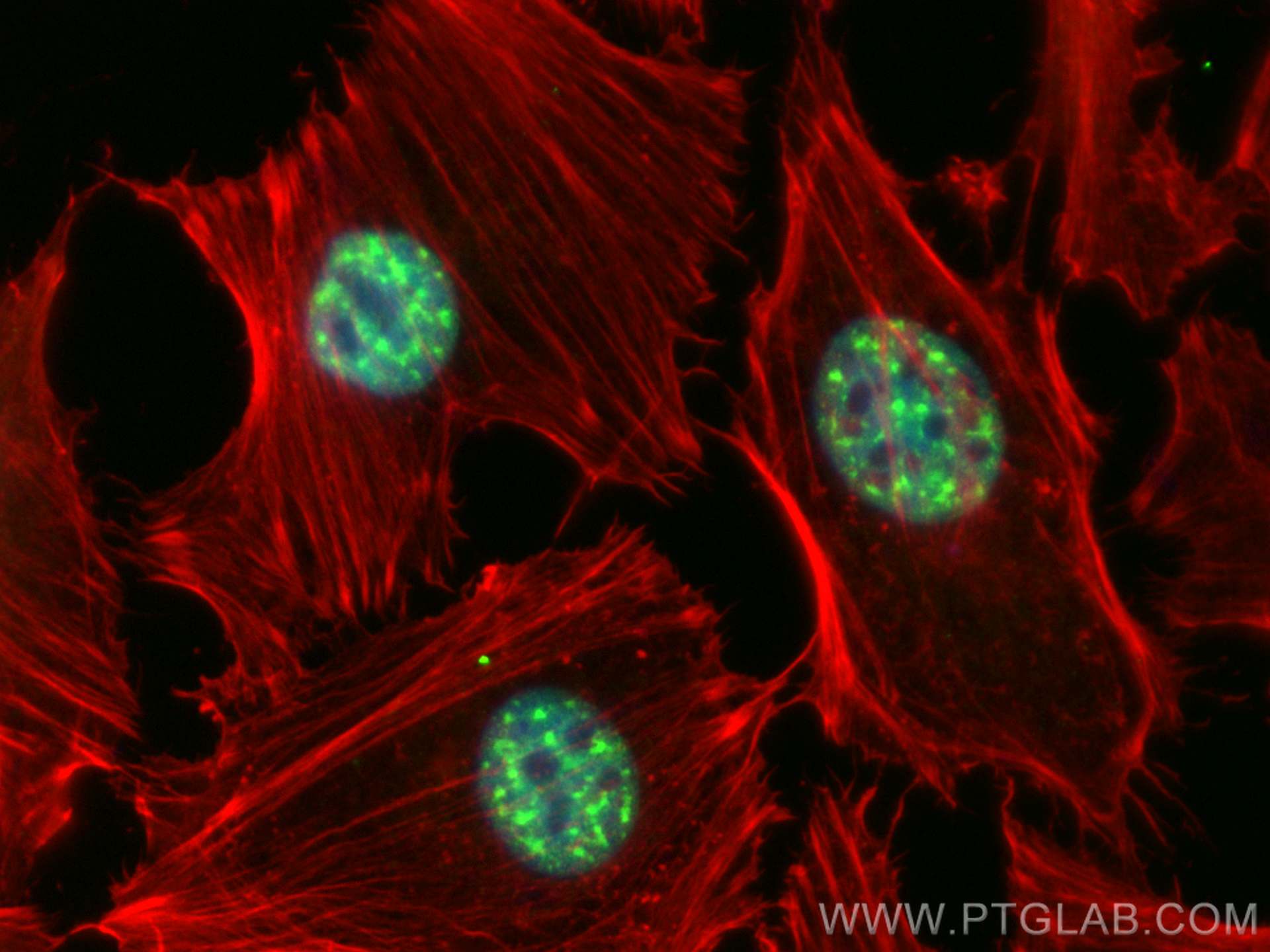

Tested Applications
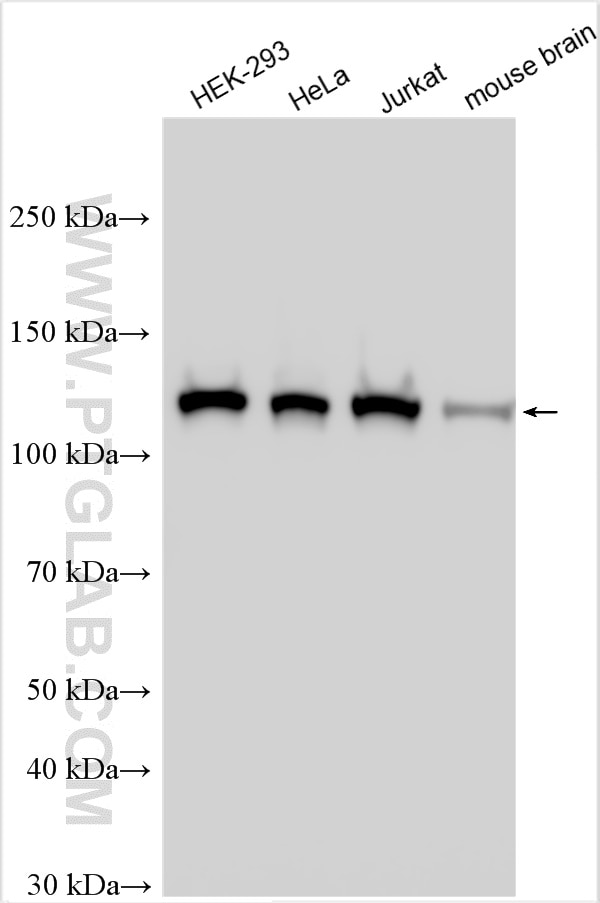
| Positive WB detected in | HEK-293 cells, HeLa cells, Jurkat cells, mouse brain tissue |
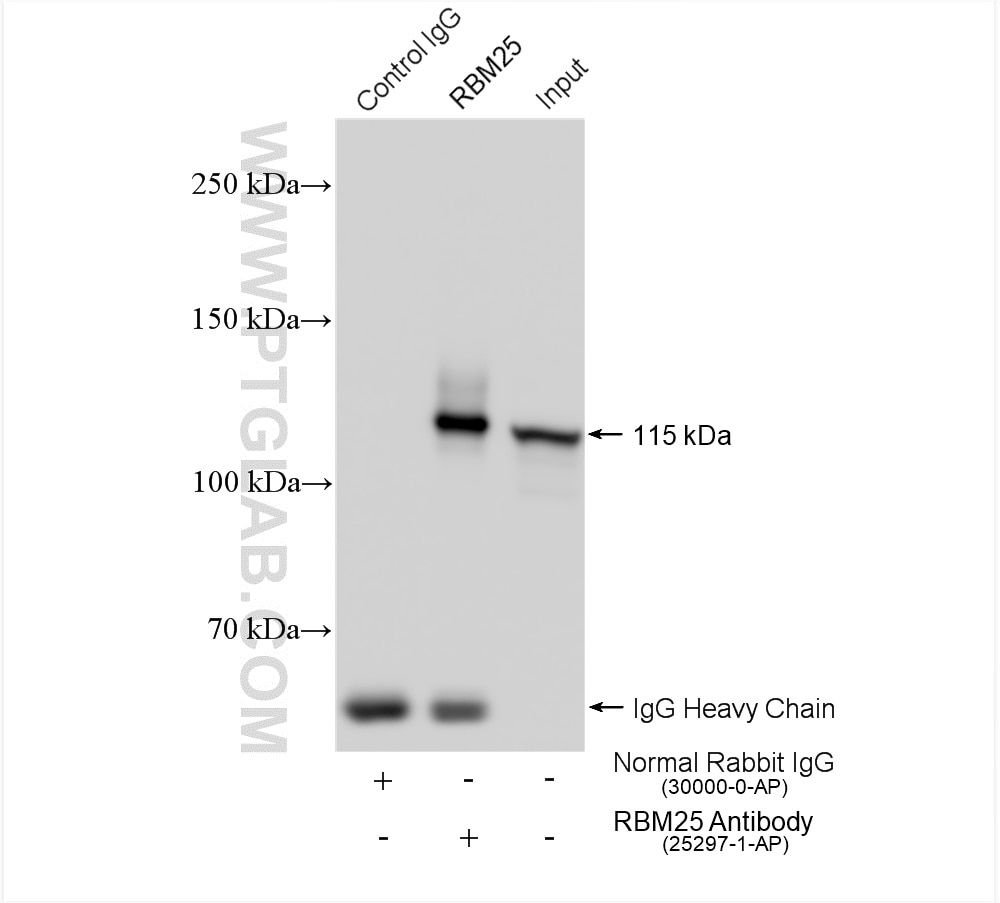
| Positive IP detected in | HEK-293 cells |
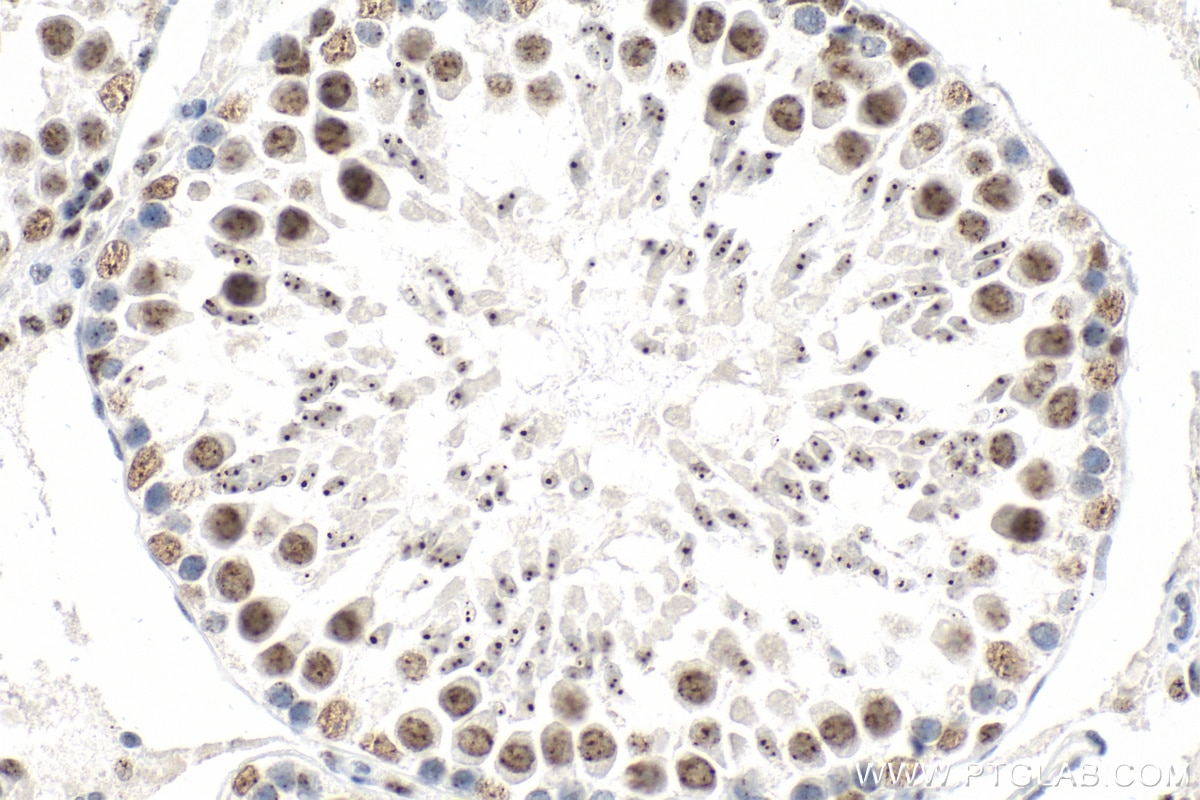
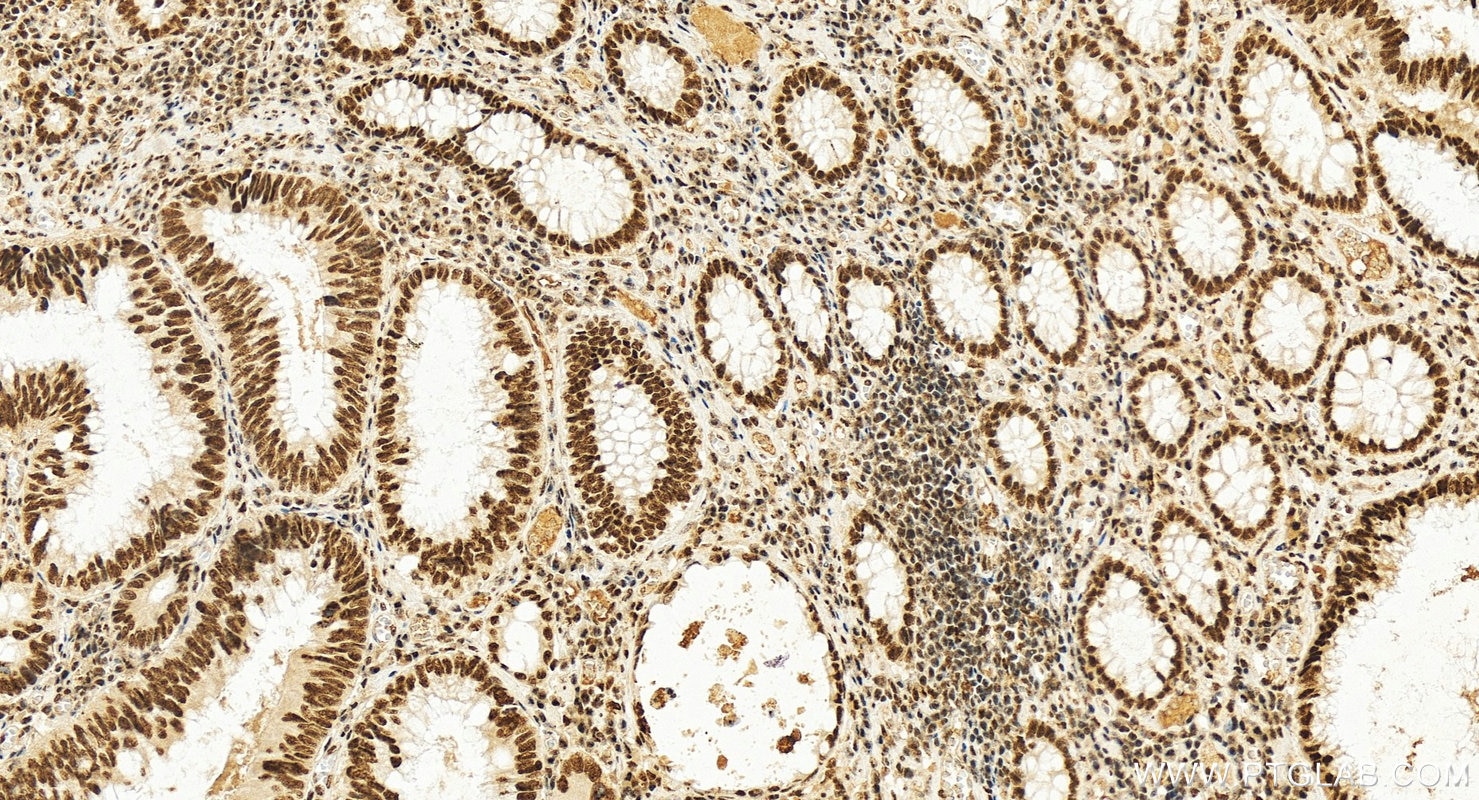
| Positive IHC detected in | human colon cancer tissue, rat testis tissue Note: suggested antigen retrieval with TE buffer pH 9.0; (*) Alternatively, antigen retrieval may be performed with citrate buffer pH 6.0 |
| Positive IF/ICC detected in | HeLa cells |
Recommended dilution
| Application | Dilution |
|---|---|
| Western Blot (WB) | WB : 1:1000-1:4000 |
| Immunoprecipitation (IP) | IP : 0.5-4.0 ug for 1.0-3.0 mg of total protein lysate |
| Immunohistochemistry (IHC) | IHC : 1:150-1:600 |
| Immunofluorescence (IF)/ICC | IF/ICC : 1:200-1:800 |
| It is recommended that this reagent should be titrated in each testing system to obtain optimal results. | |
| Sample-dependent, Check data in validation data gallery. | |
Product Information
25297-1-AP targets RBM25 in WB, IHC, IF/ICC, IP, RIP, ELISA applications and shows reactivity with human, mouse, rat samples.
| Tested Reactivity | human, mouse, rat |
| Cited Reactivity | human, mouse, rat |
| Host / Isotype | Rabbit / IgG |
| Class | Polyclonal |
| Type | Antibody |
| Immunogen |
CatNo: Ag18244 Product name: Recombinant human RBM25 protein Source: e coli.-derived, PGEX-4T Tag: GST Domain: 605-839 aa of BC113389 Sequence: QKPCLKPTLRPISSAPSVSSASGNATPNTPGDESPCGIIIPHENSPDQQQPEEHRPKIGLSLKLGASNSPGQPNSVKRKKLPVDSVFNKFEDEDSDDVPRKRKLVPLDYGEDDKNATKGTVNTEEKRKHIKSLIEKIPTAKPELFAYPLDWSIVDSILMERRIRPWINKKIIEYIGEEEATLVDFVCSKVMAHSSPQSILDDVAMVLDEEAEVFIVKMWRLLIYETEAKKIGLVK Predict reactive species |
| Full Name | RNA binding motif protein 25 |
| Calculated Molecular Weight | 843 aa, 100 kDa |
| Observed Molecular Weight | 110-120 kDa |
| GenBank Accession Number | BC113389 |
| Gene Symbol | RBM25 |
| Gene ID (NCBI) | 58517 |
| RRID | AB_2880014 |
| Conjugate | Unconjugated |
| Form | Liquid |
| Purification Method | Antigen affinity purification |
| UNIPROT ID | P49756 |
| Storage Buffer | PBS with 0.02% sodium azide and 50% glycerol, pH 7.3. |
| Storage Conditions | Store at -20°C. Stable for one year after shipment. Aliquoting is unnecessary for -20oC storage. 20ul sizes contain 0.1% BSA. |
Background Information
RNA-binding protein 25 (RBM25), also named as Protein S164 or RNPC7, is a 843 amino acid protein, which contains one RRM domain and one PWI domain. RBM25 localizes in the nucleus and cytoplasm. RBM25 acts as a regulator of alternative pre-mRNA splicing and is involved in apoptotic cell death through the regulation of the apoptotic factor BCL2L1 isoform expression.
Protocols
| Product Specific Protocols | |
|---|---|
| IF protocol for RBM25 antibody 25297-1-AP | Download protocol |
| IHC protocol for RBM25 antibody 25297-1-AP | Download protocol |
| IP protocol for RBM25 antibody 25297-1-AP | Download protocol |
| WB protocol for RBM25 antibody 25297-1-AP | Download protocol |
| Standard Protocols | |
|---|---|
| Click here to view our Standard Protocols |
Publications
What published studies show
The RBM25 Polyclonal antibody (Cat# 25297-1-AP) has 12 citations published in journals including Immunity, Molecular Cell, Nature Cell Biology, Advanced Science, Science China Life Sciences, Arteriosclerosis Thrombosis and Vascular Biology, Cell Insight, Journal of Affective Disorders, Pathology Research and Practice, PeerJ, Gene, and bioRxiv. Research fields span alternative splicing regulation, hepatocellular and colon cancer, neurodegeneration (tau pathology), cardiovascular disease, ferroptosis, PTSD, and nuclear RNA biology.
| Species | Application | Title |
|---|---|---|
Immunity The R136S mutation in the APOE3 gene confers resilience against tau pathology via inhibition of the cGAS-STING-IFN pathway | ||
Mol Cell RNA-coupled CRISPR screens reveal ZNF207 as a regulator of LMNA aberrant splicing in progeria. | ||
Sci China Life Sci RBM25 depletion suppresses the growth of colon cancer cells through regulating alternative splicing of MNK2
| ||
Arterioscler Thromb Vasc Biol Super Enhancer-Associated Circular RNA-CircKrt4 Regulates Hypoxic Pulmonary Artery Endothelial Cell Dysfunction in Mice | ||
J Affect Disord Uncoupling serotonin (2C) and dopamine (D2) receptor heterodimers ameliorate PTSD-like behaviors |






