


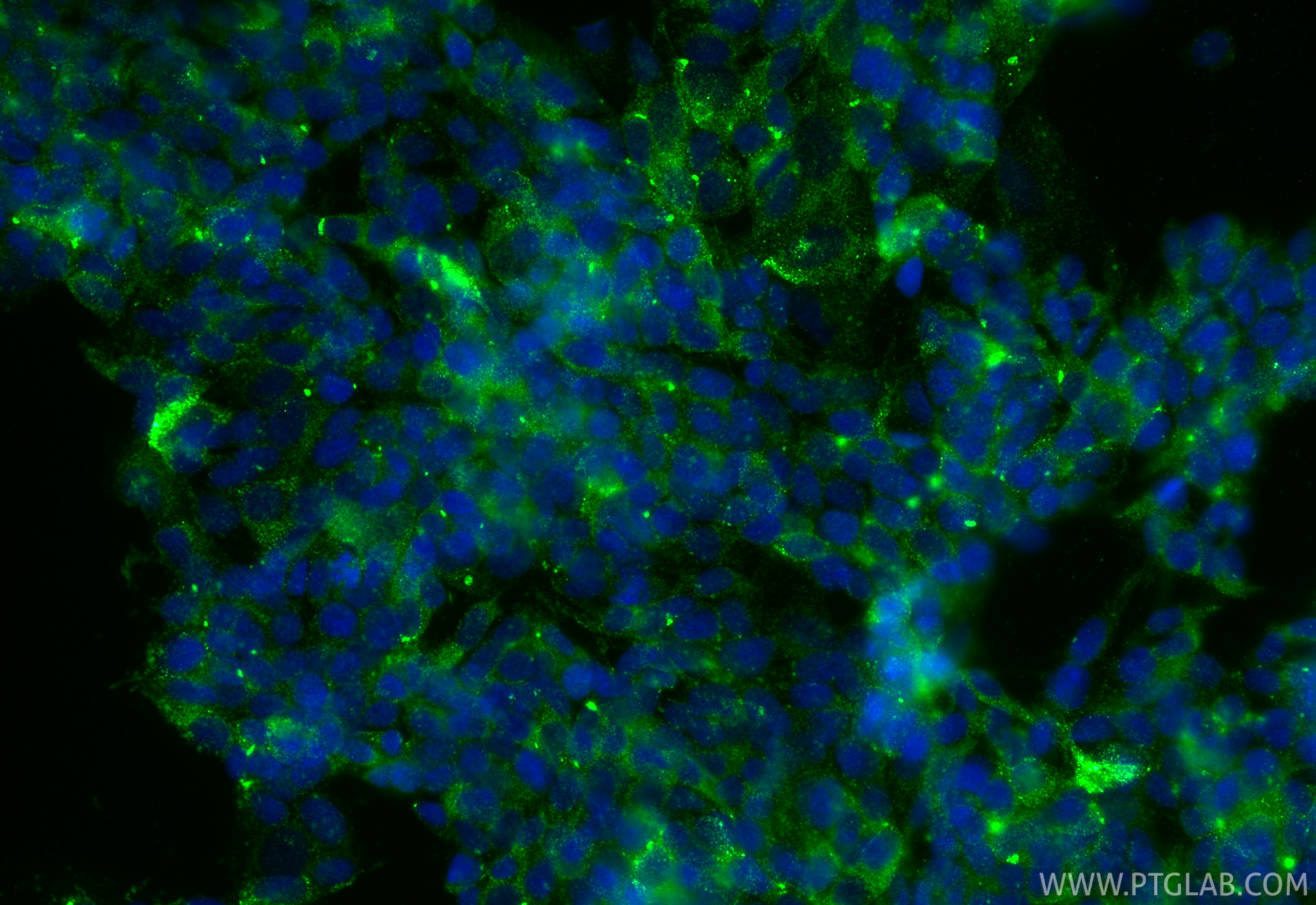

Tested Applications
| Positive WB detected in | SH-SY5Y cells |
| Positive IHC detected in | human gliomas tissue Note: suggested antigen retrieval with TE buffer pH 9.0; (*) Alternatively, antigen retrieval may be performed with citrate buffer pH 6.0 |
| Positive IF/ICC detected in | SH-SY5Y cells |
Recommended dilution
| Application | Dilution |
|---|---|
| Western Blot (WB) | WB : 1:500-1:1000 |
| Immunohistochemistry (IHC) | IHC : 1:20-1:200 |
| Immunofluorescence (IF)/ICC | IF/ICC : 1:50-1:500 |
| It is recommended that this reagent should be titrated in each testing system to obtain optimal results. | |
| Sample-dependent, Check data in validation data gallery. | |
Product Information
14056-1-AP targets RGS7 in WB, IHC, IF/ICC, ELISA applications and shows reactivity with human, mouse, rat samples.
| Tested Reactivity | human, mouse, rat |
| Cited Reactivity | rat |
| Host / Isotype | Rabbit / IgG |
| Class | Polyclonal |
| Type | Antibody |
| Immunogen |
CatNo: Ag4982 Product name: Recombinant human RGS7 protein Source: e coli.-derived, PGEX-4T Tag: GST Domain: 139-487 aa of BC022009 Sequence: NKARLELADYEAESLARLQRAFARKWEFIFMQAEAQAKVDKKRDKIERKILDSQERAFWDVHRPVPGCVNTTEVDIKKSSRMRNPHKTRKSVYGLQNDIRSHSPTHTPTPETKPPTEDELQQQIKYWQIQLDRHRLKMSKVADSLLSYTEQYLEYDPFLLPPDPSNPWLSDDTTFWELEASKEPSQQRVKRWGFGMDEALKDPVGREQFLKFLESEFSSENLRFWLAVEDLKKRPIKEVPSRVQEIWQEFLAPGAPSAINLDSKSYDKTTHNVKEPGRYTFEDAQEHIYKLMKSDSYPRFIRSSAYQELLQAKKKSGNSMDRRTSFEKFAQNVGKSLTSKRLTSLAQSY Predict reactive species |
| Full Name | regulator of G-protein signaling 7 |
| Calculated Molecular Weight | 58 kDa |
| Observed Molecular Weight | 58-62 kDa |
| GenBank Accession Number | BC022009 |
| Gene Symbol | RGS7 |
| Gene ID (NCBI) | 6000 |
| RRID | AB_2238316 |
| Conjugate | Unconjugated |
| Form | Liquid |
| Purification Method | Antigen affinity purification |
| UNIPROT ID | P49802 |
| Storage Buffer | PBS with 0.02% sodium azide and 50% glycerol, pH 7.3. |
| Storage Conditions | Store at -20°C. Stable for one year after shipment. Aliquoting is unnecessary for -20oC storage. 20ul sizes contain 0.1% BSA. |
Background Information
Regulator of G-protein signaling 7 (RGS7) expression is both necessary and sufficient to promote doxorubicin-dependent acetylation and activation of NF-κB subunit p65 and resultant production of pro-inflammatory cytokines from cardiomyocytes (PMID: 37589751). RGS7 promotes apoptosis in cardiac myocytes by increasing oxidative stress and impairing mitochondrial function, actions that involve a direct and functional interaction between RGS7 and the Ca2+/calmodulin-dependent kinase CaMKII (PMID: 36574707). In non-neuronal cell types, it is possible that a greater proportion of RGS7 may be present in the cytosol where it is free to interact with additional effectors (PMID: 36574707).
Protocols
| Product Specific Protocols | |
|---|---|
| IF protocol for RGS7 antibody 14056-1-AP | Download protocol |
| IHC protocol for RGS7 antibody 14056-1-AP | Download protocol |
| WB protocol for RGS7 antibody 14056-1-AP | Download protocol |
| Standard Protocols | |
|---|---|
| Click here to view our Standard Protocols |
Publications
What published studies show
The RGS7 Polyclonal antibody (catalog number 14056-1-AP) has a total of 2 citations. These appear in two journals: Biochimica et Biophysica Acta (Molecular Basis of Disease), where it was used for IHC in a rat study on RGS7 silencing and atrial fibrillation progression via the cGMP-PKG signaling pathway, and Epigenomics, in a study on DNA methylation changes during gallstone formation. The associated research fields are cardiovascular disease (atrial fibrillation) and epigenetics/gallbladder disease.
| Species | Application | Title |
|---|---|---|
Biochim Biophys Acta Mol Basis Dis Silencing RGS7 attenuates atrial fibrillation progression by activating the cGMP-PKG signaling pathway | ||




