

Tested Applications
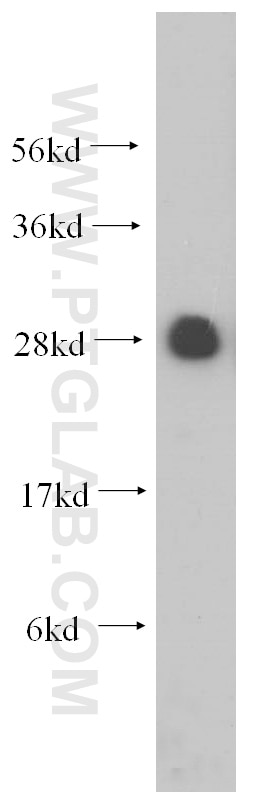
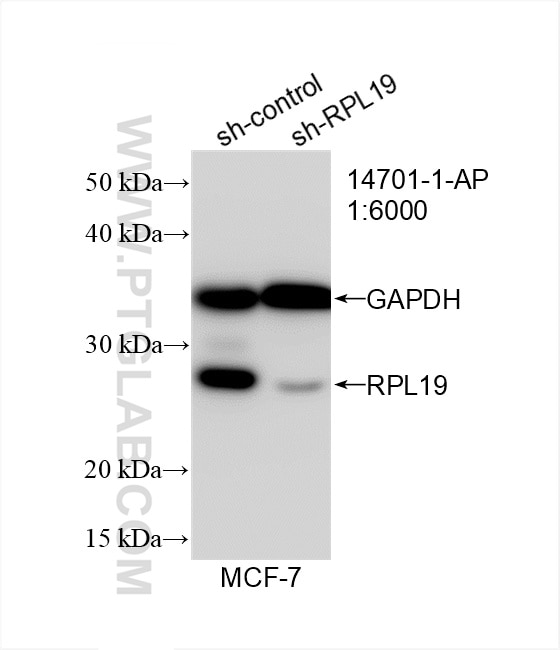
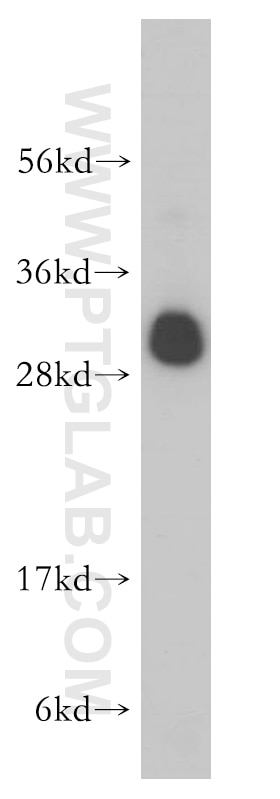
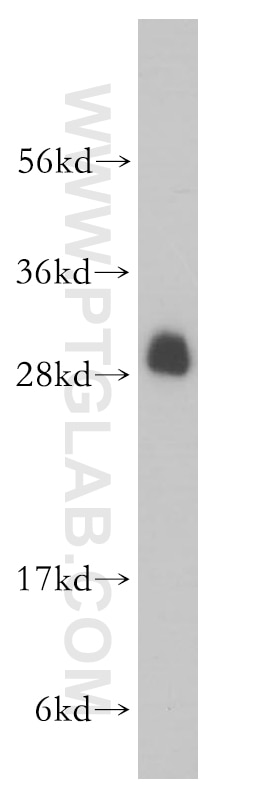
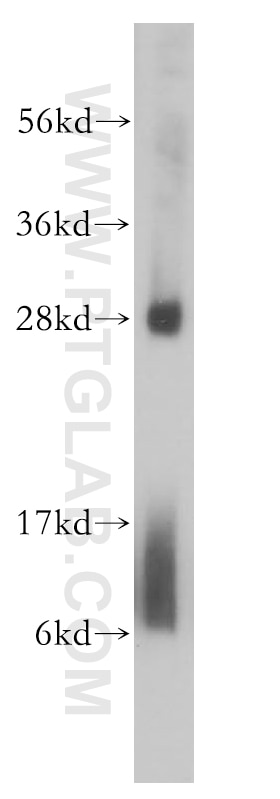
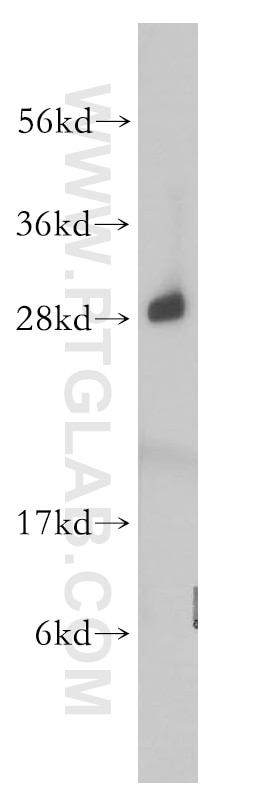
| Positive WB detected in | HeLa cells, MCF-7 cells, mouse spleen tissue, mouse testis tissue, PC-3 cells |
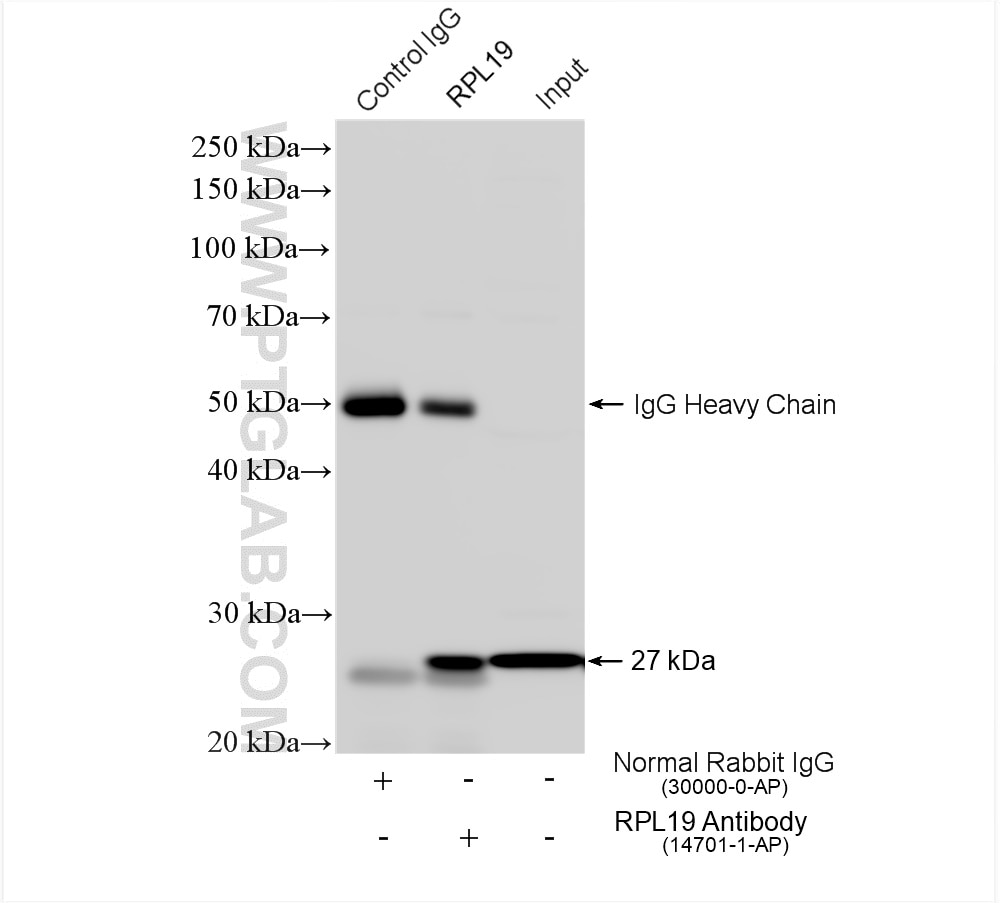
| Positive IP detected in | HeLa cells |
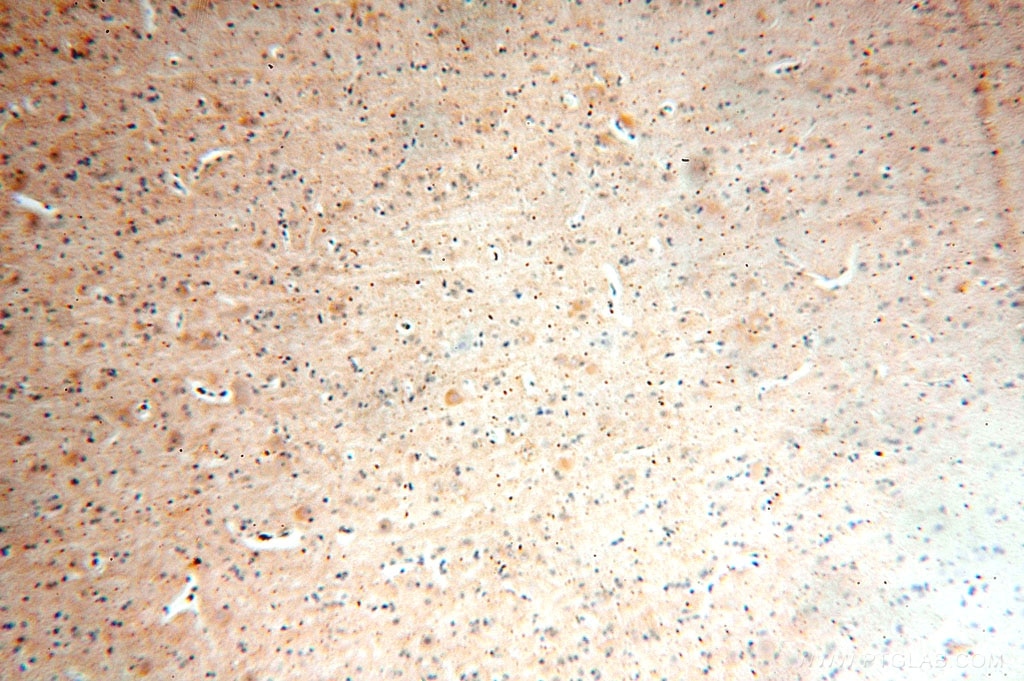
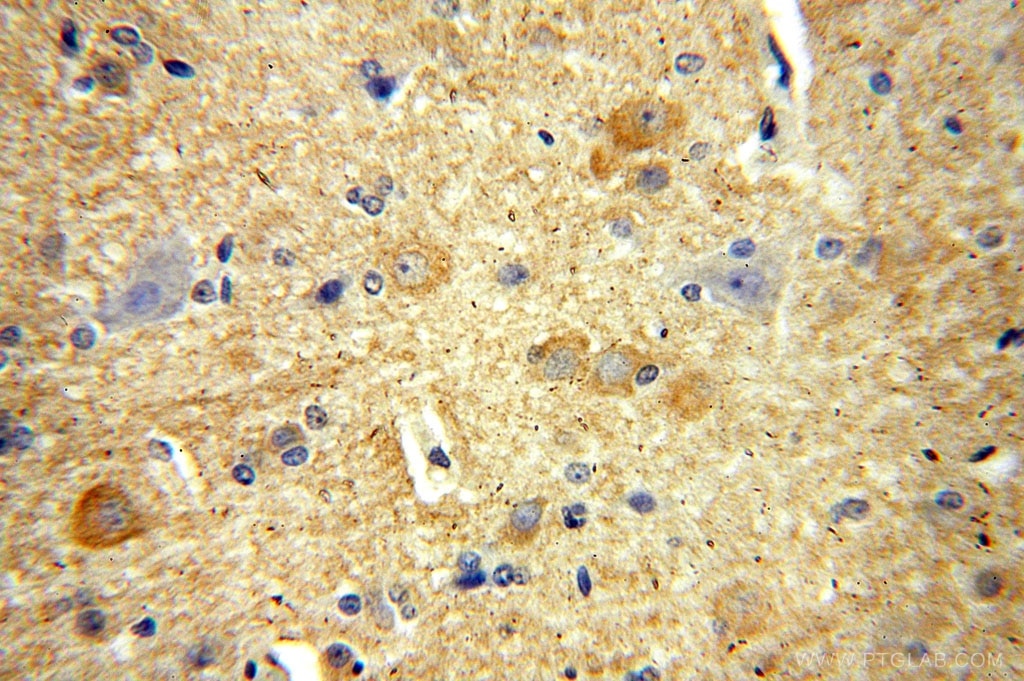
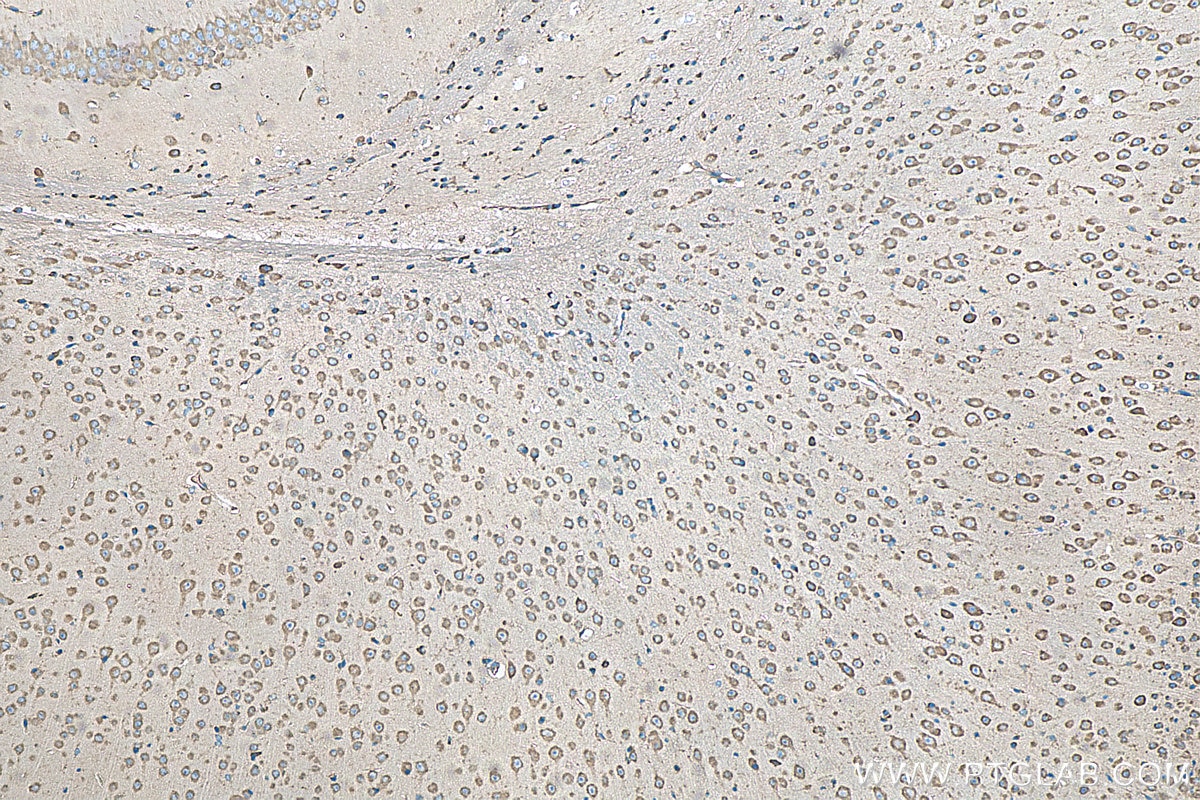
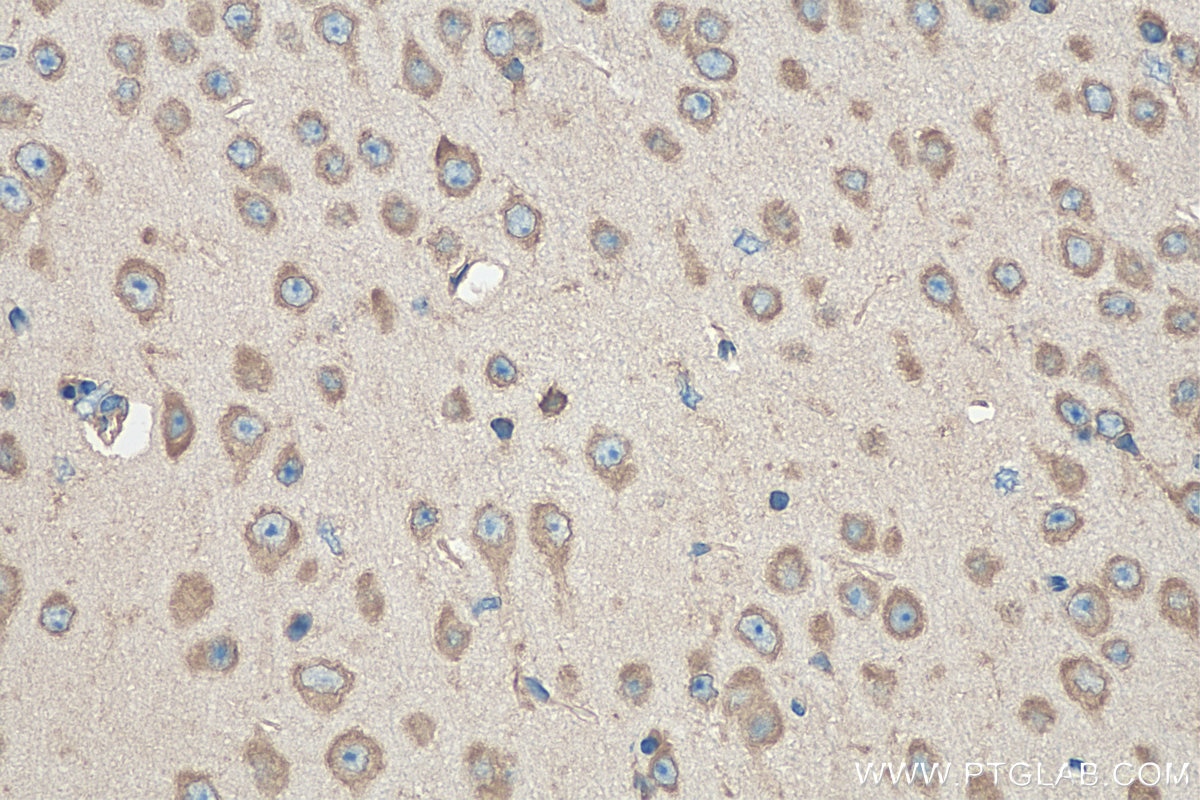
| Positive IHC detected in | human brain tissue, mouse brain tissue Note: suggested antigen retrieval with TE buffer pH 9.0; (*) Alternatively, antigen retrieval may be performed with citrate buffer pH 6.0 |
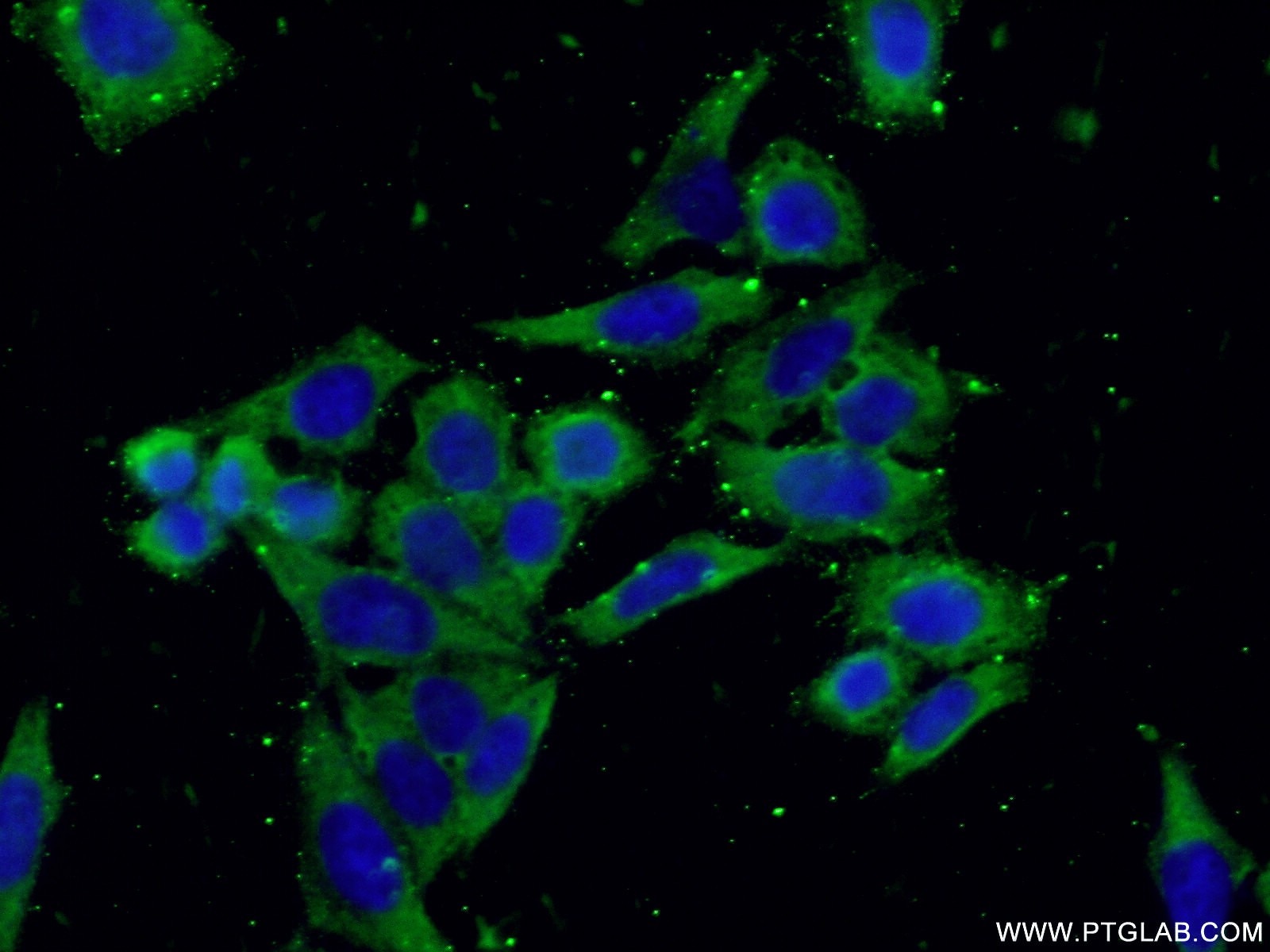
| Positive IF/ICC detected in | HeLa cells |
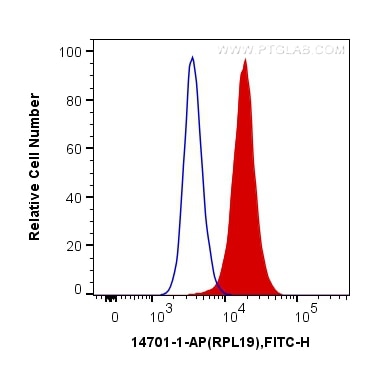
| Positive FC (Intra) detected in | HeLa cells |
Recommended dilution
| Application | Dilution |
|---|---|
| Western Blot (WB) | WB : 1:500-1:3000 |
| Immunoprecipitation (IP) | IP : 0.5-4.0 ug for 1.0-3.0 mg of total protein lysate |
| Immunohistochemistry (IHC) | IHC : 1:20-1:200 |
| Immunofluorescence (IF)/ICC | IF/ICC : 1:50-1:500 |
| Flow Cytometry (FC) (INTRA) | FC (INTRA) : 0.20 ug per 10^6 cells in a 100 µl suspension |
| It is recommended that this reagent should be titrated in each testing system to obtain optimal results. | |
| Sample-dependent, Check data in validation data gallery. | |
Product Information
14701-1-AP targets RPL19 in WB, IHC, IF/ICC, FC (Intra), IP, ELISA applications and shows reactivity with human, mouse, rat samples.
| Tested Reactivity | human, mouse, rat |
| Cited Reactivity | human, mouse |
| Host / Isotype | Rabbit / IgG |
| Class | Polyclonal |
| Type | Antibody |
| Immunogen |
CatNo: Ag6371 Product name: Recombinant human RPL19 protein Source: e coli.-derived, PET28a Tag: 6*His Domain: 1-196 aa of BC066315 Sequence: MSMLRLQKRLASSVLRCGKKKVWLDPNETNEIANANSRQQIRKLIKDGLIIRKPVTVHSRARCRKNTLARRKGRHMGIGKRKGTANARMPEKVTWMRRMRILRRLLRRYRESKKIDRHMYHSLYLKVKGNVFKNKRILMEHIHKLKADKARKKLLADQAEARRSKTKEARKRREERLQAKKEEIIKTLSKEEETKK Predict reactive species |
| Full Name | ribosomal protein L19 |
| Calculated Molecular Weight | 23 kDa |
| Observed Molecular Weight | 28 kDa |
| GenBank Accession Number | BC066315 |
| Gene Symbol | RPL19 |
| Gene ID (NCBI) | 6143 |
| RRID | AB_2181587 |
| Conjugate | Unconjugated |
| Form | Liquid |
| Purification Method | Antigen affinity purification |
| UNIPROT ID | P84098 |
| Storage Buffer | PBS with 0.02% sodium azide and 50% glycerol, pH 7.3. |
| Storage Conditions | Store at -20°C. Stable for one year after shipment. Aliquoting is unnecessary for -20oC storage. 20ul sizes contain 0.1% BSA. |
Background Information
RPL19, also named as 60S ribosomal protein L19, is a 196 amino acid protein, which belongs to the ribosomal protein L19e family. RPL19 encodes a ribosomal protein that is a component of the 60S subunit.
Protocols
| Product Specific Protocols | |
|---|---|
| FC protocol for RPL19 antibody 14701-1-AP | Download protocol |
| IF protocol for RPL19 antibody 14701-1-AP | Download protocol |
| IHC protocol for RPL19 antibody 14701-1-AP | Download protocol |
| IP protocol for RPL19 antibody 14701-1-AP | Download protocol |
| WB protocol for RPL19 antibody 14701-1-AP | Download protocol |
| Standard Protocols | |
|---|---|
| Click here to view our Standard Protocols |
Publications
What published studies show
The RPL26 antibody (catalog #14701-1-AP) has 10 total citations published in journals including Science Advances, EMBO Journal, Developmental Cell, Current Biology, Cell Reports, Phytomedicine, International Journal of Biological Macromolecules, Translational Research, and Human Mutation. Research fields span ribosome biology, cancer (colorectal cancer, glioblastoma, myeloma), neurodegeneration (tauopathy), spermiogenesis, meiosis, and Diamond-Blackfan anemia. Applications include Western blot and immunofluorescence in human and mouse samples.
| Species | Application | Title |
|---|---|---|
Phytomedicine FBXO11 enhances colorectal cancer progression through TMBIM6 stabilization: Echinacoside as a natural inhibitor. | ||
EMBO J Decreased synthesis of ribosomal proteins in tauopathy revealed by non-canonical amino acid labelling. | ||
Dev Cell Autophagic elimination of ribosomes during spermiogenesis provides energy for flagellar motility. | ||
Int J Biol Macromol Translational hub ribosomal protein S5 promotes glioblastoma progression by affecting translation patterns. | ||
EMBO J Decreased synthesis of ribosomal proteins in tauopathy revealed by non-canonical amino acid labelling. |














