
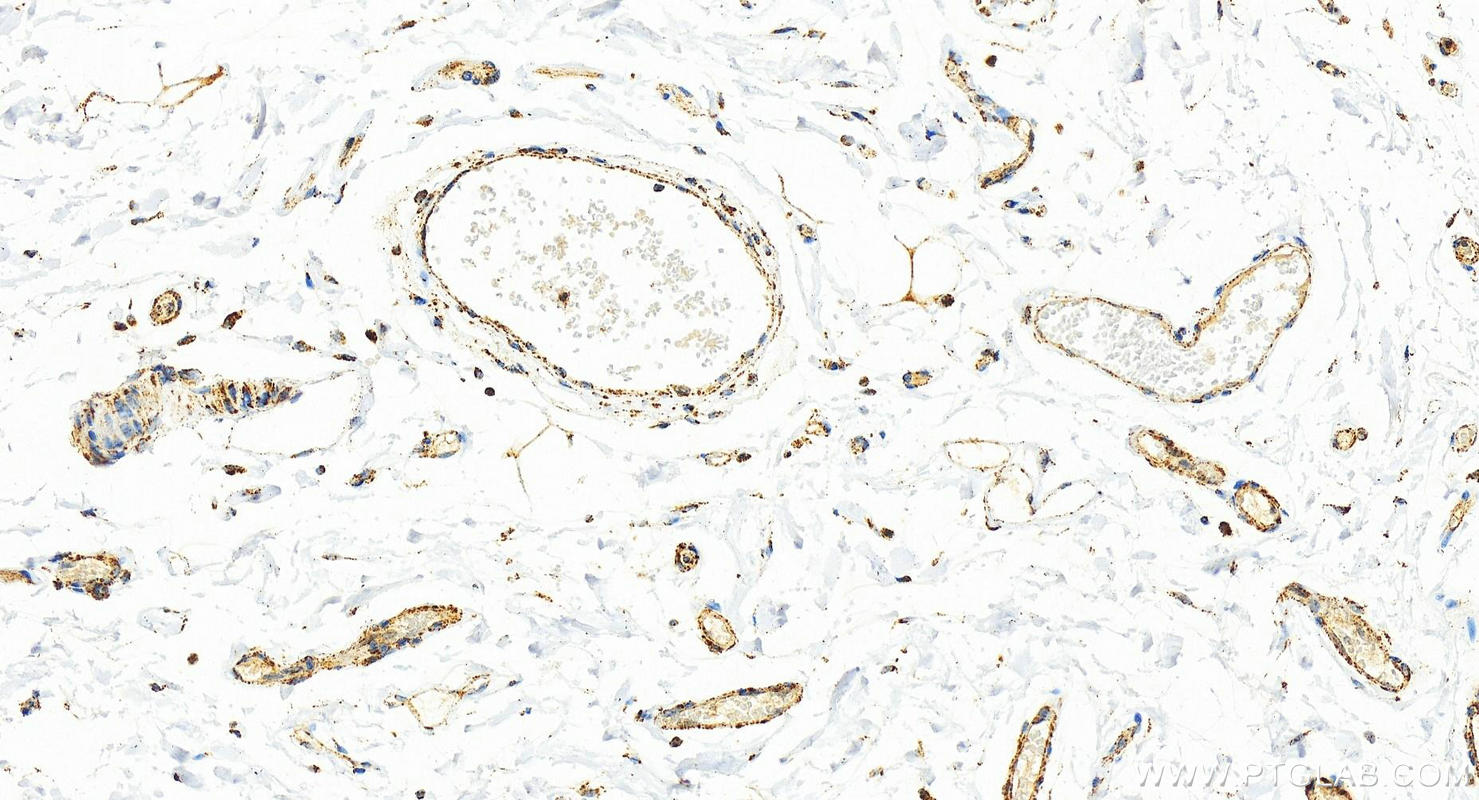

Tested Applications
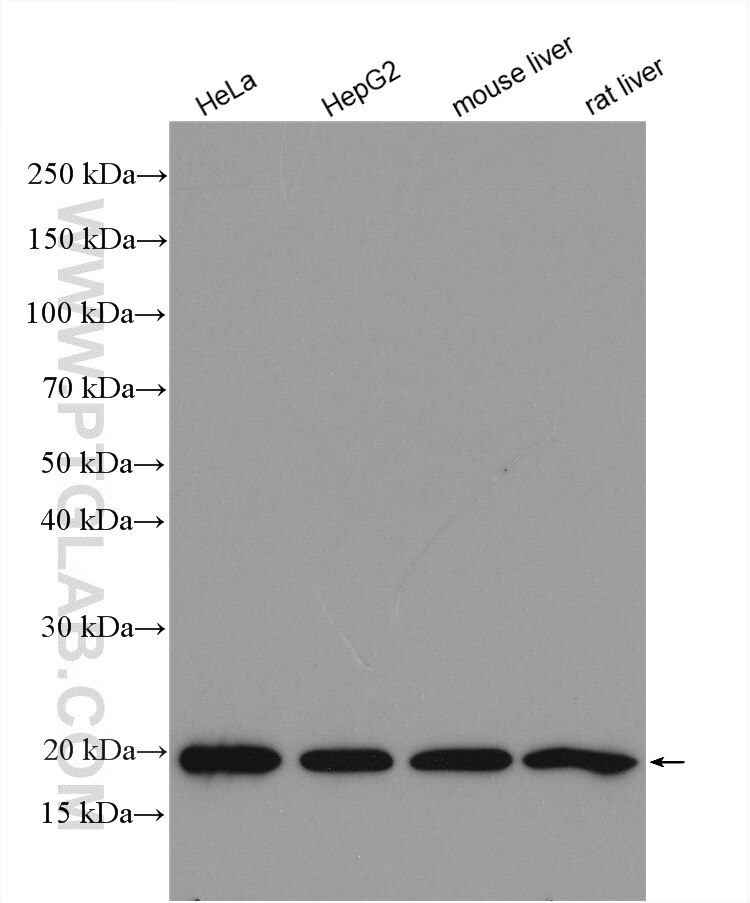
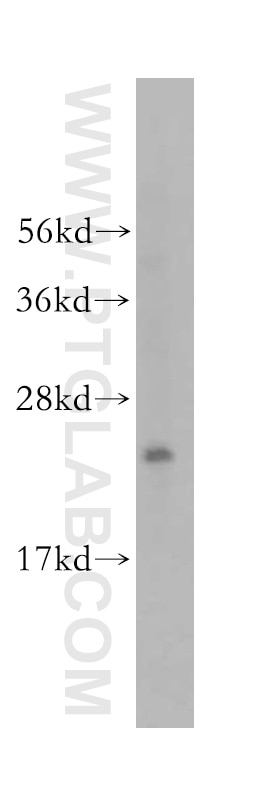
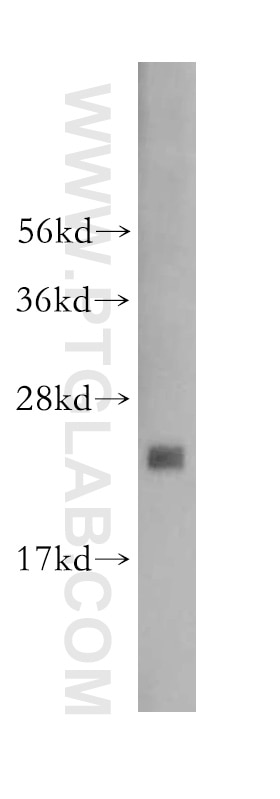
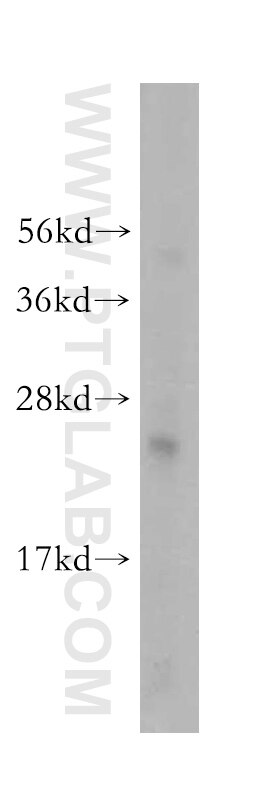
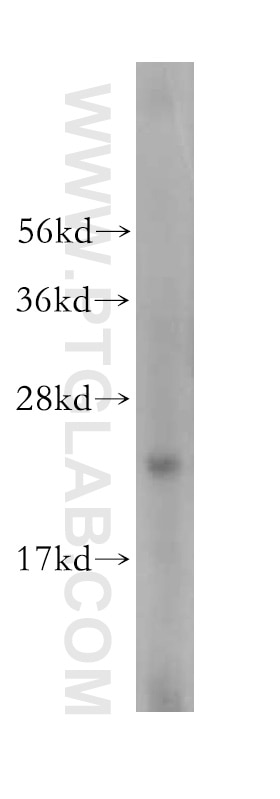
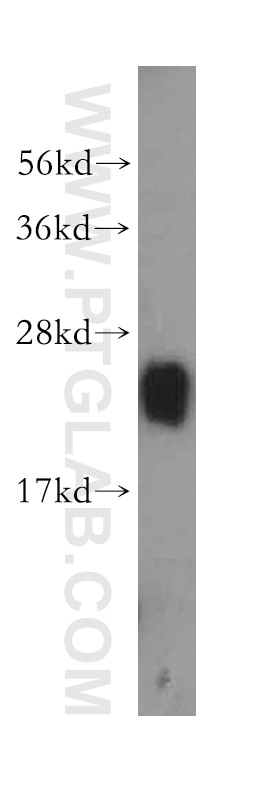
| Positive WB detected in | HeLa cells, HepG2 cells, human liver tissue, human heart tissue, mouse liver tissue, rat liver tissue |
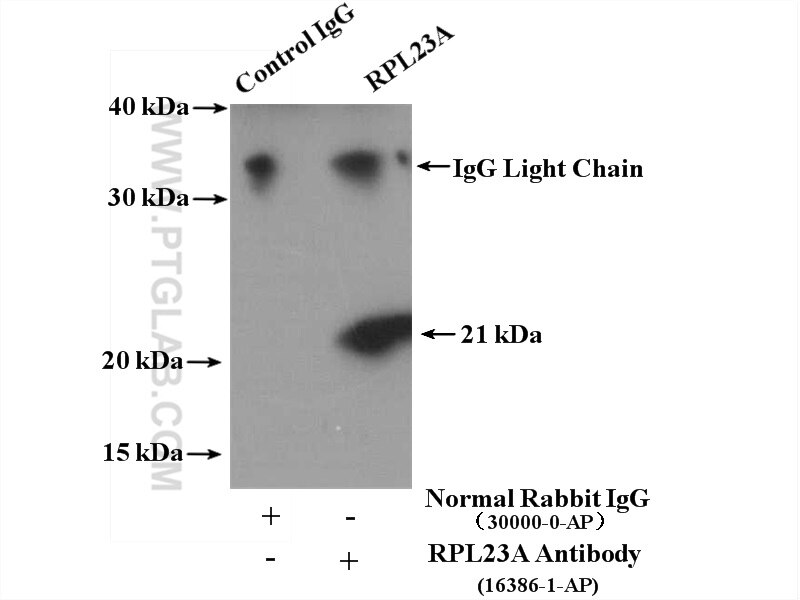
| Positive IP detected in | HepG2 cells |
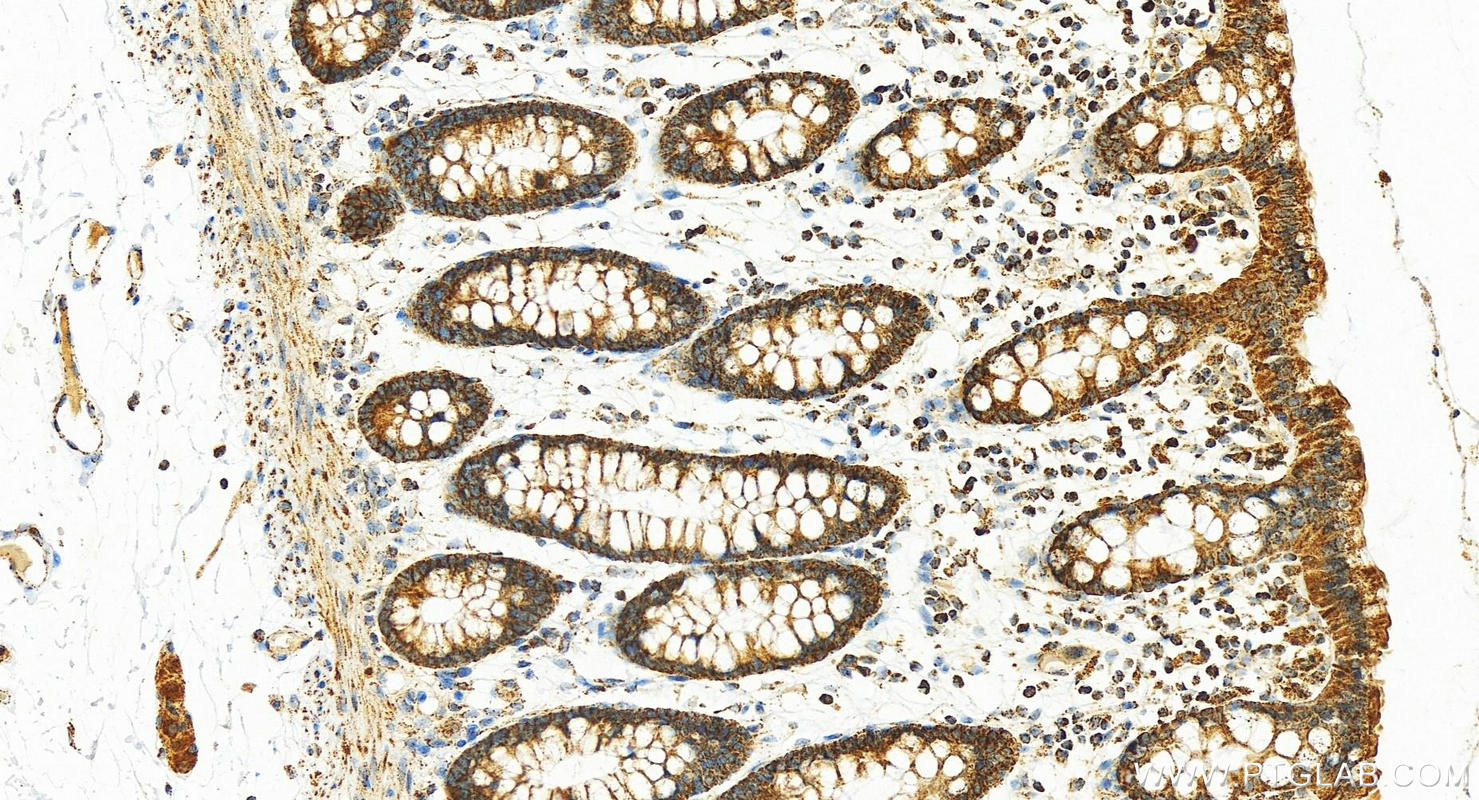
| Positive IHC detected in | human normal colon Note: suggested antigen retrieval with TE buffer pH 9.0; (*) Alternatively, antigen retrieval may be performed with citrate buffer pH 6.0 |
Recommended dilution
| Application | Dilution |
|---|---|
| Western Blot (WB) | WB : 1:2000-1:12000 |
| Immunoprecipitation (IP) | IP : 0.5-4.0 ug for 1.0-3.0 mg of total protein lysate |
| Immunohistochemistry (IHC) | IHC : 1:600-1:2400 |
| It is recommended that this reagent should be titrated in each testing system to obtain optimal results. | |
| Sample-dependent, Check data in validation data gallery. | |
Product Information
16386-1-AP targets RPL23A in WB, IHC, IF, IP, RIP, ELISA applications and shows reactivity with human, mouse, rat samples.
| Tested Reactivity | human, mouse, rat |
| Cited Reactivity | human, mouse |
| Host / Isotype | Rabbit / IgG |
| Class | Polyclonal |
| Type | Antibody |
| Immunogen |
CatNo: Ag9424 Product name: Recombinant human RPL23A protein Source: e coli.-derived, PET28a Tag: 6*His Domain: 1-156 aa of BC014459 Sequence: MAPKAKKEAPAPPKAEAKAKALKAKKAVLKGVHSHKKKKIRTSPTFRRPKTLRLRRQPKYPRKSAPRRNKLDHYAIIKFPLTTESAMKKIEDNNTLVFIVDVKANKHQIKQAVKKLYDIDVAKVNTLIRPDGEKKAYVRLAPDYDALDVANKIGII Predict reactive species |
| Full Name | ribosomal protein L23a |
| Calculated Molecular Weight | 156 aa, 18 kDa |
| Observed Molecular Weight | 18-23 kDa |
| GenBank Accession Number | BC014459 |
| Gene Symbol | RPL23A |
| Gene ID (NCBI) | 6147 |
| RRID | AB_2269755 |
| Conjugate | Unconjugated |
| Form | Liquid |
| Purification Method | Antigen affinity purification |
| UNIPROT ID | P62750 |
| Storage Buffer | PBS with 0.02% sodium azide and 50% glycerol, pH 7.3. |
| Storage Conditions | Store at -20°C. Stable for one year after shipment. Aliquoting is unnecessary for -20oC storage. 20ul sizes contain 0.1% BSA. |
Protocols
| Product Specific Protocols | |
|---|---|
| IHC protocol for RPL23A antibody 16386-1-AP | Download protocol |
| IP protocol for RPL23A antibody 16386-1-AP | Download protocol |
| WB protocol for RPL23A antibody 16386-1-AP | Download protocol |
| Standard Protocols | |
|---|---|
| Click here to view our Standard Protocols |
Publications
What published studies show
The RPL23A Polyclonal antibody (Cat# 16386-1-AP) has 11 citations published in journals including Cell Stem Cell, Nature Communications, Molecular Cell, Nucleic Acids Research, Brain, Cell Death & Disease, Nature Structural & Molecular Biology, Cell Reports, Breast Cancer Research, and Gene. Associated research fields encompass ribosome biogenesis and assembly, stem cell regeneration, RNA processing and surveillance, cancer progression (colorectal and breast), neurodegeneration, viral gene expression, and neural development.
| Species | Application | Title |
|---|---|---|
Cell Stem Cell HectD1 controls hematopoietic stem cell regeneration by coordinating ribosome assembly and protein synthesis. | ||
Nat Commun The Perlman syndrome DIS3L2 exoribonuclease safeguards endoplasmic reticulum-targeted mRNA translation and calcium ion homeostasis. | ||
Nat Commun Kaposi's sarcoma-associated herpesvirus induces specialised ribosomes to efficiently translate viral lytic mRNAs | ||
Mol Cell An ultraconserved snoRNA-like element in long noncoding RNA CRNDE promotes ribosome biogenesis and cell proliferation | ||
Nucleic Acids Res Stable Cas9 expression regulates cell growth by facilitating mTORC2 activation | ||
Brain Interactome screening of C9orf72 dipeptide repeats reveals VCP sequestration and functional impairment by polyGA. |










