
Recombinant Rat CD63 protein (rFc Tag) (HPLC verified)
Species
Rat
Purity
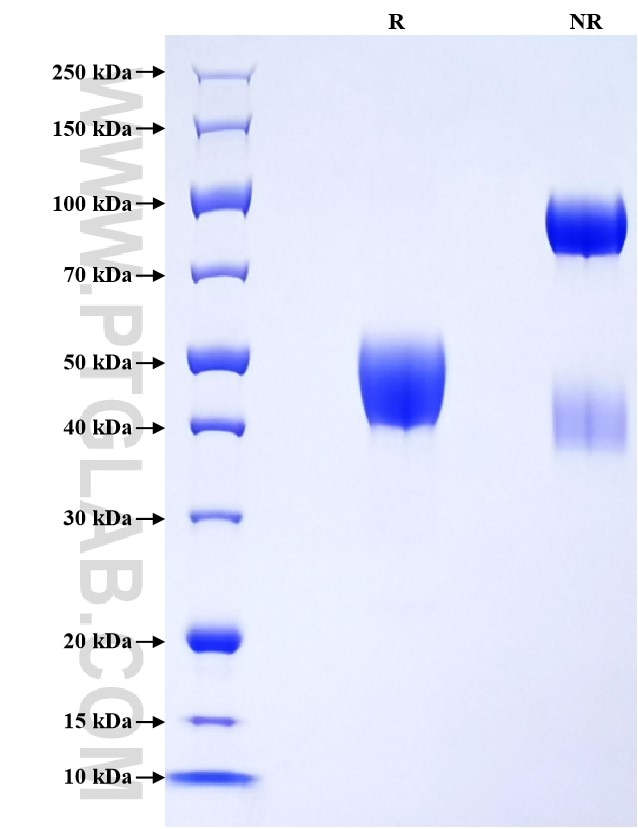
>90 %, SDS-PAGE
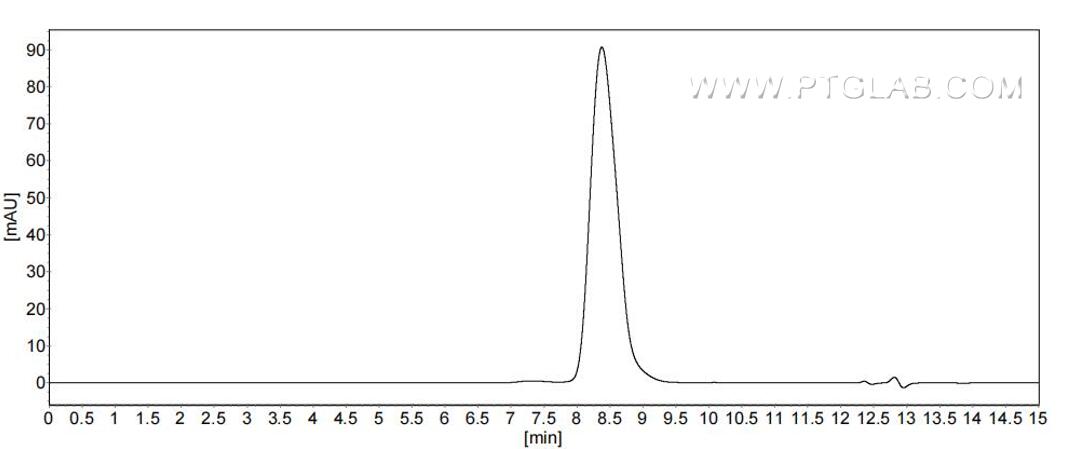
>90 %, SEC-HPLC
Tag
rFc Tag
Activity
not tested
Cat no : Eg3216
Validation Data Gallery
Product Information
| Purity | >90 %, SDS-PAGE >90 %, SEC-HPLC |
| Endotoxin | <0.1 EU/μg protein, LAL method |
| Activity |
Not tested |
| Expression | HEK293-derived Rat CD63 protein Arg108-Val203 (Accession# P28648) with a rabbit IgG Fc tag at the C-terminus. |
| GeneID | 29186 |
| Accession | P28648 |
| PredictedSize | 37.2 kDa |
| SDS-PAGE | 40-50 kDa, reducing (R) conditions |
| Formulation | Lyophilized from 0.22 μm filtered solution in PBS, pH 7.4. Normally 5% trehalose and 5% mannitol are added as protectants before lyophilization. |
| Reconstitution | Briefly centrifuge the tube before opening. Reconstitute at 0.1-0.5 mg/mL in sterile water. |
| Storage Conditions |
It is recommended that the protein be aliquoted for optimal storage. Avoid repeated freeze-thaw cycles.
|
| Shipping | The product is shipped at ambient temperature. Upon receipt, store it immediately at the recommended temperature. |
Background
Cluster of differentiation antigen 63 (CD63) is a member of transmembrane-4-superfamily of tetraspanin proteins and is a highly N-glycosylated type III lysosomal membrane protein. CD63 plays important roles in membrane transport, fusion, and protein kinase signaling. CD63 is a widely recognized extracellular vesicle (EV) marker that contributes to EV secretion from cells. CD63 is ubiquitously expressed and often considered to be a late endosomal, lysosomal, as well as an exosomal marker protein. CD63 is known to regulate malignancy of various types of cancers such as melanoma and breast cancer and serves as a potential marker for cancer detection.
References:
1.Song Z. et al. (2020) Molecules. 25(23):5585.
2.Dey S. et al. (2023) Adv Biol (Weinh). 7(7):e2300078.
3.Yanatori I. et al. (2021) Blood. 138(16):1490-1503.
4.Koh HM. et al. (2020) In Vivo. 34(5):2209-2215.