
Recombinant Rat MAG protein (rFc Tag)
Species
Rat
Purity
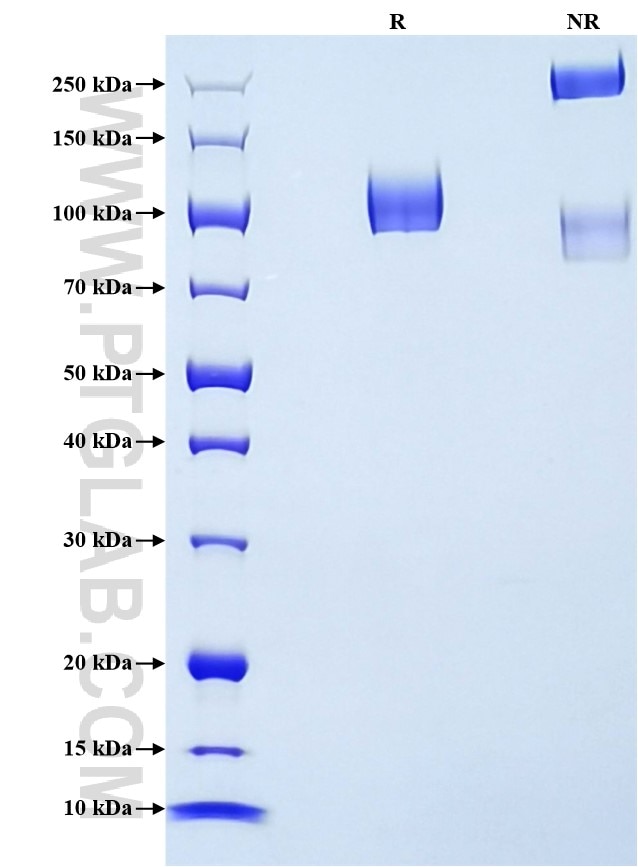
>90 %, SDS-PAGE
Tag
rFc Tag
Activity
not tested
Cat no : Eg3251
Validation Data Gallery
Product Information
| Purity | >90 %, SDS-PAGE |
| Endotoxin | <0.1 EU/μg protein, LAL method |
| Activity |
Not tested |
| Expression | HEK293-derived Rat MAG protein Gly20-Pro516 (Accession# P07722-1) with a rabbit IgG Fc tag at the C-terminus. |
| GeneID | 29409 |
| Accession | P07722-1 |
| PredictedSize | 81.2 kDa |
| SDS-PAGE | 95-110 kDa, reducing (R) conditions |
| Formulation | Lyophilized from 0.22 μm filtered solution in PBS, pH 7.4. Normally 5% trehalose and 5% mannitol are added as protectants before lyophilization. |
| Reconstitution | Briefly centrifuge the tube before opening. Reconstitute at 0.1-0.5 mg/mL in sterile water. |
| Storage Conditions |
It is recommended that the protein be aliquoted for optimal storage. Avoid repeated freeze-thaw cycles.
|
| Shipping | The product is shipped at ambient temperature. Upon receipt, store it immediately at the recommended temperature. |
Background
Myelin-associated glycoprotein (MAG/Siglec-4a), a member of the siglec family, is a 100 kDa glycoprotein that is located in the innermost layer of the myelin lamellae, where it maintains close contact with the axonal membrane and mediates cell-to-cell interactions between myelinating glial cells and neurons. It is selectively expressed by myelinating cells, including Schwann cells in the peripheral nervous system (PNS) and oligodendrocytes in the central nervous system (CNS). MAG is a key component of axon-glial cell interactions, and serves a variety of functions in the biology of neurons and glial cells. In vitro MAG can affect synapse growth in a bifunctional manner. It promotes neurite growth in neurons at early stages of development (e.g., embryonic dorsal root ganglion) and inhibits neurite growth in neurons at later stages, such as the adult dorsal root ganglion or early postnatal cerebellum.
References:
1. Lopez PH. (2014) Adv Neurobiol. 9:245-62.
2. Strenge K, et al. (2001) FEBS Lett. 499(3):262-7.
3. Swanson BJ, et al. (2007) Cancer Res. 67(21):10222-9.