



Tested Applications
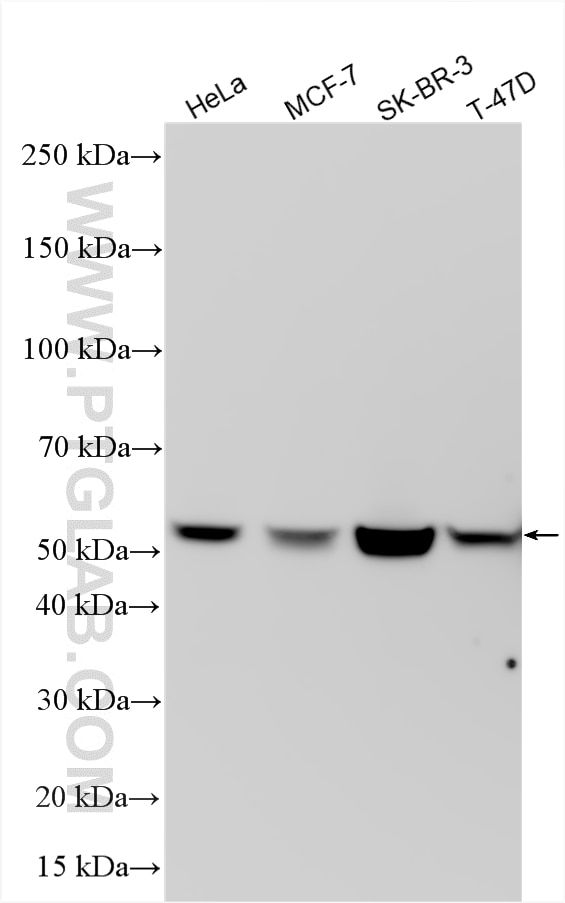
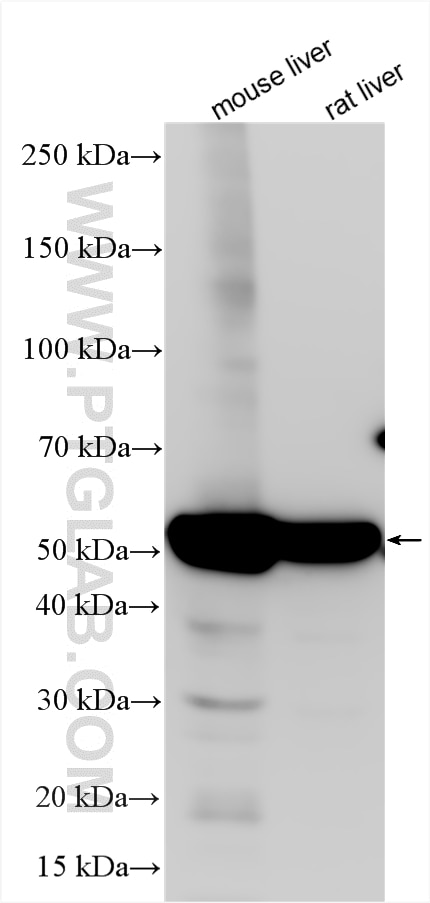
| Positive WB detected in | HeLa cells, A549 cells, mouse liver tissue, MCF-7 cells, SK-BR-3 cells, T-47D cells, rat liver tissue |
| Positive IHC detected in | human liver tissue, human colon tissue, human lung cancer tissue Note: suggested antigen retrieval with TE buffer pH 9.0; (*) Alternatively, antigen retrieval may be performed with citrate buffer pH 6.0 |
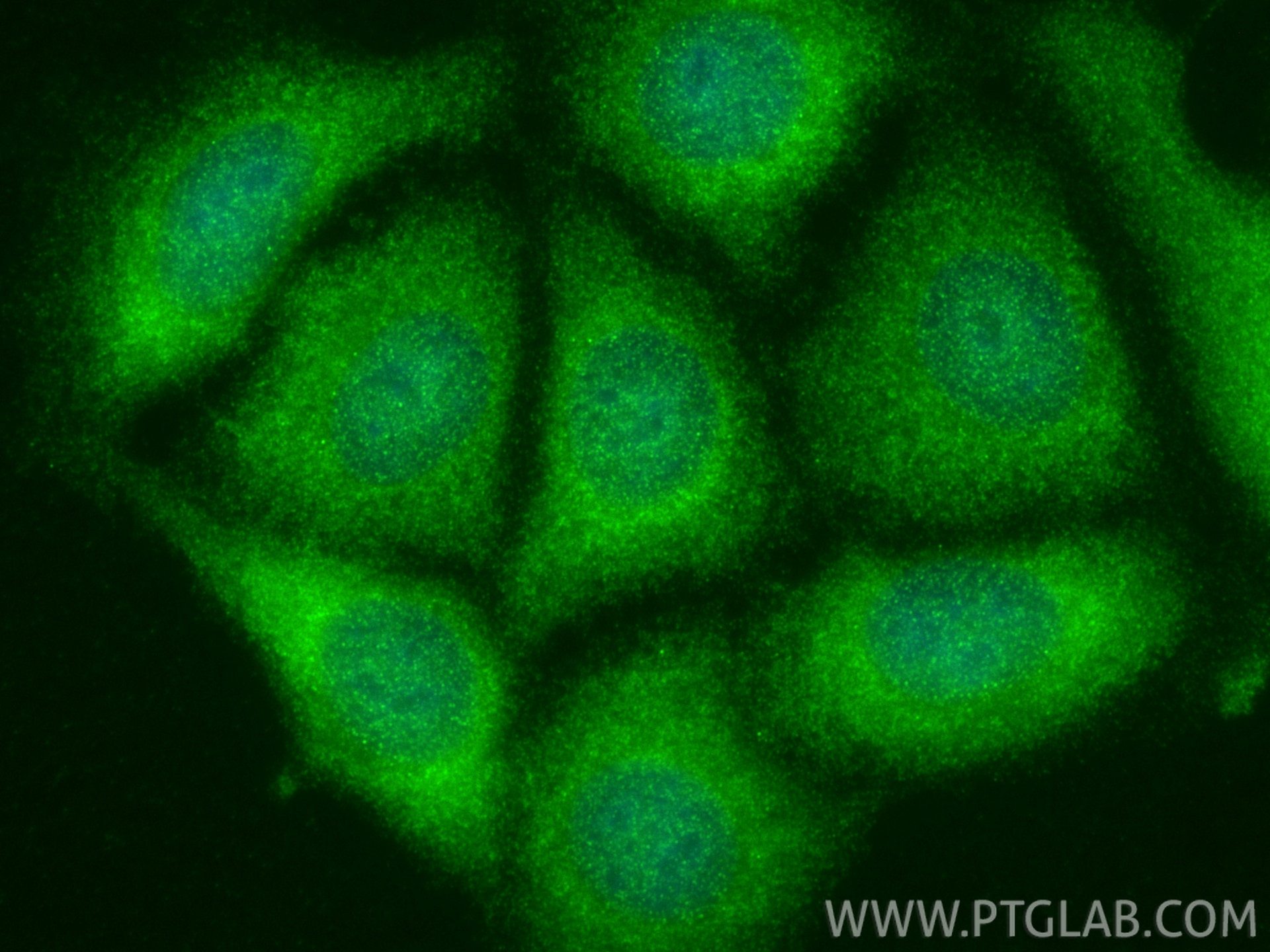
| Positive IF/ICC detected in | MCF-7 cells |
Recommended dilution
| Application | Dilution |
|---|---|
| Western Blot (WB) | WB : 1:2000-1:12000 |
| Immunohistochemistry (IHC) | IHC : 1:50-1:500 |
| Immunofluorescence (IF)/ICC | IF/ICC : 1:50-1:500 |
| It is recommended that this reagent should be titrated in each testing system to obtain optimal results. | |
| Sample-dependent, Check data in validation data gallery. | |
Product Information
27230-1-AP targets SELENBP1 in WB, IHC, IF/ICC, ELISA applications and shows reactivity with human, mouse, rat samples.
| Tested Reactivity | human, mouse, rat |
| Cited Reactivity | human, mouse |
| Host / Isotype | Rabbit / IgG |
| Class | Polyclonal |
| Type | Antibody |
| Immunogen |
CatNo: Ag20967 Product name: Recombinant human SELENBP1 protein Source: e coli.-derived, PET30a Tag: 6*His Domain: 1-305 aa of BC009084 Sequence: MATKCGNCGPGYSTPLEAMKGPREEIVYLPCIYRNTGTEAPDYLATVDVDPKSPQYCQVIHRLPMPNLKDELHHSGWNTCSSCFGDSTKSRTKLVLPSLISSRIYVVDVGSEPRAPKLHKVIEPKDIHAKCELAFLHTSHCLASGEVMISSLGDVKGNGKGGFVLLDGETFEVKGTWERPGGAAPLGYDFWYQPRHNVMISTEWAAPNVLRDGFNPADVEAGLYGSHLYVWDWQRHEIVQTLSLKDGLIPLEIRFLHNPDAAQGFVGCALSSTIQRFYKNEGGTWSVEKVIQVPPKKVKGWLLPE Predict reactive species |
| Full Name | selenium binding protein 1 |
| Calculated Molecular Weight | 52 kDa |
| Observed Molecular Weight | 52 kDa |
| GenBank Accession Number | BC009084 |
| Gene Symbol | SELENBP1 |
| Gene ID (NCBI) | 8991 |
| RRID | AB_2880811 |
| Conjugate | Unconjugated |
| Form | Liquid |
| Purification Method | Antigen affinity purification |
| UNIPROT ID | Q13228 |
| Storage Buffer | PBS with 0.02% sodium azide and 50% glycerol, pH 7.3. |
| Storage Conditions | Store at -20°C. Stable for one year after shipment. Aliquoting is unnecessary for -20oC storage. 20ul sizes contain 0.1% BSA. |
Background Information
SELENBP1 (selenium binding protein 1,SBP1), also known as LPSB or SP56, is a 472 amino acid peripheral membrane protein that binds selenium covalently. Selenium, an essential trace element, has been shown to have an anti-cancer effect. Many reports have described a relationship between insufficient selenium intake and increased risk of cancer. Moreover, the expression of SELENBP1 has been shown to be decreased in several tumors including cancers of the prostate, lungs, colon, and ovary (PMID: 21143902, 20332323, 18272210). SELENBP1 has four isoforms with the molecular mass of 56kD, 52kD and 45kD.
Protocols
| Product Specific Protocols | |
|---|---|
| IF protocol for SELENBP1 antibody 27230-1-AP | Download protocol |
| IHC protocol for SELENBP1 antibody 27230-1-AP | Download protocol |
| WB protocol for SELENBP1 antibody 27230-1-AP | Download protocol |
| Standard Protocols | |
|---|---|
| Click here to view our Standard Protocols |
Publications
What published studies show
The SELENBP1 Polyclonal antibody (catalog number 27230-1-AP) has 4 total citations. These appear in four journals: Science China Life Sciences, Human Reproduction, BMC Gastroenterology, and Reproductive Sciences. The associated research fields span kidney fibrosis in chronic kidney disease, chemotherapy-induced ovarian damage, immunotherapy efficacy in colorectal cancer, and male infertility/teratozoospermia. Applications cited include immunofluorescence and Western blot in human and mouse samples.
| Species | Application | Title |
|---|---|---|
Sci China Life Sci SELENBP1 protects against kidney fibrosis in chronic kidney disease as a methanethiol oxidase | ||
Hum Reprod Proteomic profiling reveals the molecular signatures of chemotherapy-induced human ovarian damage. | ||
BMC Gastroenterol Tumor microenvironment-related gene selenium-binding protein 1 (SELENBP1) is associated with immunotherapy efficacy and survival in colorectal cancer | ||
Reprod Sci Unraveling the Impact of the PROCA1 Mutation in Male Infertility: Incorporating Whole Exome Sequencing in Teratozoospermia Patients and Analyzing Proca1 Knockout Mice |






