

Tested Applications
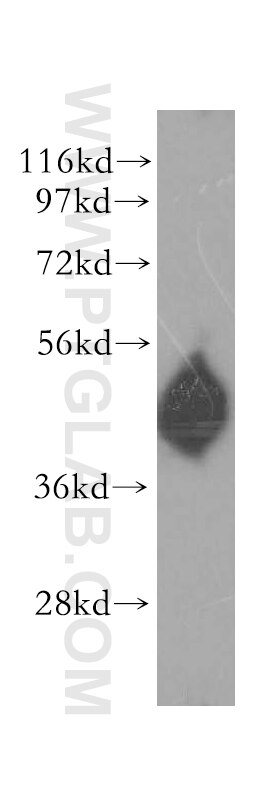
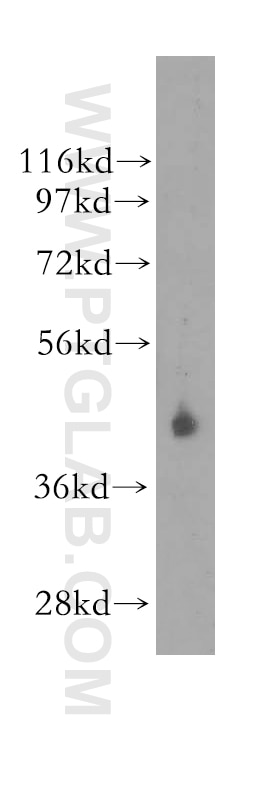
| Positive WB detected in | human spleen tissue, human plasma tissue |
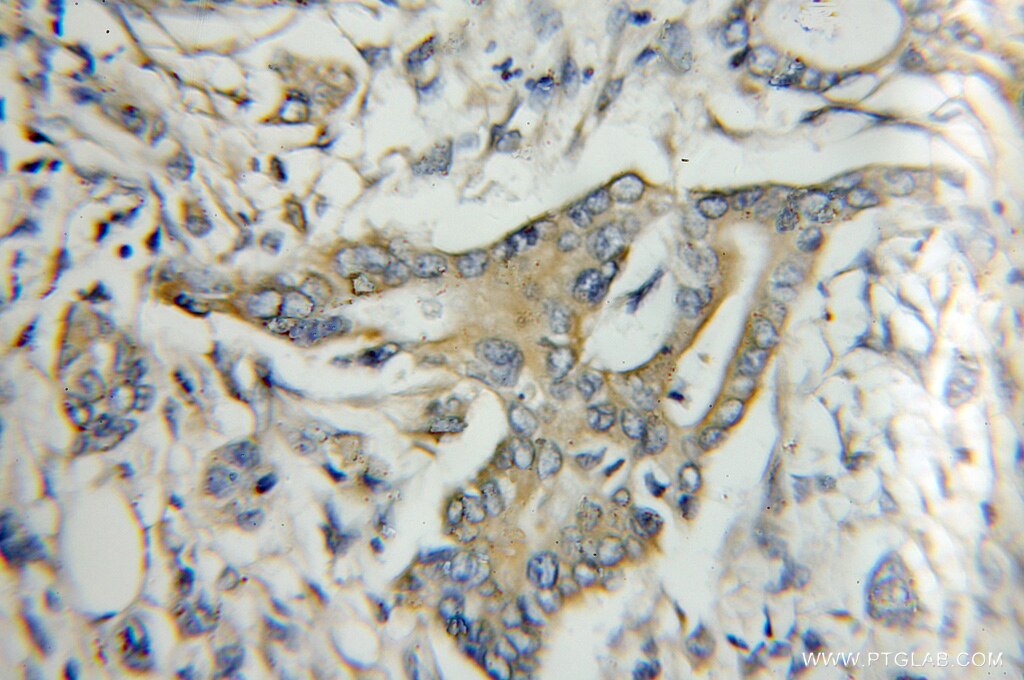
| Positive IHC detected in | human pancreas cancer tissue Note: suggested antigen retrieval with TE buffer pH 9.0; (*) Alternatively, antigen retrieval may be performed with citrate buffer pH 6.0 |
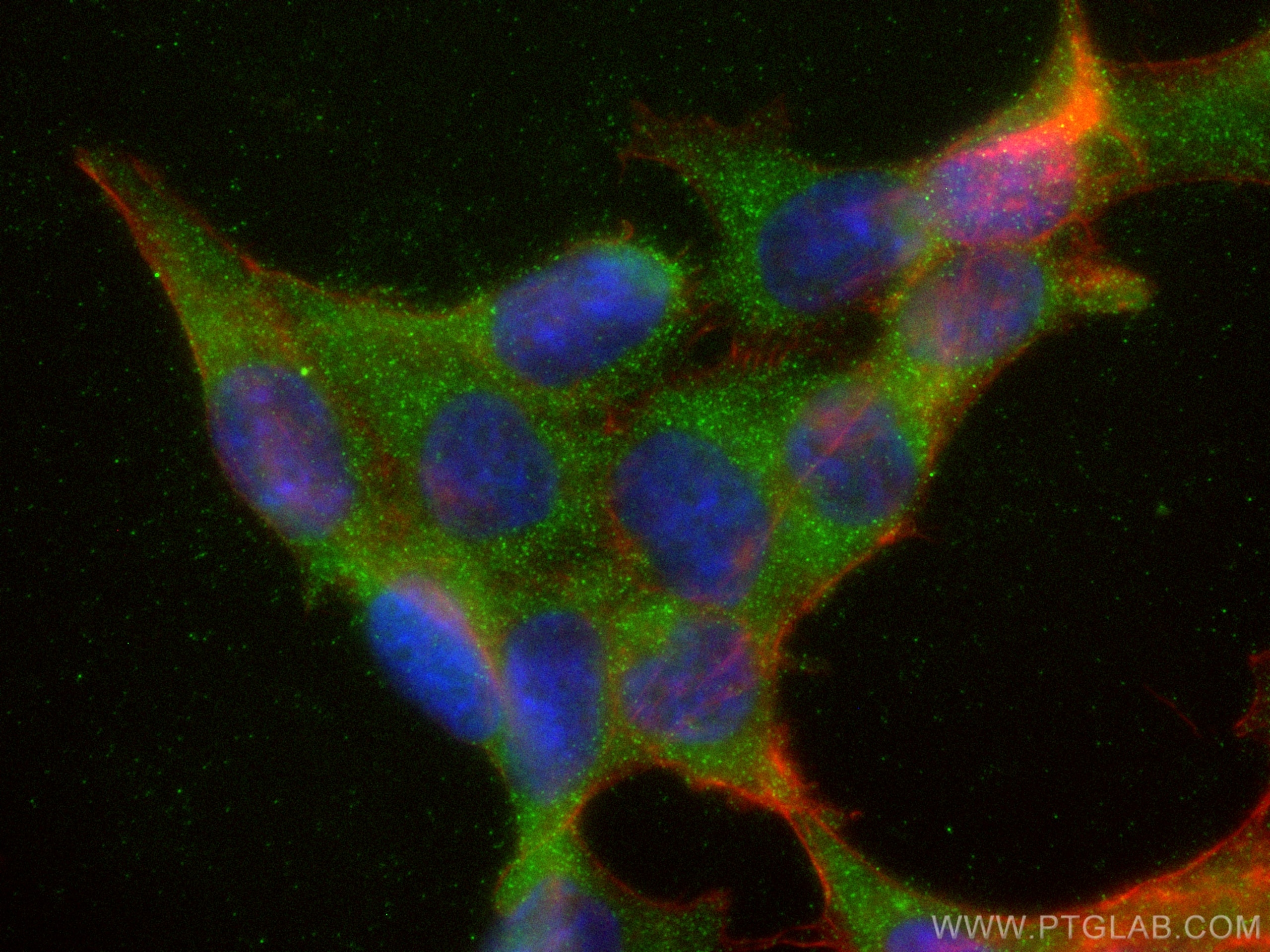
| Positive IF/ICC detected in | HCT 116 cells |
Recommended dilution
| Application | Dilution |
|---|---|
| Western Blot (WB) | WB : 1:500-1:2400 |
| Immunohistochemistry (IHC) | IHC : 1:20-1:200 |
| Immunofluorescence (IF)/ICC | IF/ICC : 1:50-1:500 |
| It is recommended that this reagent should be titrated in each testing system to obtain optimal results. | |
| Sample-dependent, Check data in validation data gallery. | |
Product Information
11430-2-AP targets Serpin A4/Kallistatin in WB, IHC, IF/ICC, ELISA applications and shows reactivity with human samples.
| Tested Reactivity | human |
| Cited Reactivity | mouse |
| Host / Isotype | Rabbit / IgG |
| Class | Polyclonal |
| Type | Antibody |
| Immunogen |
CatNo: Ag1962 Product name: Recombinant human SERPINA4 protein Source: e coli.-derived, PGEX-4T Tag: GST Domain: 21-427 aa of BC014992 Sequence: QLHVEHDGESCSNSSHQQILETGEGSPSLKIAPANADFAFRFYYLIASETPGKNIFFSPLSISAAYAMLSLGACSHSRSQILEGLGFNLTELSESDVHRGFQHLLHTLNLPGHGLETRVGSALFLSHNLKFLAKFLNDTMAVYEAKLFHTNFYDTVGTIQLINDHVKKETRGKIVDLVSELKKDVLMVLVNYIYFKALWEKPFISSRTTPKDFYVDENTTVRVPMMLQDQEHHWYLHDRYLPCSVLRMDYKGDATVFFILPNQGKMREIEEVLTPEMLMRWNNLLRKRNFYKKLELHLPKFSISGSYVLDQILPRLGFTDLFSKWADLSGITKQQKLEASKSFHKATLDVDEAGTEAAAATSFAIKFFSAQTNRHILRFNRPFLVVIFSTSTQSVLFLGKVVDPTKP Predict reactive species |
| Full Name | serpin peptidase inhibitor, clade A (alpha-1 antiproteinase, antitrypsin), member 4 |
| Calculated Molecular Weight | 49 kDa |
| Observed Molecular Weight | 49 kDa |
| GenBank Accession Number | BC014992 |
| Gene Symbol | Kallistatin |
| Gene ID (NCBI) | 5267 |
| RRID | AB_2185735 |
| Conjugate | Unconjugated |
| Form | Liquid |
| Purification Method | Antigen affinity purification |
| UNIPROT ID | P29622 |
| Storage Buffer | PBS with 0.02% sodium azide and 50% glycerol, pH 7.3. |
| Storage Conditions | Store at -20°C. Stable for one year after shipment. Aliquoting is unnecessary for -20oC storage. 20ul sizes contain 0.1% BSA. |
Background Information
Kallistatin is also named Serpin A4 and Peptidase inhibitor 4 (PI-4). Kallistatin was first identified in human plasma as a tissue kallikrein-binding protein and a serine proteinase inhibitor. Kallistatin via its two structural elements regulates differential signaling cascades, and thus a wide spectrum of biological functions (PMID: 28427524). Kallistatin via the active site promotes neovascularization by stimulating VEGF levels in endothelial progenitor cells. Second, kallistatin inhibits or induces apoptosis depending on cell types. Kallistatin via its heparin-binding site inhibits angiogenesis by blocking vascular endothelial growth factor (VEGF)-induced growth, migration and adhesion of endothelial cells. Kallistatin can act as an antioxidant or pro-oxidant (PMID: 28742513).
Protocols
| Product Specific Protocols | |
|---|---|
| IF protocol for Serpin A4/Kallistatin antibody 11430-2-AP | Download protocol |
| IHC protocol for Serpin A4/Kallistatin antibody 11430-2-AP | Download protocol |
| WB protocol for Serpin A4/Kallistatin antibody 11430-2-AP | Download protocol |
| Standard Protocols | |
|---|---|
| Click here to view our Standard Protocols |
Publications
What published studies show
The Serpin A4/Kallistatin Polyclonal antibody (Cat# 11430-2-AP) has 1 total citation. It was cited in the journal Diabetes (Impact Factor 9.3), in a study investigating the pathogenic role of diabetes-induced Kallistatin overexpression in corneal wound healing deficiency through inhibition of canonical Wnt signaling. The research field encompasses diabetes, corneal wound healing, and Wnt signaling pathway regulation. The antibody was applied in WB and IF in mouse samples.
| Species | Application | Title |
|---|---|---|
Diabetes Pathogenic Role of Diabetes-induced Overexpression of Kallistatin in Corneal Wound Healing Deficiency through Inhibition of Canonical Wnt Signaling. |





