

Tested Applications
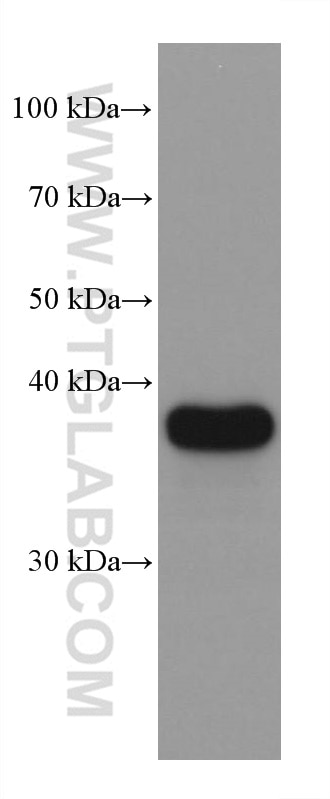
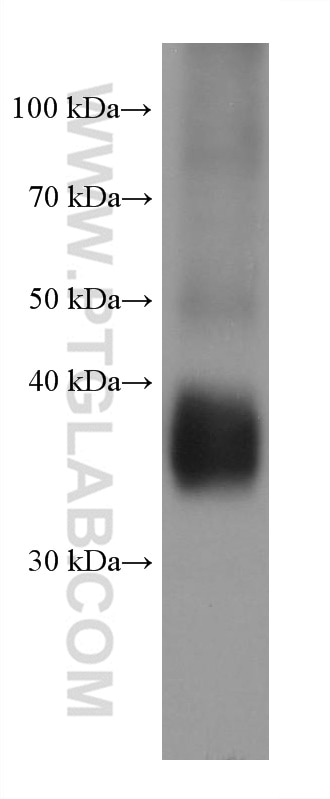
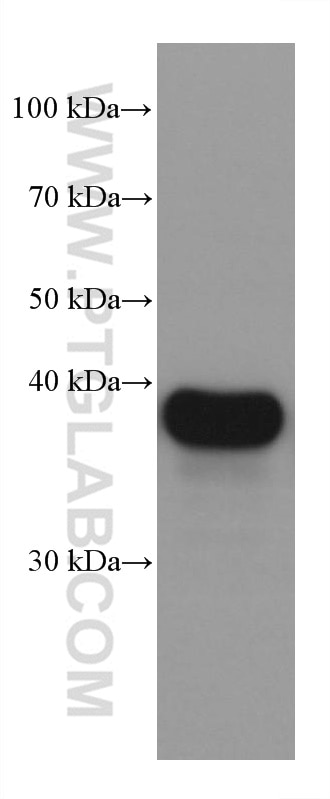
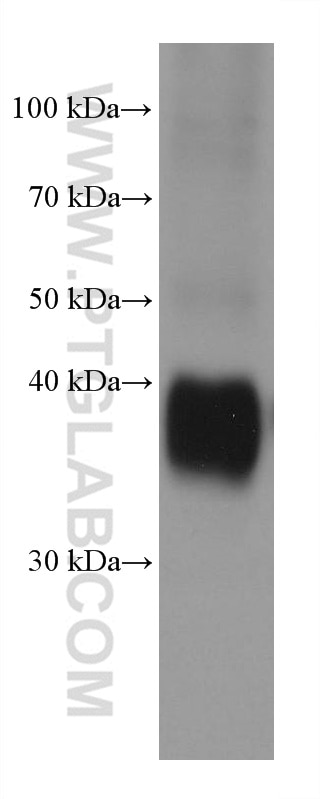
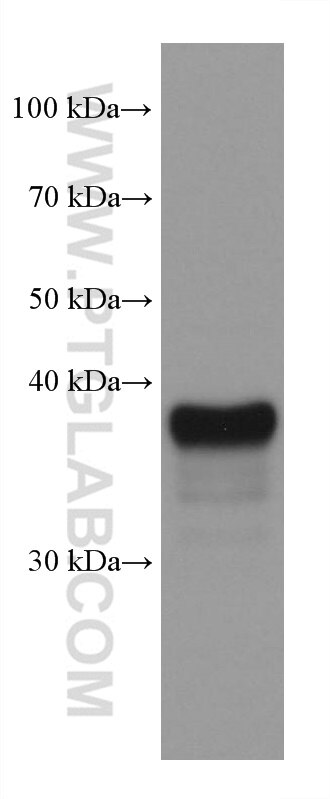
| Positive WB detected in | K-562 cells, human placenta tissue, Daudi cells, Raji cells, Ramos cells |
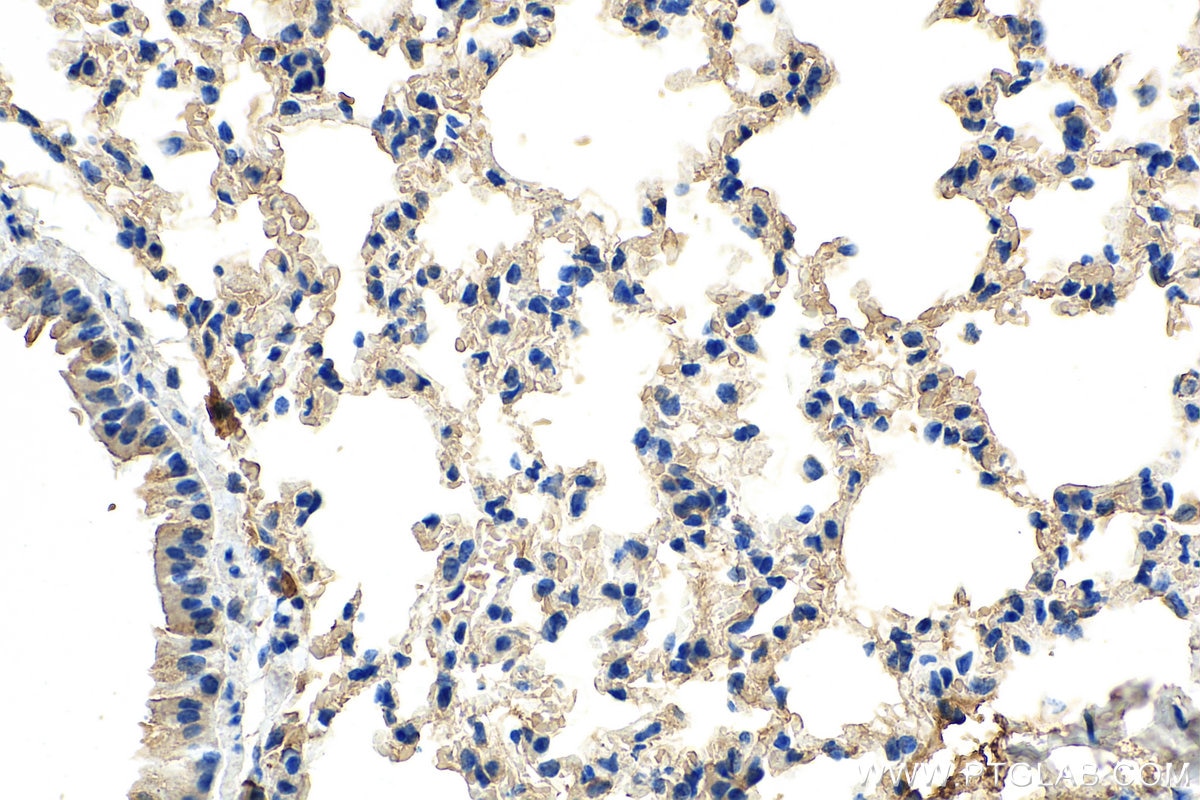
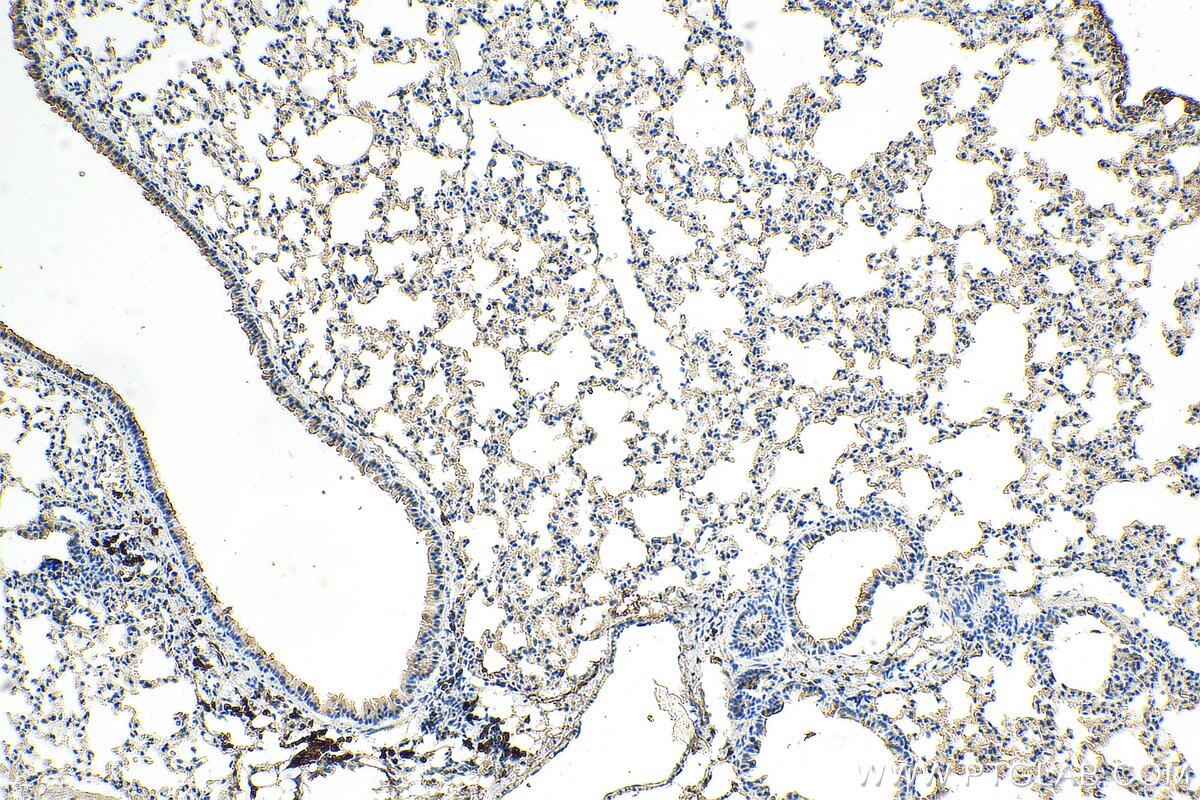
| Positive IHC detected in | mouse lung tissue Note: suggested antigen retrieval with TE buffer pH 9.0; (*) Alternatively, antigen retrieval may be performed with citrate buffer pH 6.0 |
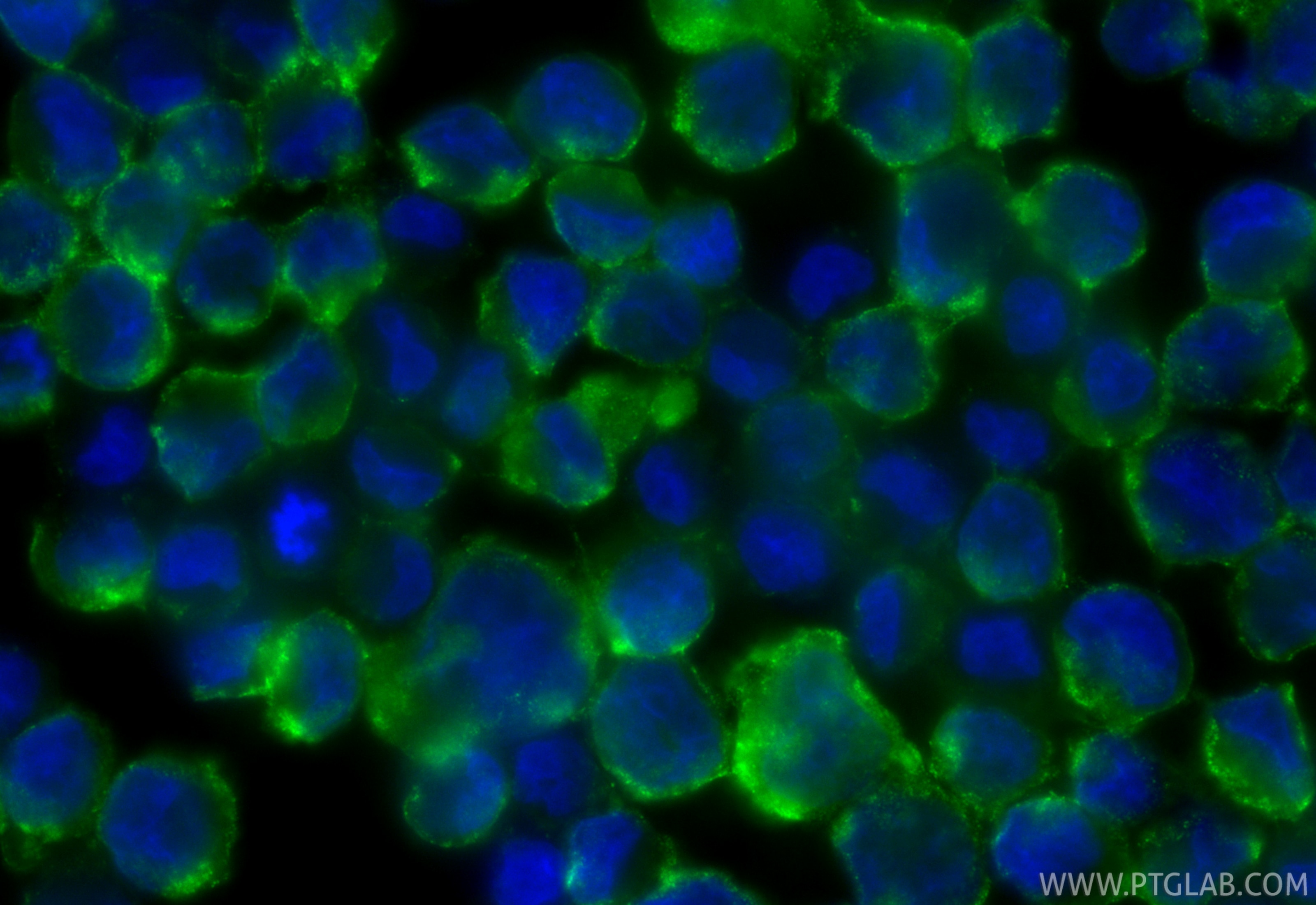
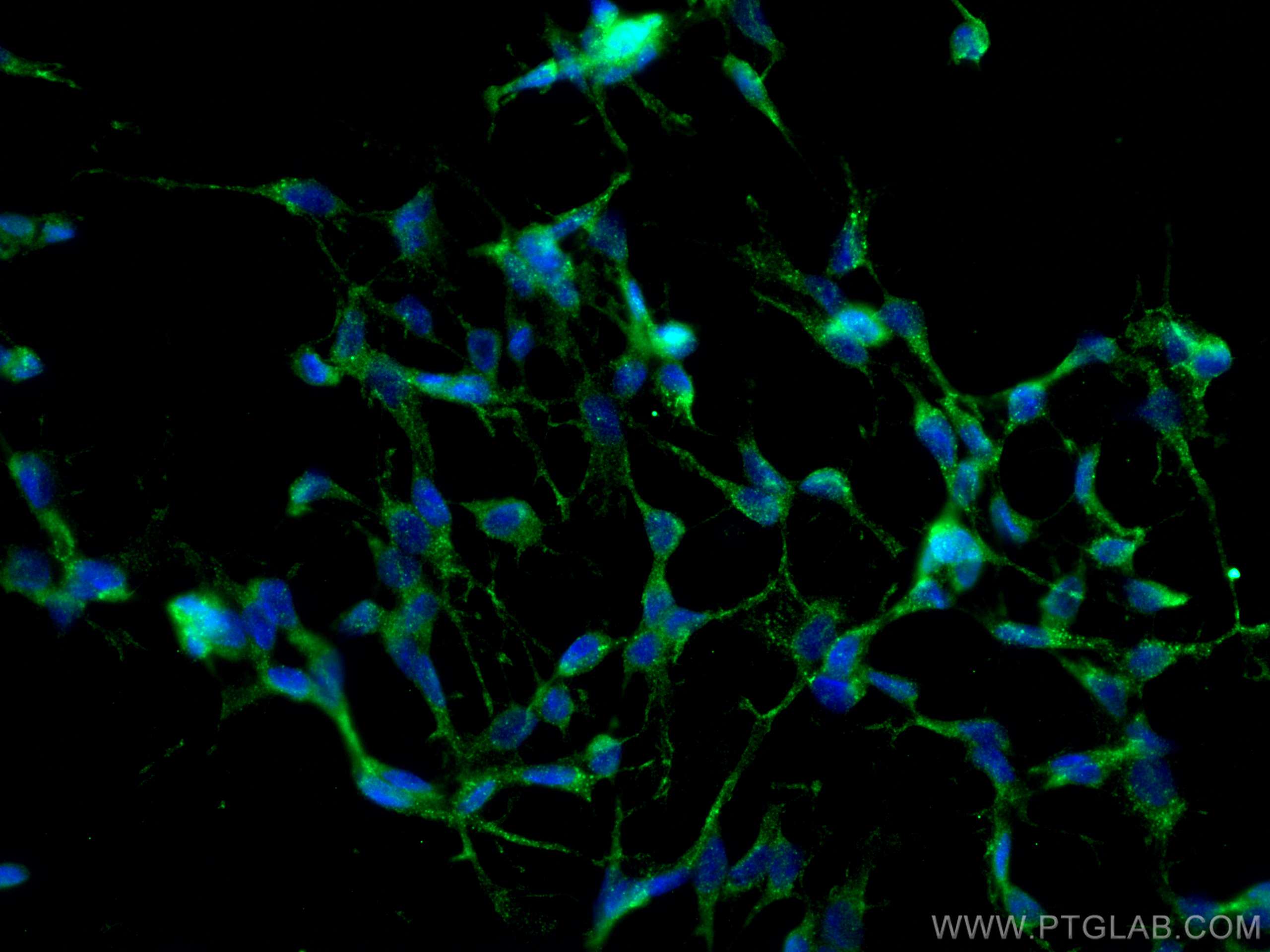
| Positive IF/ICC detected in | K-562 cells, C6 cells |
Recommended dilution
| Application | Dilution |
|---|---|
| Western Blot (WB) | WB : 1:5000-1:50000 |
| Immunohistochemistry (IHC) | IHC : 1:500-1:2000 |
| Immunofluorescence (IF)/ICC | IF/ICC : 1:400-1:1600 |
| It is recommended that this reagent should be titrated in each testing system to obtain optimal results. | |
| Sample-dependent, Check data in validation data gallery. | |
Product Information
67950-1-Ig targets SerpinB9 in WB, IHC, IF/ICC, ELISA applications and shows reactivity with human, mouse, rat samples.
| Tested Reactivity | human, mouse, rat |
| Cited Reactivity | human, mouse |
| Host / Isotype | Mouse / IgG1 |
| Class | Monoclonal |
| Type | Antibody |
| Immunogen |
CatNo: Ag6719 Product name: Recombinant human SERPINB9 protein Source: e coli.-derived, PET28a Tag: 6*His Domain: 1-376 aa of BC002538 Sequence: METLSNASGTFAIRLLKILCQDNPSHNVFCSPVSISSALAMVLLGAKGNTATQMAQALSLNTEEDIHRAFQSLLTEVNKAGTQYLLRTANRLFGEKTCQFLSTFKESCLQFYHAELKELSFIRAAEESRKHINTWVSKKTEGKIEELLPGSSIDAETRLVLVNAIYFKGKWNEPFDETYTREMPFKINQEEQRPVQMMYQEATFKLAHVGEVRAQLLELPYARKELSLLVLLPDDGVELSTVEKSLTFEKLTAWTKPDCMKSTEVEVLLPKFKLQEDYDMESVLRHLGIVDAFQQGKADLSAMSAERDLCLSKFVHKSFVEVNEEGTEAAAASSCFVVAECCMESGPRFCADHPFLFFIRHNRANSILFCGRFSSP Predict reactive species |
| Full Name | serpin peptidase inhibitor, clade B (ovalbumin), member 9 |
| Calculated Molecular Weight | 42 kDa |
| Observed Molecular Weight | 38 kDa |
| GenBank Accession Number | BC002538 |
| Gene Symbol | SERPINB9 |
| Gene ID (NCBI) | 5272 |
| RRID | AB_2918702 |
| Conjugate | Unconjugated |
| Form | Liquid |
| Purification Method | Protein G purification |
| UNIPROT ID | P50453 |
| Storage Buffer | PBS with 0.02% sodium azide and 50% glycerol, pH 7.3. |
| Storage Conditions | Store at -20°C. Stable for one year after shipment. Aliquoting is unnecessary for -20oC storage. 20ul sizes contain 0.1% BSA. |
Background Information
SerpinB9, also named as PI-9, belongs to the serpin family. SerpinB9 is an intracellular inhibitor of granzyme B (grB) that protects cytotoxic lymphocytes from grB-mediated death. It has a nucleo-cytoplasmic distribution and is produced in CD8+ T cells and natural killer cells (PMID: 28024184). Also, SerpinB9 is expressed by vascular SMCs and endothelial cells to avoid GZB-induced apoptosis (PMID: 28743062). The molecular weight of SerpinB9 is 42 kDa.
Protocols
| Product Specific Protocols | |
|---|---|
| IF protocol for SerpinB9 antibody 67950-1-Ig | Download protocol |
| IHC protocol for SerpinB9 antibody 67950-1-Ig | Download protocol |
| WB protocol for SerpinB9 antibody 67950-1-Ig | Download protocol |
| Standard Protocols | |
|---|---|
| Click here to view our Standard Protocols |
Publications
What published studies show
The SerpinB9 Monoclonal antibody (catalog #67950-1-Ig) has 5 total citations. They appear in Cell Death & Disease, Orphanet Journal of Rare Diseases, Immunotherapy, Journal of Cardiothoracic Surgery, and Frontiers in Immunology. The research fields covered include cancer biology (non-seminoma stemness/metastasis and dermatofibrosarcoma proteomics), immunotherapy (anti-PD-1-induced spinal cord injury), cardiovascular disease (atherosclerosis stress responses), and inflammatory bowel disease (Crohn's disease molecular signatures). Applications cited include IHC, IF, and WB across human and mouse models.
| Species | Application | Title |
|---|---|---|
Cell Death Dis Single-cell landscape identified SERPINB9 as a key player contributing to stemness and metastasis in non-seminomas
| ||
Orphanet J Rare Dis Proteomics-based approach reveals the involvement of spliceosomal components SF3B and SerpinB9 in dermatofibrosarcoma protuberans. | ||
Immunotherapy The development of anti-PD-1 antibody-induced spinal cord injury in bone marrow transplant C57BL/6 Rag1-/- mouse model | ||
J Cardiothorac Surg Single-cell sequencing combined with transcriptome sequencing to reveal the molecular mechanisms related to integrated stress responses in atherosclerosis. | ||
Front Immunol Identification of Crohn's disease-associated molecular signatures by integrative bioinformatics analysis and experimental validation. |










