

Tested Applications
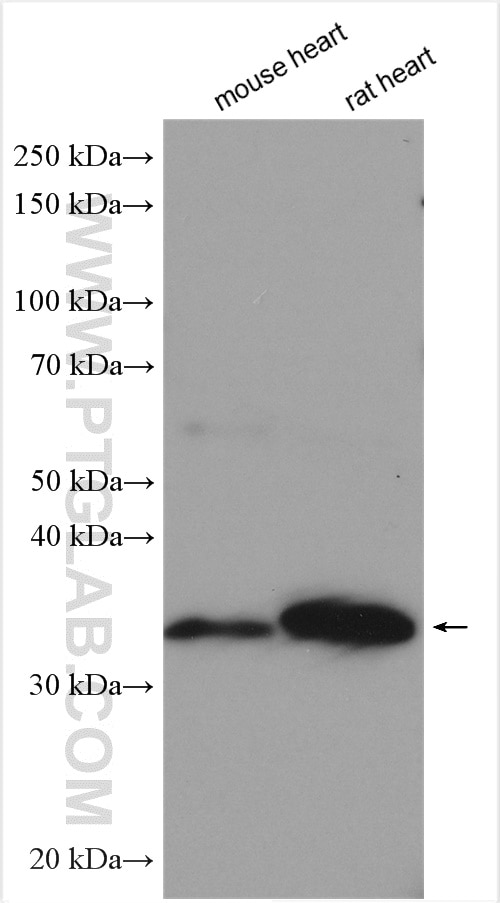
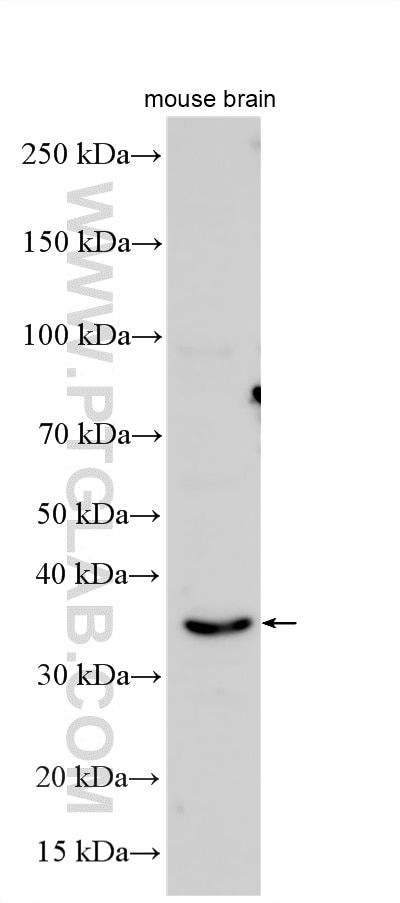
| Positive WB detected in | rat heart tissue, mouse brain tissue, mouse heart tissue |
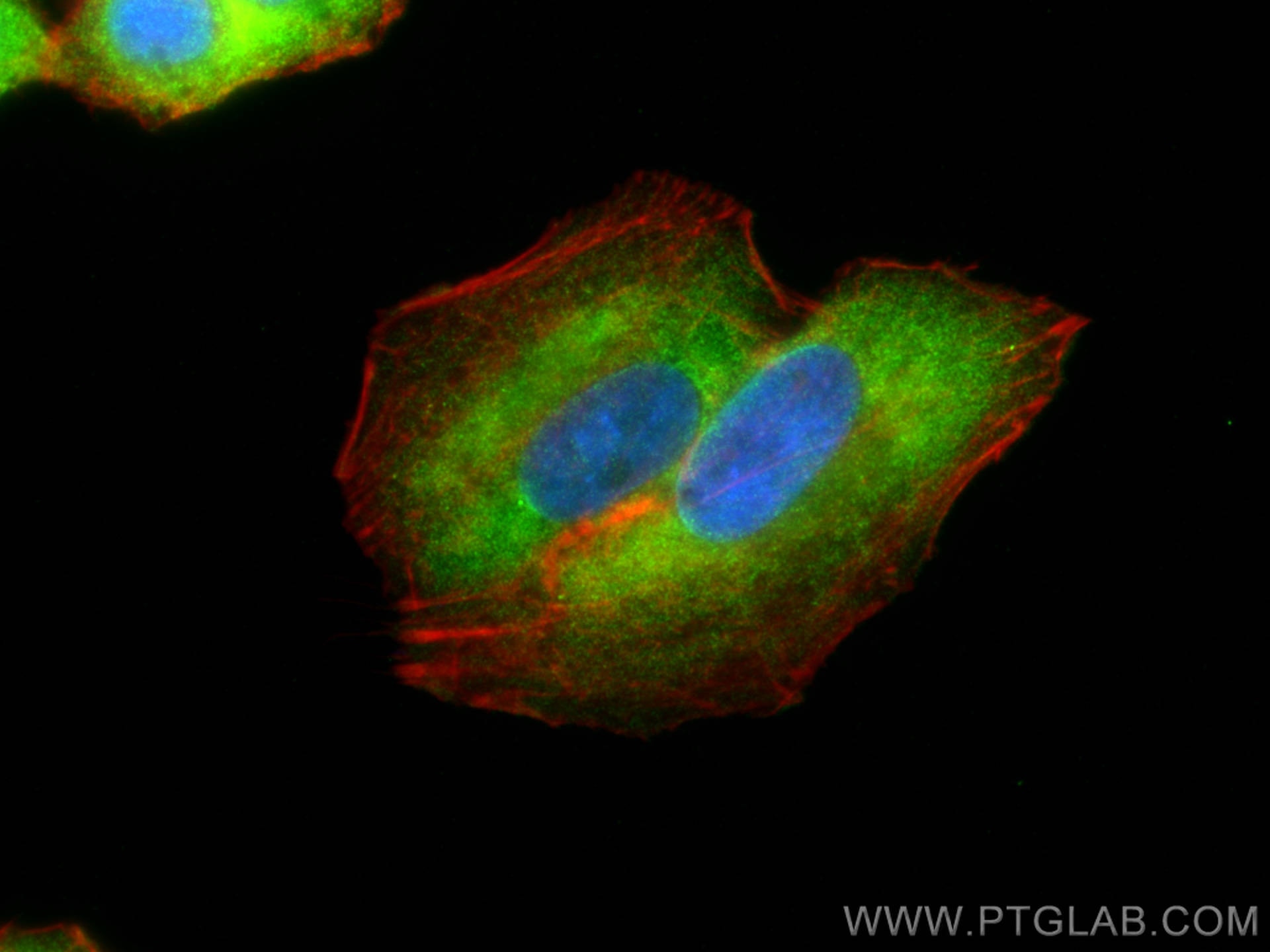
| Positive IF/ICC detected in | A549 cells |
Recommended dilution
| Application | Dilution |
|---|---|
| Western Blot (WB) | WB : 1:500-1:1000 |
| Immunofluorescence (IF)/ICC | IF/ICC : 1:200-1:800 |
| It is recommended that this reagent should be titrated in each testing system to obtain optimal results. | |
| Sample-dependent, Check data in validation data gallery. | |
Product Information
12189-1-AP targets SFRP2 in WB, IF/ICC, ELISA applications and shows reactivity with human, mouse, rat samples.
| Tested Reactivity | human, mouse, rat |
| Cited Reactivity | human, mouse, rabbit |
| Host / Isotype | Rabbit / IgG |
| Class | Polyclonal |
| Type | Antibody |
| Immunogen |
CatNo: Ag2853 Product name: Recombinant human SFRP2 protein Source: e coli.-derived, PGEX-4T Tag: GST Domain: 1-295 aa of BC008666 Sequence: MLQGPGSLLLLFLASHCCLGSARGLFLFGQPDFSYKRSNCKPIPVNLQLCHGIEYQNMRLPNLLGHETMKEVLEQAGAWIPLVMKQCHPDTKKFLCSLFAPVCLDDLDETIQPCHSLCVQVKDRCAPVMSAFGFPWPDMLECDRFPQDNDLCIPLASSDHLLPATEEAPKVCEACKNKNDDDNDIMETLCKNDFALKIKVKEITYINRDTKIILETKSKTIYKLNGVSERDLKKSVLWLKDSLQCTCEEMNDINAPYLVMGQKQGGELVITSVKRWQKGQREFKRISRSIRKLQC Predict reactive species |
| Full Name | secreted frizzled-related protein 2 |
| Calculated Molecular Weight | 295 aa, 34 kDa |
| Observed Molecular Weight | 33 kDa |
| GenBank Accession Number | BC008666 |
| Gene Symbol | SFRP2 |
| Gene ID (NCBI) | 6423 |
| RRID | AB_2254520 |
| Conjugate | Unconjugated |
| Form | Liquid |
| Purification Method | Antigen affinity purification |
| UNIPROT ID | Q96HF1 |
| Storage Buffer | PBS with 0.02% sodium azide and 50% glycerol, pH 7.3. |
| Storage Conditions | Store at -20°C. Stable for one year after shipment. Aliquoting is unnecessary for -20oC storage. 20ul sizes contain 0.1% BSA. |
Background Information
Secreted frizzled-related protein 2 (Sfrp2) is a secreted glycoprotein molecule containing an N terminal cysteine-rich domain, which is typically 30-50% identical to the putative Wnt-binding site of the frizzled receptor, and a C terminal heparin-binding domain with weak homology to netrins. It has been implicated in diverse cellular processes, including embryogenesis, regulation of cell apoptosis, and cell differentiation. Methylation of this gene is a potential marker for the presence of colorectal cancer.
Protocols
| Product Specific Protocols | |
|---|---|
| IF protocol for SFRP2 antibody 12189-1-AP | Download protocol |
| WB protocol for SFRP2 antibody 12189-1-AP | Download protocol |
| Standard Protocols | |
|---|---|
| Click here to view our Standard Protocols |
Publications
What published studies show
The anti-SFRP2 antibody (Cat# 12189-1-AP) has 13 total citations spanning journals including Cell Research, British Journal of Cancer, Breast Cancer Research, Scientific Reports, Biomedical Pharmacotherapy, Frontiers in Oncology, Cell Immunology, PLoS One, Biochemical and Biophysical Research Communications, Physiological Genomics, Psychiatry Investigation, Noncoding RNA Research, and Aging Cell. Research fields cover Wnt/β-catenin signaling, hepatocellular carcinoma, thyroid cancer, breast cancer, hair follicle biology, spermatogenesis, hematopoiesis, muscle fibrosis, ulcerative colitis, and autism-related neurobiology.
| Species | Application | Title |
|---|---|---|
Cell Res Comprehensive profiling reveals mechanisms of SOX2-mediated cell fate specification in human ESCs and NPCs. | ||
Br J Cancer KSRP-mediated Wnt/β-catenin activation promotes follicular thyroid cancer progression and stemness | ||
Breast Cancer Res Secreted frizzled-related protein 2 monoclonal antibody-mediated IFN-ϒ reprograms tumor-associated macrophages to suppress triple negative breast cancer. | ||
Noncoding RNA Res Exosomal miRNA-218-5p derived from low-passage dermal papilla cells modulates hair follicle growth and development. | ||
Sci Rep The role of dexamethasone in mediating the contradictory effects of Wnt antagonists SFRP2 and SFRP3 on human hair follicle growth | ||
Biomed Pharmacother MicroRNA-500a promotes migration and invasion in hepatocellular carcinoma by activating the Wnt/β-catenin signaling pathway. |




