

Tested Applications
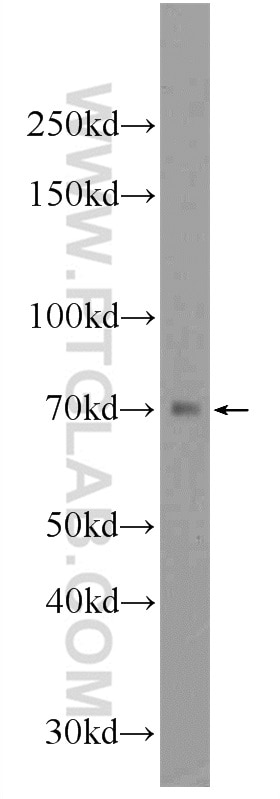
| Positive WB detected in | mouse kidney tissue |
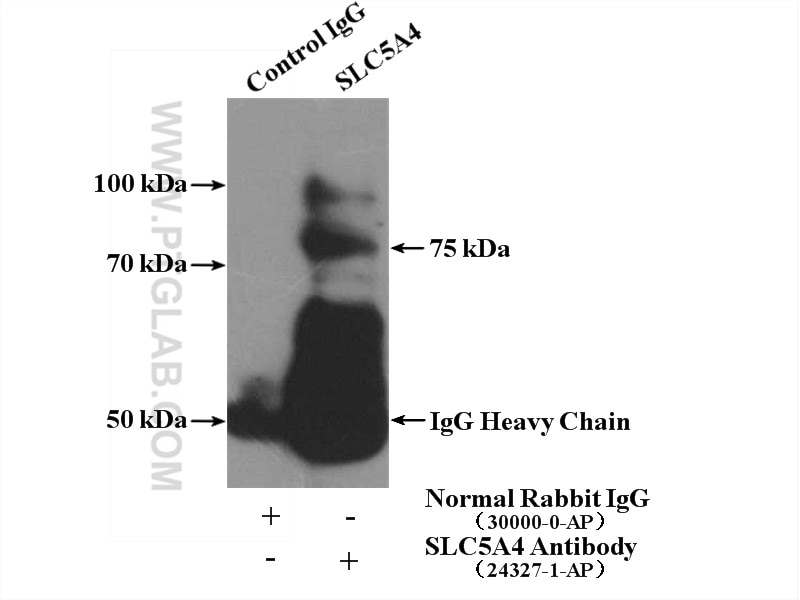
| Positive IP detected in | mouse kidney tissue |
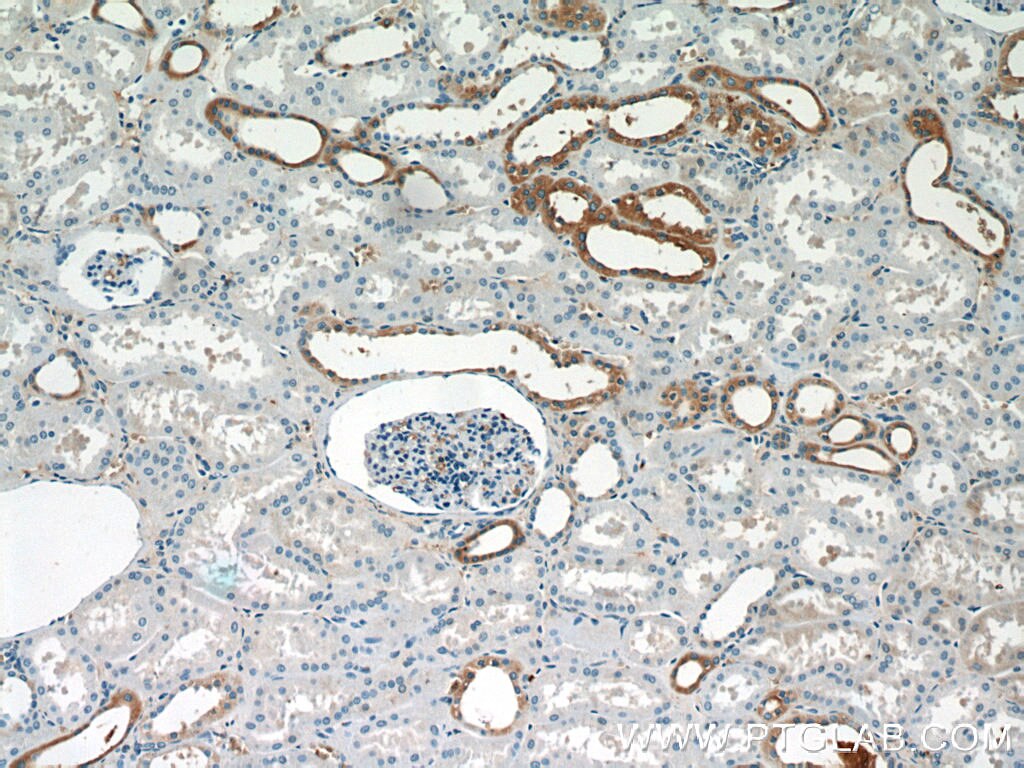
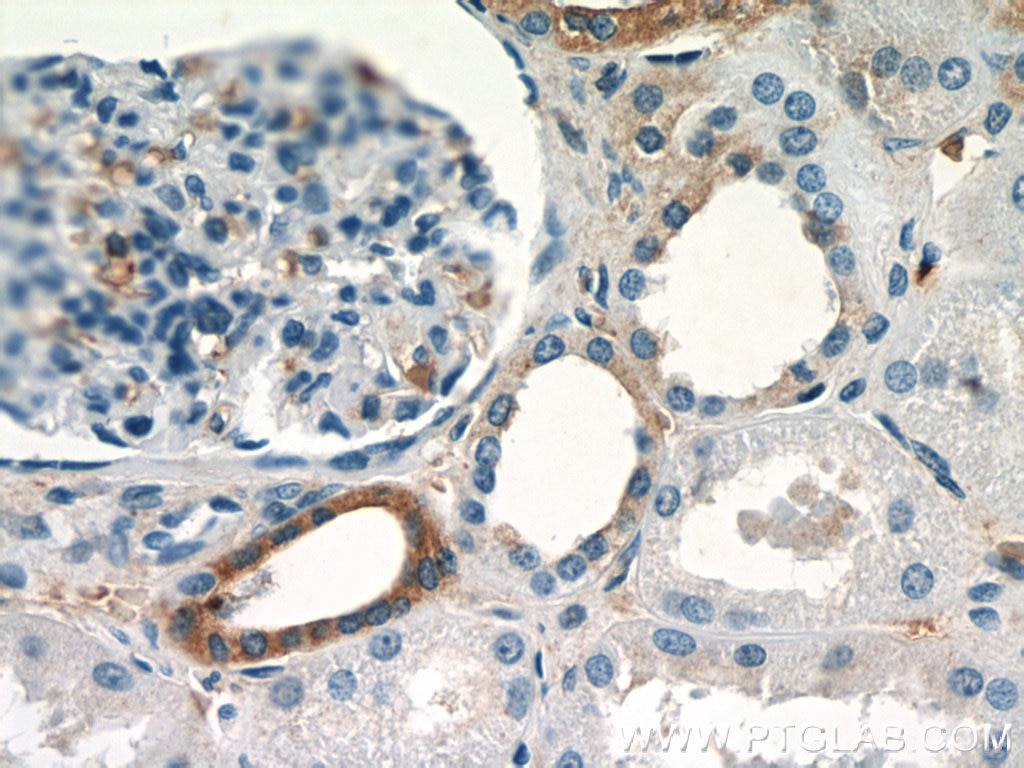
| Positive IHC detected in | human kidney tissue Note: suggested antigen retrieval with TE buffer pH 9.0; (*) Alternatively, antigen retrieval may be performed with citrate buffer pH 6.0 |
Recommended dilution
| Application | Dilution |
|---|---|
| Western Blot (WB) | WB : 1:500-1:2000 |
| Immunoprecipitation (IP) | IP : 0.5-4.0 ug for 1.0-3.0 mg of total protein lysate |
| Immunohistochemistry (IHC) | IHC : 1:20-1:200 |
| It is recommended that this reagent should be titrated in each testing system to obtain optimal results. | |
| Sample-dependent, Check data in validation data gallery. | |
Product Information
24327-1-AP targets SGLT3/SLC5A4 in WB, IHC, IF, IP, ELISA applications and shows reactivity with human, mouse, rat samples.
| Tested Reactivity | human, mouse, rat |
| Cited Reactivity | human, mouse |
| Host / Isotype | Rabbit / IgG |
| Class | Polyclonal |
| Type | Antibody |
| Immunogen |
CatNo: Ag19391 Product name: Recombinant human SLC5A4 protein Source: e coli.-derived, PET28a Tag: 6*His Domain: 579-633 aa of BC153069 Sequence: SQEETDDGVEEDYPEKSRGCLKKAYDLFCGLQKGPKLTKEEEEALSKKLTDTSER Predict reactive species |
| Full Name | solute carrier family 5 (low affinity glucose cotransporter), member 4 |
| Calculated Molecular Weight | 659 aa, 72 kDa |
| Observed Molecular Weight | 60-70 kDa |
| GenBank Accession Number | BC153069 |
| Gene Symbol | SGLT3 |
| Gene ID (NCBI) | 6527 |
| RRID | AB_2650519 |
| Conjugate | Unconjugated |
| Form | Liquid |
| Purification Method | Antigen affinity purification |
| UNIPROT ID | Q9NY91 |
| Storage Buffer | PBS with 0.02% sodium azide and 50% glycerol, pH 7.3. |
| Storage Conditions | Store at -20°C. Stable for one year after shipment. Aliquoting is unnecessary for -20oC storage. 20ul sizes contain 0.1% BSA. |
Background Information
SLC5A4, also known as SGLT3, is a sugar sensor that depolarizes the plasma membrane in response to external glucose (PMID: 12748858, 20421923). SGLT3 mediates the influx of sodium ions into the cell but does not transport sugars, also potently activated by imino sugars such as deoxynojirimycin (PMID: 22766068, 13130073). SGLT3 is a plasma membrane protein, shares 70% identity with SGLT1, and is expressed in the small intestine (cholinergic neurons), skeletal muscle, kidney, uterus, and testis (PMID: 12748858). SGLT3 protein at apparent molecular masses of 72 kDa and 80 kDa in human kidney tissue and HK-2 cells (PMID: 22766068).
Protocols
| Product Specific Protocols | |
|---|---|
| IHC protocol for SGLT3/SLC5A4 antibody 24327-1-AP | Download protocol |
| IP protocol for SGLT3/SLC5A4 antibody 24327-1-AP | Download protocol |
| WB protocol for SGLT3/SLC5A4 antibody 24327-1-AP | Download protocol |
| Standard Protocols | |
|---|---|
| Click here to view our Standard Protocols |
Publications
What published studies show
The SGLT3/SLC5A4 Polyclonal antibody (Cat# 24327-1-AP) has 4 total citations published in Life Sciences, Foods, International Journal of Environmental Research and Public Health, and PLoS One. The associated research fields include obesity and glucolipid metabolic dysfunction, intestinal gluconeogenesis and microbiome regulation, sodium glucose transporter expression in autism models, and sweat glucose/GLUT2 expression in atopic dermatitis.
| Species | Application | Title |
|---|---|---|
Life Sci Intestinal sodium/glucose cotransporter 3 expression is epithelial and downregulated in obesity. | ||
Foods Eurotium cristatum Ameliorates Glucolipid Metabolic Dysfunction of Obese Mice in Association with Regulating Intestinal Gluconeogenesis and Microbiome. | ||
Int J Environ Res Public Health Involvement of Intestinal Goblet Cells and Changes in Sodium Glucose Transporters Expression: Possible Therapeutic Targets in Autistic BTBR T+Itpr3tf/J Mice. | ||
PLoS One Sweat glucose and GLUT2 expression in atopic dermatitis: Implication for clinical manifestation and treatment. |





