
Product Information
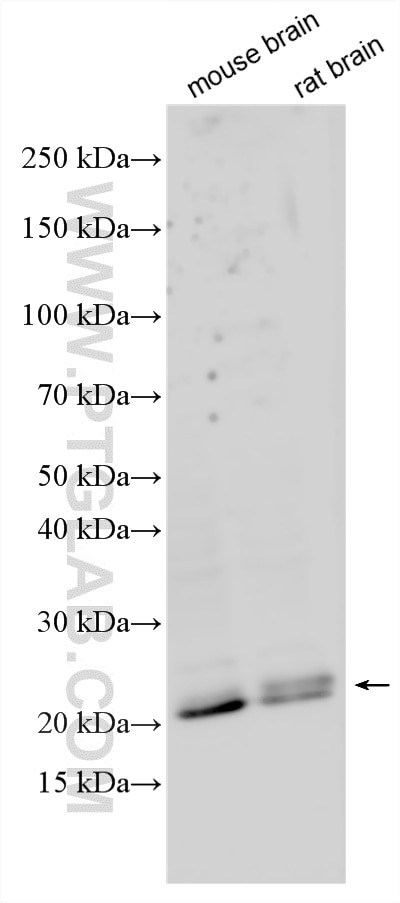
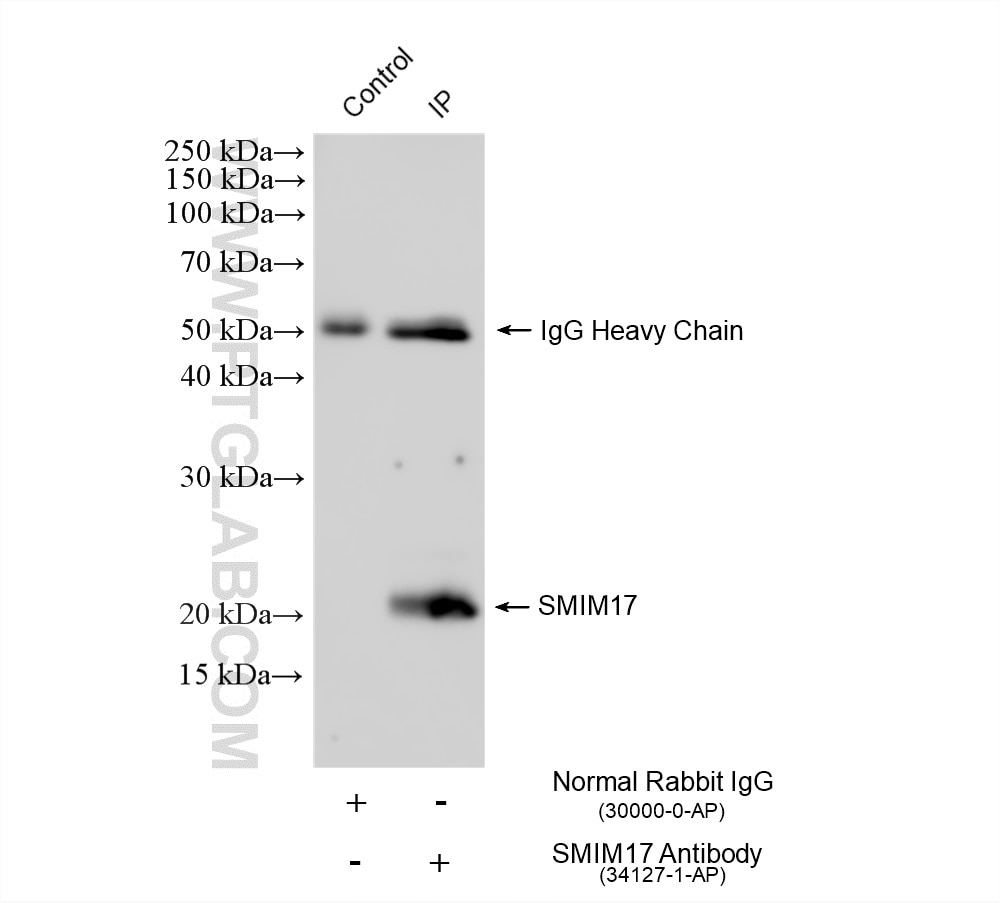
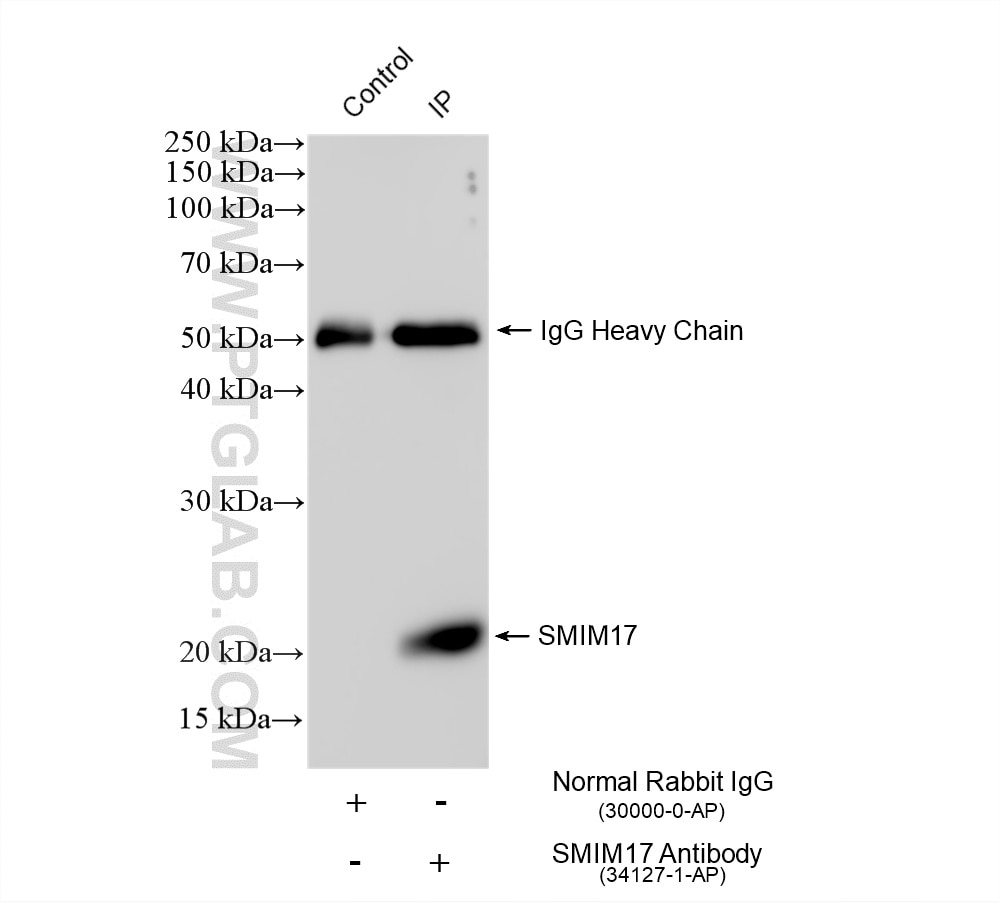
34127-1-PBS targets SMIM17 in WB, IP, Indirect ELISA applications and shows reactivity with human, mouse, rat samples.
| Tested Reactivity | human, mouse, rat |
| Host / Isotype | Rabbit / IgG |
| Class | Polyclonal |
| Type | Antibody |
| Immunogen |
CatNo: Ag41690 Product name: Recombinant human SMIM17 protein Source: e coli.-derived, PGEX-4T Tag: GST Domain: 1-95 aa of NM_001193628 Sequence: MQSLRPEQTRGLLEPERTKTLLPRESRAWEKPPHPACTKDWEAVEVGASSHDSDEKDLSSQETGLSQEWSSVEEDDESEGSQGFVEWSKAPQQTT Predict reactive species |
| Full Name | hypothetical protein LOC147670 |
| Calculated Molecular Weight | 118aa, 13 kDa |
| Observed Molecular Weight | 20 kDa |
| GenBank Accession Number | NM_001193628 |
| Gene Symbol | LOC147670 |
| Gene ID (NCBI) | 147670 |
| RRID | AB_3743158 |
| Conjugate | Unconjugated |
| Form | Liquid |
| Purification Method | Antigen affinity Purification |
| UNIPROT ID | P0DL12 |
| Storage Buffer | PBS only, pH 7.3. |
| Storage Conditions | Store at -80°C. |
Background Information
SMIM17 (Small Integral Membrane Protein 17) encodes a small integral membrane protein. It is predominantly expressed in the brain, with elevated levels in inhibitory and excitatory neurons, bipolar cells, and astrocytes. SMIM17 has been linked to endoplasmic reticulum‑stress‑induced apoptosis through its interaction with TMEM214 and CASP4, and has been suggested to play a role in neuronal synaptic function. Although its precise biological function remains largely unknown, it is considered a promising target for future neurobiological studies. SMIM17 is not currently recognized as a therapeutic drug target but has been identified in fusion events (e.g., AKT2‑SMIM17) in sarcoma and shows altered expression in certain cancers, making it a gene of interest in both basic neuroscience and oncology research.




