
Product Information
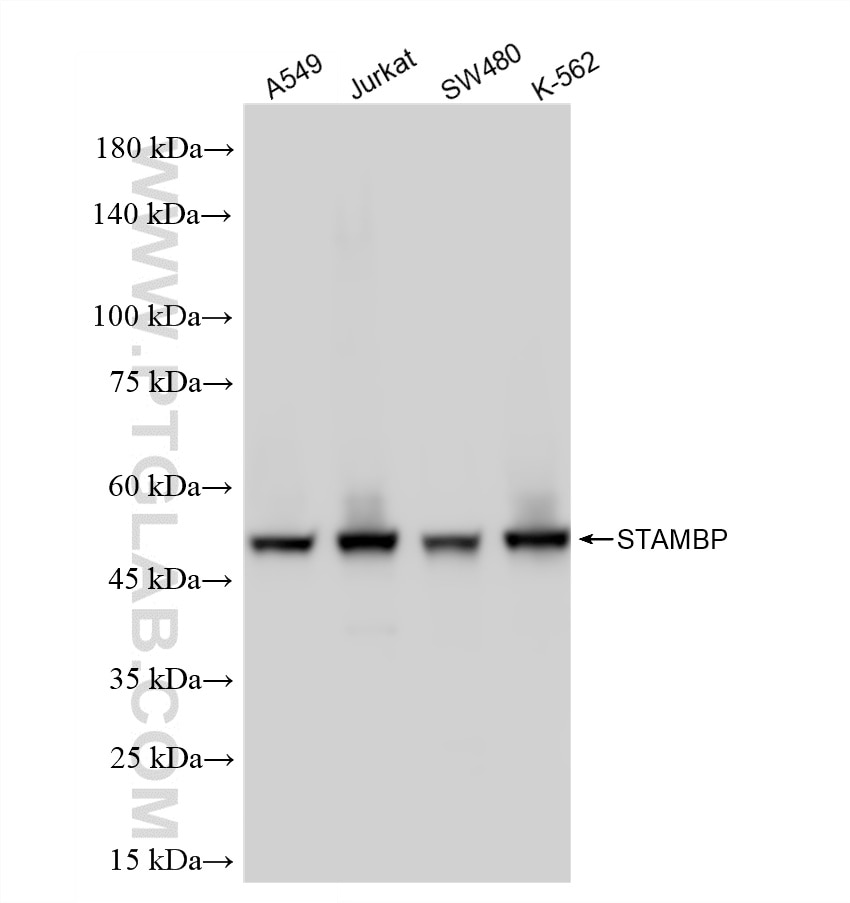
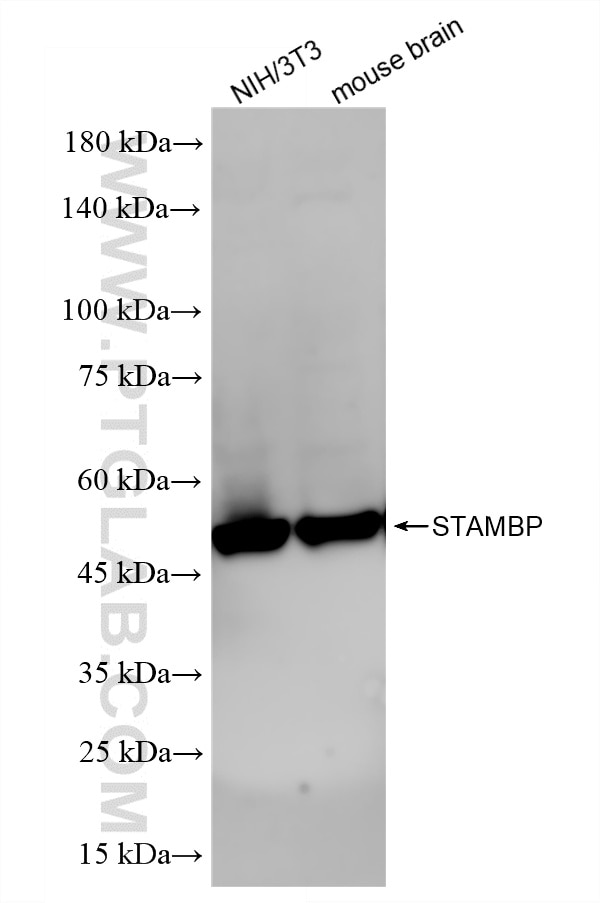
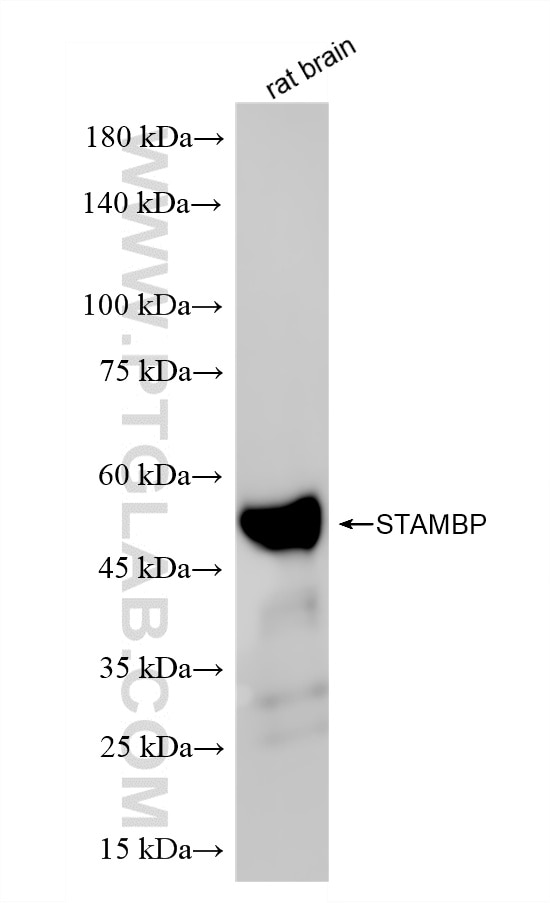
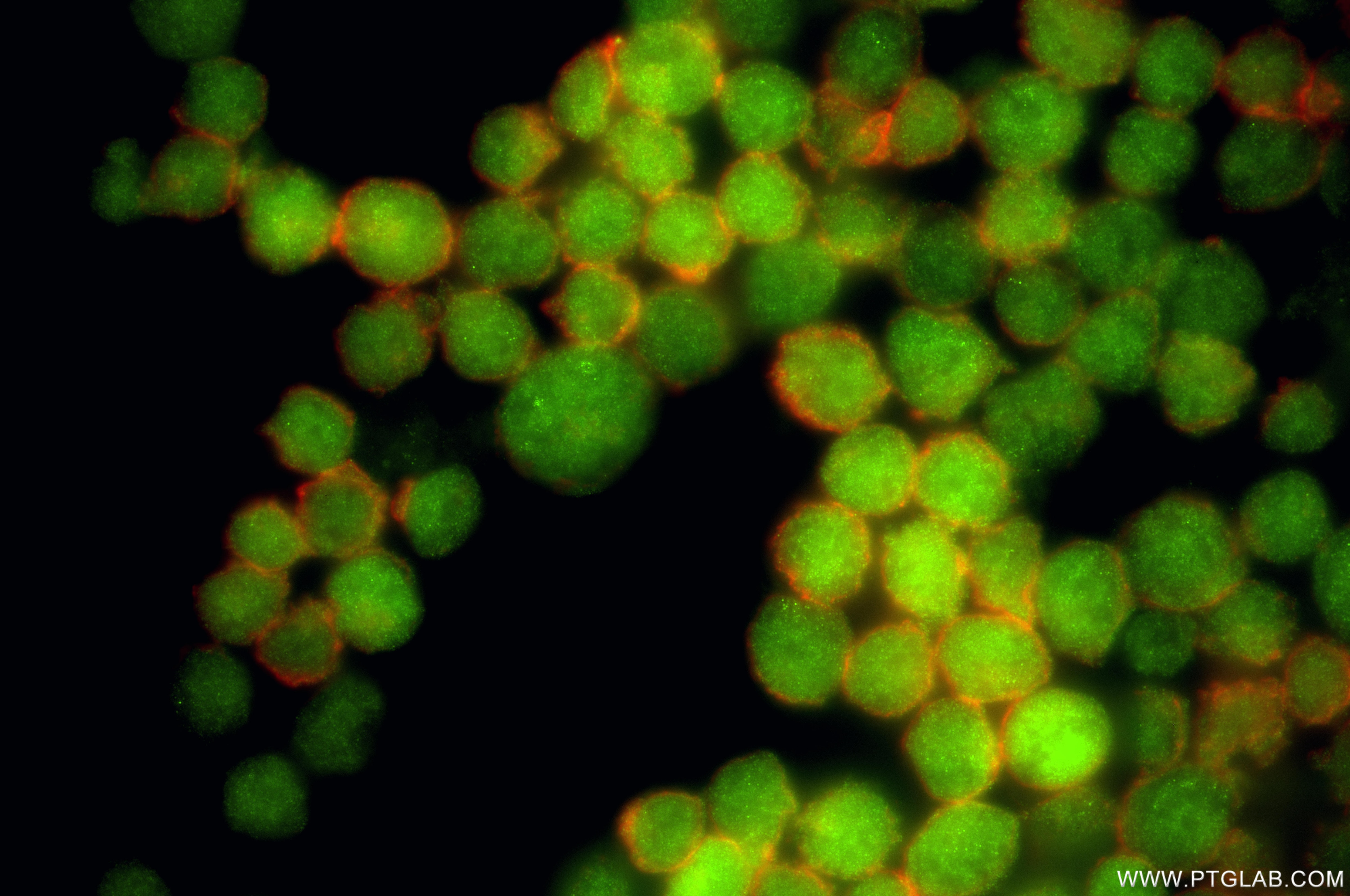
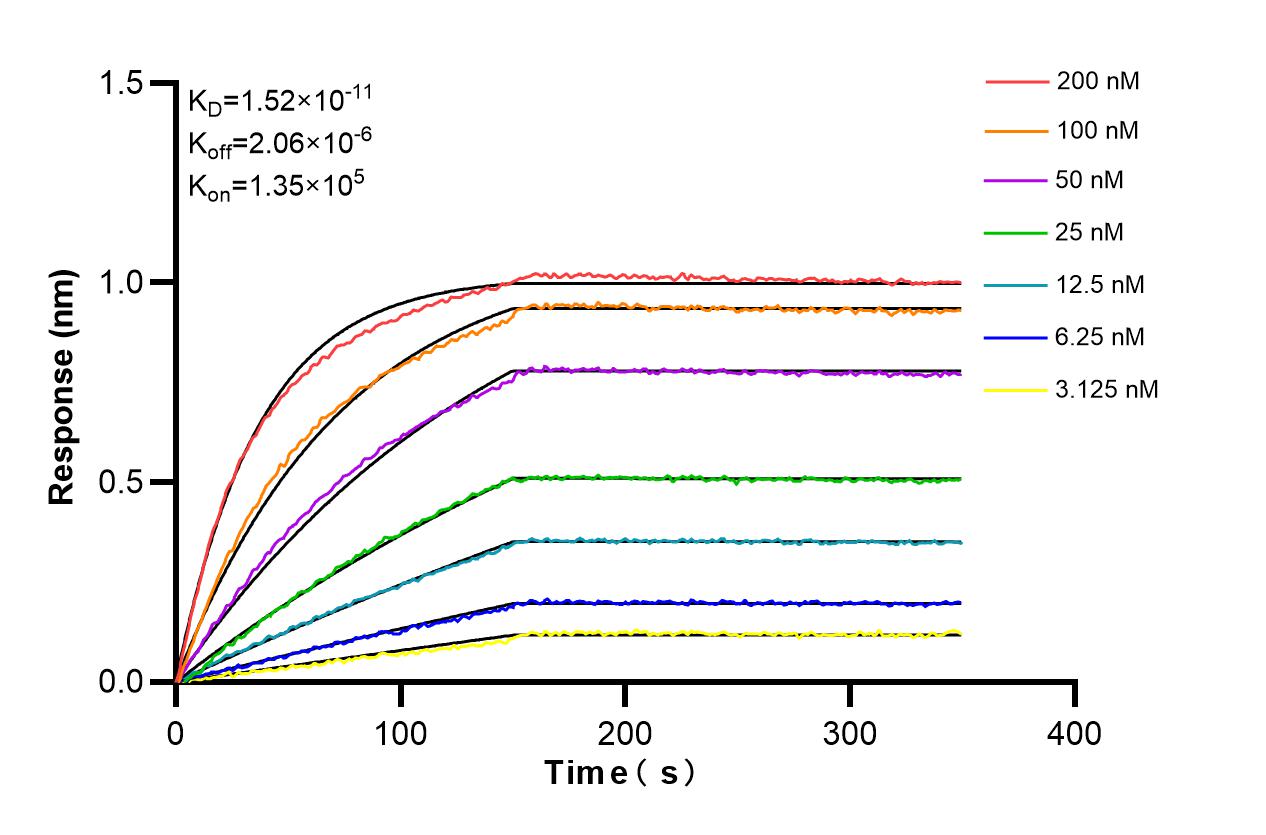
86601-3-PBS targets STAMBP in WB, IF/ICC, Indirect ELISA applications and shows reactivity with human, mouse, rat samples.
| Tested Reactivity | human, mouse, rat |
| Host / Isotype | Rabbit / IgG |
| Class | Recombinant |
| Type | Antibody |
| Immunogen |
CatNo: Ag1895 Product name: Recombinant human STAMBP protein Source: e coli.-derived, PKG Tag: GST Domain: 124-424 aa of BC007682 Sequence: EKKKEAEELARNMAIQQELEKEKQRVAQQKQQQLEQEQFHAFEEMIRNQELEKERLKIVQEFGKVDPGLGGPLVPDLEKPSLDVFPTLTVSSIQPSDCHTTVRPAKPPVVDRSLKPGALSNSESIPTIDGLRHVVVPGRLCPQFLQLASANTARGVETCGILCGKLMRNEFTITHVLIPKQSAGSDYCNTENEEELFLIQDQQGLITLGWIHTHPTQTAFLSSVDLHTHCSYQMMLPESVAIVCSPKFQETGFFKLTDHGLEEISSCRQKGFHPHSKDPPLFCSCSHVTVVDRAVTITDLR Predict reactive species |
| Full Name | STAM binding protein |
| Calculated Molecular Weight | 48 kDa |
| Observed Molecular Weight | 48 kDa |
| GenBank Accession Number | BC007682 |
| Gene Symbol | STAMBP |
| Gene ID (NCBI) | 10617 |
| RRID | AB_3744997 |
| Conjugate | Unconjugated |
| Form | Liquid |
| Purification Method | Protein A purification |
| UNIPROT ID | O95630 |
| Storage Buffer | PBS only, pH 7.3. |
| Storage Conditions | Store at -80°C. |
Background Information
STAM-binding protein (STAMBP) is also named AMSH. STAMBP, a member of the Jab1/MPN metalloenzyme family of deubiquitinating enzymes (DUBs), specifically cleaves K63-linked polyubiquitination chains from substrates (PMID: 15314065, PMID: 26601948). STAMBP is implicated in the endosome-lysosome pathway and shuttles ubiquitinated substrate proteins to lysosomes for degradation (PMID: 10383417, PMID: 24151880). STAMBP regulates protein degradation by binding to the ESCRT-0 protein STAM and the charged multivesicular body proteins of the ESCRT-III complex (PMID: 20159979). STAMBP is implicated in the inflammatory response by promoting the deubiquitination and stabilization of NALP7 and increasing the activity of inflammasomes (PMID: 28492230). STAMBP expression was increased in the cytoplasm of tumor cells from LUAD patients. STAMBP overexpression promoted cell migration and invasion, whereas STAMBP knockdown attenuated these processes in LUAD cells after epidermal growth factor treatment (PMID: 3410245).






