

Tested Applications
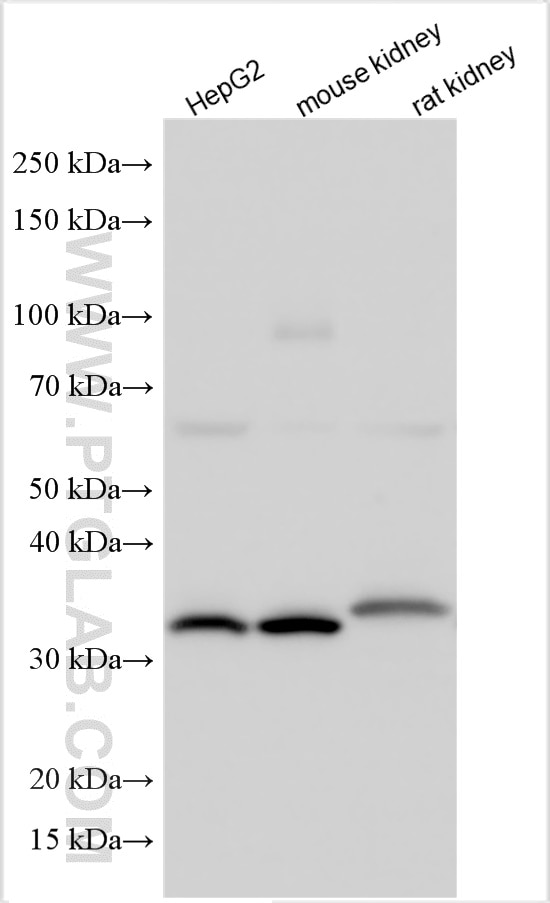
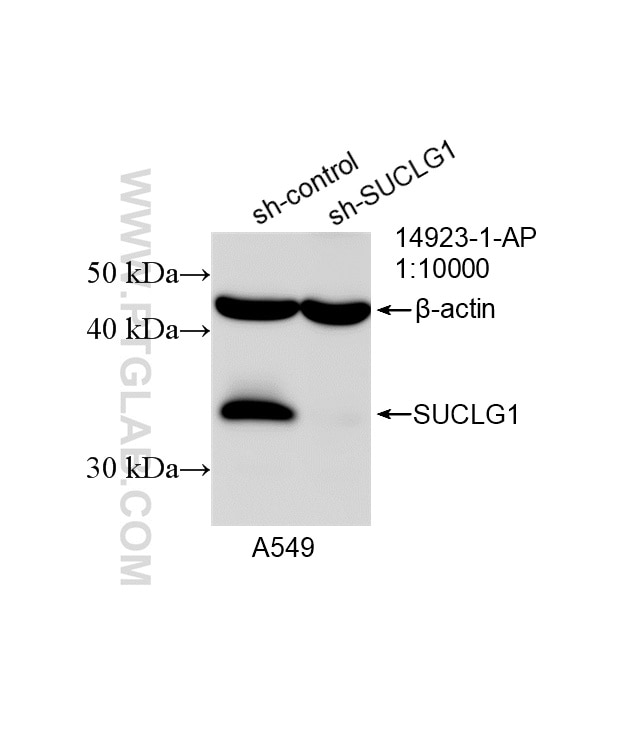
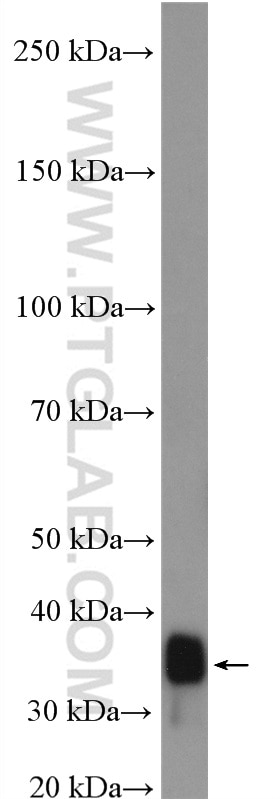
| Positive WB detected in | HepG2 cells, rat liver tissue, A549 cells |
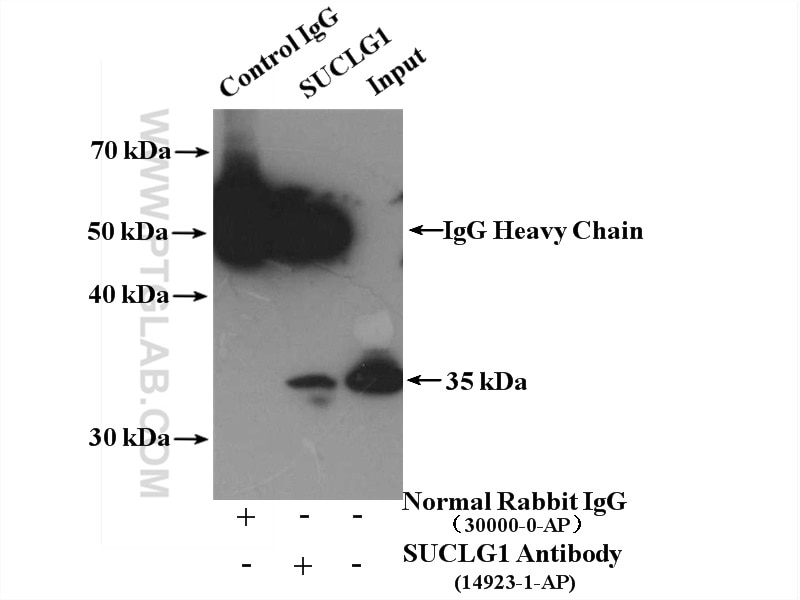
| Positive IP detected in | mouse kidney tissue |
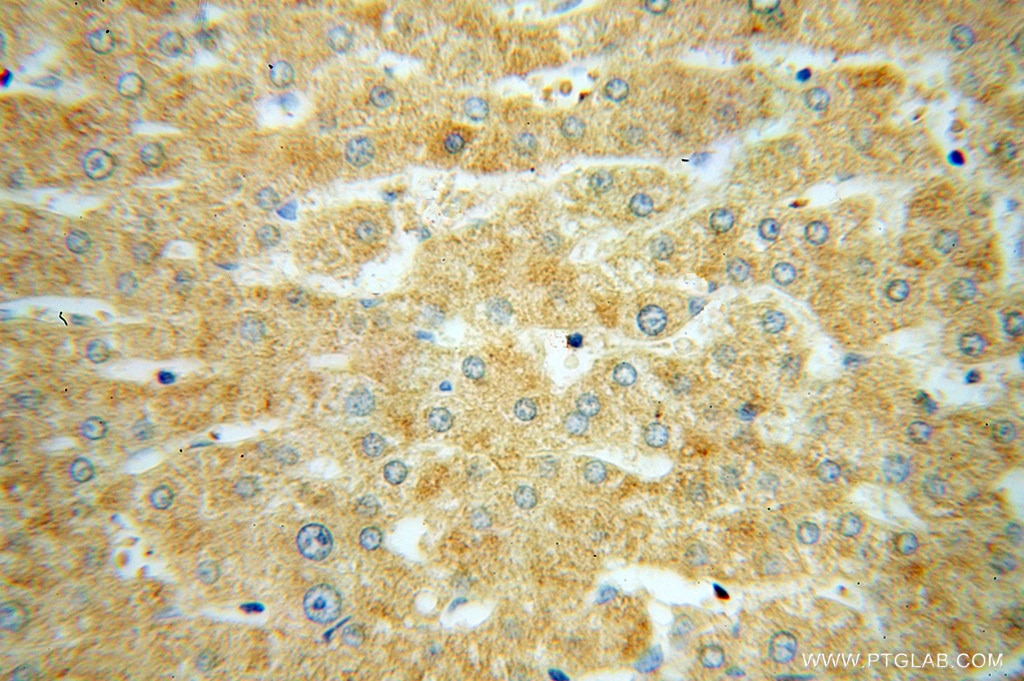
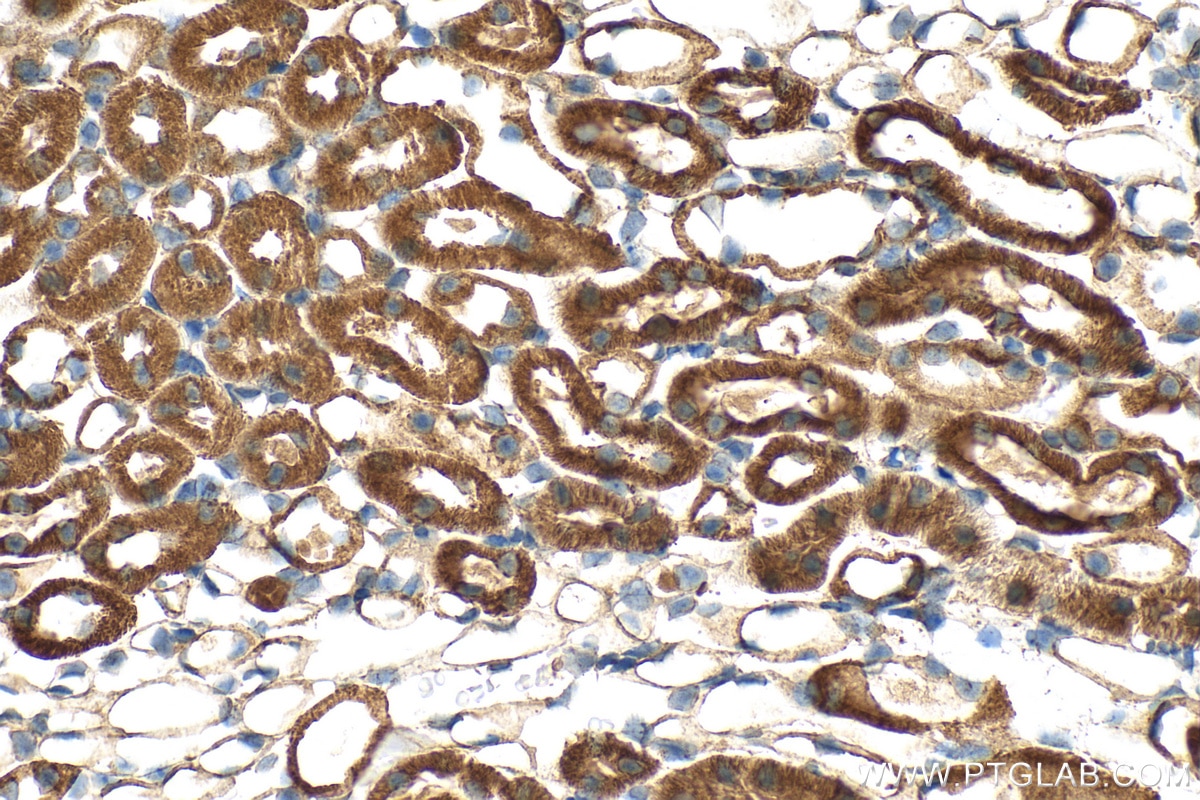
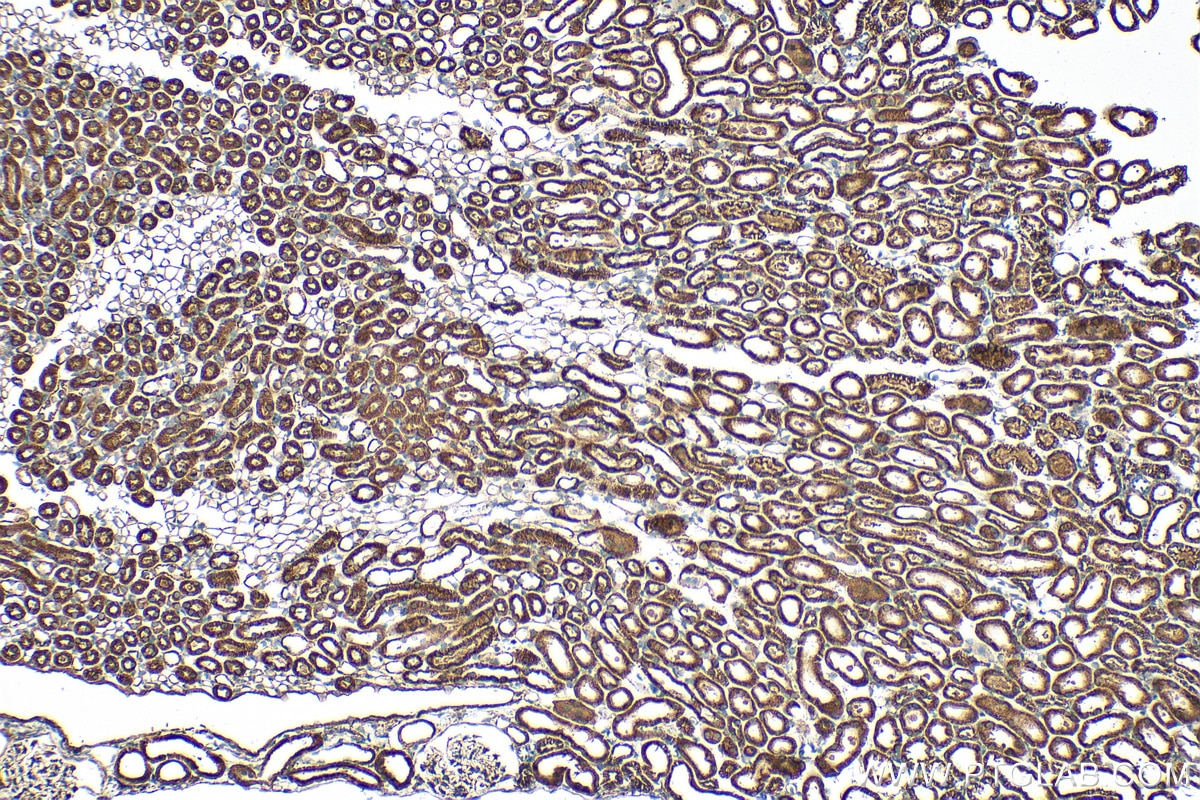
| Positive IHC detected in | mouse kidney tissue, human liver cancer tissue Note: suggested antigen retrieval with TE buffer pH 9.0; (*) Alternatively, antigen retrieval may be performed with citrate buffer pH 6.0 |
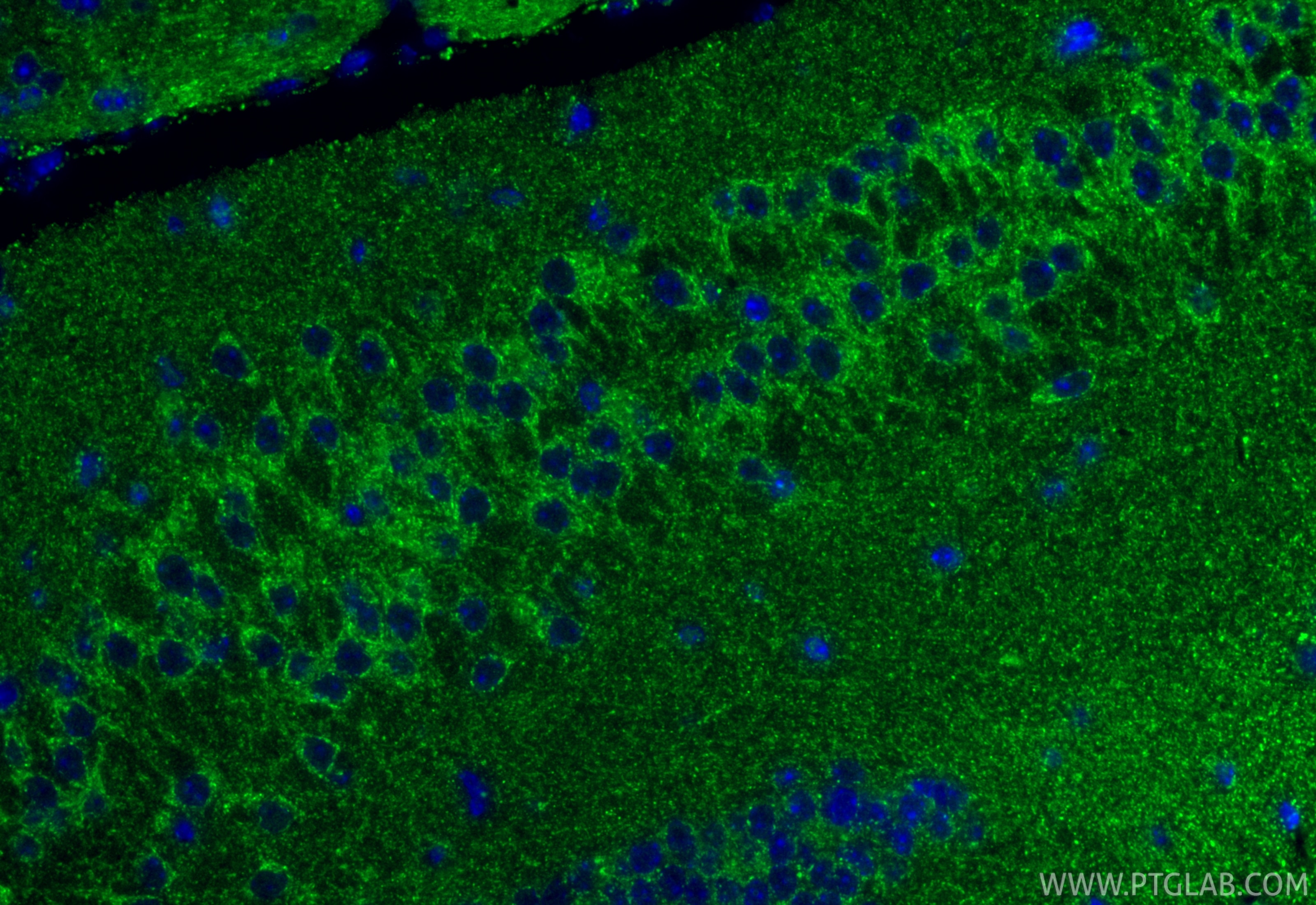
| Positive IF-P detected in | mouse brain tissue |
Recommended dilution
| Application | Dilution |
|---|---|
| Western Blot (WB) | WB : 1:5000-1:10000 |
| Immunoprecipitation (IP) | IP : 0.5-4.0 ug for 1.0-3.0 mg of total protein lysate |
| Immunohistochemistry (IHC) | IHC : 1:50-1:500 |
| Immunofluorescence (IF)-P | IF-P : 1:200-1:800 |
| It is recommended that this reagent should be titrated in each testing system to obtain optimal results. | |
| Sample-dependent, Check data in validation data gallery. | |
Product Information
14923-1-AP targets SUCLG1 in WB, IHC, IF-P, IP, ELISA applications and shows reactivity with human, mouse, rat samples.
| Tested Reactivity | human, mouse, rat |
| Cited Reactivity | human, mouse, rat |
| Host / Isotype | Rabbit / IgG |
| Class | Polyclonal |
| Type | Antibody |
| Immunogen |
CatNo: Ag6481 Product name: Recombinant human SUCLG1 protein Source: e coli.-derived, PGEX-4T Tag: GST Domain: 1-333 aa of BC000504 Sequence: MVSGSSGLAAARLLSRSFLLPQNGIRHCSYTASRQHLYVDKNTKIICQGFTGKQGTFHSQQALEYGTKLVGGTTPGKGGQTHLGLPVFNTVKEAKEQTGATASVIYVPPPFAAAAINEAIEAEIPLVVCITEGIPQQDMVRVKHKLLRQEKTRLIGPNCPGVINPGECKIGIMPGHIHKKGRIGIVSRSGTLTYEAVHQTTQVGLGQSLCVGIGGDPFNGTDFIDCLEIFLNDSATEGIILIGEIGGNAEENAAEFLKQHNSGPNSKPVVSFIAGLTAPPGRRMGHAGAIIAGGKGGAKEKISALQSAGVVVSMSPAQLGTTIYKEFEKRKML Predict reactive species |
| Full Name | succinate-CoA ligase, alpha subunit |
| Calculated Molecular Weight | 35 kDa |
| Observed Molecular Weight | 35 kDa |
| GenBank Accession Number | BC000504 |
| Gene Symbol | SUCLG1 |
| Gene ID (NCBI) | 8802 |
| RRID | AB_2197177 |
| Conjugate | Unconjugated |
| Form | Liquid |
| Purification Method | Antigen affinity purification |
| UNIPROT ID | P53597 |
| Storage Buffer | PBS with 0.02% sodium azide and 50% glycerol, pH 7.3. |
| Storage Conditions | Store at -20°C. Stable for one year after shipment. Aliquoting is unnecessary for -20oC storage. 20ul sizes contain 0.1% BSA. |
Background Information
SUCLG1(succinyl-CoA ligase [ADP/GDP-forming] subunit alpha, mitochondrial) is also named as SCS-alpha and belongs to the succinate/malate CoA ligase alpha subunit family. The SUCLG1 gene encodes a 35 kDa protein with a 40 amino acids transit peptide. This enzyme catalyzes the ATP- or GTP-dependent ligation of succinate and CoA to form succinyl-CoA. Defects in SUCLG1 are the cause of mitochondrial DNA depletion syndrome type 9 (MTDPS9).
Protocols
| Product Specific Protocols | |
|---|---|
| IF protocol for SUCLG1 antibody 14923-1-AP | Download protocol |
| IHC protocol for SUCLG1 antibody 14923-1-AP | Download protocol |
| IP protocol for SUCLG1 antibody 14923-1-AP | Download protocol |
| WB protocol for SUCLG1 antibody 14923-1-AP | Download protocol |
| Standard Protocols | |
|---|---|
| Click here to view our Standard Protocols |
Publications
What published studies show
The SUCLG1 Polyclonal antibody (Cat# 14923-1-AP) has 19 citations published in journals including Nature Communications, Molecular Cell, Nature Structural & Molecular Biology, Signal Transduction and Targeted Therapy, Metabolism, Nucleic Acids Research, Clinical Cancer Research, ACS Central Science, Cell Death Discovery, and others. Research fields span cardiac energetics, mitochondrial metabolism, TCA cycle regulation, ovarian biology, neurodegeneration (ALS, Alzheimer's), cancer (thyroid, cholangiocarcinoma, pancreatic), sepsis, and metabolic reprogramming in stem cells.
| Species | Application | Title |
|---|---|---|
Signal Transduct Target Ther A two-strata energy flux system driven by a stress hormone prioritizes cardiac energetics | ||
Nat Commun A genetically encoded fluorescent biosensor for detecting itaconate with subcellular resolution in living macrophages | ||
Metabolism Glutamine synthetase deficiency triggers mitochondrial oxidative stress and a ribotoxic stress response during acute hepatic metabolic crisis. | ||
Mol Cell Quantitative subcellular acyl-CoA analysis reveals distinct nuclear metabolism and isoleucine-dependent histone propionylation | ||
Mol Cell Accumulation of succinate suppresses de novo purine synthesis through succinylation-mediated control of the mitochondrial folate cycle. | ||
Nucleic Acids Res Lactylation of CREB is required for FSH-induced proliferation and differentiation of ovarian granulosa cells |









