

Tested Applications
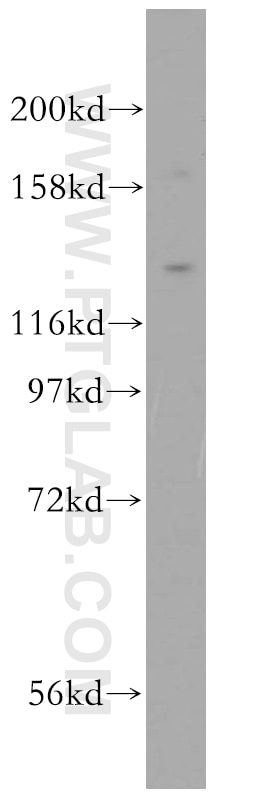
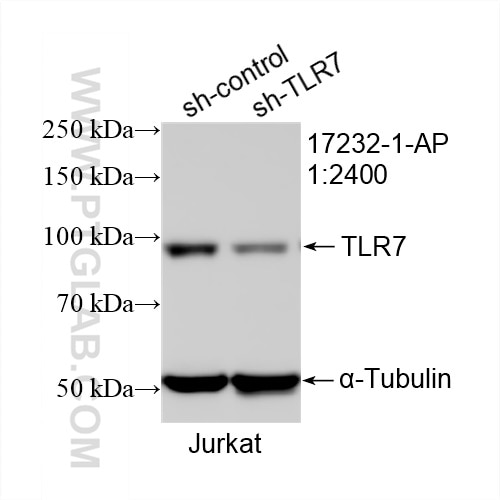
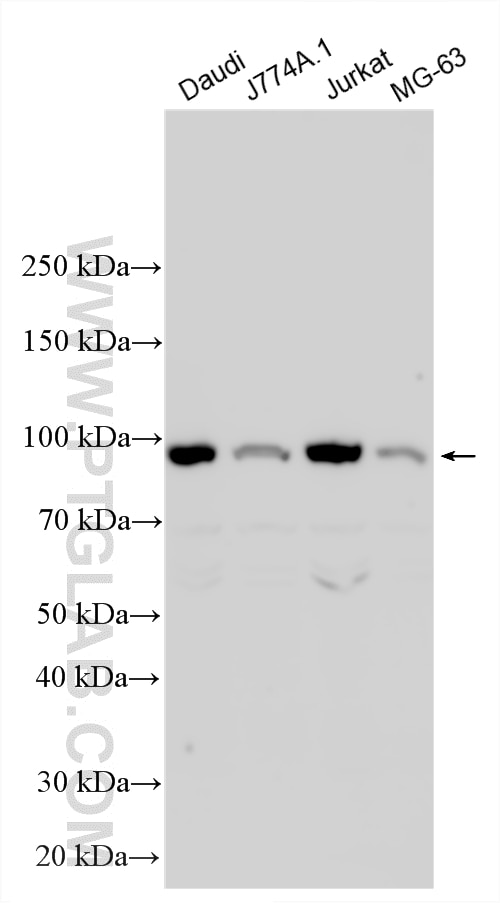
| Positive WB detected in | Daudi cells, Jurkat cells, mouse lung tissue, J774A.1 cells, MG-63 cells |
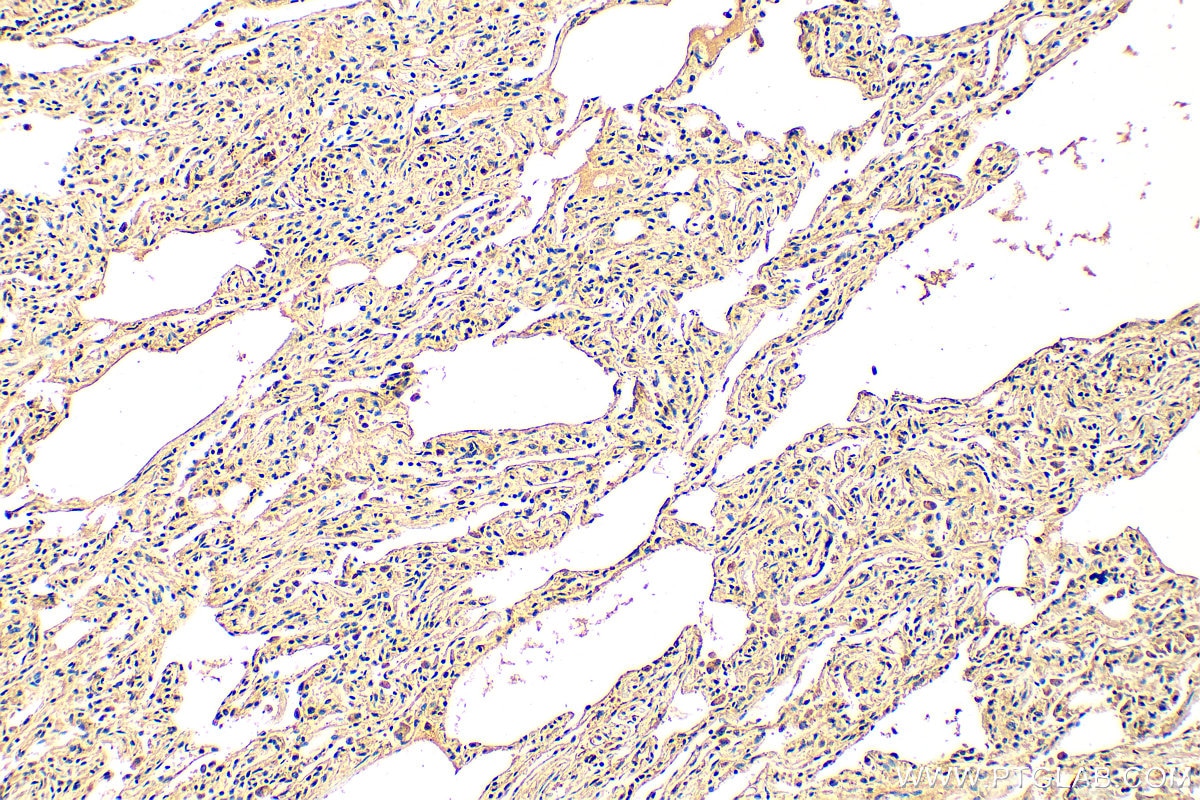
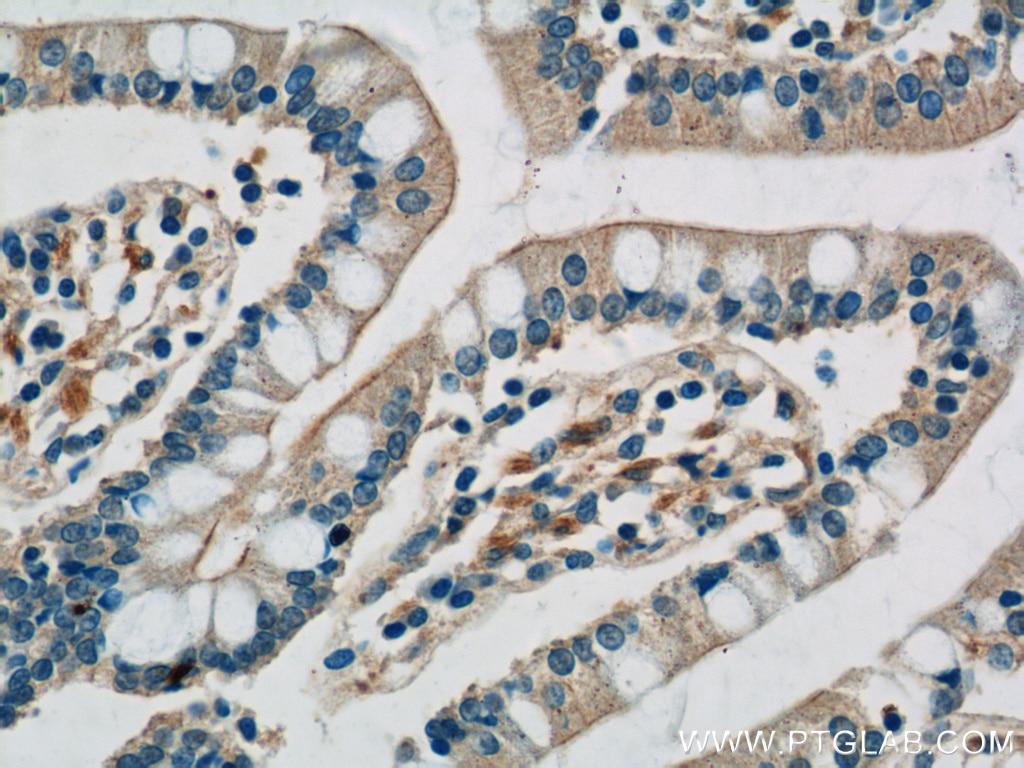
| Positive IHC detected in | human lung tissue, human small intestine tissue Note: suggested antigen retrieval with TE buffer pH 9.0; (*) Alternatively, antigen retrieval may be performed with citrate buffer pH 6.0 |
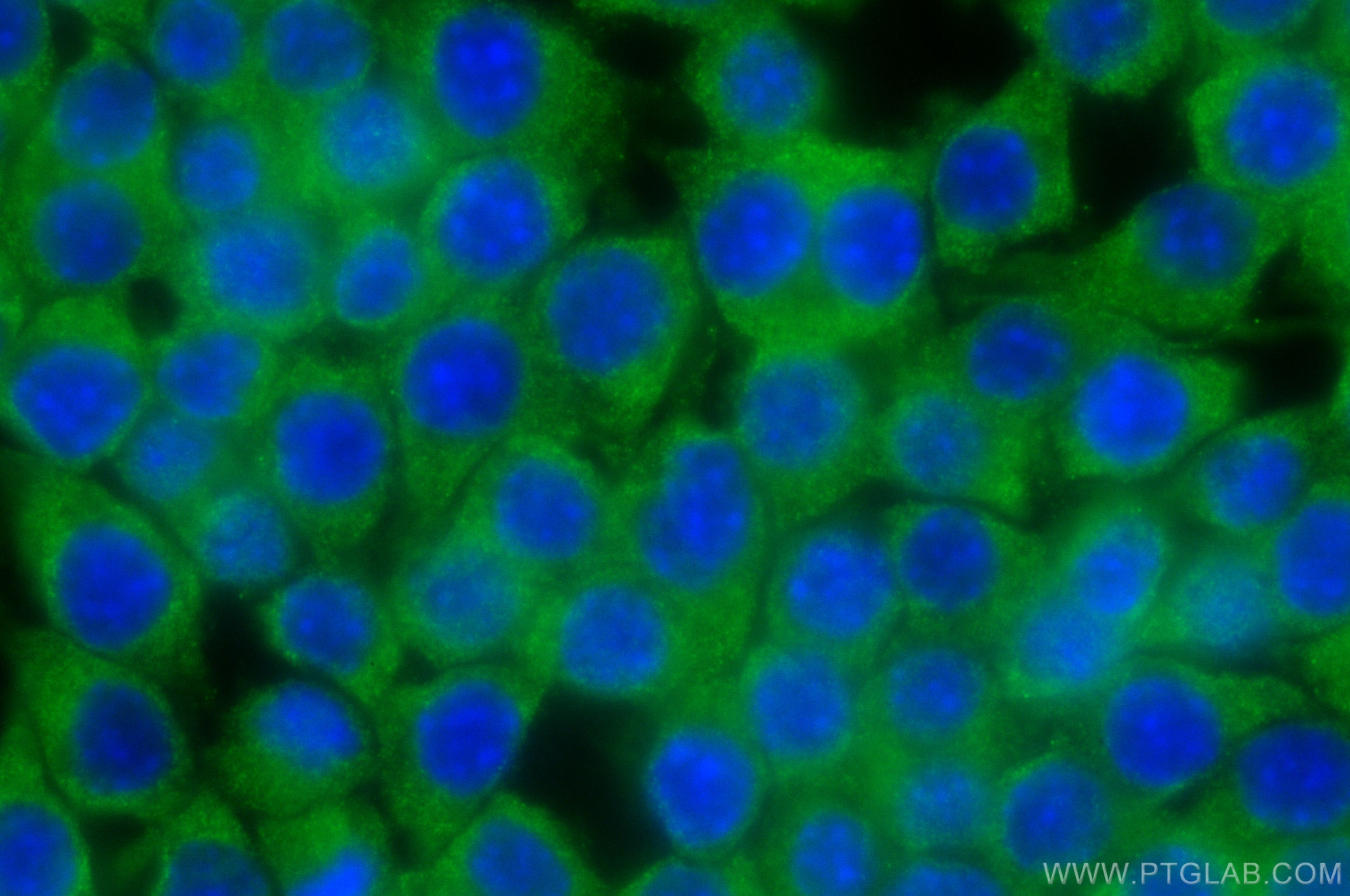
| Positive IF/ICC detected in | RAW 264.7 cells |
Recommended dilution
| Application | Dilution |
|---|---|
| Western Blot (WB) | WB : 1:500-1:3000 |
| Immunohistochemistry (IHC) | IHC : 1:50-1:500 |
| Immunofluorescence (IF)/ICC | IF/ICC : 1:200-1:800 |
| It is recommended that this reagent should be titrated in each testing system to obtain optimal results. | |
| Sample-dependent, Check data in validation data gallery. | |
Product Information
17232-1-AP targets TLR7 in WB, IHC, IF/ICC, ELISA applications and shows reactivity with human, mouse samples.
| Tested Reactivity | human, mouse |
| Cited Reactivity | human, mouse, rat |
| Host / Isotype | Rabbit / IgG |
| Class | Polyclonal |
| Type | Antibody |
| Immunogen |
CatNo: Ag11073 Product name: Recombinant human TLR7 protein Source: e coli.-derived, PGEX-4T Tag: GST Domain: 24-348 aa of BC033651 Sequence: LLGARWFPKTLPCDVTLDVPKNHVIVDCTDKHLTEIPGGIPTNTTNLTLTINHIPDISPASFHRLDHLVEIDFRCNCVPIPLGSKNNMCIKRLQIKPRSFSGLTYLKSLYLDGNQLLEIPQGLPPSLQLLSLEANNIFSIRKENLTELANIEILYLGQNCYYRNPCYVSYSIEKDAFLNLTKLKVLSLKDNNVTAVPTVLPSTLTELYLYNNMIAKIQEDDFNNLNQLQILDLSGNCPRCYNAPFPCAPCKNNSPLQIPVNAFDALTELKVLRLHSNSLQHVPPRWFKNINKLQELDLSQNFLAKEIGDAKFLHFLPSLIQLDLS Predict reactive species |
| Full Name | toll-like receptor 7 |
| Calculated Molecular Weight | 1049 aa, 121 kDa |
| Observed Molecular Weight | 121 kDa, 100 kDa |
| GenBank Accession Number | BC033651 |
| Gene Symbol | TLR7 |
| Gene ID (NCBI) | 51284 |
| RRID | AB_2203464 |
| Conjugate | Unconjugated |
| Form | Liquid |
| Purification Method | Antigen affinity purification |
| UNIPROT ID | Q9NYK1 |
| Storage Buffer | PBS with 0.02% sodium azide and 50% glycerol, pH 7.3. |
| Storage Conditions | Store at -20°C. Stable for one year after shipment. Aliquoting is unnecessary for -20oC storage. 20ul sizes contain 0.1% BSA. |
Background Information
Among the TLR family, TLR7 (toll-like receptor 7) is an endosomal innate immune sensor that can detect single-stranded ribonucleic acid. Constitutive expression of TLR7 is pre-dominant in dendritic cells and B cells compared to other immune cells. Low levels of TLR7 expression have been observed in non-immune cells, such as hepatocytes, epithelial cells, and keratinocytes (PMID: 37596656).
Protocols
| Product Specific Protocols | |
|---|---|
| IF protocol for TLR7 antibody 17232-1-AP | Download protocol |
| IHC protocol for TLR7 antibody 17232-1-AP | Download protocol |
| WB protocol for TLR7 antibody 17232-1-AP | Download protocol |
| Standard Protocols | |
|---|---|
| Click here to view our Standard Protocols |
Publications
What published studies show
TLR7 antibody (Cat# 17232-1-AP) has accumulated 21 citations published in high-impact journals including Cell, Nature Communications, Science Translational Medicine, Frontiers in Immunology, Cancer Medicine, and Molecular Neurobiology. Associated research fields encompass pyroptosis and liver disease, autoimmune disorders (SLE, Sjögren's syndrome), acute lung injury, oncology (glioma, melanoma, pancreatic cancer), viral infections (influenza, RSV), metabolic syndrome, pulmonary hypertension, neurocognitive impairment, and traditional Chinese medicine applications.
| Species | Application | Title |
|---|---|---|
Nat Commun TLR7 promotes smoke-induced experimental lung damage through the activity of mast cell tryptase | ||
Sci Transl Med The m6A demethylase FTO links TLR7 to mitochondrial oxidation driving age-associated B cell formation in systemic lupus erythematosus | ||
Int J Biol Macromol Structure elucidation and molecular mechanism of an immunomodulatory polysaccharide from Nostoc commune | ||
Antioxidants (Basel) Quercetin Ameliorates Renal Injury and Pyroptosis in Lupus Nephritis through Inhibiting IL-33/ST2 Pathway In Vitro and In Vivo | ||
Stem Cell Res Ther Exosomal SNHG16 secreted by CSCs promotes glioma development via TLR7.
|







