




Tested Applications
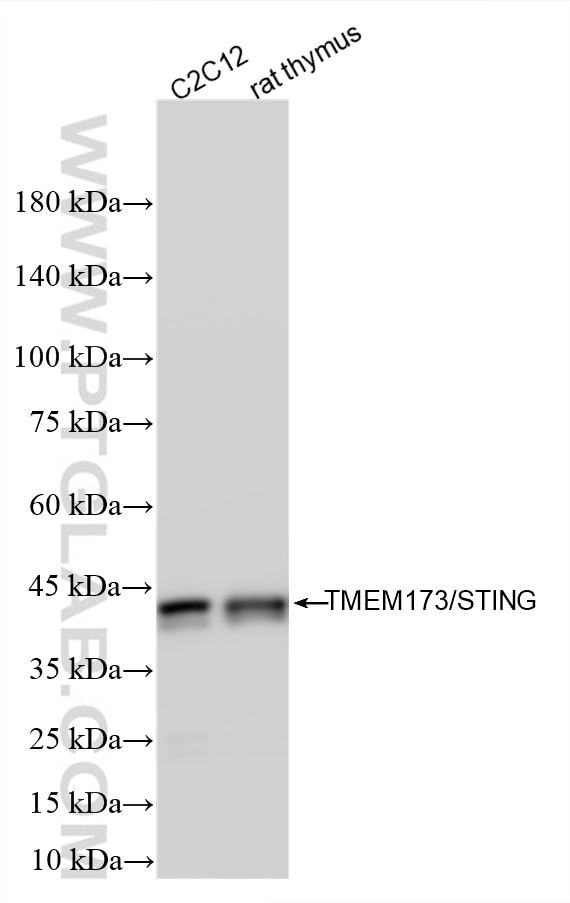
| Positive WB detected in | HeLa cells, C2C12 cells, MOLT-4 cells, Jurkat cells, K-562 cells, THP-1 cells, HSC-T6 cells, NIH/3T3 cells, rat thymus tissue |
| Positive IP detected in | HeLa cells |
| Positive IHC detected in | human tonsillitis tissue, mouse liver tissue, human colon tissue, human liver tissue Note: suggested antigen retrieval with TE buffer pH 9.0; (*) Alternatively, antigen retrieval may be performed with citrate buffer pH 6.0 |
| Positive IF-P detected in | human tonsillitis tissue |
| Positive IF-Fro detected in | mouse cerebellum tissue |
| Positive IF/ICC detected in | THP-1 cells, human tonsillitis tissue |
Recommended dilution
| Application | Dilution |
|---|---|
| Western Blot (WB) | WB : 1:2000-1:10000 |
| Immunoprecipitation (IP) | IP : 0.5-4.0 ug for 1.0-3.0 mg of total protein lysate |
| Immunohistochemistry (IHC) | IHC : 1:1000-1:4000 |
| Immunofluorescence (IF)-P | IF-P : 1:200-1:800 |
| Immunofluorescence (IF)-FRO | IF-FRO : 1:200-1:800 |
| Immunofluorescence (IF)/ICC | IF/ICC : 1:50-1:500 |
| It is recommended that this reagent should be titrated in each testing system to obtain optimal results. | |
| Sample-dependent, Check data in validation data gallery. | |
Product Information
80165-1-RR targets TMEM173/STING in WB, IHC, IF/ICC, IF-P, IF-Fro, IP, CoIP, ELISA applications and shows reactivity with human, mouse, rat samples.
| Tested Reactivity | human, mouse, rat |
| Cited Reactivity | human, mouse |
| Host / Isotype | Rabbit / IgG |
| Class | Recombinant |
| Type | Antibody |
| Immunogen |
CatNo: Ag13921 Product name: Recombinant human TMEM173 protein Source: e coli.-derived, PGEX-4T Tag: GST Domain: 174-379 aa of BC047779 Sequence: ELQARIRTYNQHYNNLLRGAVSQRLYILLPLDCGVPDNLSMADPNIRFLDKLPQQTGDHAGIKDRVYSNSIYELLENGQRAGTCVLEYATPLQTLFAMSQYSQAGFSREDRLEQAKLFCRTLEDILADAPESQNNCRLIAYQEPADDSSFSLSQEVLRHLRQEEKEEVTVGSLKTSAVPSTSTMSQEPELLISGMEKPLPLRTDFS Predict reactive species |
| Full Name | transmembrane protein 173 |
| Calculated Molecular Weight | 379 aa, 42 kDa |
| Observed Molecular Weight | 37 kDa |
| GenBank Accession Number | BC047779 |
| Gene Symbol | STING |
| Gene ID (NCBI) | 340061 |
| RRID | AB_2918870 |
| Conjugate | Unconjugated |
| Form | Liquid |
| Purification Method | Protein A purification |
| UNIPROT ID | Q86WV6 |
| Storage Buffer | PBS with 0.02% sodium azide and 50% glycerol, pH 7.3. |
| Storage Conditions | Store at -20°C. Stable for one year after shipment. Aliquoting is unnecessary for -20oC storage. 20ul sizes contain 0.1% BSA. |
Background Information
Stimulator of interferon genes (STING, also known as ERIS, MITA and MPYS, and encoded by TMEM173) is a transmembrane adaptor protein that facilitates innate immune signaling (PMID: 18724357). STING is widely expressed in various cell types such as endothelial cells, epithelial cells, T cells, macrophages, and dendritic cells (PMID: 26603901). It is predominantly located in the endoplasmic reticulum (ER). STING functions as a sensor of cytosolic DNA and promotes the production of type I interferons and pro-inflammatory cytokines.
Protocols
| Product Specific Protocols | |
|---|---|
| IF protocol for TMEM173/STING antibody 80165-1-RR | Download protocol |
| IHC protocol for TMEM173/STING antibody 80165-1-RR | Download protocol |
| IP protocol for TMEM173/STING antibody 80165-1-RR | Download protocol |
| WB protocol for TMEM173/STING antibody 80165-1-RR | Download protocol |
| Standard Protocols | |
|---|---|
| Click here to view our Standard Protocols |
Publications
What published studies show
80165-1-RR is a Rabbit Recombinant anti-STING antibody with 11 total citations. Citations appear in journals including Nature Communications, Cell & Molecular Biology Letters, International Journal of Biological Sciences, Molecular Medicine, Journal of Ethnopharmacology, International Journal of Molecular Sciences, International Immunopharmacology, Diabetes & Metabolic Syndrome, Viruses, Journal of Immunotherapy, and Cytokine. Research fields span cancer immunology, ferroptosis, cGAS-STING signaling, neuroinflammation, osteoarthritis, diabetic complications, viral infections, and immune regulation.
| Species | Application | Title |
|---|---|---|
Nat Commun FAD synthase confers ferroptosis resistance and restrains CD8+ T cell recruitment in hepatocellular carcinoma | ||
Cell Mol Biol Lett The role of the cGAS/STING pathway in skeletal muscle regeneration: modulation of inflammation, macrophage polarization, and oxidative stress. | ||
Int J Biol Sci Targeting Ash1L-STING Axis Restores NK Cell Function and Ameliorates Immune-Mediated Bone Marrow Failure Diseases. | ||
Mol Med Pentagalloylglucose alleviates acetaminophen-induced acute liver injury by modulating inflammation via cGAS-STING pathway | ||
J Ethnopharmacol Lycopodium japonicum Thunb. inhibits chondrocyte apoptosis, senescence and inflammation in osteoarthritis through STING/NF-κB signaling pathway | ||
Int J Mol Sci Network Pharmacology, Molecular Dynamics Simulation, and Biological Validation Insights into the Potential of Ligustri Lucidi Fructus for Diabetic Nephropathy |
Reviews
What customers say
The single review reports a 5-star experience using this antibody for Western Blot on human fibroblasts at a 1:1000 dilution. The user found it worked well and quickly, with a perfect signal after just 1 hour at room temperature, and it still functioned at 4°C. They noted that two closely spaced bands (STAT1/pSTAT1) can sometimes be observed. Overall, the feedback is highly positive, highlighting strong performance and reliable signal.
The reviews below have been submitted by verified Proteintech customers who received an incentive for providing their feedback.
Fabrizio (Verified Customer) (04-23-2026) | It worked well and fast, just 1 h on RT and the signal is perfect. Still worked ON at 4°C. Sometimes it is possibile to see two bands very close to each other (STAT1/PSTAT1)
|




