

Tested Applications
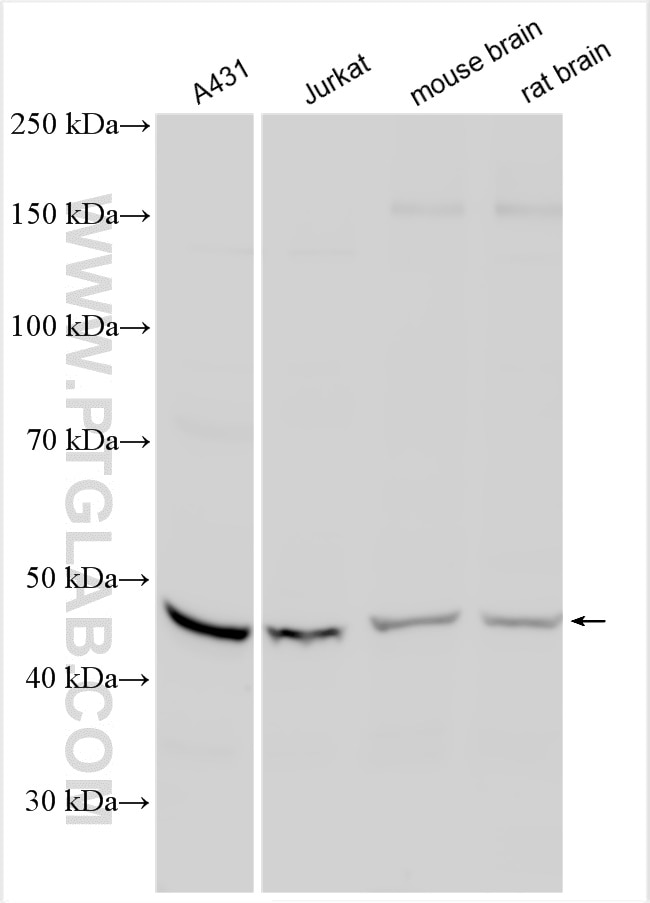
| Positive WB detected in | A431 cells, Jurkat cells, mouse brain tissue, rat brain tissue |
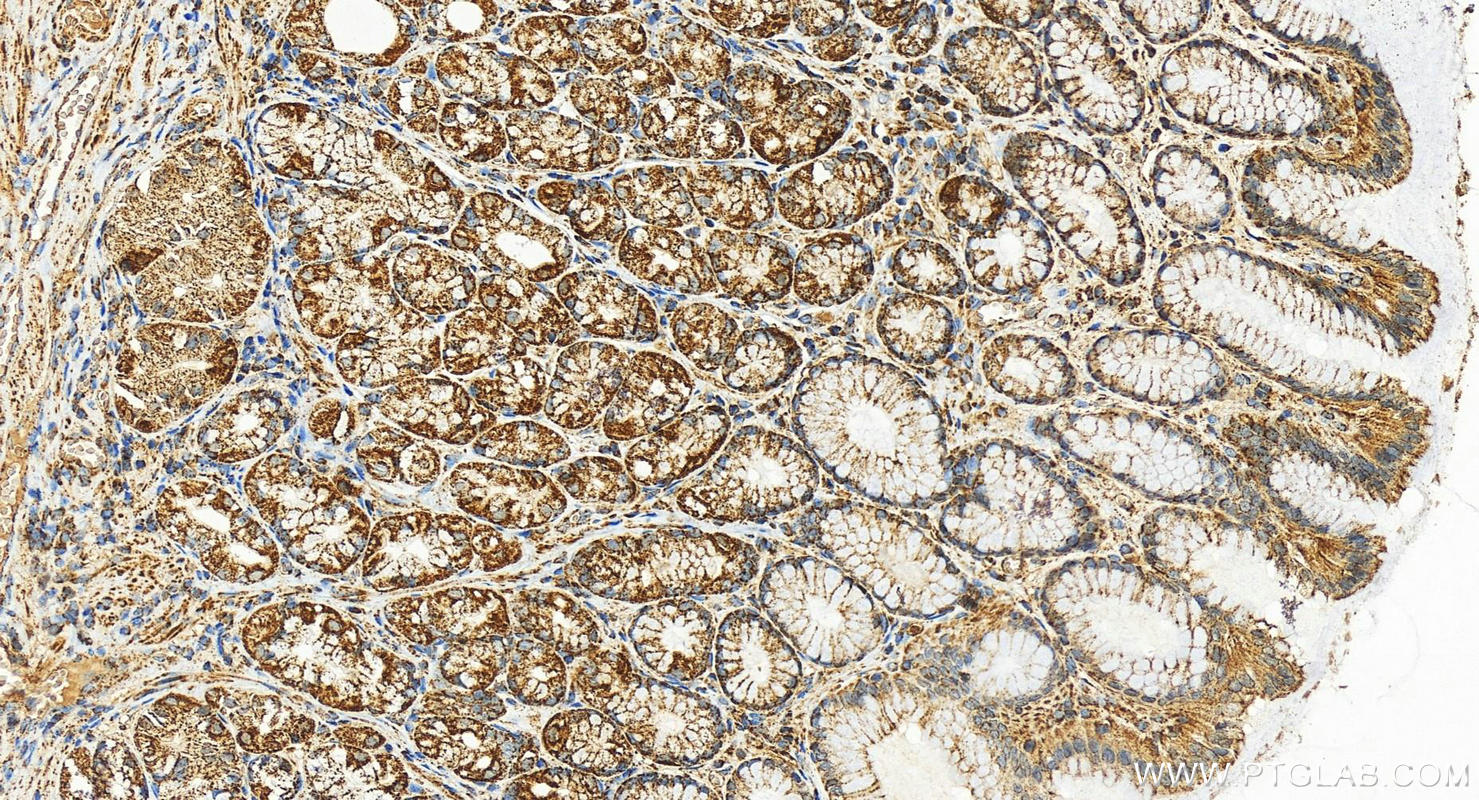
| Positive IHC detected in | human stomach tissue Note: suggested antigen retrieval with TE buffer pH 9.0; (*) Alternatively, antigen retrieval may be performed with citrate buffer pH 6.0 |
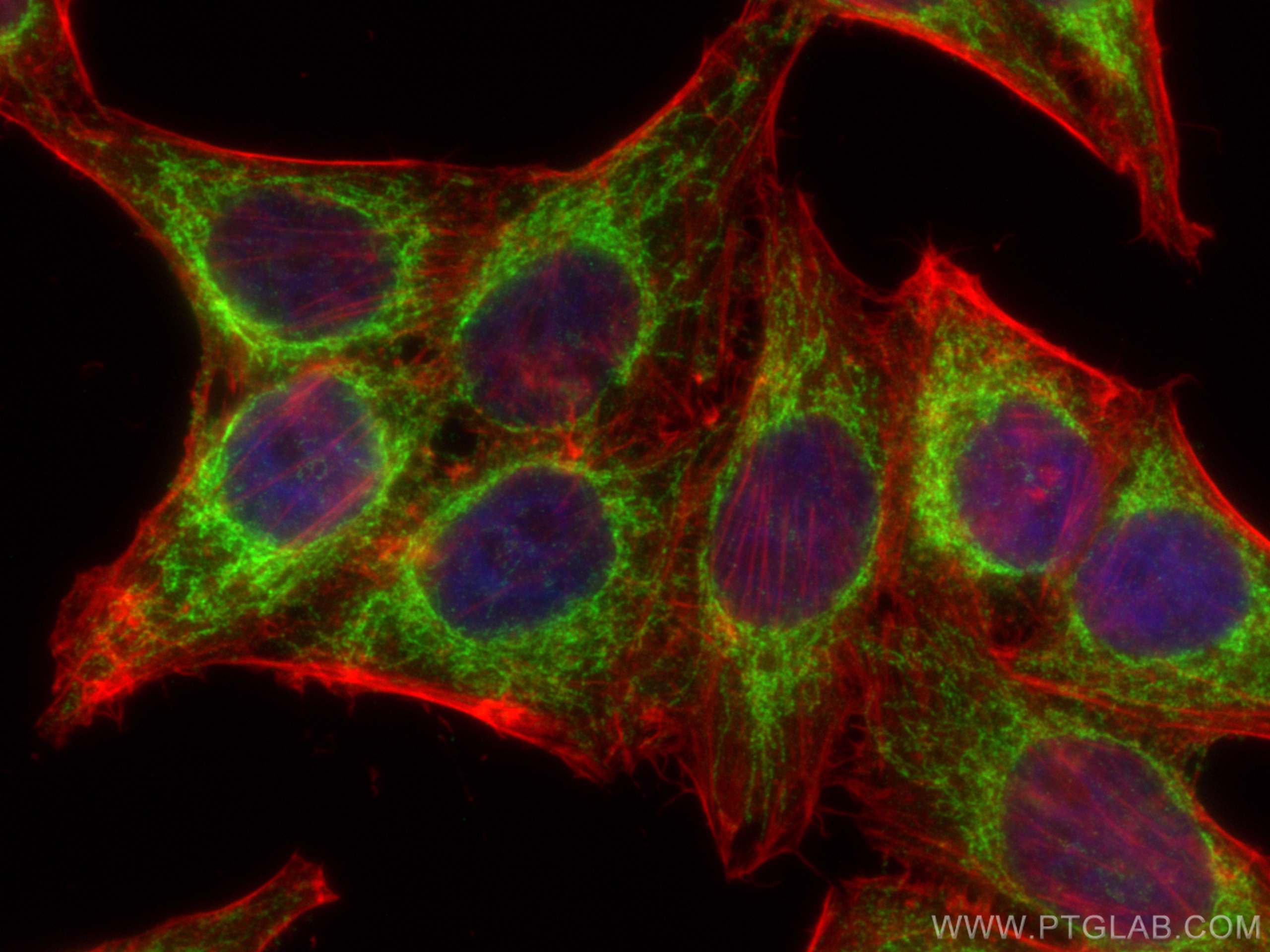
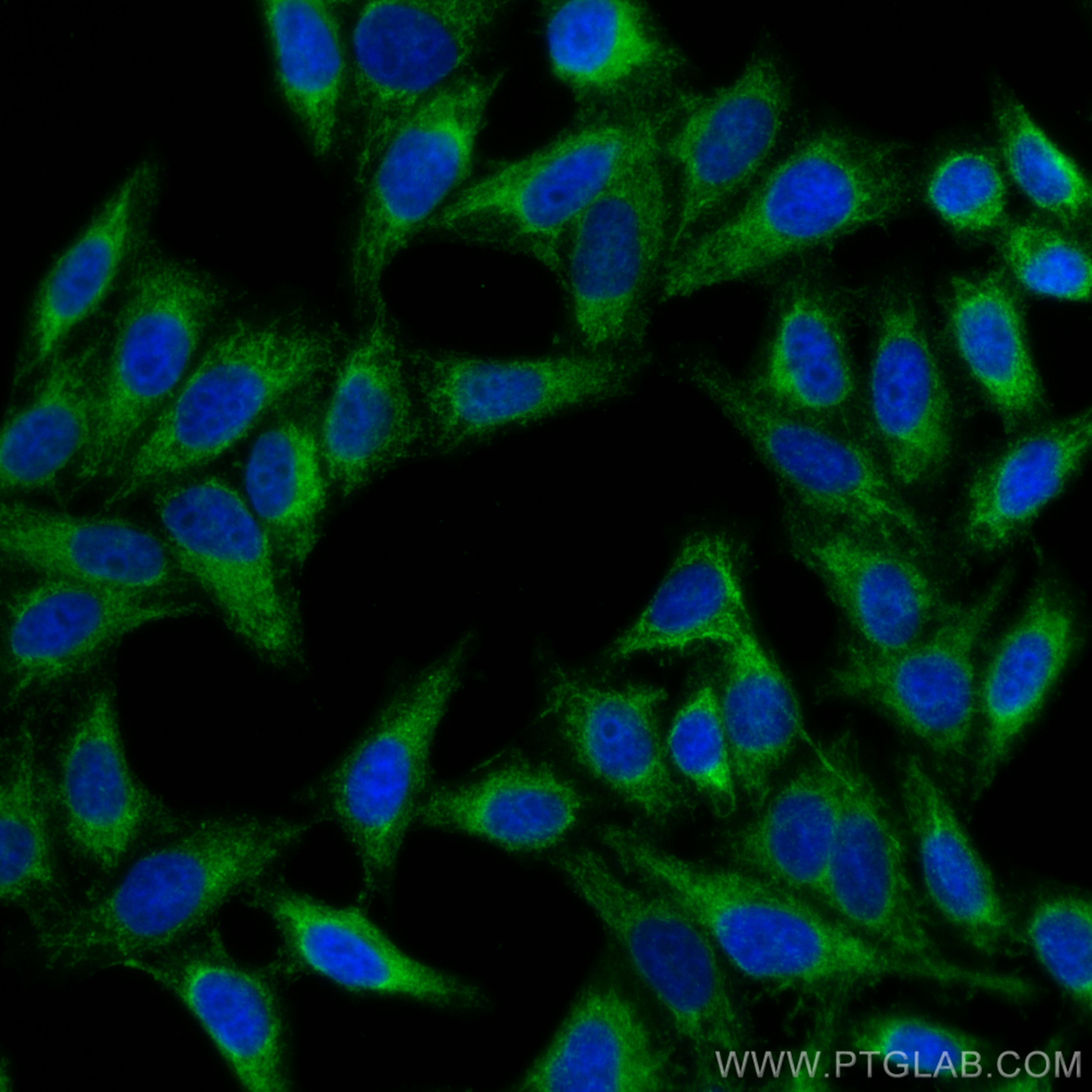
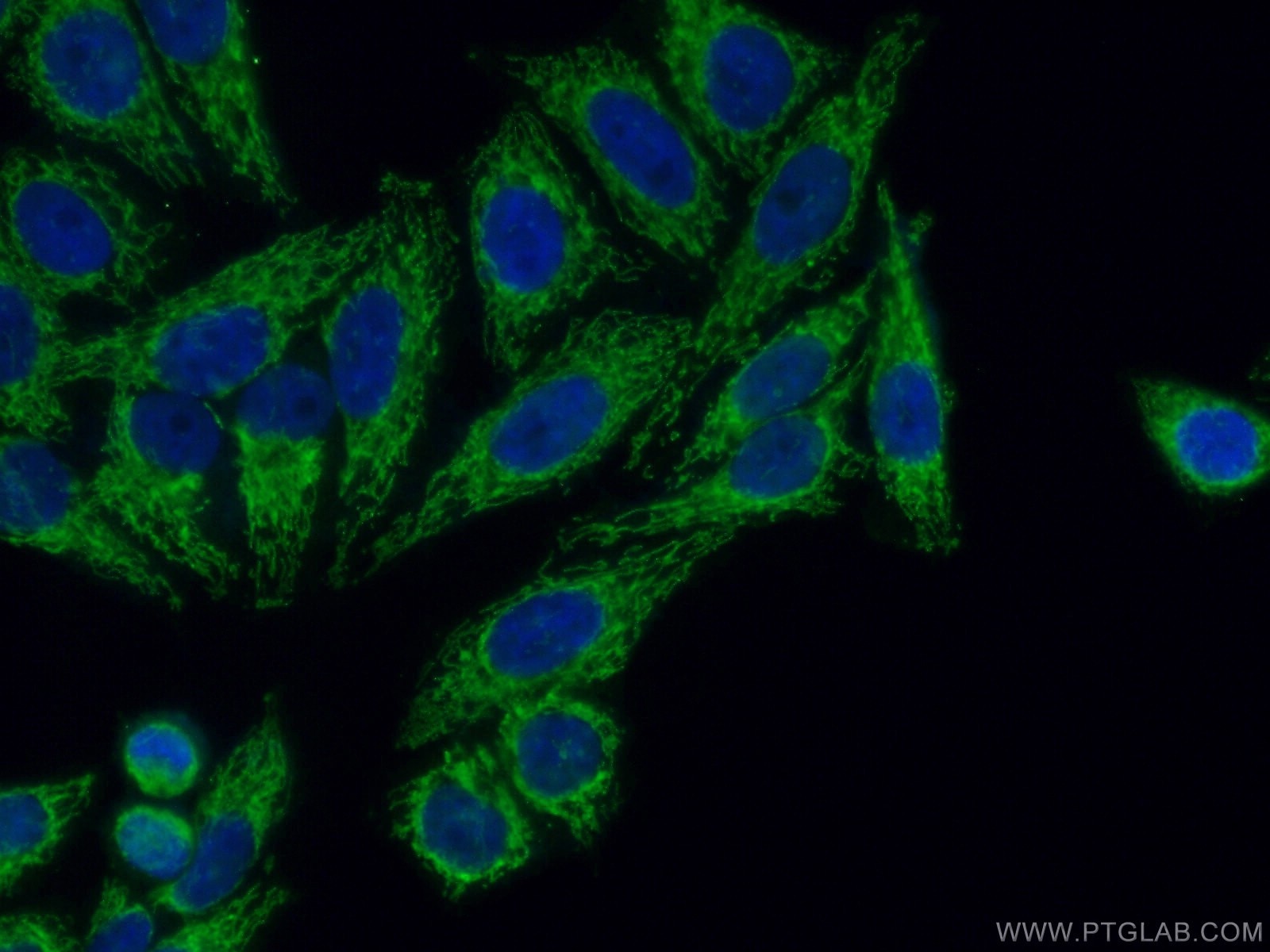
| Positive IF/ICC detected in | HepG2 cells |
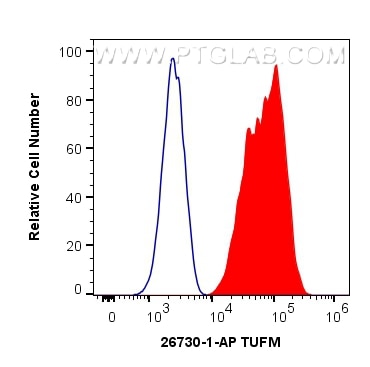
| Positive FC (Intra) detected in | HepG2 cells |
Recommended dilution
| Application | Dilution |
|---|---|
| Western Blot (WB) | WB : 1:1000-1:8000 |
| Immunohistochemistry (IHC) | IHC : 1:400-1:1600 |
| Immunofluorescence (IF)/ICC | IF/ICC : 1:500-1:2000 |
| Flow Cytometry (FC) (INTRA) | FC (INTRA) : 0.40 ug per 10^6 cells in a 100 µl suspension |
| It is recommended that this reagent should be titrated in each testing system to obtain optimal results. | |
| Sample-dependent, Check data in validation data gallery. | |
Product Information
26730-1-AP targets TUFM in WB, IHC, IF/ICC, FC (Intra), CoIP, ELISA applications and shows reactivity with human, mouse, rat samples.
| Tested Reactivity | human, mouse, rat |
| Cited Reactivity | human, mouse, rat, zebrafish |
| Host / Isotype | Rabbit / IgG |
| Class | Polyclonal |
| Type | Antibody |
| Immunogen |
CatNo: Ag24981 Product name: Recombinant human TUFM protein Source: e coli.-derived, PET30a Tag: 6*His Domain: 108-455 aa of BC010041 Sequence: GITINAAHVEYSTAARHYAHTDCPGHADYVKNMITGTAPLDGCILVVAANDGPMPQTREHLLLARQIGVEHVVVYVNKADAVQDSEMVELVELEIRELLTEFGYKGEETPVIVGSALCALEGRDPELGLKSVQKLLDAVDTYIPVPARDLEKPFLLPVEAVYSVPGRGTVVTGTLERGILKKGDECELLGHSKNIRTVVTGIEMFHKSLERAEAGDNLGALVRGLKREDLRRGLVMVKPGSIKPHQKVEAQVYILSKEEGGRHKPFVSHFMPVMFSLTWDMACRIILPPEKELAMPGEDLKFNLILRQPMILEKGQRFTLRDGNRTIGTGLVTNTLAMTEEEKNIKWG Predict reactive species |
| Full Name | Tu translation elongation factor, mitochondrial |
| Calculated Molecular Weight | 50 kDa |
| Observed Molecular Weight | 46-50 kDa |
| GenBank Accession Number | BC010041 |
| Gene Symbol | TUFM |
| Gene ID (NCBI) | 7284 |
| RRID | AB_2880616 |
| Conjugate | Unconjugated |
| Form | Liquid |
| Purification Method | Antigen affinity purification |
| UNIPROT ID | P49411 |
| Storage Buffer | PBS with 0.02% sodium azide and 50% glycerol, pH 7.3. |
| Storage Conditions | Store at -20°C. Stable for one year after shipment. Aliquoting is unnecessary for -20oC storage. 20ul sizes contain 0.1% BSA. |
Background Information
TUFM, also named as Elongation factor Tu, mitochondrial, is a 452 amino acid protein, which contains 1 tr-type G (guanine nucleotide-binding) domain and belongs to the TRAFAC class translation factor GTPase superfamily. TUFM localizes in the Mitochondrion and promotes the GTP-dependent binding of aminoacyl-tRNA to the A-site of ribosomes during protein biosynthesis.
Protocols
| Product Specific Protocols | |
|---|---|
| FC protocol for TUFM antibody 26730-1-AP | Download protocol |
| IF protocol for TUFM antibody 26730-1-AP | Download protocol |
| IHC protocol for TUFM antibody 26730-1-AP | Download protocol |
| WB protocol for TUFM antibody 26730-1-AP | Download protocol |
| Standard Protocols | |
|---|---|
| Click here to view our Standard Protocols |
Publications
What published studies show
The TUFM Polyclonal antibody (Cat# 26730-1-AP) has 13 citations published in journals including Nature Cell Biology, Nature Communications, Autophagy, Nucleic Acids Research, Clinical Cancer Research, Cell Reports, Journal of Hazardous Materials, Science of the Total Environment, Apoptosis, International Journal of Molecular Medicine, and Ecotoxicology and Environmental Safety. Research fields span mitochondrial translation, mitophagy, cardiomyopathy, neurotoxicity, glioma, osteoarthritis, leukemia, acute pancreatitis, and viral infection.
| Species | Application | Title |
|---|---|---|
Nat Cell Biol Blebbisomes are large, organelle-rich extracellular vesicles with cell-like properties | ||
Autophagy Bunyavirus SFTSV nucleoprotein exploits tufm-mediated mitophagy to impair antiviral innate immunity | ||
Nucleic Acids Res Deletion of Mtu1 (Trmu) in zebrafish revealed the essential role of tRNA modification in mitochondrial biogenesis and hearing function. | ||
Nucleic Acids Res Ablation of Mto1 in zebrafish exhibited hypertrophic cardiomyopathy manifested by mitochondrion RNA maturation deficiency. | ||
Nucleic Acids Res Deletion of Gtpbp3 in zebrafish revealed the hypertrophic cardiomyopathy manifested by aberrant mitochondrial tRNA metabolism. |







