

Tested Applications
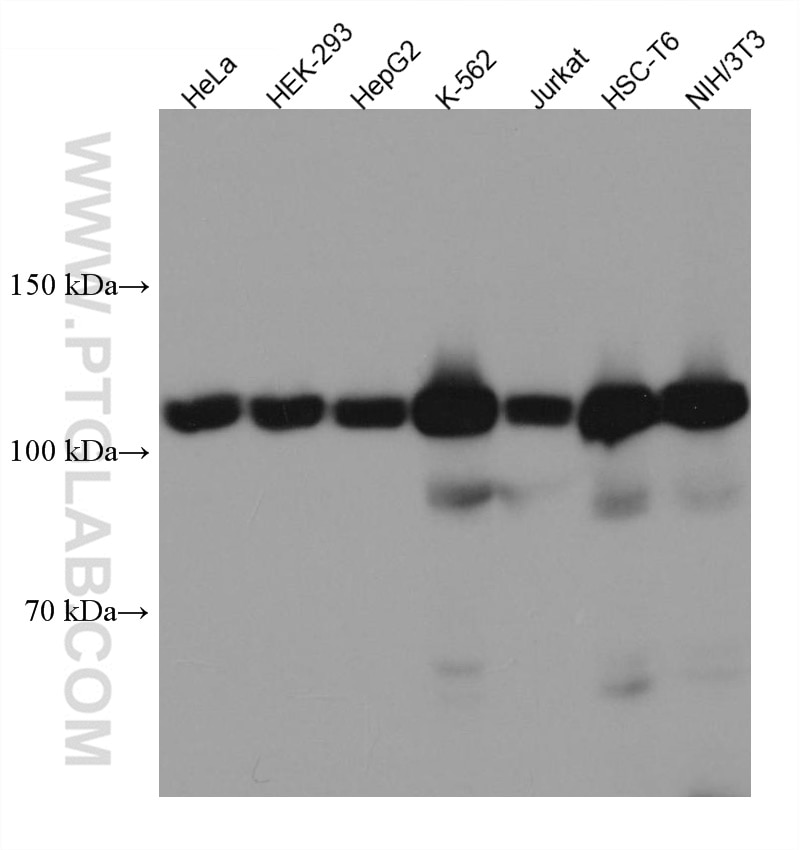
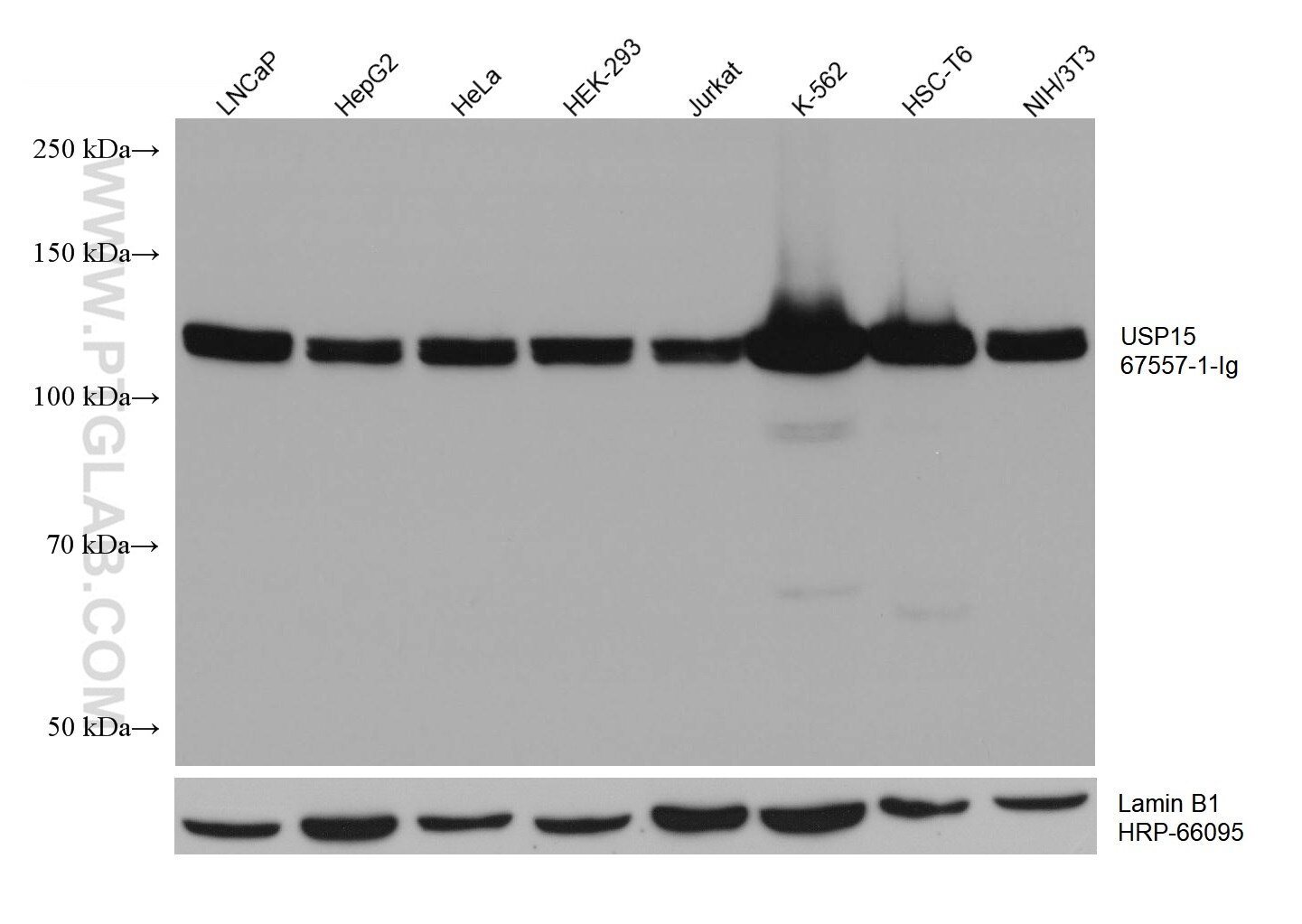
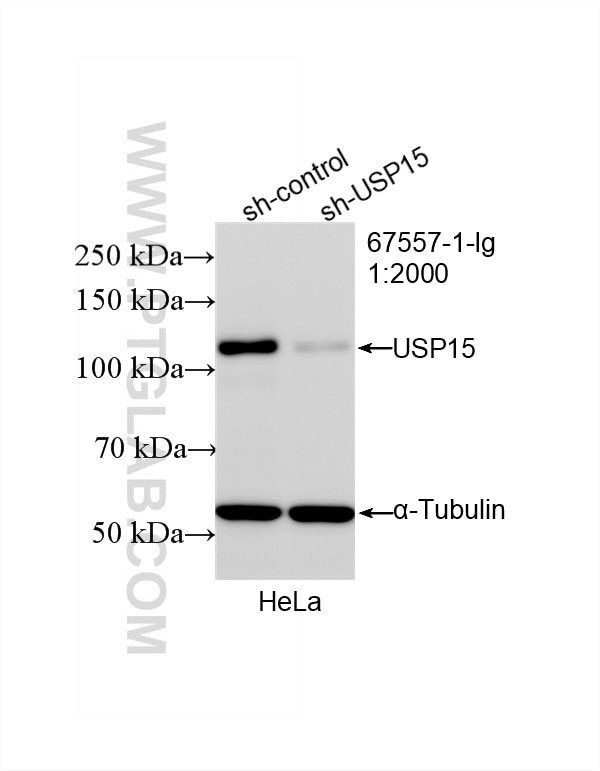
| Positive WB detected in | HeLa cells, 4T1 cells, LNCaP cells, HEK-293 cells, HepG2 cells, K-562 cells, Jurkat cells, HSC-T6 cells, NIH/3T3 cells |
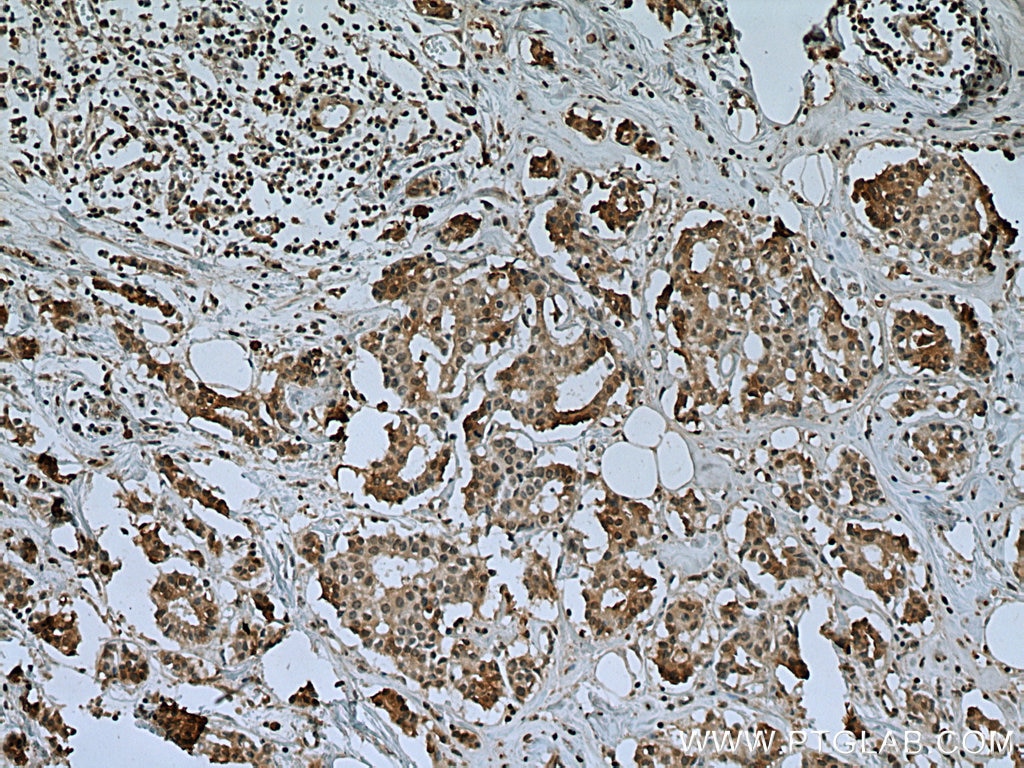
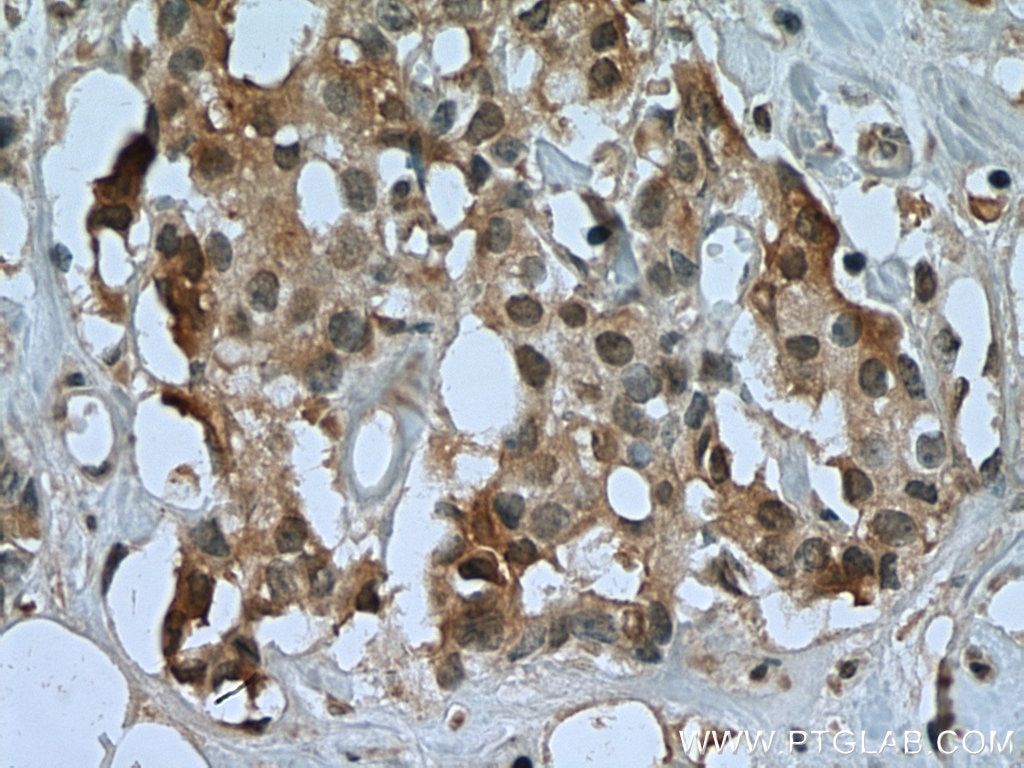
| Positive IHC detected in | human breast cancer tissue Note: suggested antigen retrieval with TE buffer pH 9.0; (*) Alternatively, antigen retrieval may be performed with citrate buffer pH 6.0 |
Recommended dilution
| Application | Dilution |
|---|---|
| Western Blot (WB) | WB : 1:5000-1:50000 |
| Immunohistochemistry (IHC) | IHC : 1:500-1:2000 |
| It is recommended that this reagent should be titrated in each testing system to obtain optimal results. | |
| Sample-dependent, Check data in validation data gallery. | |
Product Information
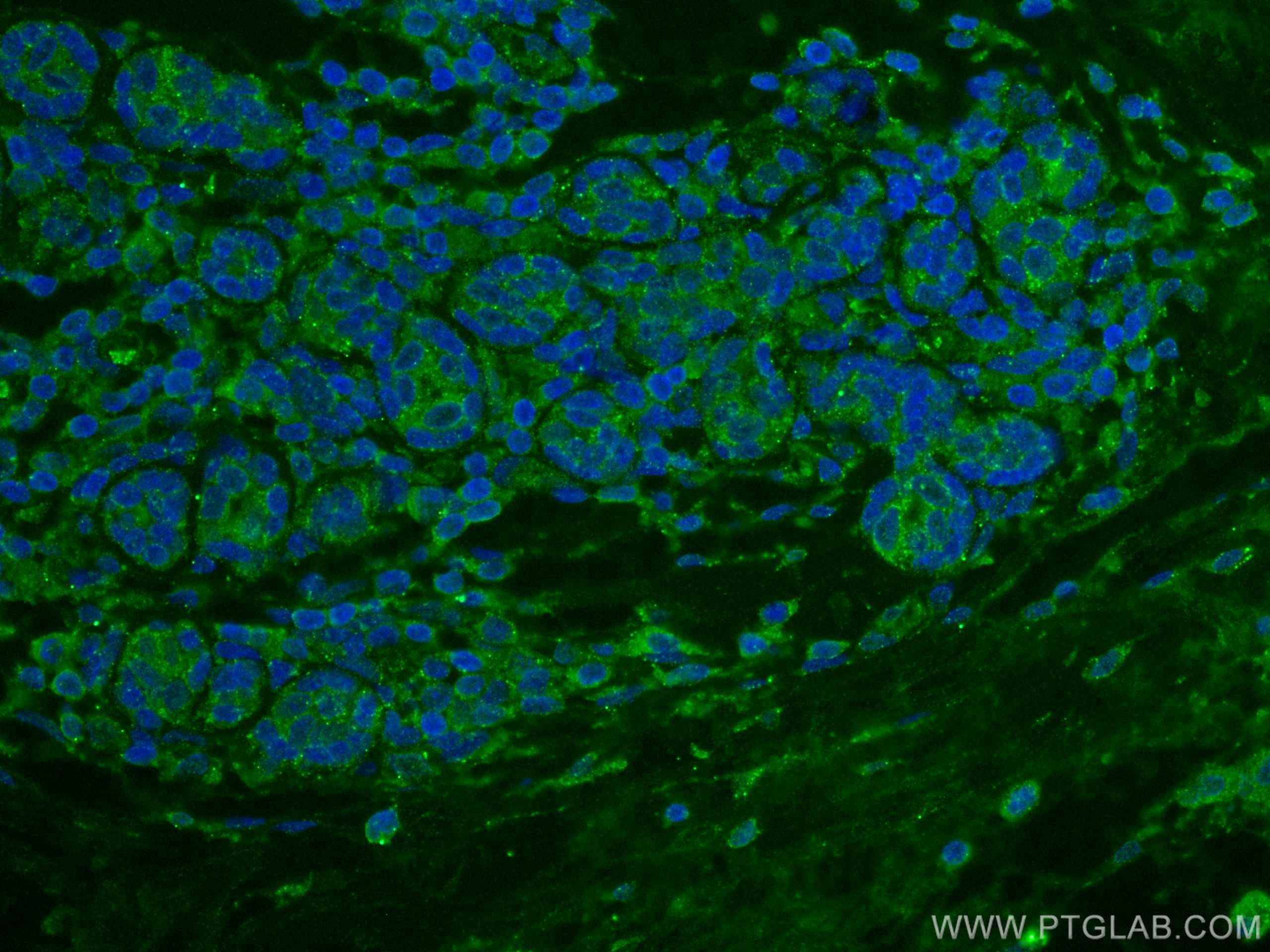
67557-1-Ig targets USP15 in WB, IHC, IF, IP, CoIP, ELISA applications and shows reactivity with human, mouse, rat samples.
| Tested Reactivity | human, mouse, rat |
| Cited Reactivity | human, mouse |
| Host / Isotype | Mouse / IgG1 |
| Class | Monoclonal |
| Type | Antibody |
| Immunogen |
CatNo: Ag5712 Product name: Recombinant human USP15 protein Source: e coli.-derived, PET28a Tag: 6*His Domain: 1-235 aa of BC020688 Sequence: MAEGGAADLDTQRSDIATLLKTSLRKGDTWYLVDSRWFKQWKKYVGFDSWDKYQMGDQNVYPGPIDNSGLLKDGDAQSLKEHLIDELDYILLPTEGWNKLVSWYTLMEGQEPIARKVVEQGMFVKHCKVEVYLTELKLCENGNMNNVVTRRFSKADTIDTIEKEIRKIFSIPDEKETRLWNKYMSNTFEPLNKPDSTIQDAGLYQGQVLVIEQKNEDGTWPRGPSTPKKPLEQSC Predict reactive species |
| Full Name | ubiquitin specific peptidase 15 |
| Calculated Molecular Weight | 112 kDa |
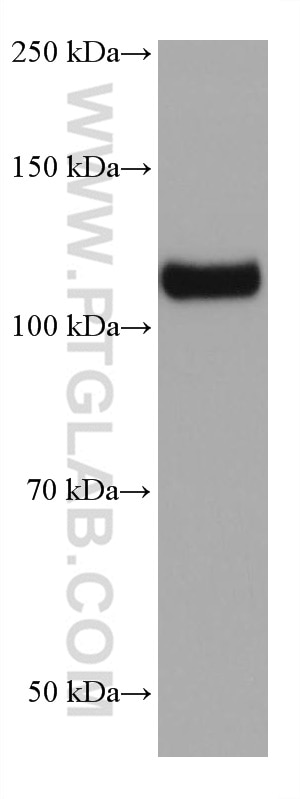
| Observed Molecular Weight | 112 kDa |
| GenBank Accession Number | BC020688 |
| Gene Symbol | USP15 |
| Gene ID (NCBI) | 9958 |
| RRID | AB_2882771 |
| Conjugate | Unconjugated |
| Form | Liquid |
| Purification Method | Protein G purification |
| UNIPROT ID | Q9Y4E8 |
| Storage Buffer | PBS with 0.02% sodium azide and 50% glycerol, pH 7.3. |
| Storage Conditions | Store at -20°C. Stable for one year after shipment. Aliquoting is unnecessary for -20oC storage. 20ul sizes contain 0.1% BSA. |
Background Information
Ubiquitin is a highly conserved eukaryotic protein that is synthesized as a fusion protein precursor, either to itself or to one of two ribosomal proteins. USP15, is also named as KIAA0529,Unph-2, Unph4, encoding a human ubiquitin-specific protease (USP). The USP15 protein contains the highly conserved Cys and His boxes present in all members of he UBP family of deubiquitinating enzymes(PMID:10444327).It has 3 isoforms produced by alternative splicing.
Protocols
| Product Specific Protocols | |
|---|---|
| IF protocol for USP15 antibody 67557-1-Ig | Download protocol |
| IHC protocol for USP15 antibody 67557-1-Ig | Download protocol |
| WB protocol for USP15 antibody 67557-1-Ig | Download protocol |
| Standard Protocols | |
|---|---|
| Click here to view our Standard Protocols |
Publications
What published studies show
The USP15 Monoclonal antibody (1C9G3), catalog number 67557-1-Ig, has 11 citations. These appear in journals including Nature Communications, Cell Death & Disease, Molecular Medicine, Cell Reports, International Immunopharmacology, Endocrine-Related Cancer, ACS Pharmacology & Translational Science, Cancer Medicine, Journal of Cancer, and Briefings in Functional Genomics. Research fields span cancer biology (breast, renal cell, thyroid, NSCLC), DNA damage repair, deubiquitination, inflammation, and drug resistance.
| Species | Application | Title |
|---|---|---|
Nat Commun SART3 promotes homologous recombination repair by stimulating DNA-RNA hybrids removal and DNA end resection | ||
Nat Commun Proteostatic reactivation of the developmental transcription factor TBX3 drives BRAF/MAPK-mediated tumorigenesis | ||
Cell Death Dis The deubiquitinating enzyme USP15 stabilizes ERα and promotes breast cancer progression.
| ||
Mol Med USP15 regulates radiation-induced DNA damage and intestinal injury through K48-linked deubiquitination and stabilisation of ATM | ||
Cell Rep USP15 stabilizes c-Myc to drive sunitinib resistance by suppressing cuproptosis in clear cell renal cell carcinoma. | ||
Int Immunopharmacol USP15 regulates TRIM21/GSDMD pathway to affect lipopolysaccharide-induced acute liver injury.
|
Reviews
What customers say
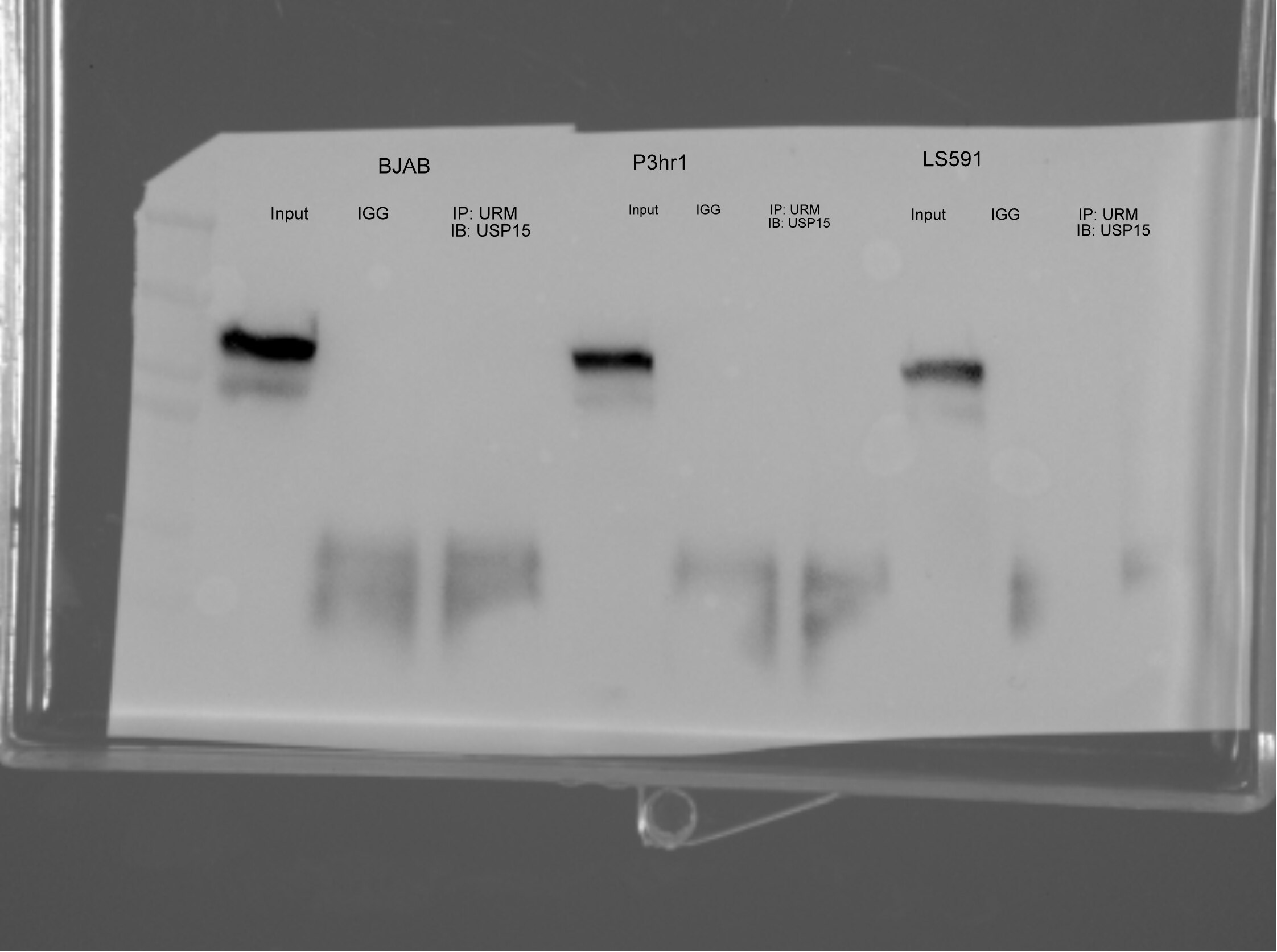
The single review for this antibody is highly positive, with a 5-star rating. The reviewer used it for Western Blot at a 1:5,000 dilution and described it as a great antibody that produced a very specific single band. Overall, the feedback highlights strong specificity and reliable performance in WB applications.
The reviews below have been submitted by verified Proteintech customers who received an incentive for providing their feedback.
Shunbin (Verified Customer) (06-07-2023) | Great antibody for Western Blot. Very specific single band
 |








