

Product Information
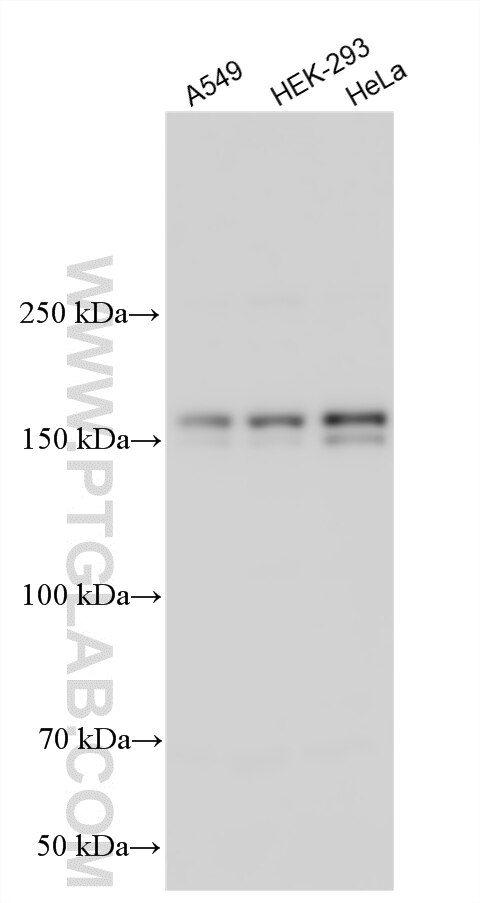
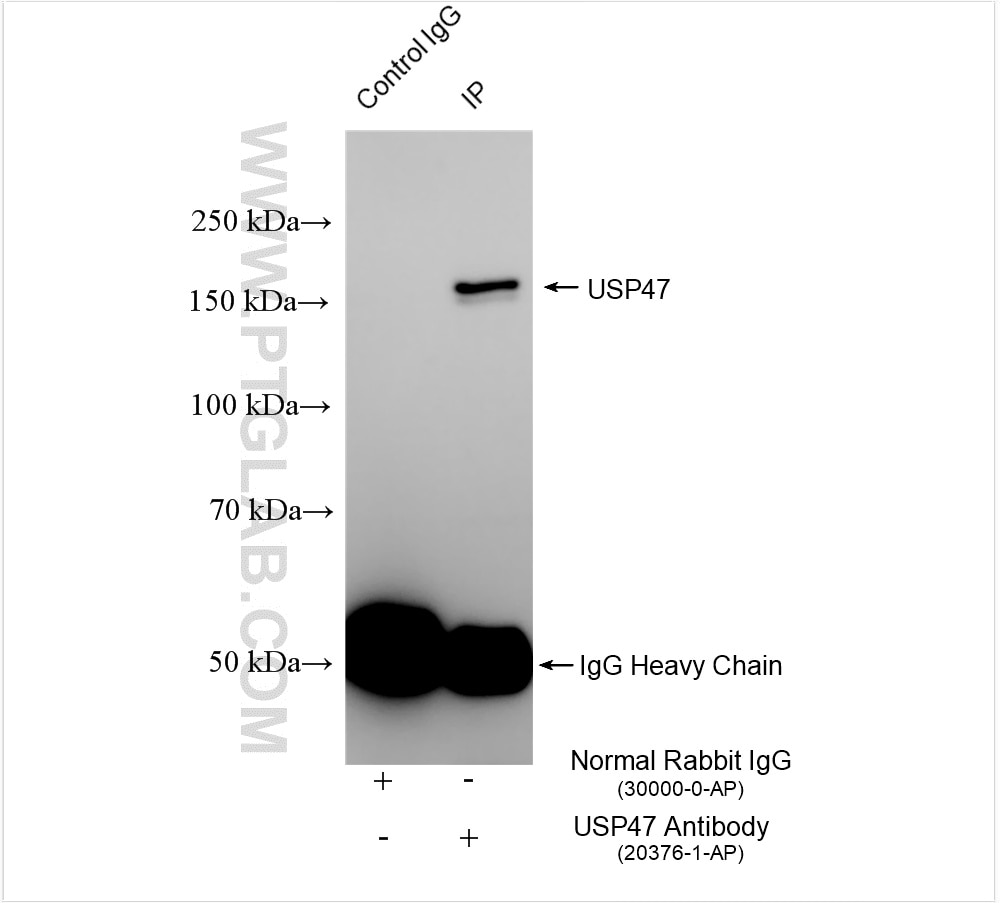
20376-1-PBS targets USP47 in WB, IP, ELISA applications and shows reactivity with human samples.
| Tested Reactivity | human |
| Host / Isotype | Rabbit / IgG |
| Class | Polyclonal |
| Type | Antibody |
| Immunogen |
CatNo: Ag13990 Product name: Recombinant human USP47 protein Source: e coli.-derived, PGEX-4T Tag: GST Domain: 1219-1375 aa of BC000226 Sequence: MKSMSQLAVLSRRWKPSEMKLDPFQEVVLESSSVDELREKLSEISGIPLDDIEFAKGRGTFPCDISVLDIHQDLDWNPKVSTLNVWPLYICDDGAVIFYRDKTEELMELTDEQRNELMKKESSRLQKTGHRVTYSPRKEKALKIYLDGAPNKDLTQD Predict reactive species |
| Full Name | ubiquitin specific peptidase 47 |
| Calculated Molecular Weight | 1375 aa, 157 kDa |
| Observed Molecular Weight | 151 kDa |
| GenBank Accession Number | BC000226 |
| Gene Symbol | USP47 |
| Gene ID (NCBI) | 55031 |
| RRID | AB_3741991 |
| Conjugate | Unconjugated |
| Form | Liquid |
| Purification Method | Antigen affinity purification |
| UNIPROT ID | Q96K76 |
| Storage Buffer | PBS only, pH 7.3. |
| Storage Conditions | Store at -80°C. |
Background Information
USP47 (Ubiquitin-Specific Peptidase 47) is a deubiquitinating enzyme that regulates protein stability and function by specifically removing ubiquitin chains from target proteins. USP47 is involved in various fundamental biological processes, including DNA damage repair, cell cycle progression, Wnt signaling, and epithelial-mesenchymal transition. By deubiquitinating and stabilizing β-catenin and TLE3, this enzyme positively regulates the Wnt/β-catenin signaling pathway, thereby promoting cell proliferation and tumorigenesis. Studies have shown that USP47 is significantly overexpressed in various cancers, such as colorectal cancer, gastric cancer, and breast cancer, where it participates in epithelial-mesenchymal transition (EMT), DNA damage repair, and cell cycle regulation.



