

Tested Applications
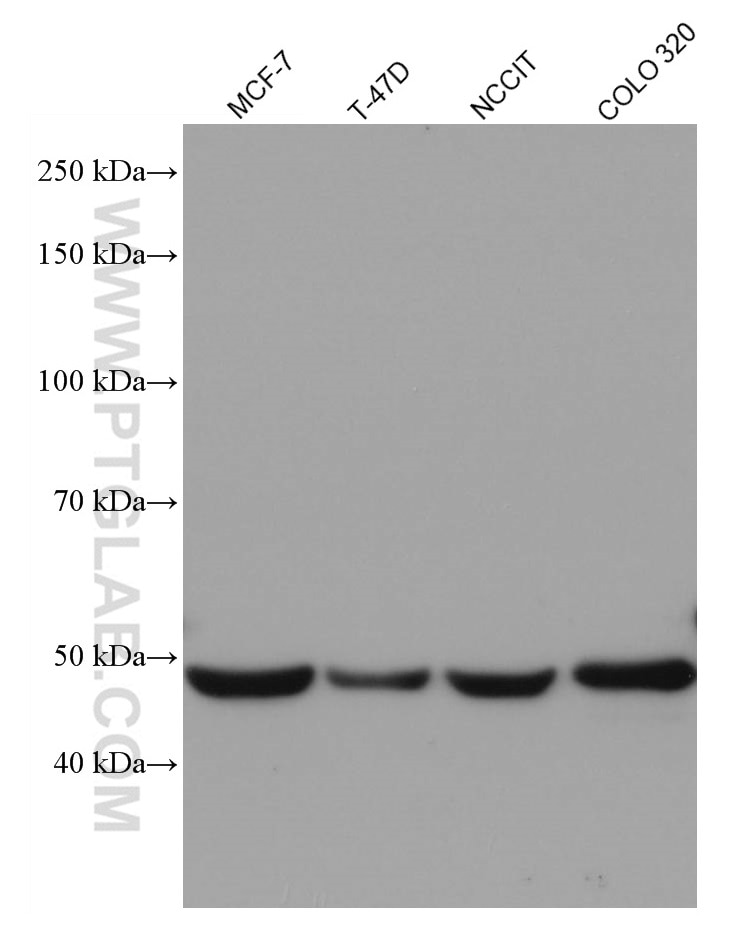
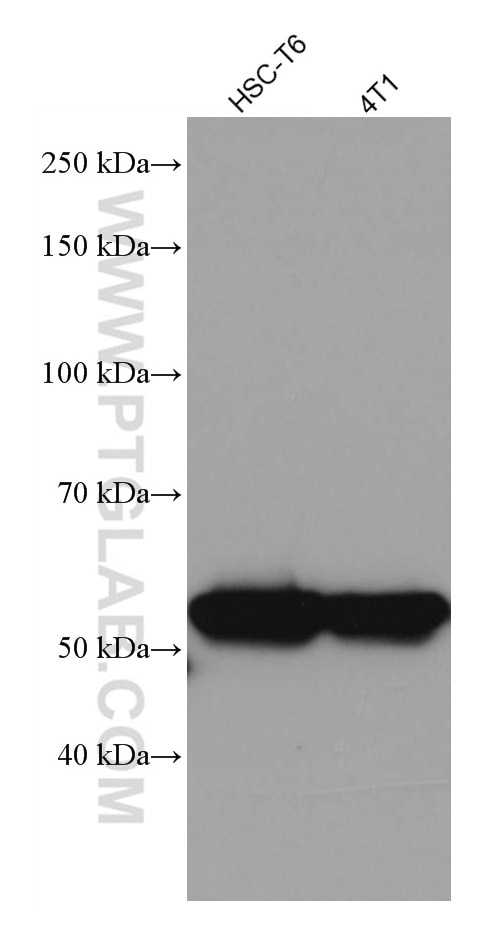
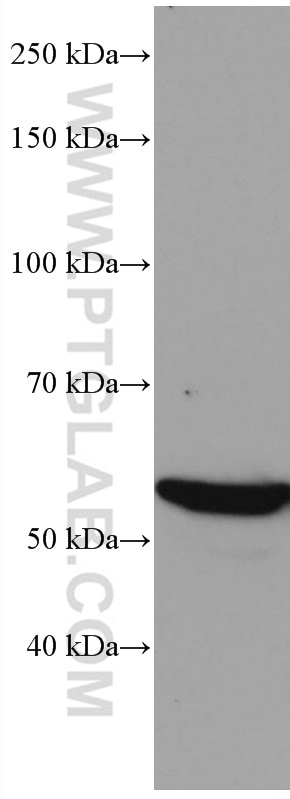
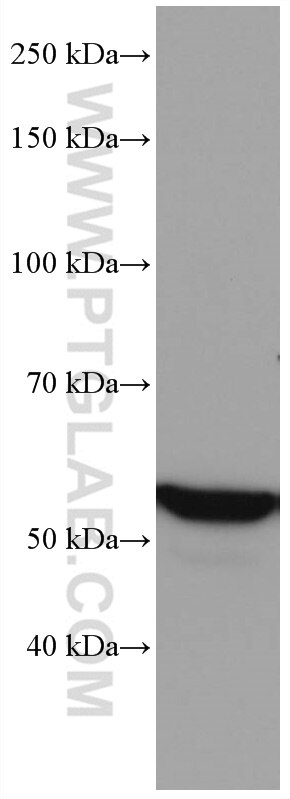
| Positive WB detected in | MCF-7 cells, HeLa cells, HSC-T6 cells, T-47D cells, NCCIT cells, COLO 320 cells, 4T1 cells |
Recommended dilution
| Application | Dilution |
|---|---|
| Western Blot (WB) | WB : 1:2000-1:10000 |
| It is recommended that this reagent should be titrated in each testing system to obtain optimal results. | |
| Sample-dependent, Check data in validation data gallery. | |
Product Information
67192-1-Ig targets VDR in WB, IHC, IF, ChIP, ELISA applications and shows reactivity with human, mouse, rat samples.
| Tested Reactivity | human, mouse, rat |
| Cited Reactivity | human, mouse, rat, pig |
| Host / Isotype | Mouse / IgG2a |
| Class | Monoclonal |
| Type | Antibody |
| Immunogen |
CatNo: Ag28188 Product name: Recombinant human VDR protein Source: e coli.-derived, PET28a Tag: 6*His Domain: 81-220 aa of BC060832 Sequence: LKRCVDIGMMKEFILTDEEVQRKREMILKRKEEEALKDSLRPKLSEEQQRIIAILLDAHHKTYDPTYSDFCQFRPPVRVNDGGGSHPSRPNSRHTPSFSGDSSSSCSDHCITSSDMMDSSSFSNLDLSEEDSDDPSVTLE Predict reactive species |
| Full Name | vitamin D (1,25- dihydroxyvitamin D3) receptor |
| Calculated Molecular Weight | 48 kDa |
| Observed Molecular Weight | 48-55 kDa |
| GenBank Accession Number | BC060832 |
| Gene Symbol | VDR |
| Gene ID (NCBI) | 7421 |
| RRID | AB_2882487 |
| Conjugate | Unconjugated |
| Form | Liquid |
| Purification Method | Protein A purification |
| UNIPROT ID | P11473 |
| Storage Buffer | PBS with 0.02% sodium azide and 50% glycerol, pH 7.3. |
| Storage Conditions | Store at -20°C. Stable for one year after shipment. Aliquoting is unnecessary for -20oC storage. 20ul sizes contain 0.1% BSA. |
Background Information
The vitamin D3 receptor (VDR), also known as NR1I1 (nuclear receptor subfamily 1, group I, member 1), is a member of the nuclear receptor family of transcription factors. Upon activation by vitamin D, the VDR forms a heterodimer with the retinoid-X receptor and binds to hormone response elements on DNA resulting in expression or trans-repression of specific gene products.It is an intracellular hormone receptor that specifically binds 1,25(OH)2D3 and mediates its effects. Downstream targets of this nuclear hormone receptor are principally involved in mineral metabolism though the receptor regulates a variety of other metabolic pathways, such as those involved in the immune response and cancer. Defects in VDR are the cause of rickets vitamin D-dependent type 2A (VDDR2A). A disorder of vitamin D metabolism results in severe rickets, hypocalcemia and secondary hyperparathyroidism. Most patients have total alopecia in addition to rickets. The VDR exists two isoform with the MV 48 kDa and 54 kDa.
Protocols
| Product Specific Protocols | |
|---|---|
| WB protocol for VDR antibody 67192-1-Ig | Download protocol |
| Standard Protocols | |
|---|---|
| Click here to view our Standard Protocols |
Publications
What published studies show
The antibody is a Vitamin D Receptor (VDR) antibody, catalog number 67192-1-Ig, with a total of 36 citations. Citations appear in journals including Cell Death & Discovery, J Nanobiotechnology, Phytomedicine, Mater Today Bio, J Transl Med, CNS Neuroscience & Therapeutics, Cells, Frontiers series, European Journal of Pharmacology, International Immunopharmacology, Science Reports, Cell Signaling, and others. Research fields span vitamin D signaling, fibrosis, oncology, neurology, immunology, metabolic disease, bone biology, and sepsis.
| Species | Application | Title |
|---|---|---|
J Nanobiotechnology Nanoengineered bile acid-mediated orchestration of versatile immuno-microbial cues for treating periodontitis. | ||
Cell Commun Signal Vitamin D receptor (VDR) on the cell membrane of mouse macrophages participates in the formation of lipopolysaccharide tolerance: mVDR is related to the effect of artesunate to reverse LPS tolerance | ||
Phytomedicine Asperuloside inhibited epithelial-mesenchymal transition in colitis associated cancer via activation of vitamin D receptor.
| ||
Mater Today Bio Alendronic acid modified PLGA drug delivery system loaded with 17β-Estradiol and vitamin D3 has anti-osteoporotic effect. | ||
Cell Death Discov Claudin1 decrease induced by 1,25-dihydroxy-vitamin D3 potentiates gefitinib resistance therapy through inhibiting AKT activation-mediated cancer stem-like properties in NSCLC cells. | ||
J Transl Med Notch3 enhances the synergistic effect of all-trans retinoic acid and calcipotriol in pancreatic stellate cell activation |





