





Tested Applications
| Positive WB detected in | L02 cells, HeLa cells, MCF-7 cells |
| Positive IP detected in | L02 cells |
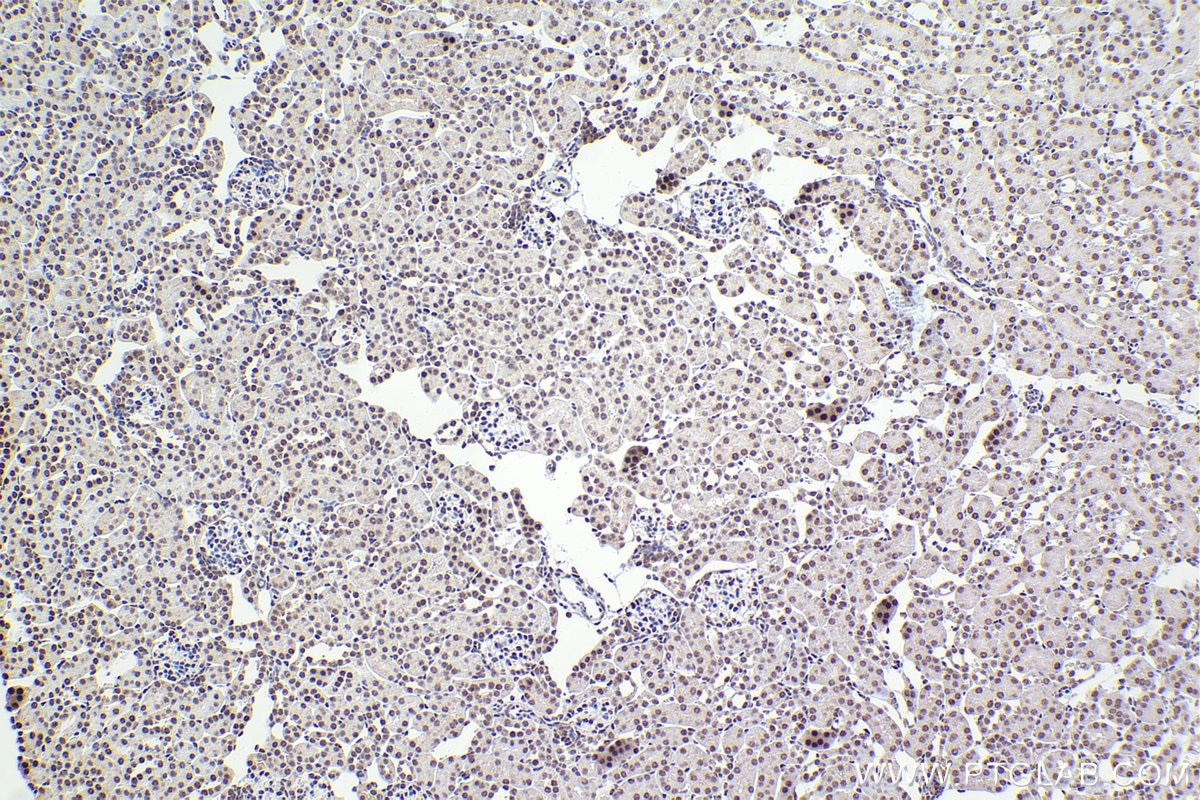
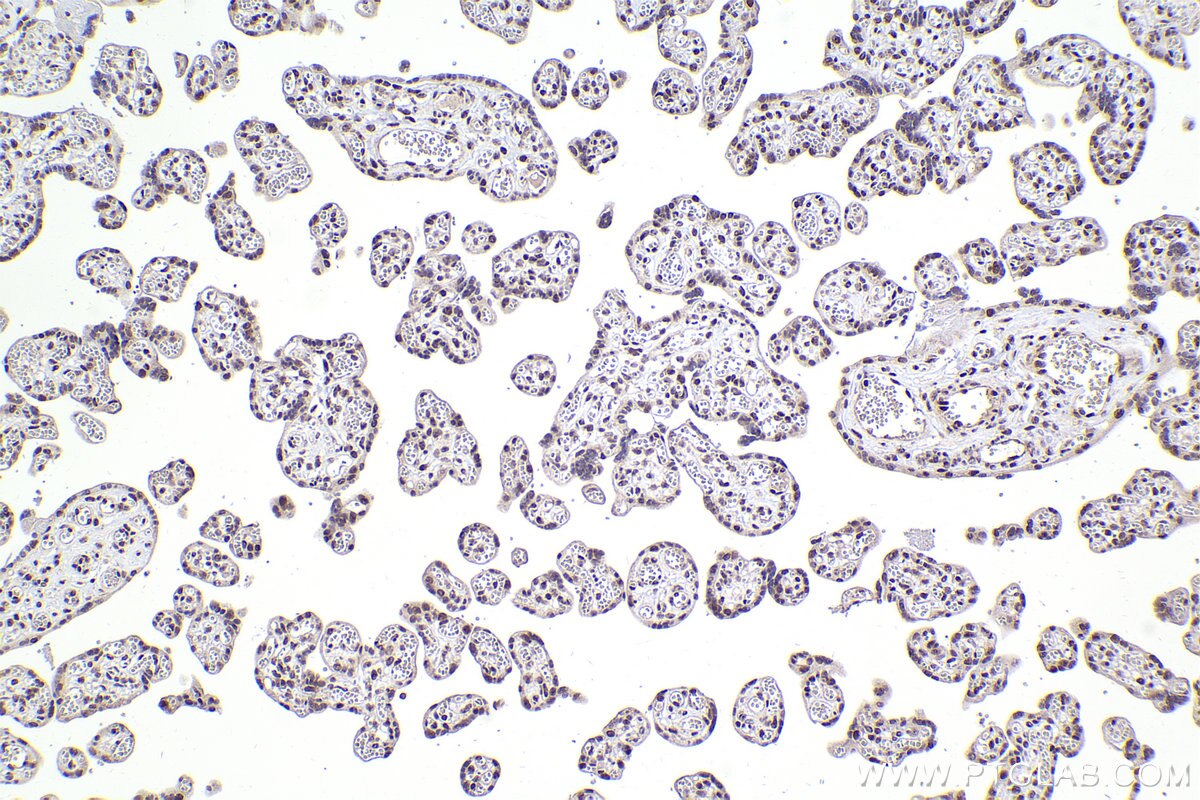
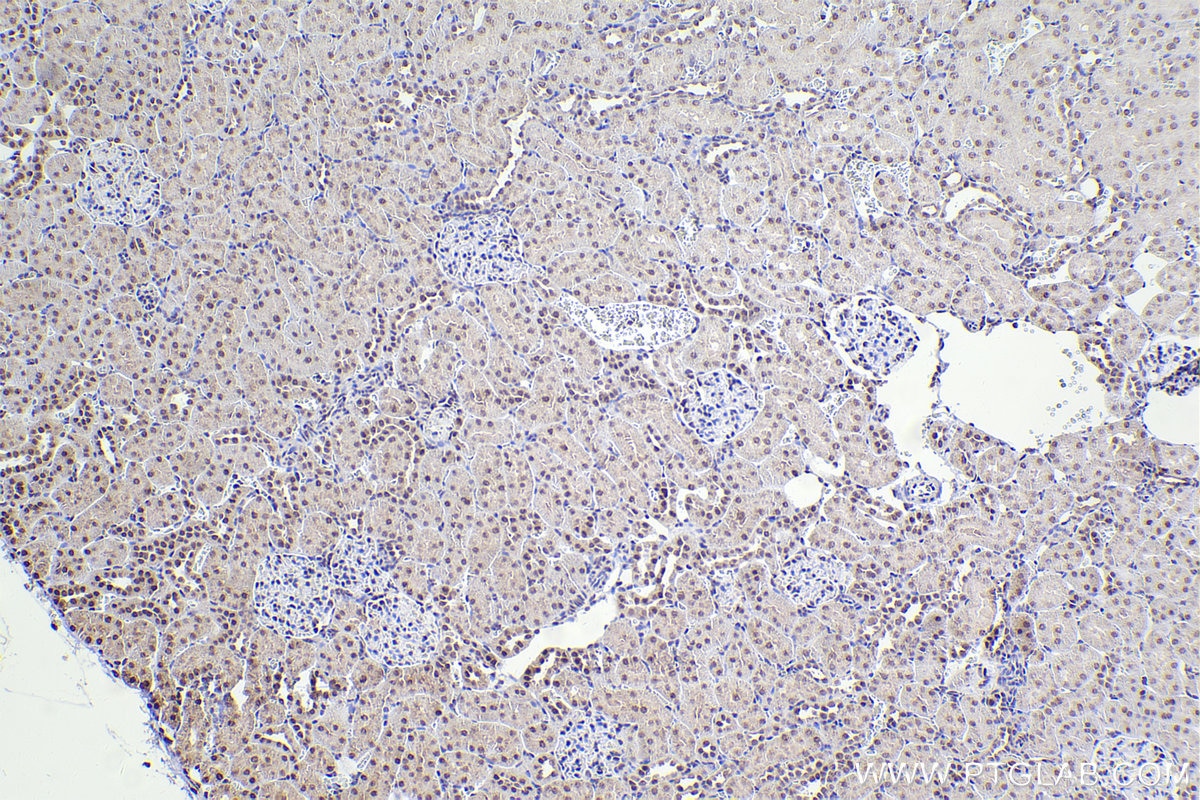
| Positive IHC detected in | human placenta tissue, mouse kidney tissue, rat kidney tissue Note: suggested antigen retrieval with TE buffer pH 9.0; (*) Alternatively, antigen retrieval may be performed with citrate buffer pH 6.0 |
| Positive IF/ICC detected in | HepG2 cells |
| Positive FC (Intra) detected in | HepG2 cells |
Recommended dilution
| Application | Dilution |
|---|---|
| Western Blot (WB) | WB : 1:200-1:1000 |
| Immunoprecipitation (IP) | IP : 0.5-4.0 ug for 1.0-3.0 mg of total protein lysate |
| Immunohistochemistry (IHC) | IHC : 1:250-1:1000 |
| Immunofluorescence (IF)/ICC | IF/ICC : 1:200-1:800 |
| Flow Cytometry (FC) (INTRA) | FC (INTRA) : 0.40 ug per 10^6 cells in a 100 µl suspension |
| It is recommended that this reagent should be titrated in each testing system to obtain optimal results. | |
| Sample-dependent, Check data in validation data gallery. | |
Product Information
16462-1-AP targets XPA in WB, IHC, IF/ICC, FC (Intra), IP, ELISA applications and shows reactivity with human, mouse, rat samples.
| Tested Reactivity | human, mouse, rat |
| Cited Reactivity | human, mouse, zebrafish |
| Host / Isotype | Rabbit / IgG |
| Class | Polyclonal |
| Type | Antibody |
| Immunogen |
CatNo: Ag9536 Product name: Recombinant human XPA protein Source: e coli.-derived, PGEX-4T Tag: GST Domain: 1-273 aa of BC014965 Sequence: MAAADGALPEAAALEQPAELPASVRASIERKRQRALMLRQARLAARPYSATAAAATGGMANVKAAPKIIDTGGGFILEEEEEEEQKIGKVVHQPGPVMEFDYVICEECGKEFMDSYLMNHFDLPTCDNCRDADDKHKLITKTEAKQEYLLKDCDLEKREPPLKFIVKKNPHHSQWGDMKLYLKLQIVKRSLEVWGSQEALEEAKEVRQENREKMKQKKFDKKVKELRRAVRSSVWKRETIVHQHEYGPEENLEDDMYRKTCTMCGHELTYEKM Predict reactive species |
| Full Name | xeroderma pigmentosum, complementation group A |
| Calculated Molecular Weight | 374aa,42 kDa; 273aa,31 kDa |
| Observed Molecular Weight | 40 kDa |
| GenBank Accession Number | BC014965 |
| Gene Symbol | XPA |
| Gene ID (NCBI) | 7507 |
| RRID | AB_2878261 |
| Conjugate | Unconjugated |
| Form | Liquid |
| Purification Method | Antigen affinity purification |
| UNIPROT ID | P23025 |
| Storage Buffer | PBS with 0.02% sodium azide and 50% glycerol, pH 7.3. |
| Storage Conditions | Store at -20°C. Stable for one year after shipment. Aliquoting is unnecessary for -20oC storage. 20ul sizes contain 0.1% BSA. |
Background Information
XPA, also named as DNA repair protein complementing XP-A cells, is a 272 amino acid protein, which belongs to the XPA family. XPA is expressed in various cell lines and in skin fibroblasts. XPA is involved in DNA excision repair. Initiates repair by binding to damaged sites with various affinities, depending on the photoproduct and the transcriptional state of the region. XPA is required for UV-induced CHEK1 phosphorylation and the recruitment of CEP164 to cyclobutane pyrimidine dimmers (CPD), sites of DNA damage after UV irradiation. The calculated molecular weight of XPA is 31 kDa, but modified XPA protein is about 40 kDa (PMID: 17848622).
Protocols
| Product Specific Protocols | |
|---|---|
| FC protocol for XPA antibody 16462-1-AP | Download protocol |
| IF protocol for XPA antibody 16462-1-AP | Download protocol |
| IHC protocol for XPA antibody 16462-1-AP | Download protocol |
| IP protocol for XPA antibody 16462-1-AP | Download protocol |
| WB protocol for XPA antibody 16462-1-AP | Download protocol |
| Standard Protocols | |
|---|---|
| Click here to view our Standard Protocols |
Publications
What published studies show
The XPA Polyclonal antibody (Cat# 16462-1-AP) has 10 citations published in journals including Advanced Science, Advanced Healthcare Materials, Science of the Total Environment, Journal of Translational Medicine, Genes & Development, Frontiers in Pharmacology, Heliyon, Journal of Cancer, Frontiers in Oncology, and Nucleic Acids Research. Research fields span DNA damage repair, liver tumorigenesis, prostate cancer, cardiac malformations, Parkinson's disease, telomere replication, melanoma, Alzheimer's disease, and non-small cell lung cancer.
| Species | Application | Title |
|---|---|---|
Adv Sci (Weinh) Arid1a Deficiency Drives Aristolochic Acid-Induced Liver Tumorigenesis through Ctnnb1 Mutation and Defective Nucleotide Excision Repair. | ||
Adv Healthc Mater Macromolecular NO-Donor Micelles for Targeted and Augmented Chemotherapy against Prostate Cancer | ||
Sci Total Environ AHR-mediated DNA damage contributes to BaP-induced cardiac malformations in zebrafish | ||
J Transl Med A diagnostic model for Parkinson's disease based on circadian rhythm-related genes | ||
Front Pharmacol Triptolide enhances carboplatin-induced apoptosis by inhibiting nucleotide excision repair (NER) activity in melanoma |
Reviews
What customers say
The single review for this antibody is highly positive, with a 5-star rating. The reviewer used it for Western Blot at a 1:1000 dilution on human organoids and SW620/SW480 cell lines, reporting that the antibody works really well for this application. Overall, the feedback indicates strong performance and reliability for WB.
The reviews below have been submitted by verified Proteintech customers who received an incentive for providing their feedback.
Yogain (Verified Customer) (12-19-2025) | Antibody works really well for western blot.
|







