

Tested Applications
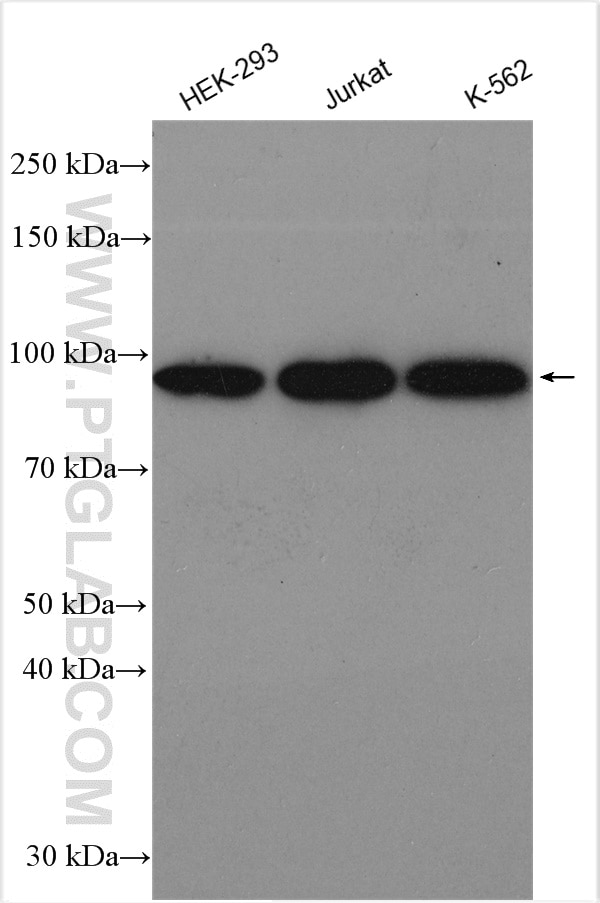
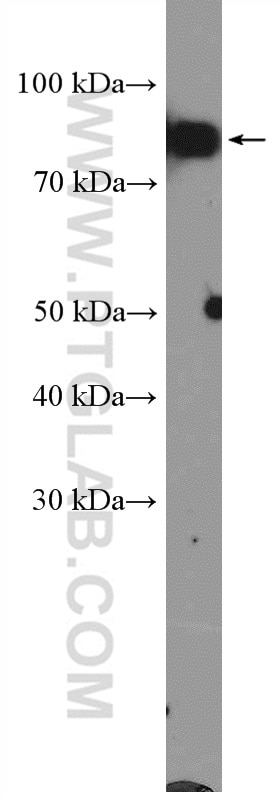
| Positive WB detected in | HEK-293 cells, K-562 cells, Jurkat cells |
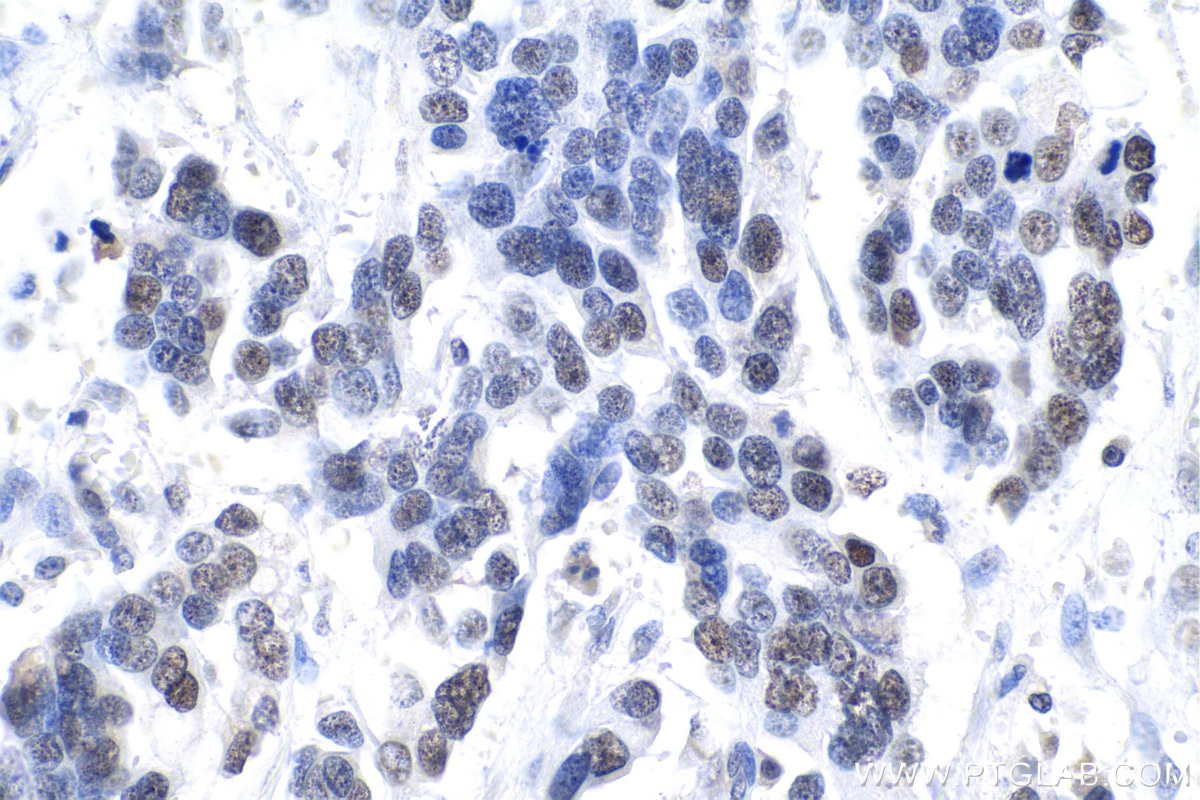
| Positive IHC detected in | human colon cancer tissue Note: suggested antigen retrieval with TE buffer pH 9.0; (*) Alternatively, antigen retrieval may be performed with citrate buffer pH 6.0 |
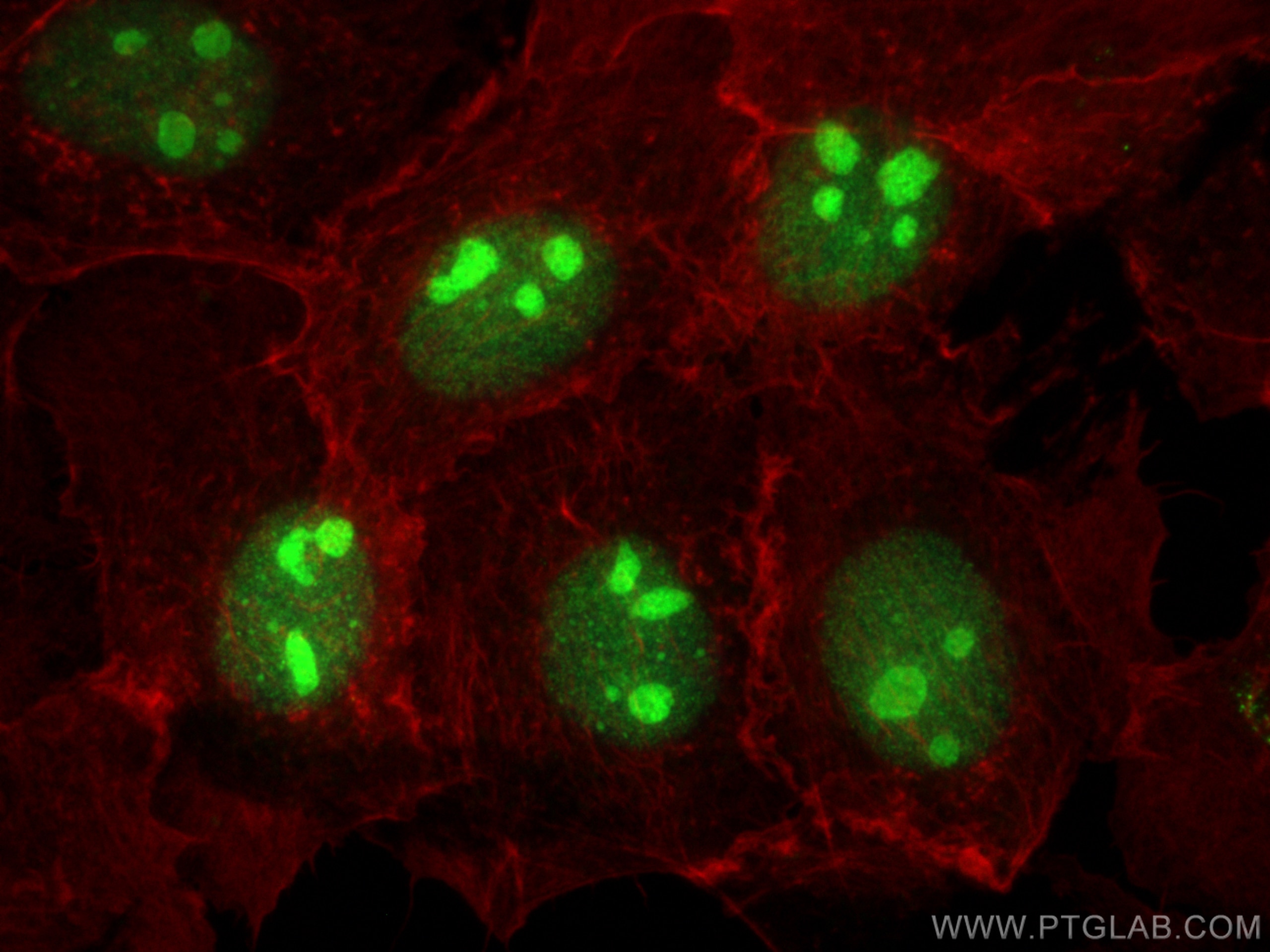
| Positive IF/ICC detected in | A431 cells |
Recommended dilution
| Application | Dilution |
|---|---|
| Western Blot (WB) | WB : 1:2000-1:12000 |
| Immunohistochemistry (IHC) | IHC : 1:500-1:2000 |
| Immunofluorescence (IF)/ICC | IF/ICC : 1:200-1:800 |
| It is recommended that this reagent should be titrated in each testing system to obtain optimal results. | |
| Sample-dependent, Check data in validation data gallery. | |
Product Information
21468-1-AP targets XRCC1 in WB, IHC, IF/ICC, ELISA applications and shows reactivity with human samples.
| Tested Reactivity | human |
| Cited Reactivity | human, mouse |
| Host / Isotype | Rabbit / IgG |
| Class | Polyclonal |
| Type | Antibody |
| Immunogen |
CatNo: Ag15172 Product name: Recombinant human XRCC1 protein Source: e coli.-derived, PET28a Tag: 6*His Domain: 284-633 aa of BC023593 Sequence: TAPVPARAQGAVTGKPRGEGTEPRRPRAGPEELGKILQGVVVVLSGFQNPFRSELRDKALELGAKYRPDWTRDSTHLICAFANTPKYSQVLGLGGRIVRKEWVLDCHRMRRRLPSQRYLMAGPGSSSEEDEASHSGGSGDEAPKLPQKQPQTKTKPTQAAGPSSPQKPPTPEETKAASPVLQEDIDIEGVQSEGQDNGAEDSGDTEDELRRVAEQKEHRLPPGQEENGEDPYAGSTDENTDSEEHQEPPDLPVPELPDFFQGKHFFLYGEFPGDERRKLIRYVTAFNGELEDYMSDRVQFVITAQEWDPSFEEALMDNPSLAFVRPRWIYSCNEKQKLLPHQLYGVVPQA Predict reactive species |
| Full Name | X-ray repair complementing defective repair in Chinese hamster cells 1 |
| Calculated Molecular Weight | 633 aa, 70 kDa |
| Observed Molecular Weight | 80-90 kDa |
| GenBank Accession Number | BC023593 |
| Gene Symbol | XRCC1 |
| Gene ID (NCBI) | 7515 |
| RRID | AB_2878865 |
| Conjugate | Unconjugated |
| Form | Liquid |
| Purification Method | Antigen affinity purification |
| UNIPROT ID | P18887 |
| Storage Buffer | PBS with 0.02% sodium azide and 50% glycerol, pH 7.3. |
| Storage Conditions | Store at -20°C. Stable for one year after shipment. Aliquoting is unnecessary for -20oC storage. 20ul sizes contain 0.1% BSA. |
Background Information
XRCC1 (X-ray Repair Cross Complementing group 1) is a molecular scaffold protein that interacts with multiple enzymatic components of DNA single-strand break repair (SSBR) including DNA kinase, DNA phosphatase, DNA polymerase, DNA deadenylase, and DNA ligase activities that collectively are capable of accelerating the repair of a broad range of DNA single-strand breaks (SSBs) (PMID: 18515191). XRCC1 is 633 amino acids in length which is comprised of an N-terminal domain (NTD) of ˜160 amino acids that interacts with Pol β, a central BRCT domain of ˜90 amino acids that interacts with PARP1 (PMID: 9584196). This antibody is not suitable for murine samples.
Protocols
| Product Specific Protocols | |
|---|---|
| IF protocol for XRCC1 antibody 21468-1-AP | Download protocol |
| IHC protocol for XRCC1 antibody 21468-1-AP | Download protocol |
| WB protocol for XRCC1 antibody 21468-1-AP | Download protocol |
| Standard Protocols | |
|---|---|
| Click here to view our Standard Protocols |
Publications
What published studies show
The XRCC1 Polyclonal antibody (Cat# 21468-1-AP) has 16 citations spanning journals including Nature, Cell, Molecular Cell, Journal of Clinical Investigation, Science Advances, and Nucleic Acids Research. Research fields covered include DNA repair (base excision repair, mismatch repair, NHEJ/NER), cancer biology (prostate, gastric, breast, ovarian, lung, gallbladder, and liver cancers), DNA damage response, oxidative stress, chemoresistance, and genome stability.
| Species | Application | Title |
|---|---|---|
Nature Retrotransposons hijack alt-EJ for DNA replication and eccDNA biogenesis
| ||
Cell Extrachromosomal DNA replication and maintenance couple with DNA damage pathway in tumors | ||
Nucleic Acids Res KDM6B promotes PARthanatos via suppression of O6-methylguanine DNA methyltransferase repair and sustained checkpoint response. | ||
J Clin Invest Overexpression of the ERG oncogene in prostate cancer identifies candidates for PARP inhibitor-based radiosensitization. | ||
Sci Adv 53BP1 orchestrates sequence feature of RAG targets to balance DNA repair outcomes during V(D)J recombination. |





