

Tested Applications
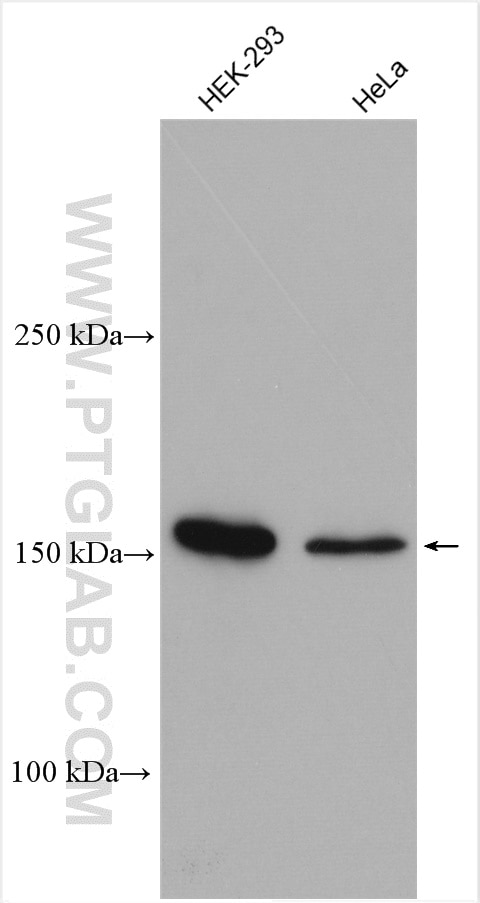
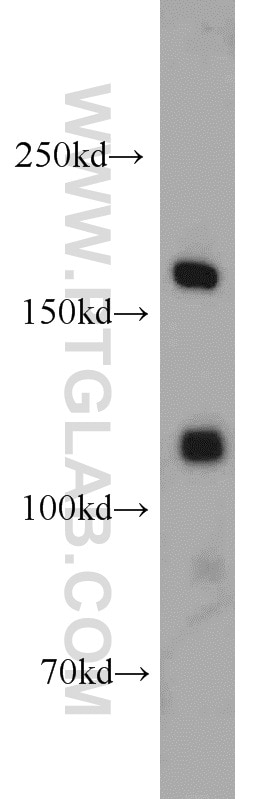
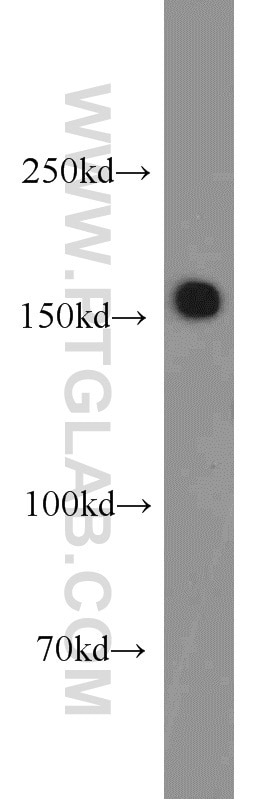
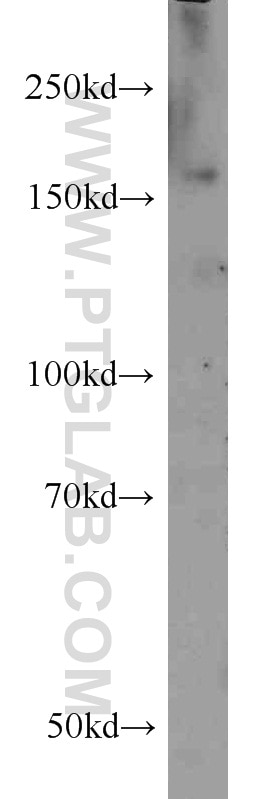
| Positive WB detected in | HEK-293 cells, mouse brain tissue, MCF-7 cells, human brain tissue, HeLa cells |
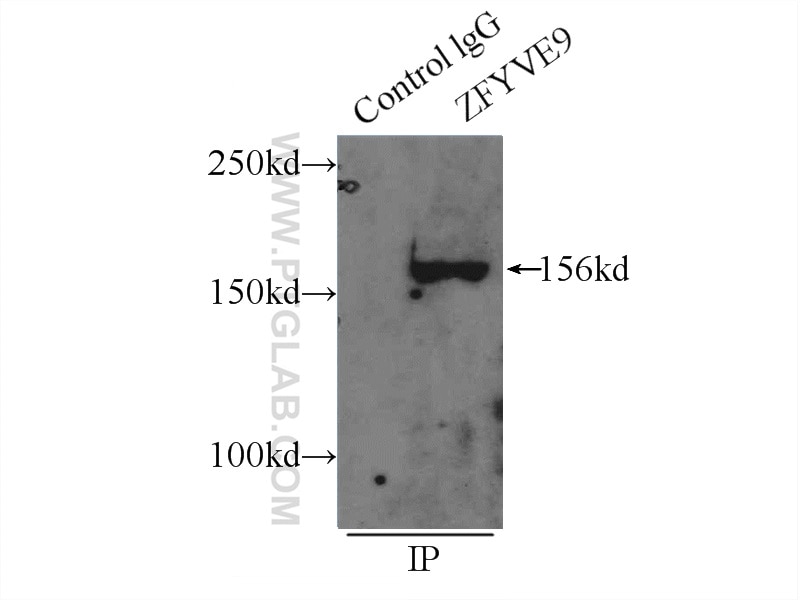
| Positive IP detected in | mouse brain tissue |
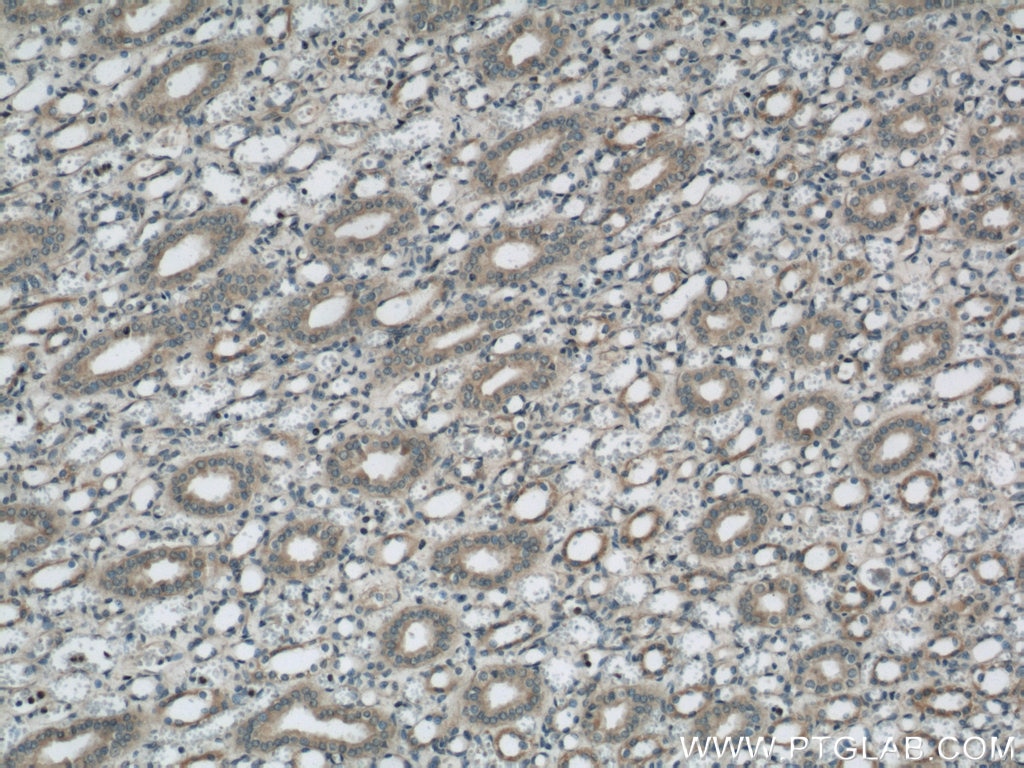
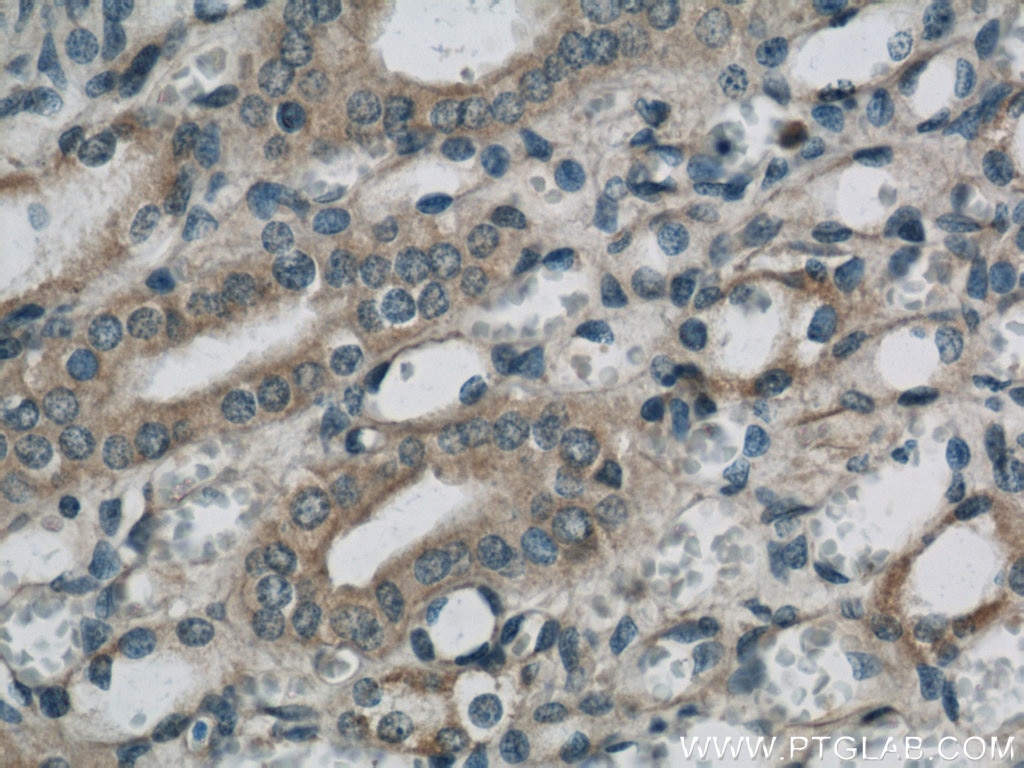
| Positive IHC detected in | human kidney tissue Note: suggested antigen retrieval with TE buffer pH 9.0; (*) Alternatively, antigen retrieval may be performed with citrate buffer pH 6.0 |
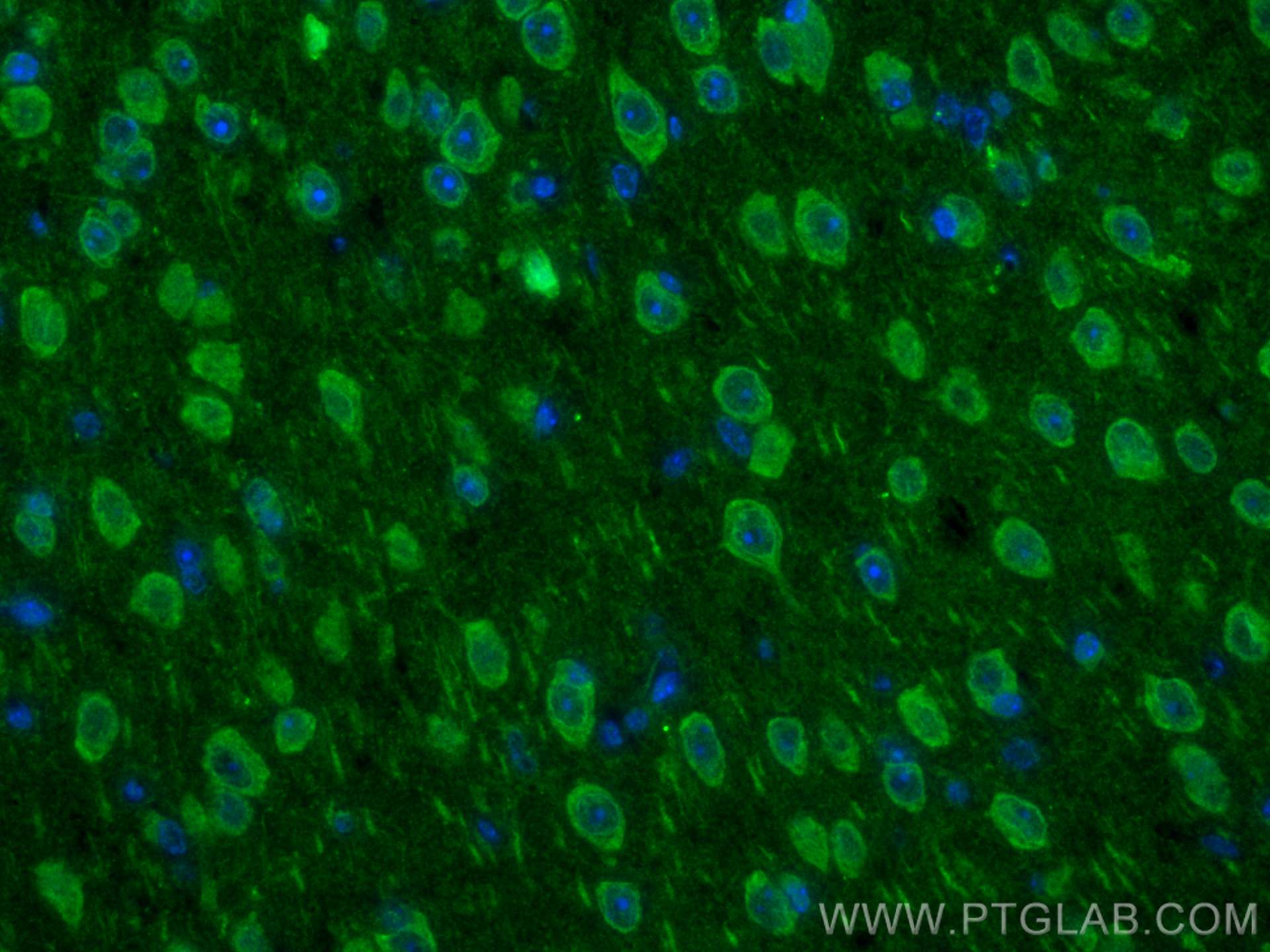
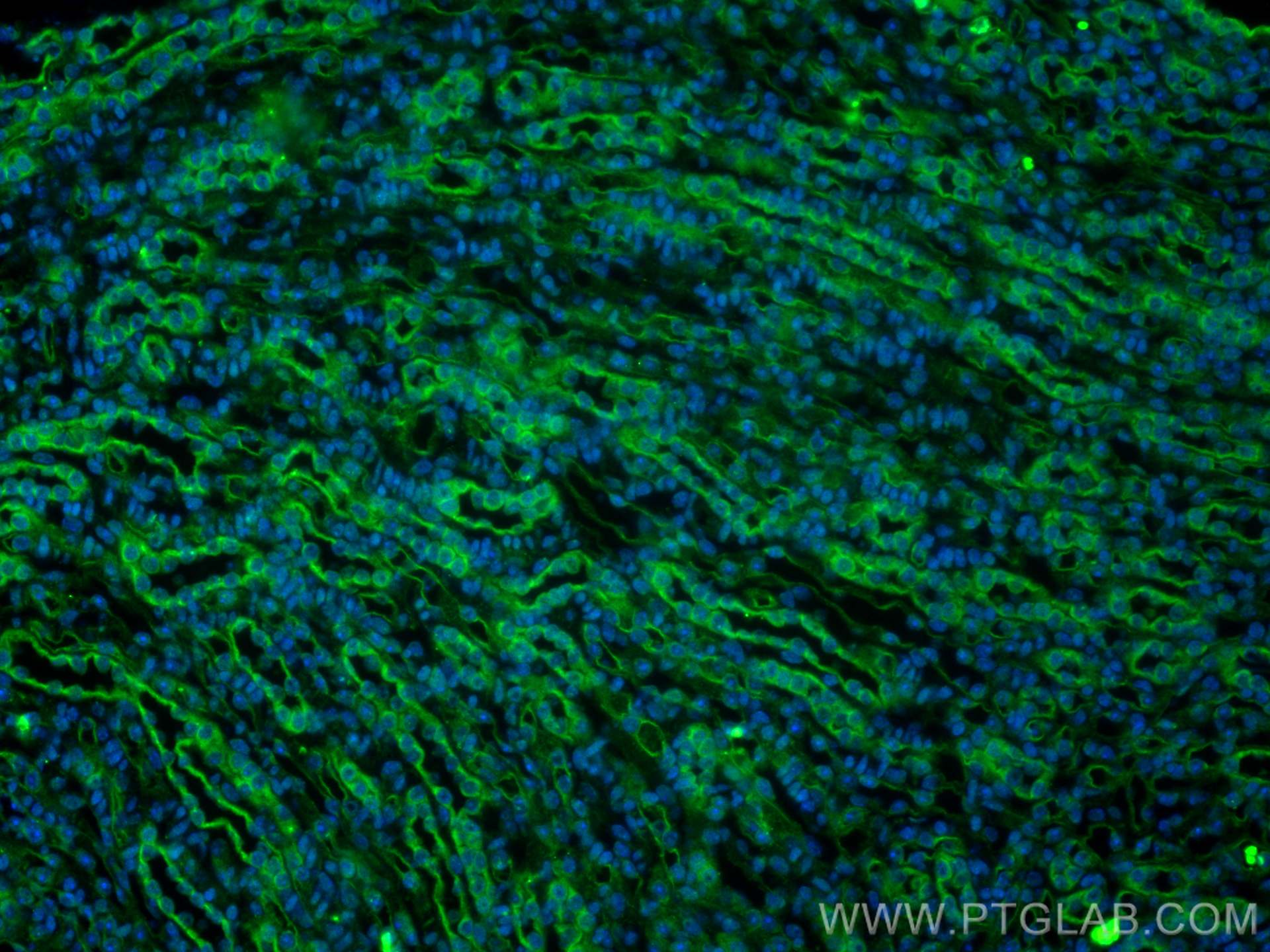
| Positive IF-P detected in | mouse brain tissue, mouse kidney tissue |
Recommended dilution
| Application | Dilution |
|---|---|
| Western Blot (WB) | WB : 1:500-1:2000 |
| Immunoprecipitation (IP) | IP : 0.5-4.0 ug for 1.0-3.0 mg of total protein lysate |
| Immunohistochemistry (IHC) | IHC : 1:20-1:200 |
| Immunofluorescence (IF)-P | IF-P : 1:50-1:500 |
| It is recommended that this reagent should be titrated in each testing system to obtain optimal results. | |
| Sample-dependent, Check data in validation data gallery. | |
Product Information
22033-1-AP targets SARA in WB, IHC, IF-P, IP, ELISA applications and shows reactivity with human, mouse, rat samples.
| Tested Reactivity | human, mouse, rat |
| Cited Reactivity | human, mouse |
| Host / Isotype | Rabbit / IgG |
| Class | Polyclonal |
| Type | Antibody |
| Immunogen |
CatNo: Ag16929 Product name: Recombinant human ZFYVE9 protein Source: e coli.-derived, PET28a Tag: 6*His Domain: 1075-1425 aa of BC032680 Sequence: MLRLGAEYRLYPCPLFSVRFRKPLFGETGHTIMNLLADFRNYQYTLPVVQGLVVDMEVRKTSIKIPSNRYNEMMKAMNKSNEHVLAGGACFNEKADSHLVCVQNDDGNYQTQAISIHNQPRKVTGASFFVFSGALKSSSGYLAKSSIVEDGVMVQITAENMDSLRQALREMKDFTITCGKADAEEPQEHIHIQWVDDDKNVSKGVVSPIDGKSMETITNVKIFHGSEYKANGKVIRWTEVFFLENDDQHNCLSDPADHSRLTEHVAKAFCLALCPHLKLLKEDGMTKLGLRVTLDSDQVGYQAGSNGQPLPSQYMNDLDSALVPVIHGGACQLSEGPVVMELIFYILENIV Predict reactive species |
| Full Name | zinc finger, FYVE domain containing 9 |
| Calculated Molecular Weight | 1425 aa, 156 kDa |
| Observed Molecular Weight | 156 kDa |
| GenBank Accession Number | BC032680 |
| Gene Symbol | SARA |
| Gene ID (NCBI) | 9372 |
| RRID | AB_11182938 |
| Conjugate | Unconjugated |
| Form | Liquid |
| Purification Method | Antigen affinity purification |
| UNIPROT ID | O95405 |
| Storage Buffer | PBS with 0.02% sodium azide and 50% glycerol, pH 7.3. |
| Storage Conditions | Store at -20°C. Stable for one year after shipment. Aliquoting is unnecessary for -20oC storage. 20ul sizes contain 0.1% BSA. |
Background Information
ZFYVE9, also known as SARA (Smad anchor for receptor activation), is a double zinc finger (FYVE domain) protein that interacts directly with SMAD2 and SMAD3, and is involved in Alzheimer's disease. SARA functions to recruit SMAD2/SMAD3 to intracellular membranes and to the TGF-beta receptor. SARA plays a significant role in TGF-mediated signaling by regulating the subcellular location of SMAD2 and SMAD3 and modulating the transcriptional activity of the SMAD3/SMAD4 complex. SARA is possibly associated with TGF-beta receptor internalization.
Protocols
| Product Specific Protocols | |
|---|---|
| IF protocol for SARA antibody 22033-1-AP | Download protocol |
| IHC protocol for SARA antibody 22033-1-AP | Download protocol |
| IP protocol for SARA antibody 22033-1-AP | Download protocol |
| WB protocol for SARA antibody 22033-1-AP | Download protocol |
| Standard Protocols | |
|---|---|
| Click here to view our Standard Protocols |
Publications
What published studies show
The SARA Polyclonal antibody (Cat# 22033-1-AP) has 5 total citations published in Autophagy, Science Advances, Journal of Bone and Mineral Research, Structure, and FASEB Journal. Research fields span autophagy and wound healing, KSHV viral infection of mesenchymal stem cells, TGF-β/Smad signaling dysfunction in osteogenesis imperfecta, structural biology of TGFβ signaling regulators, and peritoneal fibrosis treatment via Smad2/3 pathway modulation.
| Species | Application | Title |
|---|---|---|
Autophagy Autophagic degradation of SQSTM1 enables fibroblast activation to accelerate wound healing | ||
Sci Adv Neuropilin 1 is an entry receptor for KSHV infection of mesenchymal stem cell through TGFBR1/2-mediated macropinocytosis
| ||
J Bone Miner Res Dysfunction of Caveolae-mediated Endocytic TβRI Degradation Results in Hypersensitivity of TGF-β/Smad Signaling in Osteogenesis Imperfecta | ||
Structure Structural Basis for Specific Interaction of TGFβ Signaling Regulators SARA/Endofin with HD-PTP.
| ||
FASEB J Parthenolide Alleviates Peritoneal Fibrosis by Blocking Smad2/3 Phosphorylation via Smad Anchor for Receptor Activation. |










