
Product Information
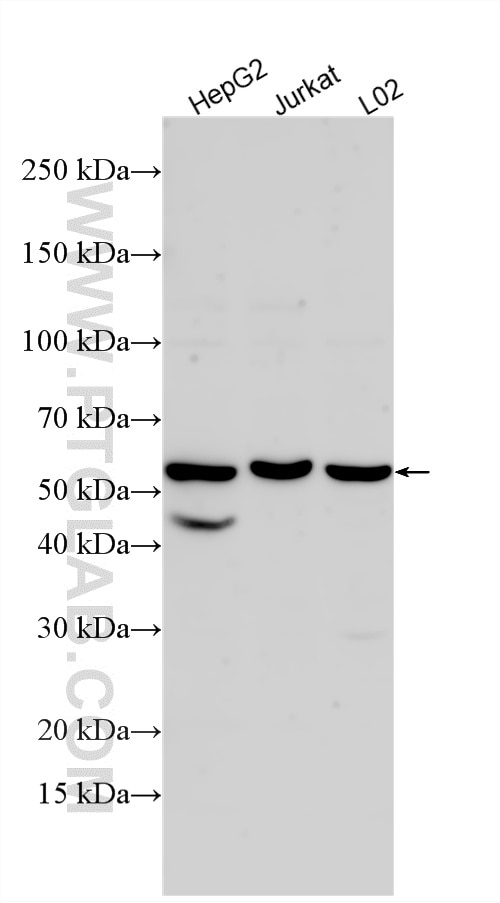
33051-1-PBS targets ZNF365 in WB, Indirect ELISA applications and shows reactivity with human samples.
| Tested Reactivity | human |
| Host / Isotype | Rabbit / IgG |
| Class | Polyclonal |
| Type | Antibody |
| Immunogen |
CatNo: Ag37654 Product name: Recombinant human ZNF365 protein Source: e coli.-derived, PGEX-4T Tag: GST Domain: 132-407 aa of BC070073 Sequence: MDLHADSLDGTRSGPGLPTSDTKASFEAHVREKFNRMVEAVDRTVEKRIDKLTKELAQKTAELLEVRAAFVQLTQKKQEVQRRERALNRQVDVAVEMIAVLRQRLTESEEELLRKEEEVVTFNHFLEAAAEKEVQGKARLQDFIENLLQRVELAEKQLEYYQSQQASGFVRDLSGHVLTDISSNRKPKCLSRGHPHSVCNHPDLKSHFHPKGRNHLKKAKDDRASMQPAKAIHEQAESSRDLCRPPKKGELLGFGRKGNIRPKMAKKKPTAIVNII Predict reactive species |
| Full Name | zinc finger protein 365 |
| Calculated Molecular Weight | 407 aa, 46 kDa |
| Observed Molecular Weight | 52 kDa, 46kDa |
| GenBank Accession Number | BC070073 |
| Gene Symbol | ZNF365 |
| Gene ID (NCBI) | 22891 |
| RRID | AB_3742838 |
| Conjugate | Unconjugated |
| Form | Liquid |
| Purification Method | Antigen affinity Purification |
| UNIPROT ID | Q70YC5 |
| Storage Buffer | PBS only, pH 7.3. |
| Storage Conditions | Store at -80°C. |
Background Information
ZNF365 is a direct p53 target that promotes genome stability. Germline polymorphisms in the ZNF365 locus are associated with increased cancer risk, including those associated with telomere dysfunction. On the mechanistic level, ZNF365 suppresses expression of a subset of common fragile sites, including telomeres. In the absence of ZNF365, defective telomeres engage in aberrant recombination of telomere ends, leading to increased telomere sister chromatid exchange and formation of anaphase DNA bridges, including ultra-fine DNA bridges, and ultimately increased cytokinesis failure and aneuploidy (PMID: 23776040).


