
Recombinant Human FGFR3 (IIIb) protein (hFc Tag, Myc Tag, His Tag)(HPLC verified)
Species
Human
Purity
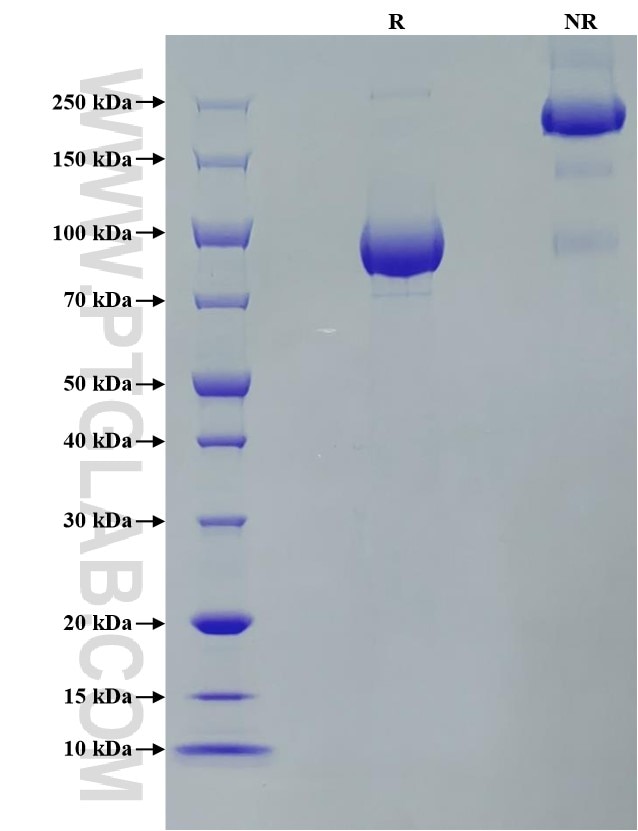
>90 %, SDS-PAGE
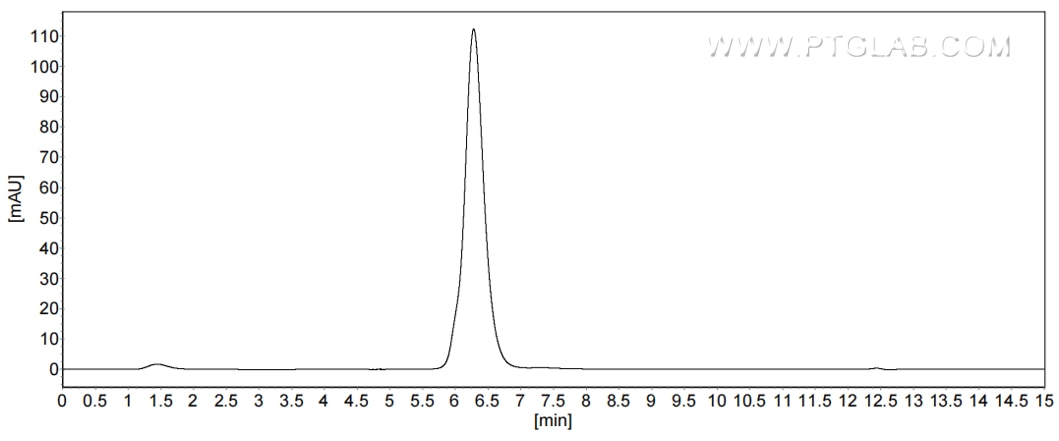
>90 %, SEC-HPLC
Tag
hFc Tag, Myc Tag, His Tag
Activity
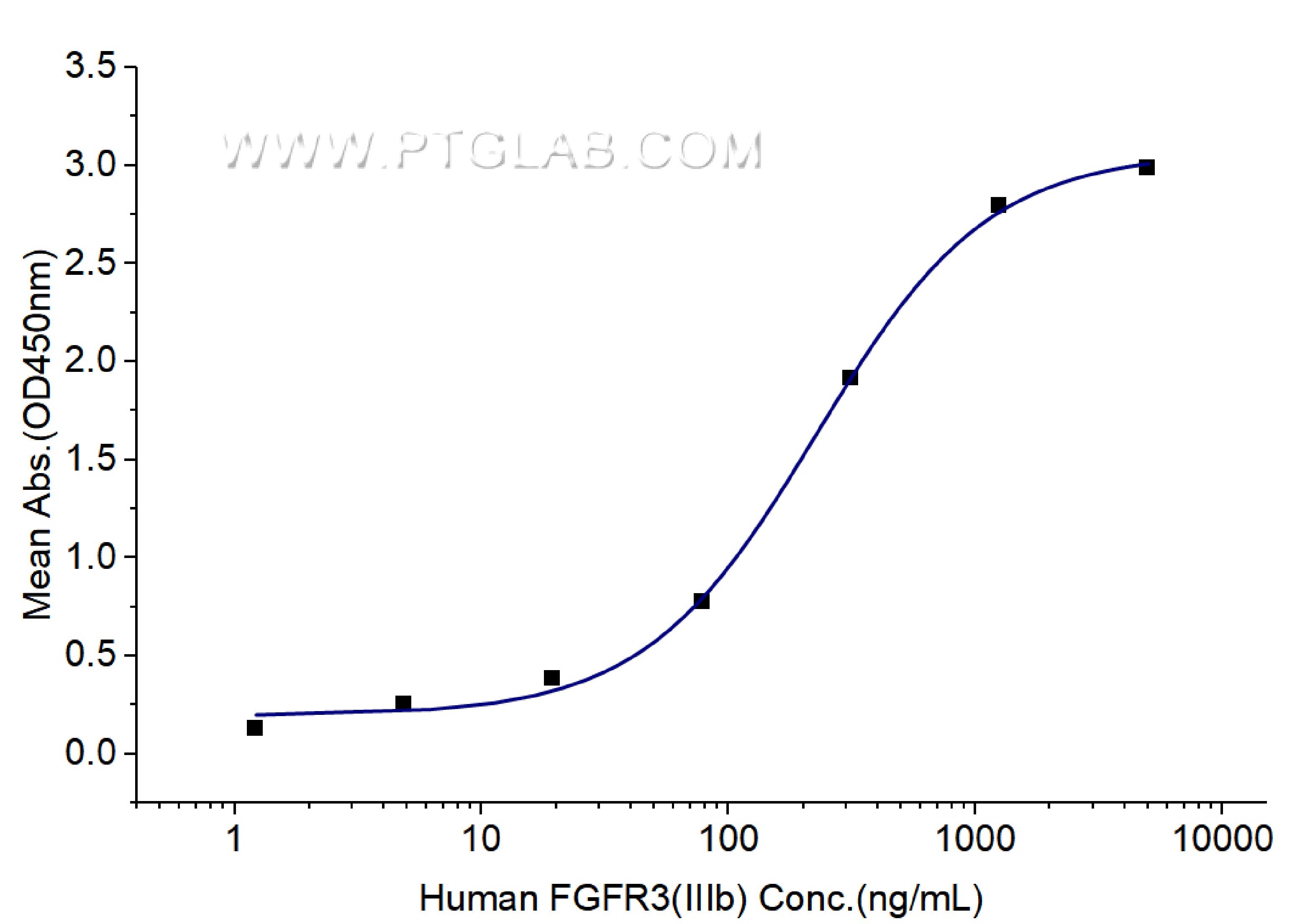
EC50: 95-380 ng/mL
Cat no : Eg0194
Validation Data Gallery
Product Information
| Purity | >90 %, SDS-PAGE >90 %, SEC-HPLC |
| Endotoxin | <0.1 EU/μg protein, LAL method |
| Activity |
Immobilized Human FGF basic (His tag) at 1 μg/mL (100 μL/well) can bind Human FGFR3 (IIIb) (hFc tag, Myc tag, His tag) with a linear range of 95-380 ng/mL. |
| Expression | HEK293-derived Human FGFR3 (IIIb) protein Glu23-Gly377 (Accession# P22607-2) with a human IgG1 Fc tag, a Myc tag and a His tag at the C-terminus. |
| GeneID | 2261 |
| Accession | P22607-2 |
| PredictedSize | 67.1 kDa |
| SDS-PAGE | 85-100 kDa, reducing (R) conditions |
| Formulation | Lyophilized from 0.22 μm filtered solution in PBS, pH 7.4. Normally 5% trehalose and 5% mannitol are added as protectants before lyophilization. |
| Reconstitution | Briefly centrifuge the tube before opening. Reconstitute at 0.1-0.5 mg/mL in sterile water. |
| Storage Conditions |
It is recommended that the protein be aliquoted for optimal storage. Avoid repeated freeze-thaw cycles.
|
| Shipping | The product is shipped at ambient temperature. Upon receipt, store it immediately at the recommended temperature. |
Background
FGFR3 (Fibroblast growth factor receptor 3) is a tyrosine-protein kinase that that acts as cell-surface receptor for fibroblast growth factors. FGFR3 binds acidic and basic fibroblast GH and plays important roles in development, osteogenesis, and bone maintenance. FGFR3 is highly expressed in chondrocytes and osteoblasts, and germline mutations are associated with bone growth disorders such as achondroplasia, chondrodysplasia, and thanatophoric dysplasia. Due to frequent mutations in certain cancers, FGFR3 gene has also been associated with tumor progression.
References:
1.Eswarakumar VP, et al. (2005). Cytokine Growth Factor Rev. 16(2):139-149.
2.Tiong KH, et al. (2013). Apoptosis. 18(12):1447-1468.
3.Kacew A, et al. (2020). Front Immunol. 11:575258.
4.Horton WA, et al. (2007). Lancet. 370(9582):162-172.