
Validation Data Gallery
Technical Specifications
| GeneID | 1950 |
| Species | Human |
| Expression | HEK293 |
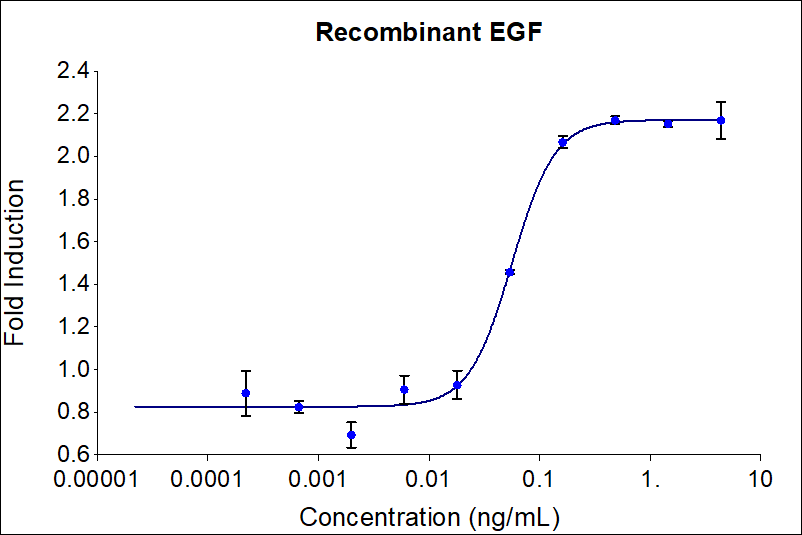
| Activity(Primary) | 0.1-0.6 ng/mL |
| Specific Activity | minimally 1.00x10⁶ IU/mg |
| Purity | >95% |
| Endotoxin | <1.0 EU/µg |
| Accession Number | P01133 |
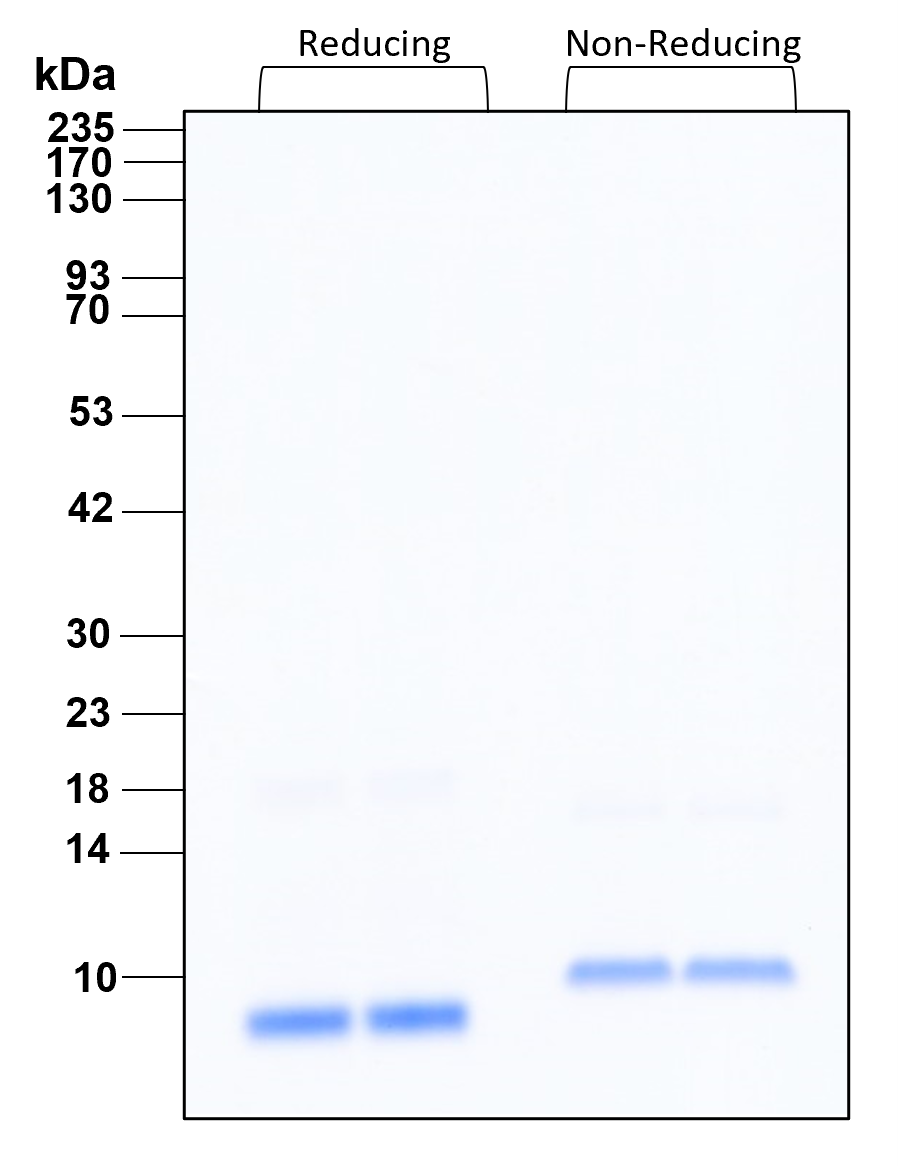
| Molecular Mass | 6 kDa reduced, 10 kDa non-reduced, monomer, glycosylated |
| Formulation | 1x PBS, See Certificate of Analysis for details |
| Species Reactivity | human |
Stability and Reconstitution
| Stability and Storage | Product Form | Temperature Conditions | Storage Time (From Date of Receipt) |
|---|---|---|---|
| Lyophilized | -20°C to -80°C | Until Expiry Date | |
| Lyophilized | Room Temperature | 2 weeks | |
| Reconstituted as per CofA | -20°C to -80°C | 6 months | |
| Reconstituted as per CofA | 4°C | 1 week | |
| Avoid repeated freeze-thaw cycles. | |||
| Reconstitution | Briefly centrifuge the vial before opening. It is recommended to reconstitute the protein to 0.2 mg/mL in sterile 1x PBS pH 7.4 containing 0.1% endotoxin-free recombinant human serum albumin (HSA). Gently swirl or tap vial to mix. |
Background
EGF (epidermal growth factor) is a 6 kDA, single chain protein that serves a mitogenic factor for numerous cell types, particularly epithelial cells and fibroblasts. It is predominantly produced and secreted by the kidneys in humans. EGF activates cells through binding with its corresponding receptor (EGFR). Receptor binding activates several downstream pathways leading to cell proliferation, differentiation, and apoptosis. EGF plays important roles in embryonic development, tissue regeneration, transport through ion channels, and wound healing. Dysregulated EGF signaling has been linked with renal disease progression, and EGF levels could potentially be used as biomarker to monitor disease-related cell damage (PMID: 15110798, 24513230, 27868030).
Synonyms
Urogastrone
Publications
| Species | Title |
|---|---|
Cancer Res Breast Cancer Stem Cells Secrete MIF to Mediate Tumor Metabolic Reprogramming that Drives Immune Evasion | |
Nat Commun E2F activity determines mitosis versus whole-genome duplication in G2-arrested cells | |
Nat Commun Pharmacological blockade of TEAD–YAP reveals its therapeutic limitation in cancer cells | |
Nat Commun USP5 stabilizes YTHDF1 to control cancer immune surveillance through mTORC1-mediated phosphorylation | |
Reviews
The reviews below have been submitted by verified Proteintech customers who received an incentive for providing their feedback.
FH Shriya (Verified Customer) (12-10-2025) | EGF protein
|
FH Alicia (Verified Customer) (11-04-2025) | I use it for cortical organoids derived from human iPSC. It helps for neural precursor cells production.
|
FH Christin (Verified Customer) (12-11-2024) | Generation and maintenance of human iPSC-derived colon organoids using Crespo protocol (2017)
|
FH Hariam (Verified Customer) (12-06-2024) | Used for blood vessel spheroids derived from human iPSCs. We assume it works since the spheroids expressed the right markers. The price is very fair as well
|
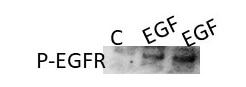
FH K. (Verified Customer) (10-26-2023) | Used it in 100-500ng concentration for 10-30 minutes to check EGFR activation and always worked well.
 |