

Tested Applications
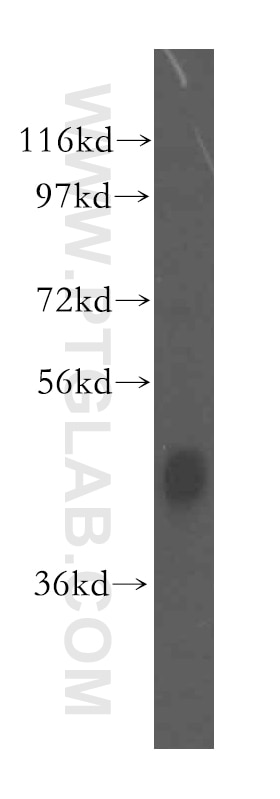
| Positive WB detected in | mouse liver tissue |
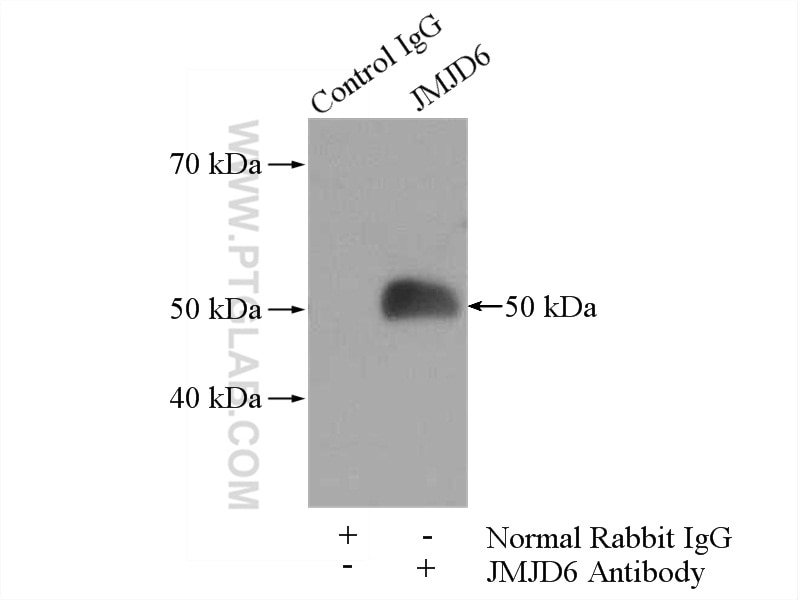
| Positive IP detected in | K-562 cells |
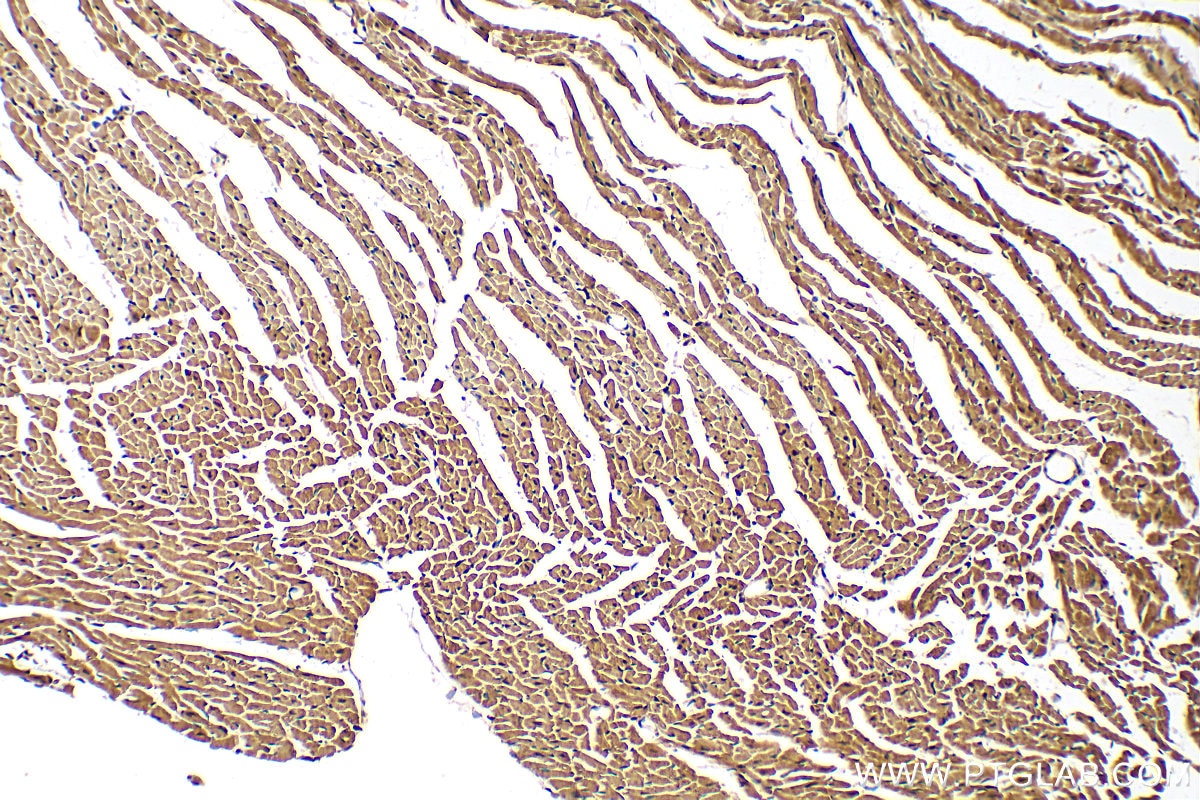
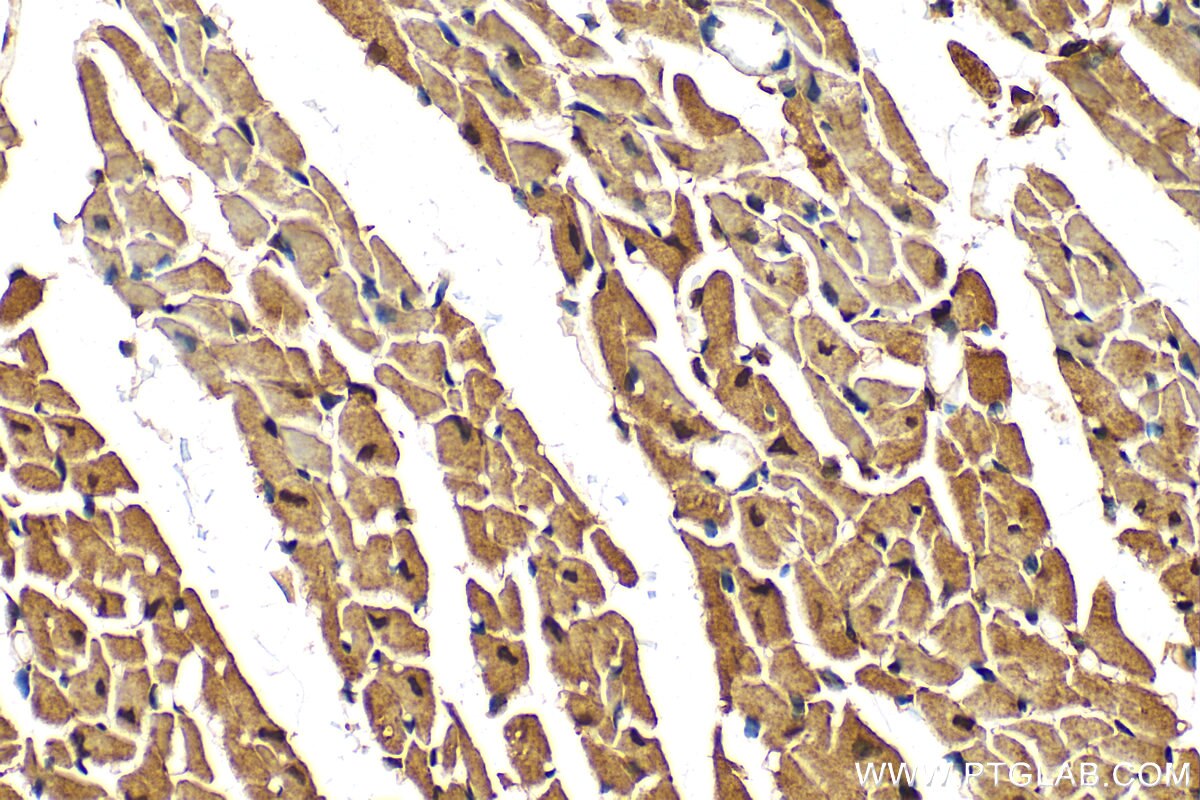
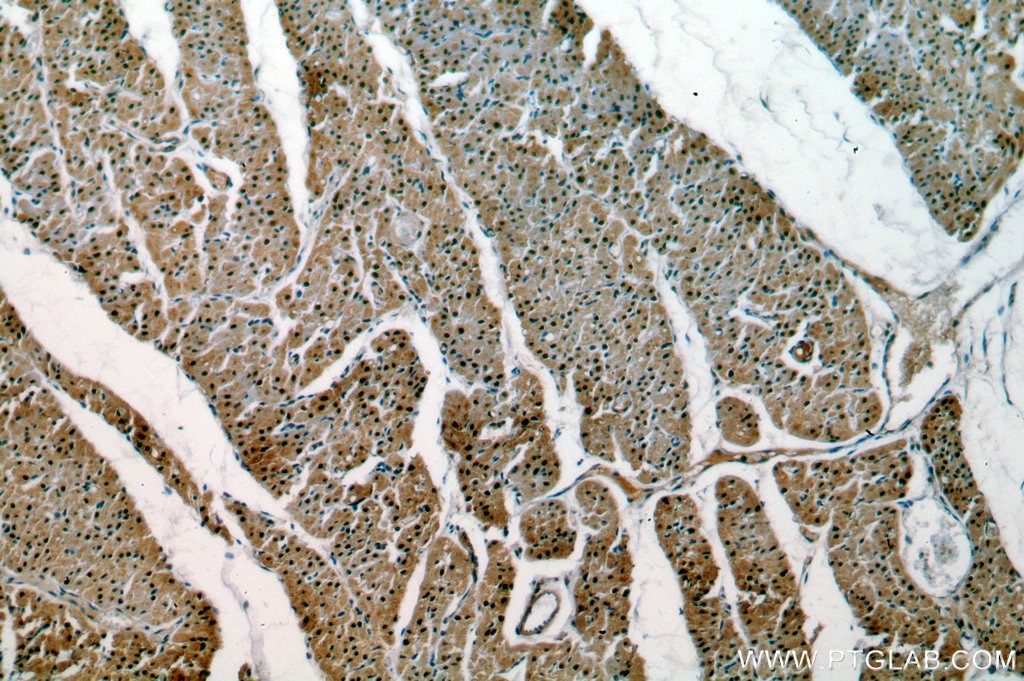
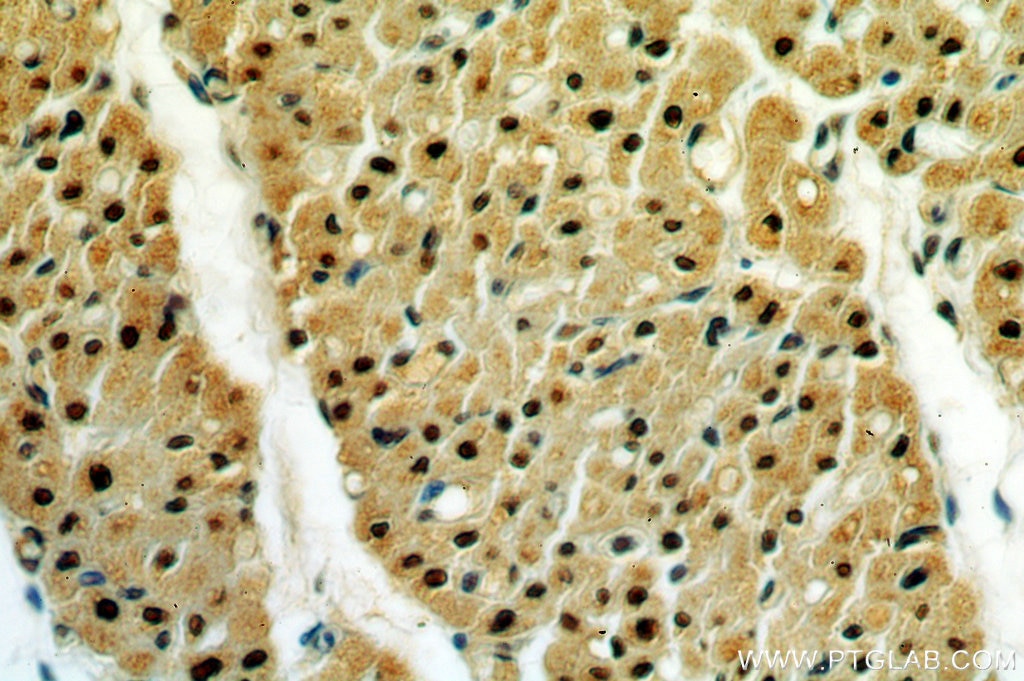
| Positive IHC detected in | mouse heart tissue, human heart tissue Note: suggested antigen retrieval with TE buffer pH 9.0; (*) Alternatively, antigen retrieval may be performed with citrate buffer pH 6.0 |
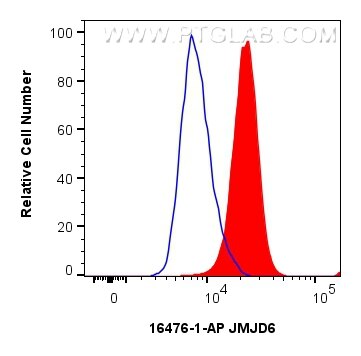
| Positive FC (Intra) detected in | A549 cells |
Recommended dilution
| Application | Dilution |
|---|---|
| Western Blot (WB) | WB : 1:500-1:1000 |
| Immunoprecipitation (IP) | IP : 0.5-4.0 ug for 1.0-3.0 mg of total protein lysate |
| Immunohistochemistry (IHC) | IHC : 1:50-1:500 |
| Flow Cytometry (FC) (INTRA) | FC (INTRA) : 0.40 ug per 10^6 cells in a 100 µl suspension |
| It is recommended that this reagent should be titrated in each testing system to obtain optimal results. | |
| Sample-dependent, Check data in validation data gallery. | |
Product Information
16476-1-AP targets JMJD6 in WB, IHC, IF, FC (Intra), IP, CoIP, ChIP, ELISA applications and shows reactivity with human, mouse, rat samples.
| Tested Reactivity | human, mouse, rat |
| Cited Reactivity | human, mouse, rat, chicken |
| Host / Isotype | Rabbit / IgG |
| Class | Polyclonal |
| Type | Antibody |
| Immunogen |
CatNo: Ag9590 Product name: Recombinant human JMJD6 protein Source: e coli.-derived, T-HIS Tag: 6*His Domain: 1-403 aa of BC066654 Sequence: MNHKSKKRIREAKRSARPELKDSLDWTRHNYYESFSLSPAAVADNVERADALQLSVEEFVERYERPYKPVVLLNAQEGWSAQEKWTLERLKRKYRNQKFKCGEDNDGYSVKMKMKYYIEYMESTRDDSPLYIFDSSYGEHPKRRKLLEDYKVPKFFTDDLFQYAGEKRRPPYRWFVMGPPRSGTGIHIDPLGTSAWNALVQGHKRWCLFPTSTPRELIKVTRDEGGNQQDEAITWFNVIYPRTQLPTWPPEFKPLEILQKPGETVFVPGGWWHVVLNLDTTIAITQNFASSTNFPVVWHKTVRGRPKLSRKWYRILKQEHPELAVLADSVDLQESTGIASDSSSDSSSSSSSSSSDSDSECESGSEGDGTVHRRKKRRTCSMVGNGDTTSQDDCVSKERSSSR Predict reactive species |
| Full Name | jumonji domain containing 6 |
| Calculated Molecular Weight | 46 kDa |
| Observed Molecular Weight | 46 kDa |
| GenBank Accession Number | BC066654 |
| Gene Symbol | JMJD6 |
| Gene ID (NCBI) | 23210 |
| RRID | AB_2265134 |
| Conjugate | Unconjugated |
| Form | Liquid |
| Purification Method | Antigen affinity purification |
| UNIPROT ID | Q6NYC1 |
| Storage Buffer | PBS with 0.02% sodium azide and 50% glycerol, pH 7.3. |
| Storage Conditions | Store at -20°C. Stable for one year after shipment. Aliquoting is unnecessary for -20oC storage. 20ul sizes contain 0.1% BSA. |
Protocols
| Product Specific Protocols | |
|---|---|
| FC protocol for JMJD6 antibody 16476-1-AP | Download protocol |
| IHC protocol for JMJD6 antibody 16476-1-AP | Download protocol |
| IP protocol for JMJD6 antibody 16476-1-AP | Download protocol |
| WB protocol for JMJD6 antibody 16476-1-AP | Download protocol |
| Standard Protocols | |
|---|---|
| Click here to view our Standard Protocols |
Publications
What published studies show
JMJD6 affinity purification antibody (Cat# 16476-1-AP) has 16 citations published in journals including Molecular Cell, Nucleic Acids Research, Theranostics, Cell Reports, Journal of Medicinal Chemistry, Acta Pharmacologica Sinica, and PLoS Pathogens. Associated research fields encompass epigenetics, transcription regulation, ferroptosis, cancer biology (liver, prostate, breast, glioblastoma), cardiac hypertrophy, antiviral signaling, and tumor microenvironment analysis.
| Species | Application | Title |
|---|---|---|
Mol Cell JMJD6 Licenses ERα-Dependent Enhancer and Coding Gene Activation by Modulating the Recruitment of the CARM1/MED12 Co-activator Complex.
| ||
Nucleic Acids Res ARGLU1 enhances promoter-proximal pausing of RNA polymerase II and stimulates DNA damage repair | ||
Theranostics PRMT6-mediated ADMA promotes p62 phase separation to form a negative feedback loop in ferroptosis | ||
Acta Pharmacol Sin JMJD6 protects against isoproterenol-induced cardiac hypertrophy via inhibition of NF-κB activation by demethylating R149 of the p65 subunit | ||
J Transl Med JMJD6-BRD4 complex stimulates lncRNA HOTAIR transcription by binding to the promoter region of HOTAIR and induces radioresistance in liver cancer stem cells | ||
Chem Sci A constitutional isomer selective chemical proteomic strategy for system-wide profiling of protein lysine 5-hydroxylation |








