

Tested Applications
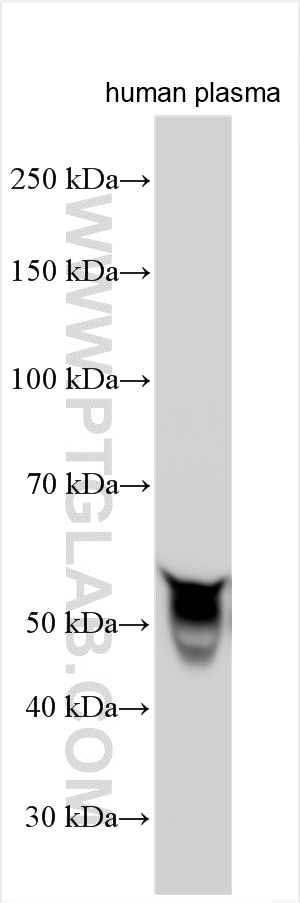
| Positive WB detected in | human plasma |
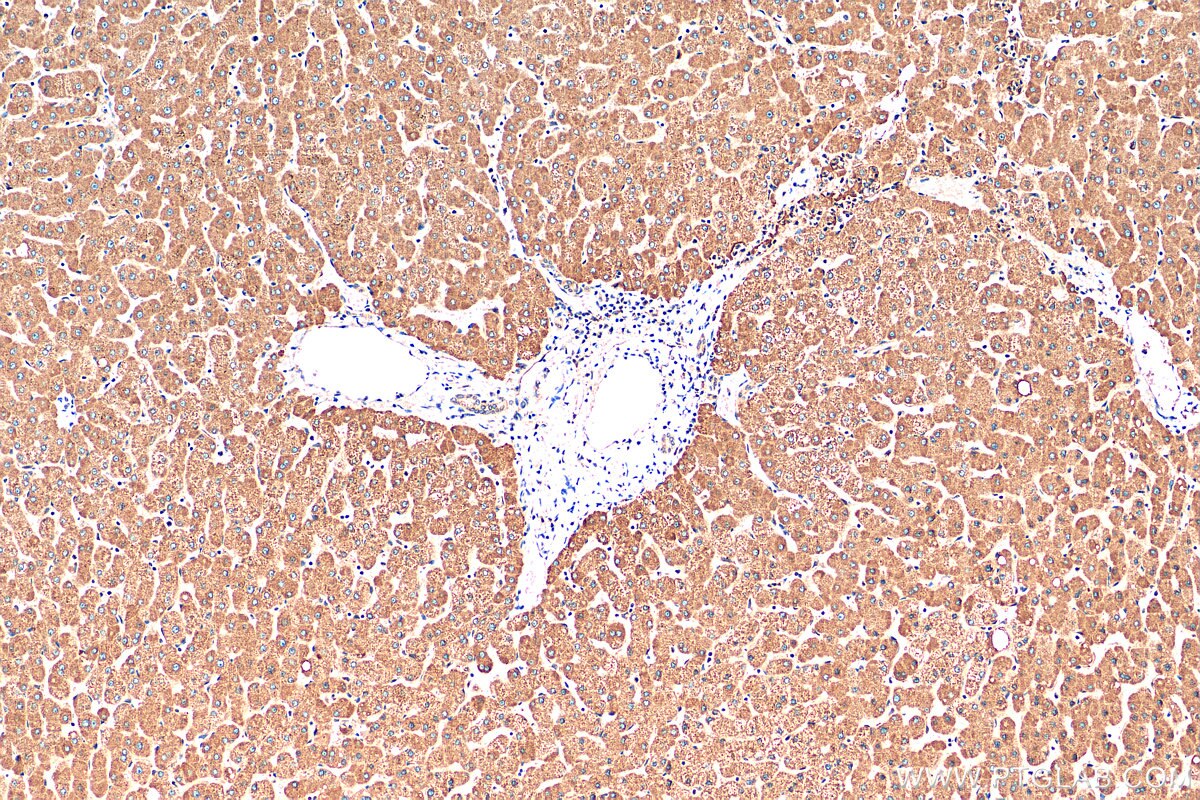
| Positive IHC detected in | human liver tissue Note: suggested antigen retrieval with TE buffer pH 9.0; (*) Alternatively, antigen retrieval may be performed with citrate buffer pH 6.0 |
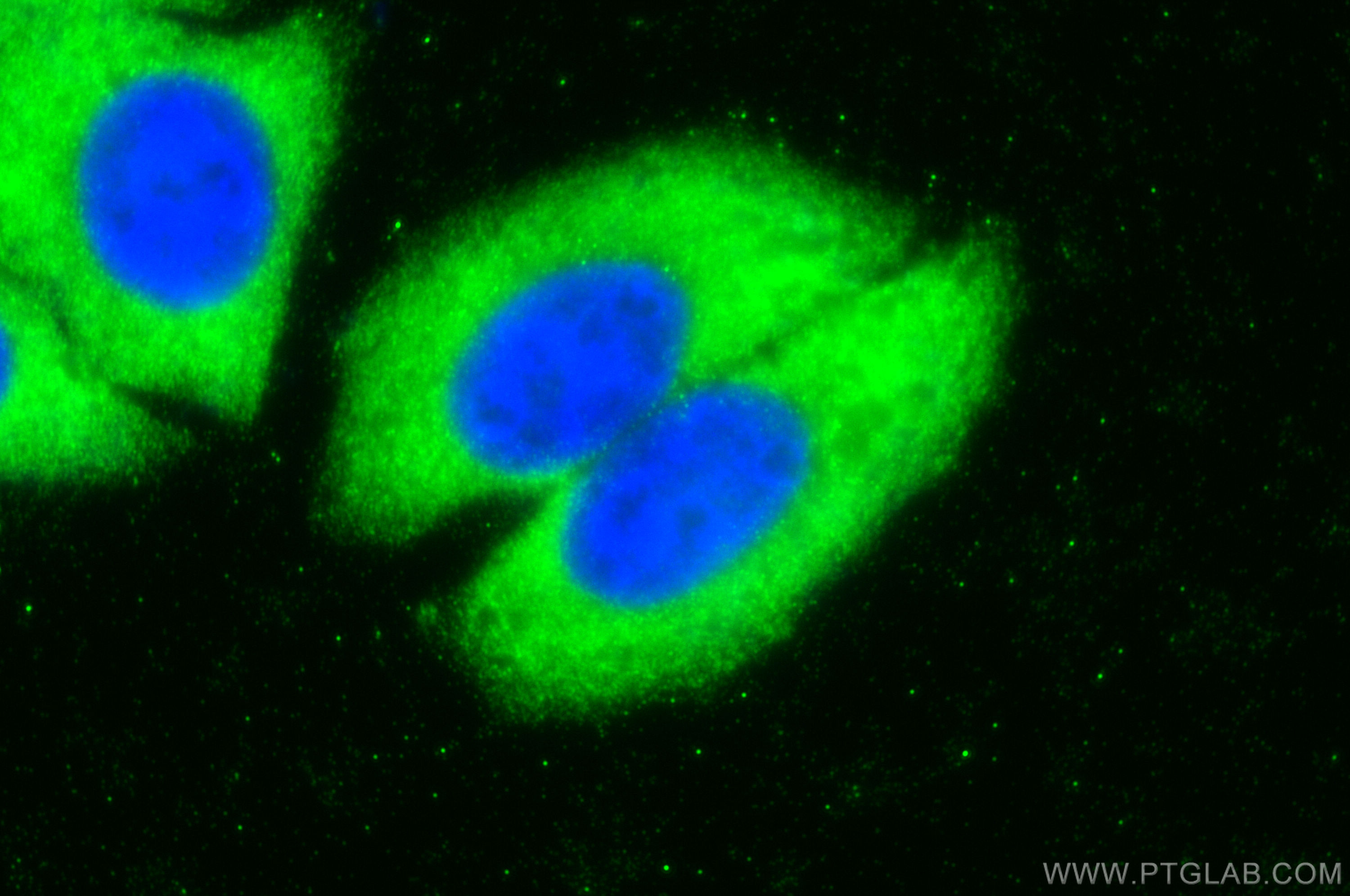
| Positive IF/ICC detected in | HepG2 cells |
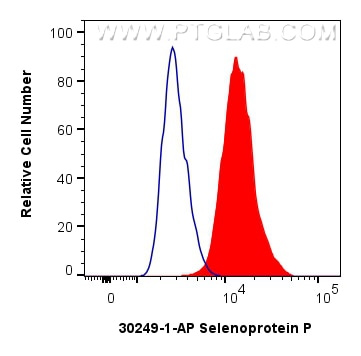
| Positive FC (Intra) detected in | HepG2 cells |
Recommended dilution
| Application | Dilution |
|---|---|
| Western Blot (WB) | WB : 1:5000-1:50000 |
| Immunohistochemistry (IHC) | IHC : 1:50-1:500 |
| Immunofluorescence (IF)/ICC | IF/ICC : 1:200-1:800 |
| Flow Cytometry (FC) (INTRA) | FC (INTRA) : 0.25 ug per 10^6 cells in a 100 µl suspension |
| It is recommended that this reagent should be titrated in each testing system to obtain optimal results. | |
| Sample-dependent, Check data in validation data gallery. | |
Product Information
30249-1-AP targets Selenoprotein P in WB, IHC, IF/ICC, FC (Intra), ELISA applications and shows reactivity with human samples.
| Tested Reactivity | human |
| Cited Reactivity | human |
| Host / Isotype | Rabbit / IgG |
| Class | Polyclonal |
| Type | Antibody |
| Immunogen |
CatNo: Ag32952 Product name: Recombinant human Selenoprotein P protein Source: e coli.-derived, PGEX-4T Tag: GST Domain: 82-299 aa of NM_001085486.2 Sequence: SNISYIVVNHQGISSRLKYTHLKNKVSEHIPVYQQEENQTDVWTLLNGSKDDFLIYDRCGRLVYHLGLPFSFLTFPYVEEAIKIAYCEKKCGNCSLTTLKDEDFCKRVSLATVDKTVETPSPHYHHEHHHNHGHQHLGSSELSENQQPGAPNAPTHPAPPGLHHHHKHKGQHRQGHPENRDMPASEDLQDLQKKLCRKRCINQLLCKLPTDSELAPRS Predict reactive species |
| Full Name | selenoprotein P, plasma, 1 |
| Calculated Molecular Weight | 43 kDa |
| Observed Molecular Weight | 45-50 kDa |
| GenBank Accession Number | NM_001085486.2 |
| Gene Symbol | Selenoprotein P |
| Gene ID (NCBI) | 6414 |
| RRID | AB_3086280 |
| Conjugate | Unconjugated |
| Form | Liquid |
| Purification Method | Antigen affinity purification |
| UNIPROT ID | P49908 |
| Storage Buffer | PBS with 0.02% sodium azide and 50% glycerol, pH 7.3. |
| Storage Conditions | Store at -20°C. Stable for one year after shipment. Aliquoting is unnecessary for -20oC storage. 20ul sizes contain 0.1% BSA. |
Background Information
Selenoprotein P, also known as SEPP1, is expressed in the liver and heart and secreted into the plasma(PMID: 8421687). Selenoprotein P is implicated as an extracellular antioxidant involved in the transport of selenium to extra-hepatic tissues via apolipoprotein E receptor-2 (apoER2) and provides selenium to tissues such as brain and testis. In humans, it exists in plasma as two isoforms of approximately 50 and 60 kDa(PMID:19453253). Selenoprotein P is a glycosylated protein and deglycosylation of SEPP1 results in 45 kDa and 35 kDa isoforms(PMID: 25298198).
Protocols
| Product Specific Protocols | |
|---|---|
| FC protocol for Selenoprotein P antibody 30249-1-AP | Download protocol |
| IF protocol for Selenoprotein P antibody 30249-1-AP | Download protocol |
| IHC protocol for Selenoprotein P antibody 30249-1-AP | Download protocol |
| WB protocol for Selenoprotein P antibody 30249-1-AP | Download protocol |
| Standard Protocols | |
|---|---|
| Click here to view our Standard Protocols |
Publications
What published studies show
The Selenoprotein P Polyclonal antibody (Cat# 30249-1-AP) has 3 citations published in Molecular Cell, Journal of Clinical Investigation, and Science China Life Sciences. The associated research fields include ferroptosis and hepatocellular carcinoma, sporadic colorectal carcinogenesis with WNT signaling, and cardiac microthrombosis in SARS-CoV-2 infection.
| Species | Application | Title |
|---|---|---|
Mol Cell Hypoxia-driven lncRNA SHIELD promotes GPX4 translation and protects against ferroptosis in hepatocellular carcinoma. | ||
J Clin Invest SELENOP modifies sporadic colorectal carcinogenesis and WNT signaling activity through LRP5/6 interactions | ||
Sci China Life Sci Resolving the developmental mechanisms of cardiac microthrombosis of SARS-CoV-2 based on single-cell transcriptome analysis |





