

Tested Applications
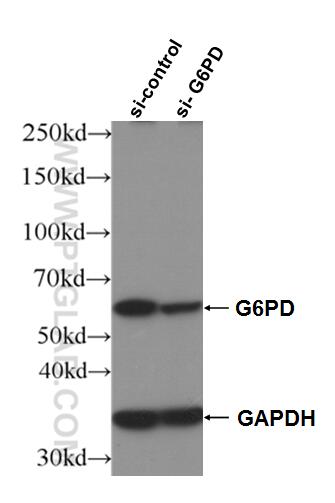
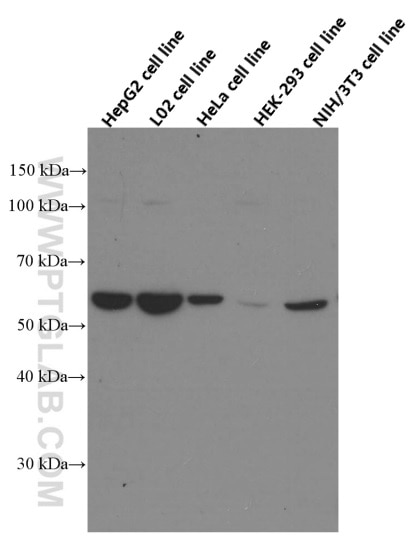
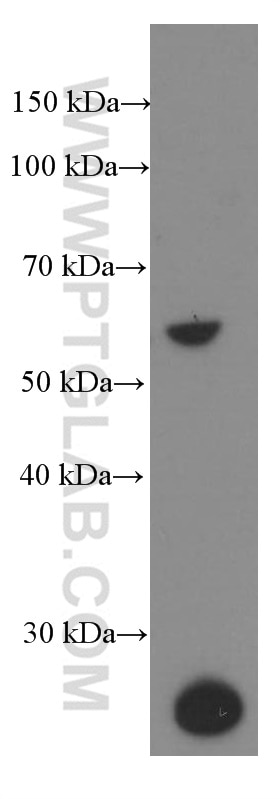
| Positive WB detected in | HepG2 cells, HeLa cells, rat spleen tissue, L02 cells, HEK-293 cells, NIH/3T3 cells |
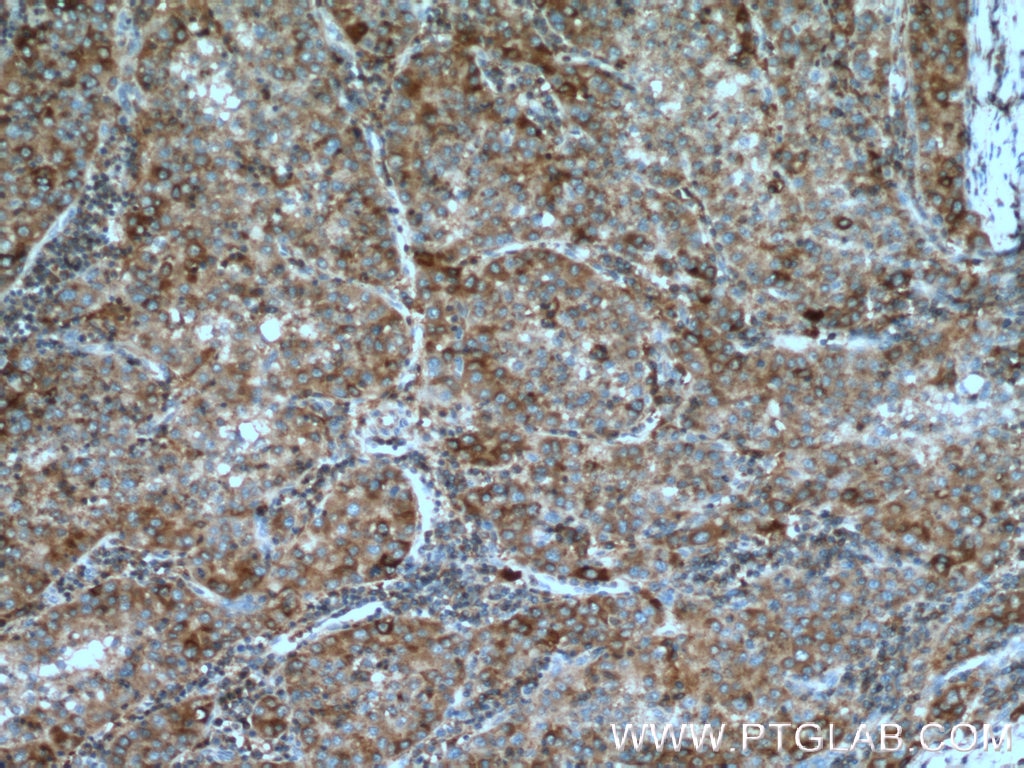
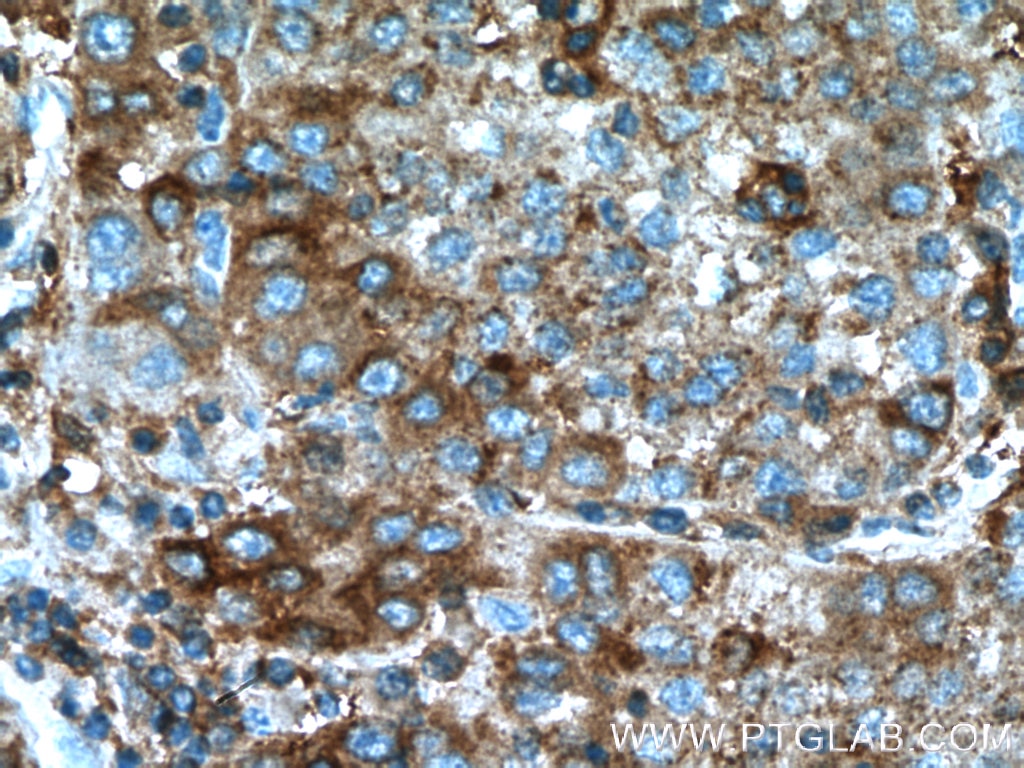
| Positive IHC detected in | human liver cancer tissue Note: suggested antigen retrieval with TE buffer pH 9.0; (*) Alternatively, antigen retrieval may be performed with citrate buffer pH 6.0 |
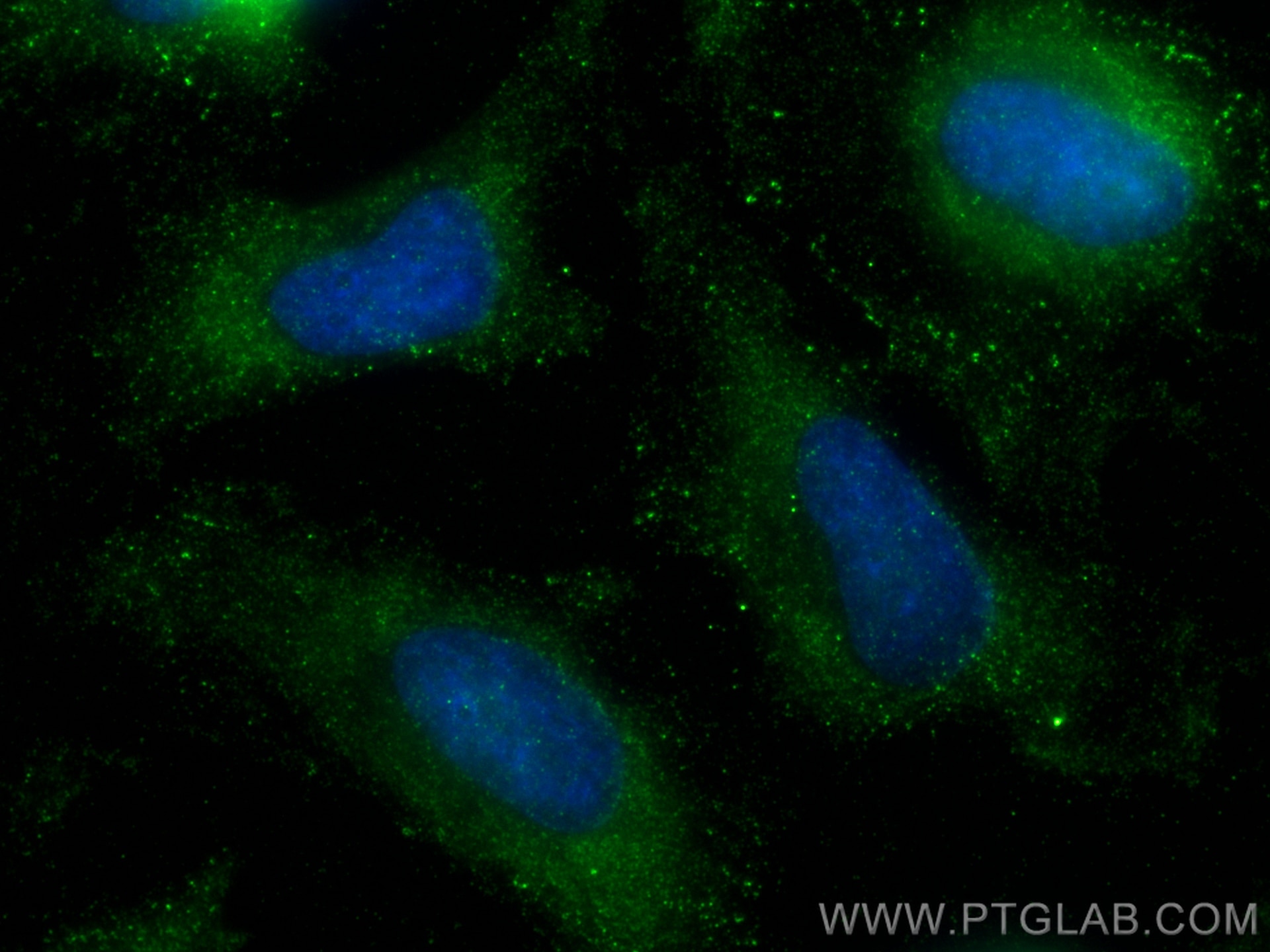
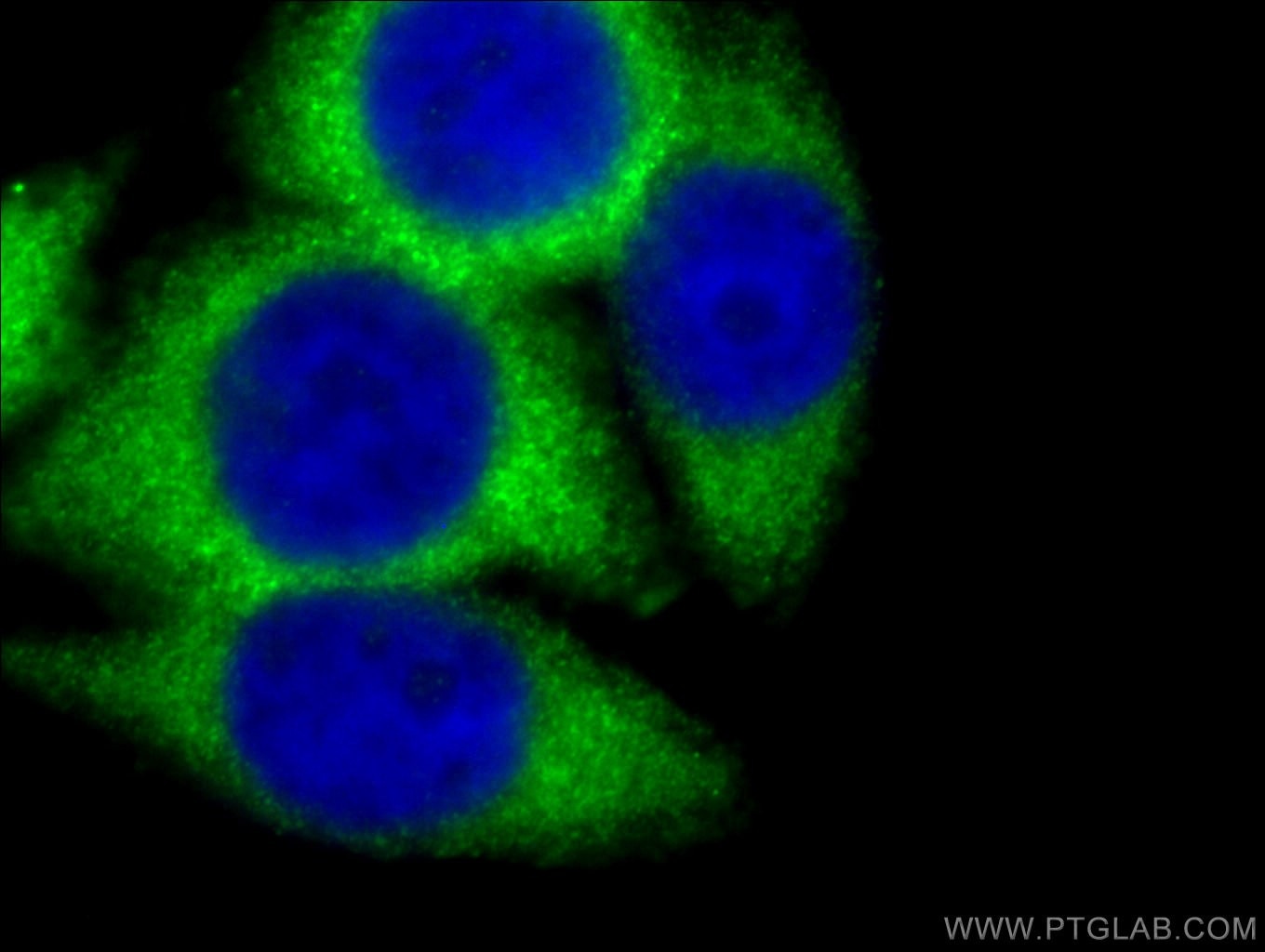
| Positive IF/ICC detected in | HeLa cells |
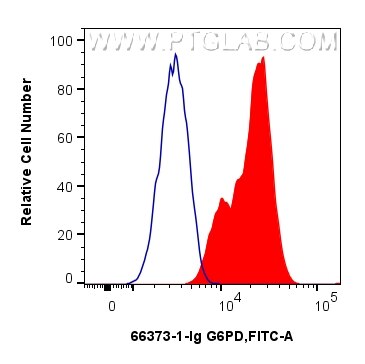
| Positive FC (Intra) detected in | Jurkat cells |
Recommended dilution
| Application | Dilution |
|---|---|
| Western Blot (WB) | WB : 1:5000-1:50000 |
| Immunohistochemistry (IHC) | IHC : 1:100-1:400 |
| Immunofluorescence (IF)/ICC | IF/ICC : 1:400-1:1600 |
| Flow Cytometry (FC) (INTRA) | FC (INTRA) : 0.25 ug per 10^6 cells in a 100 µl suspension |
| It is recommended that this reagent should be titrated in each testing system to obtain optimal results. | |
| Sample-dependent, Check data in validation data gallery. | |
Product Information
66373-1-Ig targets G6PD in WB, IHC, IF/ICC, FC (Intra), IP, ELISA applications and shows reactivity with human, mouse, rat samples.
| Tested Reactivity | human, mouse, rat |
| Cited Reactivity | human, mouse, rat |
| Host / Isotype | Mouse / IgG2a |
| Class | Monoclonal |
| Type | Antibody |
| Immunogen |
CatNo: Ag21862 Product name: Recombinant human G6PD protein Source: e coli.-derived, PET28a Tag: 6*His Domain: 1-515 aa of BC000337 Sequence: MAEQVALSRTQVCGILREELFQGDAFHQSDTHIFIIMGASGDLAKKKIYPTIWWLFRDGLLPENTFIVGYARSRLTVADIRKQSEPFFKATPEEKLKLEDFFARNSYVAGQYDDAASYQRLNSHMNALHLGSQANRLFYLALPPTVYEAVTKNIHESCMSQIGWNRIIVEKPFGRDLQSSDRLSNHISSLFREDQIYRIDHYLGKEMVQNLMVLRFANRIFGPIWNRDNIACVILTFKEPFGTEGRGGYFDEFGIIRDVMQNHLLQMLCLVAMEKPASTNSDDVRDEKVKVLKCISEVQANNVVLGQYVGNPDGEGEATKGYLDDPTVPRGSTTATFAAVVLYVENERWDGVPFILRCGKALNERKAEVRLQFHDVAGDIFHQQCKRNELVIRVQPNEAVYTKMMTKKPGMFFNPEESELDLTYGNRYKNVKLPDAYERLILDVFCGSQMHFVRSDELREAWRIFTPLLHQIELEKPKPIPYIYGSRGPTEADELMKRVGFQYEGTYKWVNPHKL Predict reactive species |
| Full Name | glucose-6-phosphate dehydrogenase |
| Calculated Molecular Weight | 59 kDa |
| Observed Molecular Weight | 60 kDa |
| GenBank Accession Number | BC000337 |
| Gene Symbol | G6PD |
| Gene ID (NCBI) | 2539 |
| RRID | AB_2877122 |
| Conjugate | Unconjugated |
| Form | Liquid |
| Purification Method | Protein A purification |
| UNIPROT ID | P11413 |
| Storage Buffer | PBS with 0.02% sodium azide and 50% glycerol, pH 7.3. |
| Storage Conditions | Store at -20°C. Stable for one year after shipment. Aliquoting is unnecessary for -20oC storage. 20ul sizes contain 0.1% BSA. |
Background Information
G6PD(Glucose-6-phosphate 1-dehydrogenase) belongs to the glucose-6-phosphate dehydrogenase family. It is a housekeeping enzyme encoded in mammals by an X-linked gene. G6PD has important functions in intermediary metabolism because it catalyzes the first step in the pentose phosphate pathway and provides reductive potential in the form of NADPH.(PMID:7489710). This protein has 3 isoforms produced by alternative splicing.
Protocols
| Product Specific Protocols | |
|---|---|
| FC protocol for G6PD antibody 66373-1-Ig | Download protocol |
| IF protocol for G6PD antibody 66373-1-Ig | Download protocol |
| IHC protocol for G6PD antibody 66373-1-Ig | Download protocol |
| WB protocol for G6PD antibody 66373-1-Ig | Download protocol |
| Standard Protocols | |
|---|---|
| Click here to view our Standard Protocols |
Publications
What published studies show
The G6PD Monoclonal antibody (2A7B12), catalog number 66373-1-Ig, has 26 citations. These appear in journals including Cell Metabolism, Nature Cancer, Redox Biology, Molecular Cell, Cell Reports, Free Radical Biology and Medicine, FASEB Journal, Journal of Biological Chemistry, Life Sciences, Atherosclerosis, and others. Research fields span glucose metabolism, the pentose phosphate pathway, ferroptosis, oxidative stress, cancer, neurology, cardiovascular disease, and metabolic remodeling, reflecting broad use in WB, IHC, IF, and IP applications.
| Species | Application | Title |
|---|---|---|
Cell Metab Upregulation of Antioxidant Capacity and Nucleotide Precursor Availability Suffices for Oncogenic Transformation. | ||
Nat Cancer RIOK1 phase separation restricts PTEN translation via stress granules activating tumor growth in hepatocellular carcinoma | ||
Redox Biol The E3 ubiquitin ligase TRIM31 is involved in cerebral ischemic injury by promoting degradation of TIGAR. | ||
Redox Biol Excessive SOX8 reprograms energy and iron metabolism to prime hepatocellular carcinoma for ferroptosis | ||
Phytomedicine Diosgenin exerts dual impacts on Th17 cell differentiation in adjuvant-induced arthritis rats by impairing SIRT1-mediated deacetylation. |









