
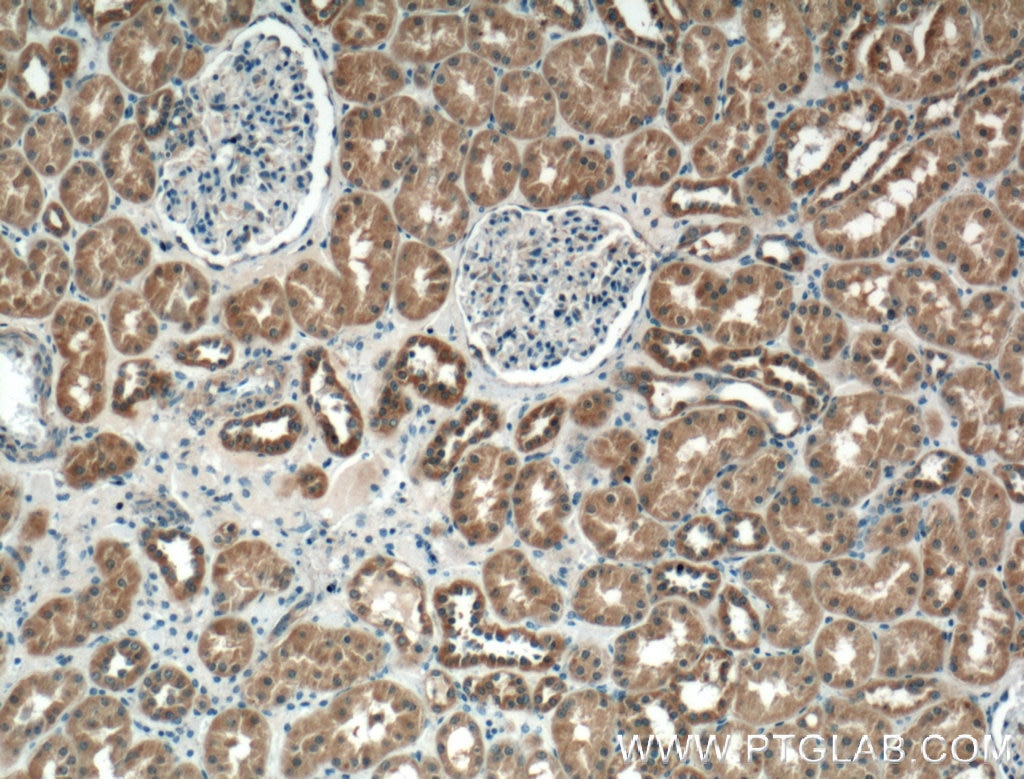
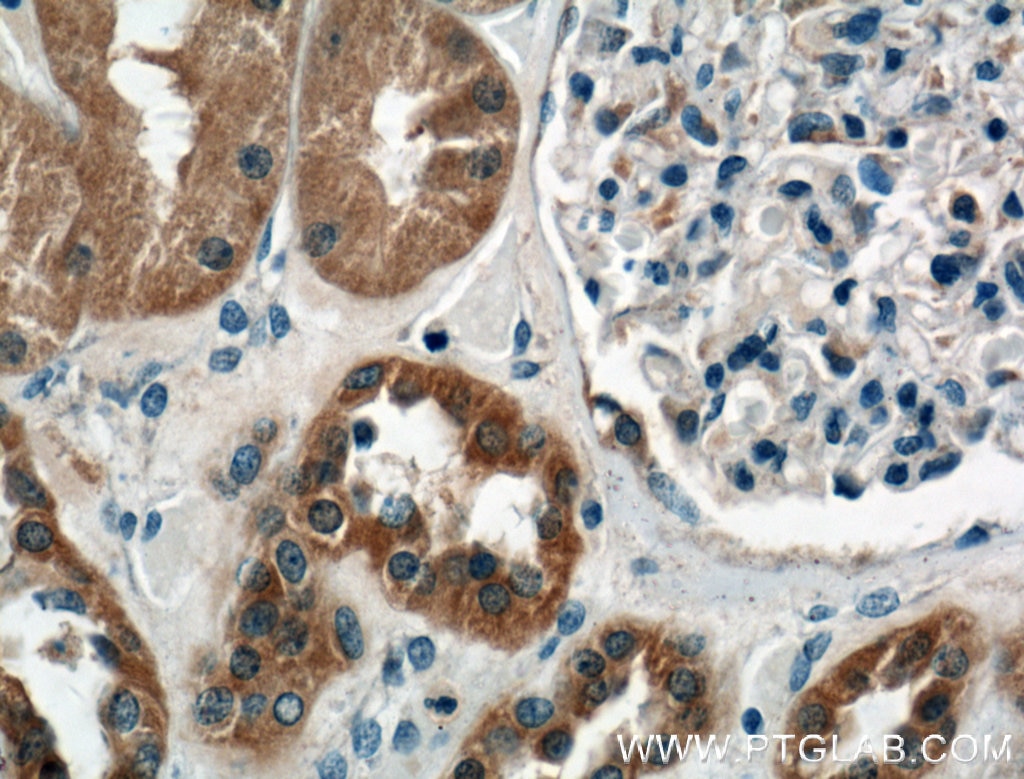
Tested Applications
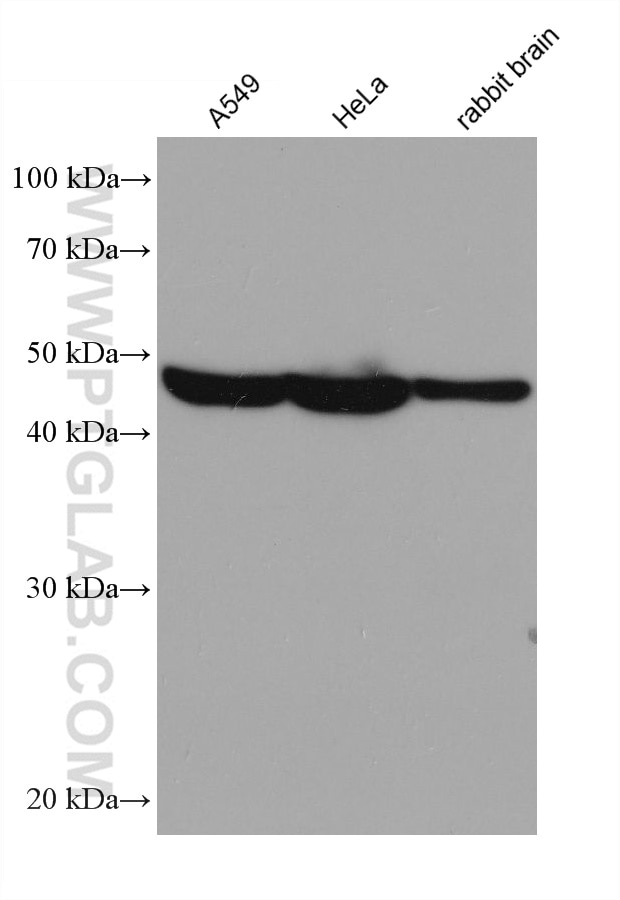
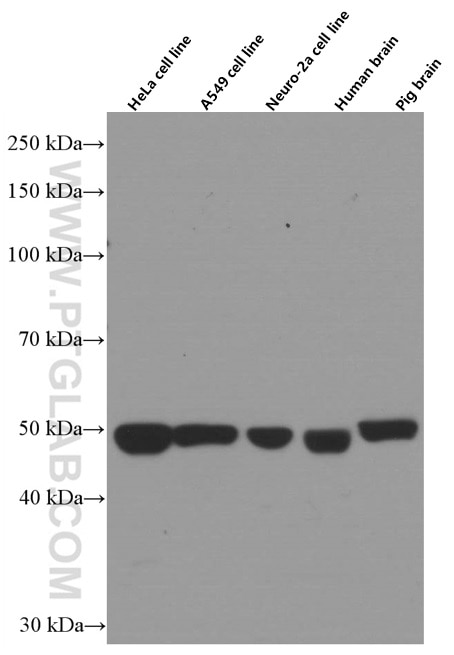
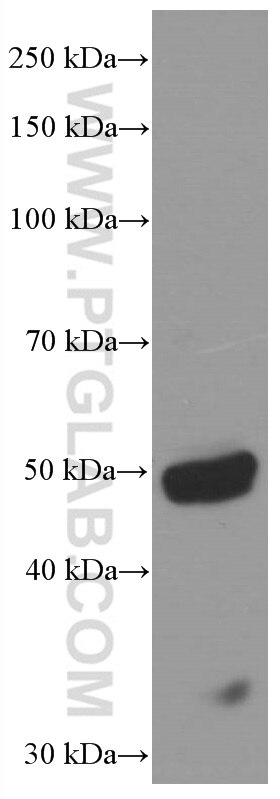
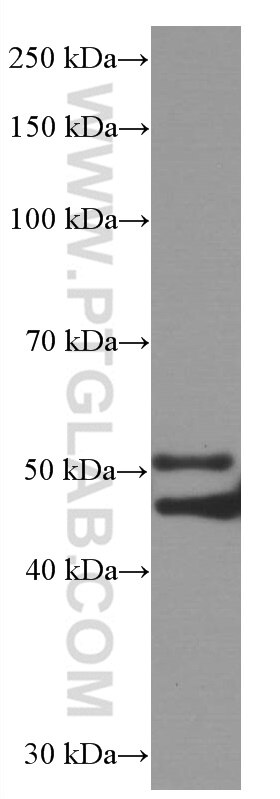
| Positive WB detected in | HeLa cells, A549 cells, mouse brain tissue, rat brain tissue, rabbit brain tissue, Neuro-2a cells, human brain tissue, pig brain tissue |
| Positive IHC detected in | human kidney tissue Note: suggested antigen retrieval with TE buffer pH 9.0; (*) Alternatively, antigen retrieval may be performed with citrate buffer pH 6.0 |
Recommended dilution
| Application | Dilution |
|---|---|
| Western Blot (WB) | WB : 1:1000-1:8000 |
| Immunohistochemistry (IHC) | IHC : 1:50-1:500 |
| It is recommended that this reagent should be titrated in each testing system to obtain optimal results. | |
| Sample-dependent, Check data in validation data gallery. | |
Product Information
66416-1-Ig targets P2RX4 in WB, IHC, ELISA applications and shows reactivity with human, mouse, pig, rat samples.
| Tested Reactivity | human, mouse, pig, rat |
| Cited Reactivity | mouse, rat |
| Host / Isotype | Mouse / IgG2b |
| Class | Monoclonal |
| Type | Antibody |
| Immunogen |
CatNo: Ag4445 Product name: Recombinant human P2RX4 protein Source: e coli.-derived, PGEX-4T Tag: GST Domain: 57-341 aa of BC033826 Sequence: TDSVVSSVTTKVKGVAVTNTSKLGFRIWDVADYVIPAQEENSLFVMTNVILTMNQTQGLCPEIPDATTVCKSDASCTAGSAGTHSNGVSTGRCVAFNGSVKTCEVAAWCPVEDDTHVPQPAFLKAAENFTLLVKNNIWYPKFNFSKRNILPNITTTYLKSCIYDAKTDPFCPIFRLGKIVENAGHGFQDMAVEGGIMGIQVNWDCNLDRAASLCLPRYSFRRLDTRDVEHNVSPGYNFRFAKYYRDLAGNEQRTLIKAYGIRFDIIVFGKAGKFDIIPTMINIGS Predict reactive species |
| Full Name | purinergic receptor P2X, ligand-gated ion channel, 4 |
| Calculated Molecular Weight | 388 aa, 43 kDa |
| Observed Molecular Weight | 50 kDa |
| GenBank Accession Number | BC033826 |
| Gene Symbol | P2RX4 |
| Gene ID (NCBI) | 5025 |
| RRID | AB_2881788 |
| Conjugate | Unconjugated |
| Form | Liquid |
| Purification Method | Protein A purification |
| UNIPROT ID | Q99571 |
| Storage Buffer | PBS with 0.02% sodium azide and 50% glycerol, pH 7.3. |
| Storage Conditions | Store at -20°C. Stable for one year after shipment. Aliquoting is unnecessary for -20oC storage. 20ul sizes contain 0.1% BSA. |
Background Information
Nucleotides, the structural subunits of the nucleic acids, are also important extracellular signaling molecules. P2 receptors are a family of cell surface receptors that mediate a wide variety of physiologic effects in response to extracellular nucleotides. These receptors fall into two classes: P2X receptors, which are ligand-gated ion channels that mediate calcium and potassium fluxes in response to ATP, and P2Y receptors, which are G protein-coupled receptors (GPCRs). P2RX4 (P2X purinoceptor 4) is a receptor for ATP acting as a ligand gated ion channel. The calculated molecular weight of P2RX4 is 43 kDa, larger apparent molecular weights of 50-80 kDa have been reported, possibly due to post-translational glycosylation (PMID: 24040145, 15262999; 29382907; 12566439).
Protocols
| Product Specific Protocols | |
|---|---|
| IHC protocol for P2RX4 antibody 66416-1-Ig | Download protocol |
| WB protocol for P2RX4 antibody 66416-1-Ig | Download protocol |
| Standard Protocols | |
|---|---|
| Click here to view our Standard Protocols |
Publications
What published studies show
| Species | Application | Title |
|---|---|---|
Clin Transl Med P2X4 receptor modulates gut inflammation and favours microbial homeostasis in colitis | ||
Biochem Pharmacol Deficiency of purinergic P2X4 receptor alleviates experimental autoimmune hepatitis in mice | ||
J Innate Immun Potential Role of Aerobic Exercise in Attenuating Diabetic Cardiomyopathy via Modulation of P2X4-Mediated NLRP3 Inflammasome Activation and Pyroptosis. | ||
IBRO Neurosci Rep Exercise attenuates neuropathic pain and neuroinflammation in an obese rat model exhibiting diabetes-related metabolic dysfunction and features of type 2 diabetes. |







