

Tested Applications
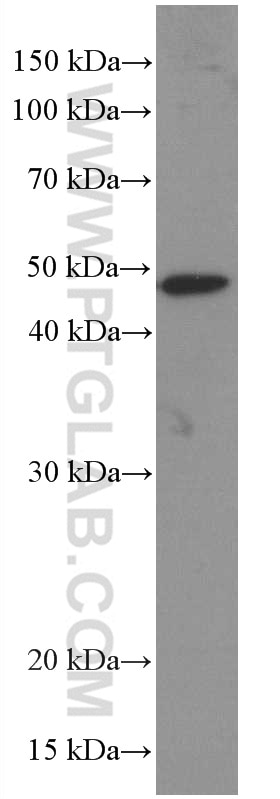
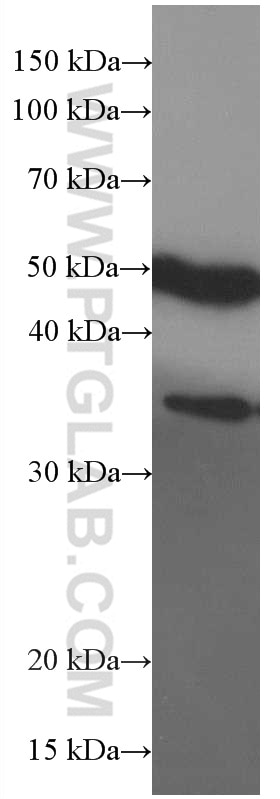
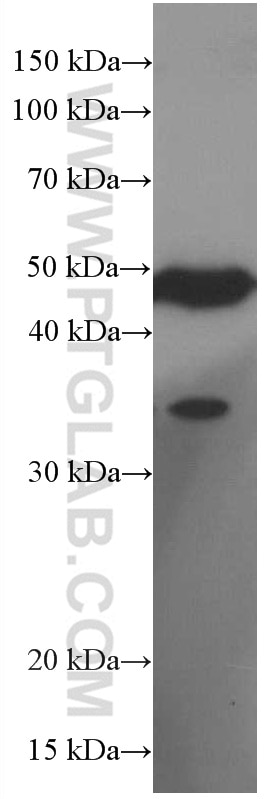
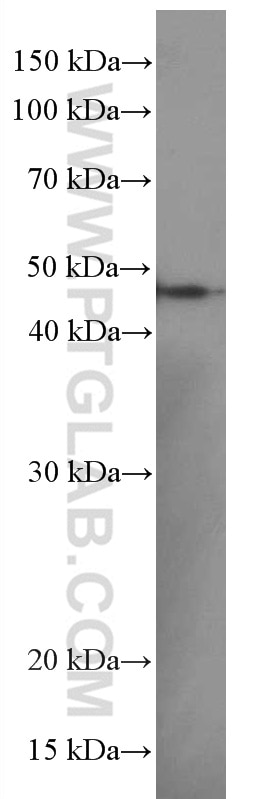
| Positive WB detected in | mouse brain tissue, SH-SY5Y cells, pig brain tissue, HEK-293 cells |
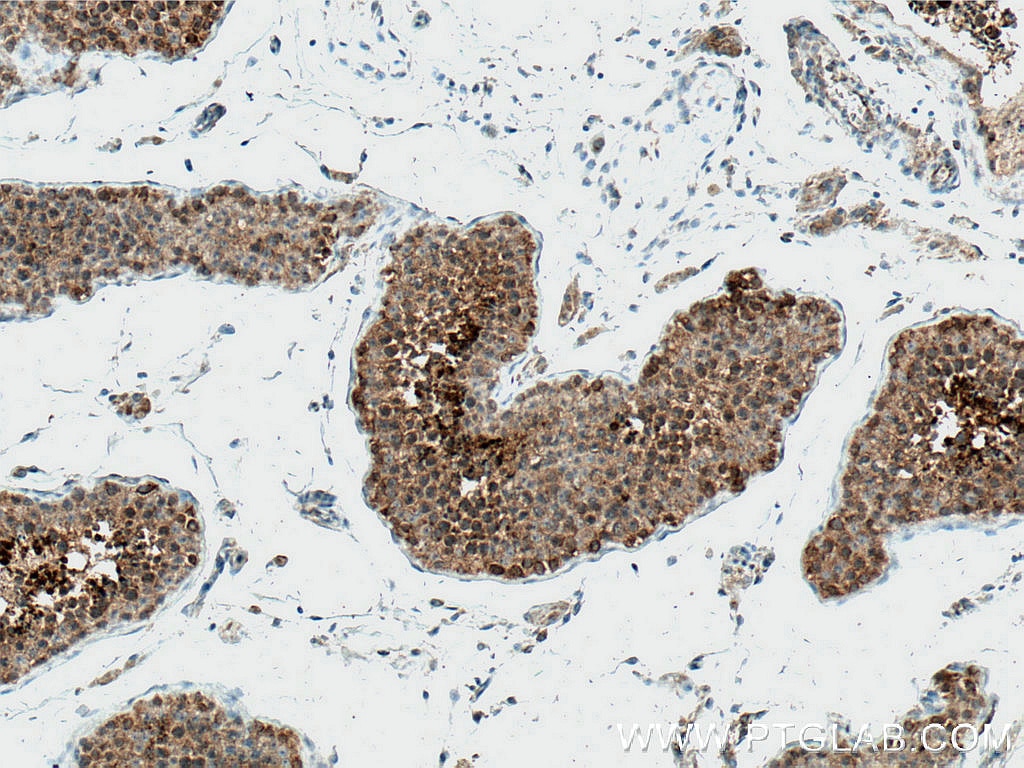
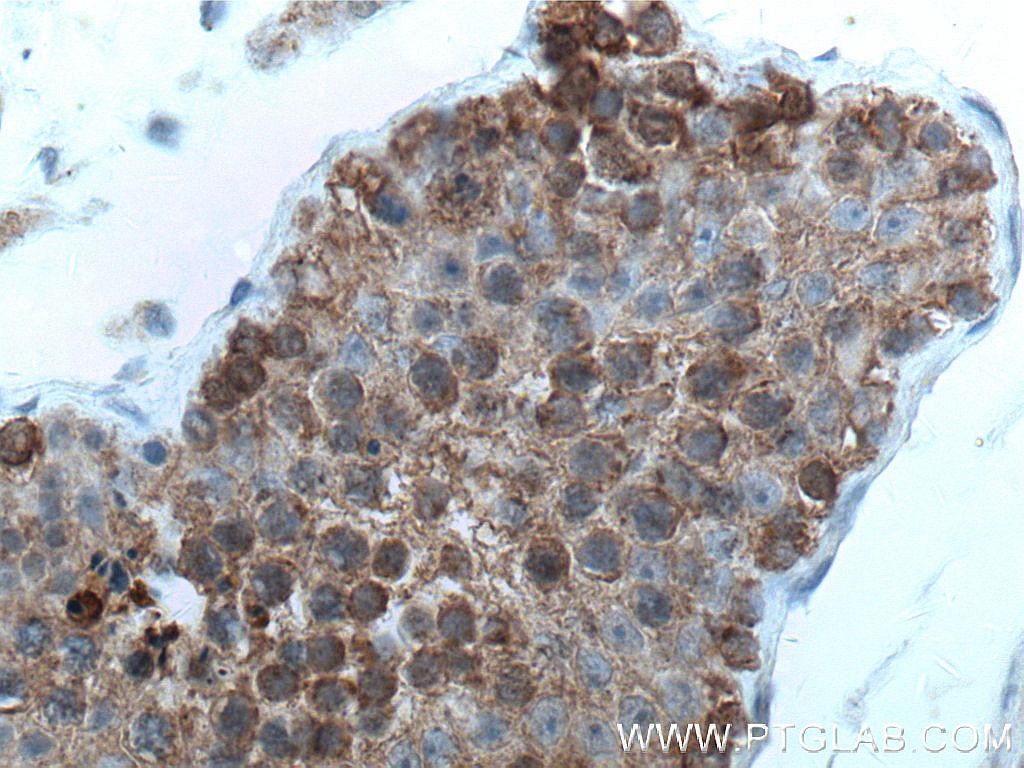
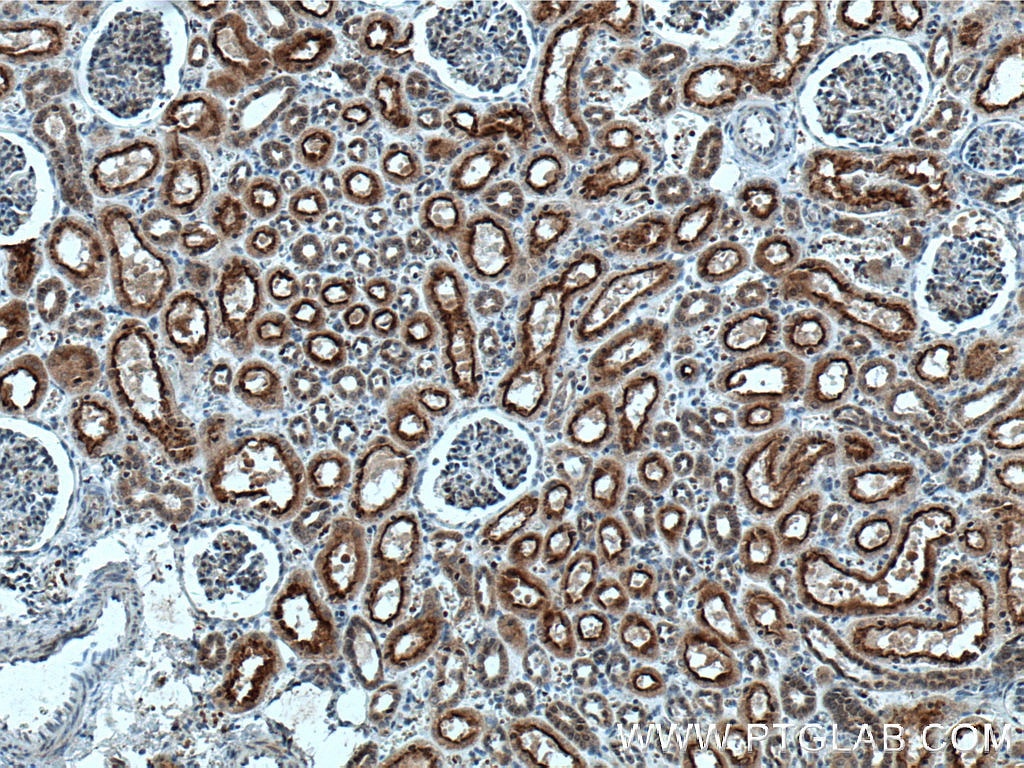
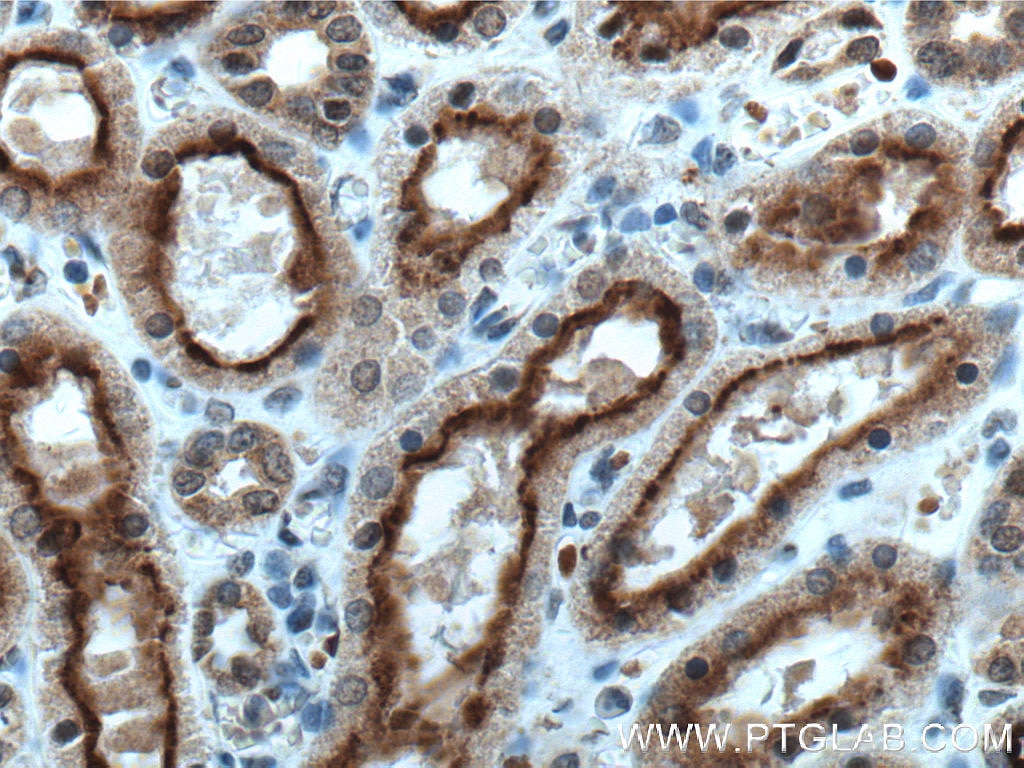
| Positive IHC detected in | human testis tissue, human kidney tissue Note: suggested antigen retrieval with TE buffer pH 9.0; (*) Alternatively, antigen retrieval may be performed with citrate buffer pH 6.0 |
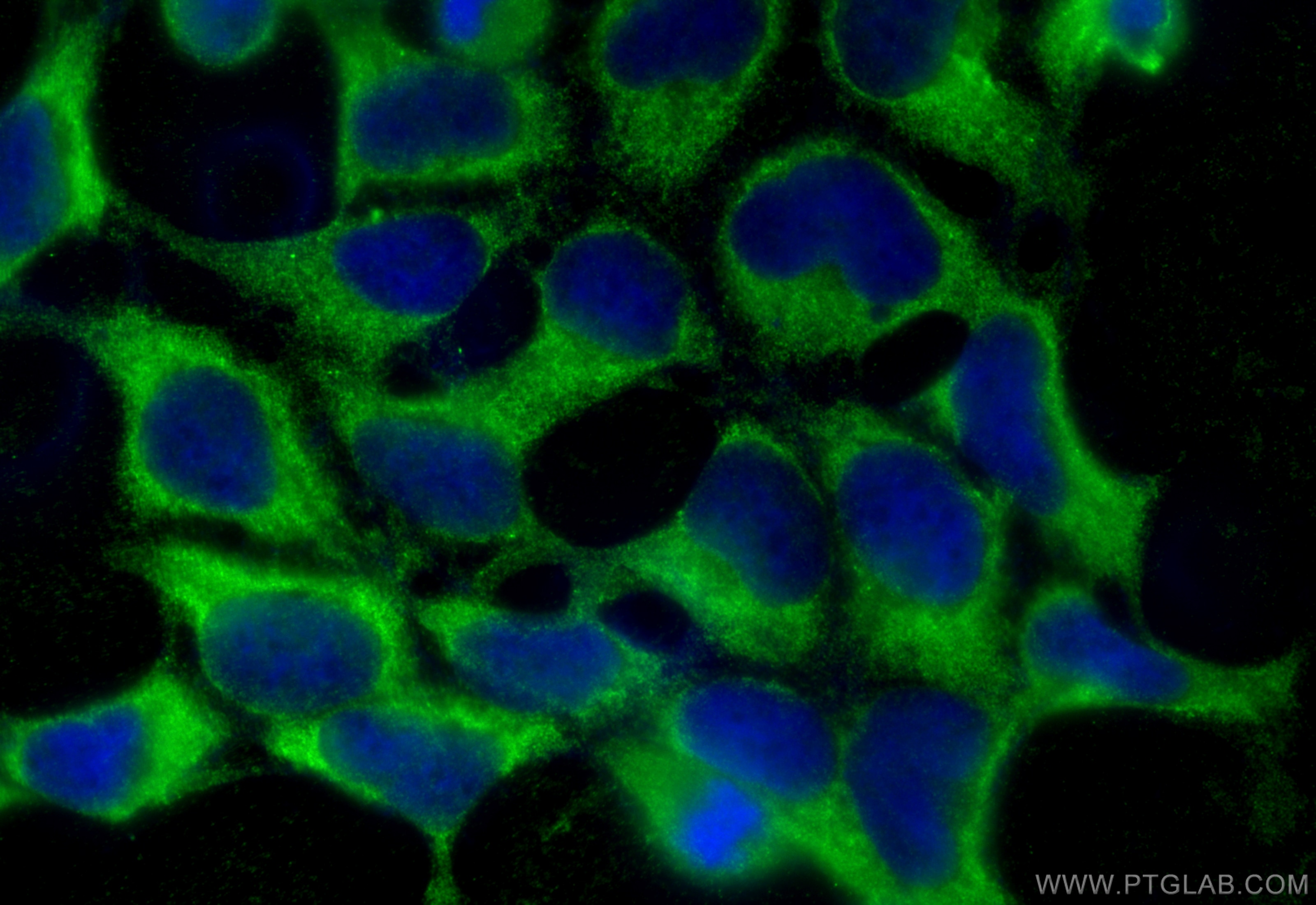
| Positive IF/ICC detected in | HEK-293 cells |
Recommended dilution
| Application | Dilution |
|---|---|
| Western Blot (WB) | WB : 1:1000-1:6000 |
| Immunohistochemistry (IHC) | IHC : 1:150-1:600 |
| Immunofluorescence (IF)/ICC | IF/ICC : 1:400-1:1600 |
| It is recommended that this reagent should be titrated in each testing system to obtain optimal results. | |
| Sample-dependent, Check data in validation data gallery. | |
Product Information
66589-1-Ig targets PHD2/EGLN1 in WB, IHC, IF/ICC, ELISA applications and shows reactivity with human, mouse, rat, pig samples.
| Tested Reactivity | human, mouse, rat, pig |
| Cited Reactivity | human, mouse, pig |
| Host / Isotype | Mouse / IgG1 |
| Class | Monoclonal |
| Type | Antibody |
| Immunogen |
Peptide Predict reactive species |
| Full Name | egl nine homolog 1 (C. elegans) |
| Calculated Molecular Weight | 46 kDa |
| Observed Molecular Weight | 46 kDa, 44 kDa, 36 kDa |
| GenBank Accession Number | NM_022051 |
| Gene Symbol | PHD2/EGLN1 |
| Gene ID (NCBI) | 54583 |
| RRID | AB_2881949 |
| Conjugate | Unconjugated |
| Form | Liquid |
| Purification Method | Protein G purification |
| UNIPROT ID | Q9GZT9 |
| Storage Buffer | PBS with 0.02% sodium azide and 50% glycerol, pH 7.3. |
| Storage Conditions | Store at -20°C. Stable for one year after shipment. Aliquoting is unnecessary for -20oC storage. 20ul sizes contain 0.1% BSA. |
Background Information
EGLN1, also named as PHD2, SM-20, HPH-2 and HIF-PH2, catalyzes the post-translational formation of 4-hydroxyproline in hypoxia-inducible factor (HIF) alpha proteins. It hydroxylates HIF-1 alpha at 'Pro-402' and 'Pro-564', and HIF-2 alpha. EGLN1 functions as a cellular oxygen sensor and, under normoxic conditions, targets HIF through the hydroxylation for proteasomal degradation via the von Hippel-Lindau ubiquitination complex. Defects in EGLN1 are the cause of erythrocytosis familial type 3 (ECYT3). EGLN1 has 3 isoforms with MW of 46 kDa, 44 kDa and 36 kDa produced by alternative splicing. It mainly localizes in cytoplasm and can shuttle between the nucleus and cytoplasm (PubMed:19631610). The antibody is specific to EGLN1.
Protocols
| Product Specific Protocols | |
|---|---|
| IF protocol for PHD2/EGLN1 antibody 66589-1-Ig | Download protocol |
| IHC protocol for PHD2/EGLN1 antibody 66589-1-Ig | Download protocol |
| WB protocol for PHD2/EGLN1 antibody 66589-1-Ig | Download protocol |
| Standard Protocols | |
|---|---|
| Click here to view our Standard Protocols |
Publications
What published studies show
PHD2/EGLN1 Monoclonal antibody (1A2F1), catalog number 66589-1-Ig, has 10 citations published in journals including Cell Death & Disease, Phytomedicine, Journal of Translational Medicine, Biochemical Pharmacology, Communications Biology, Nutrients, Frontiers in Cell and Developmental Biology, Microbial Pathogenesis, Journal of Thermal Biology, and International Immunology. Research fields span cancer metastasis, thrombosis, neuroprotection, diabetic kidney disease, development, intestinal injury, pulmonary hypertension, inflammation, heat stress, and immune resistance.
| Species | Application | Title |
|---|---|---|
Cell Death Dis SKA3-mediated hypoxia tolerance and metabolic reprogramming promote liver metastasis in lung adenocarcinoma. | ||
Phytomedicine Polydatin mitigates thrombosis by inhibiting PHD2-induced proline hydroxylation on collagen, reducing platelet adhesion | ||
J Transl Med Inhibition of OGFOD1 by FG4592 confers neuroprotection by activating unfolded protein response and autophagy after ischemic stroke
| ||
Biochem Pharmacol Astragaloside IV ameliorates diabetic kidney disease by modulating the PHD2/HIF-1α axis and inhibiting podocyte ferroptosis. | ||
Nutrients L-Theanine Mitigates Acute Alcoholic Intestinal Injury by Activating the HIF-1 Signaling Pathway to Regulate the TLR4/NF-κB/HIF-1α Axis in Mice | ||










