

Tested Applications
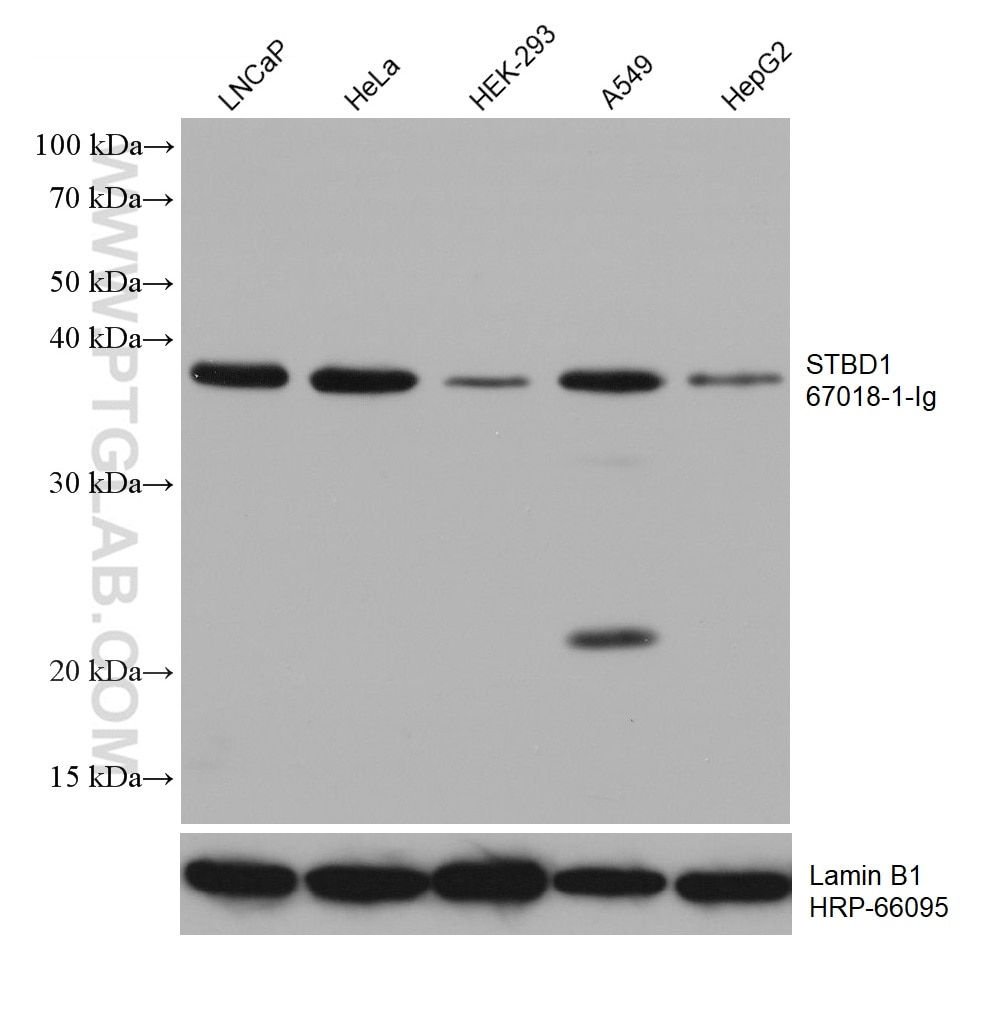
| Positive WB detected in | LNCaP cells, HEK-293 cells, A549 cells, HeLa cells, HepG2 cells |
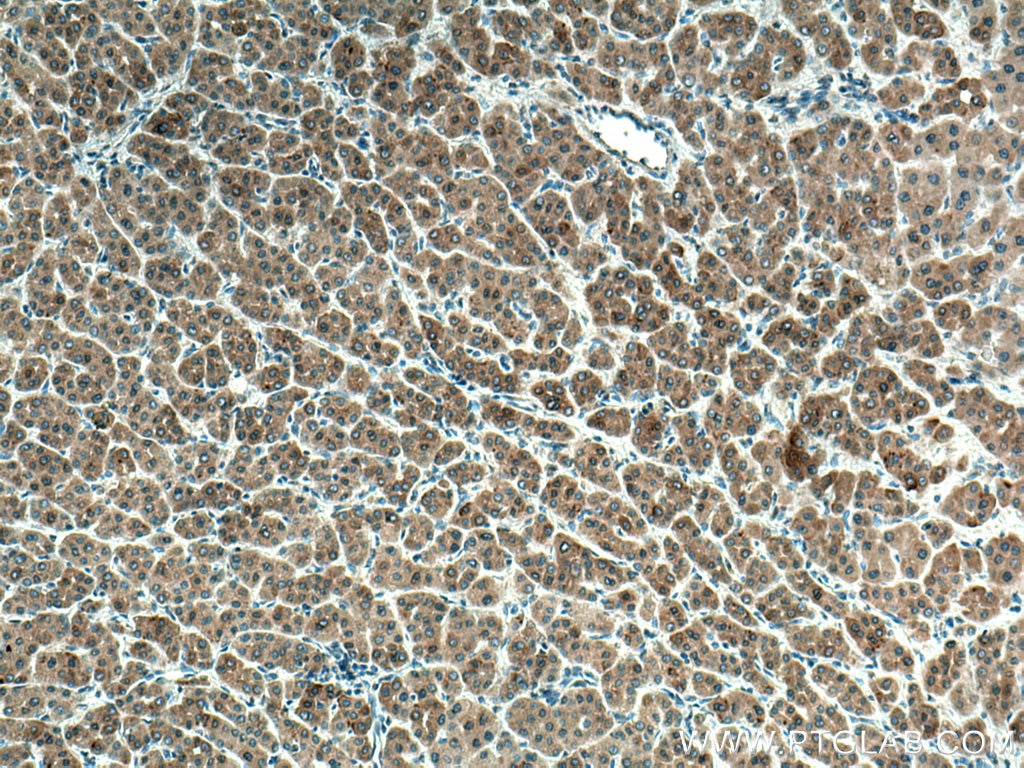
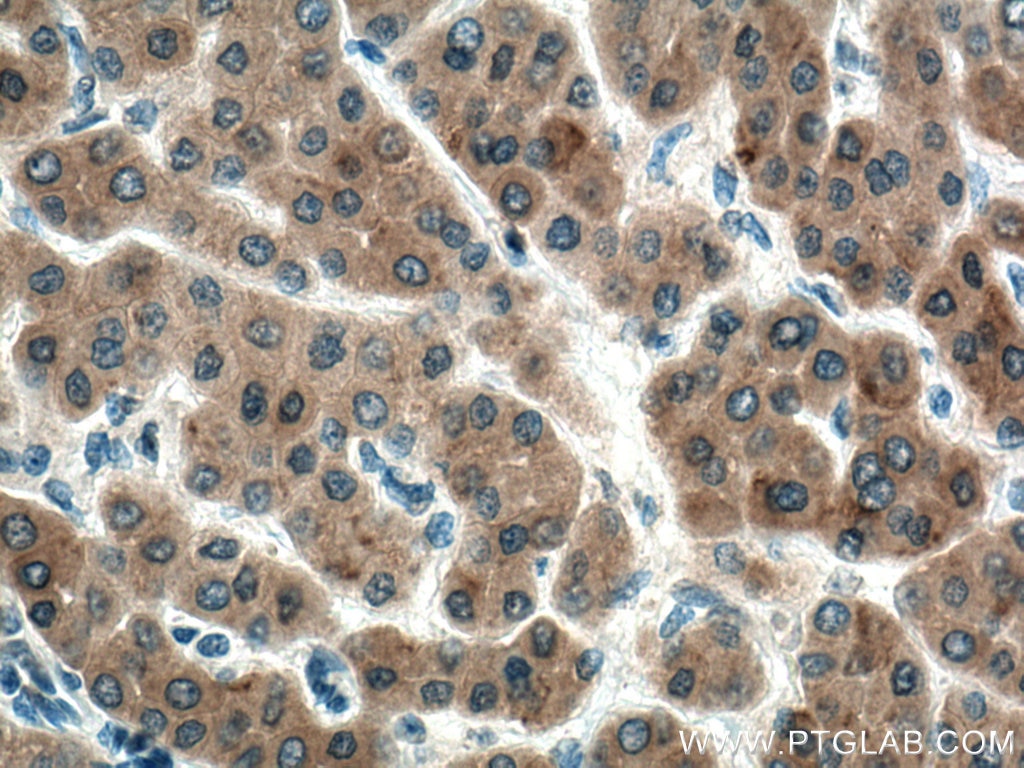
| Positive IHC detected in | human liver cancer tissue Note: suggested antigen retrieval with TE buffer pH 9.0; (*) Alternatively, antigen retrieval may be performed with citrate buffer pH 6.0 |
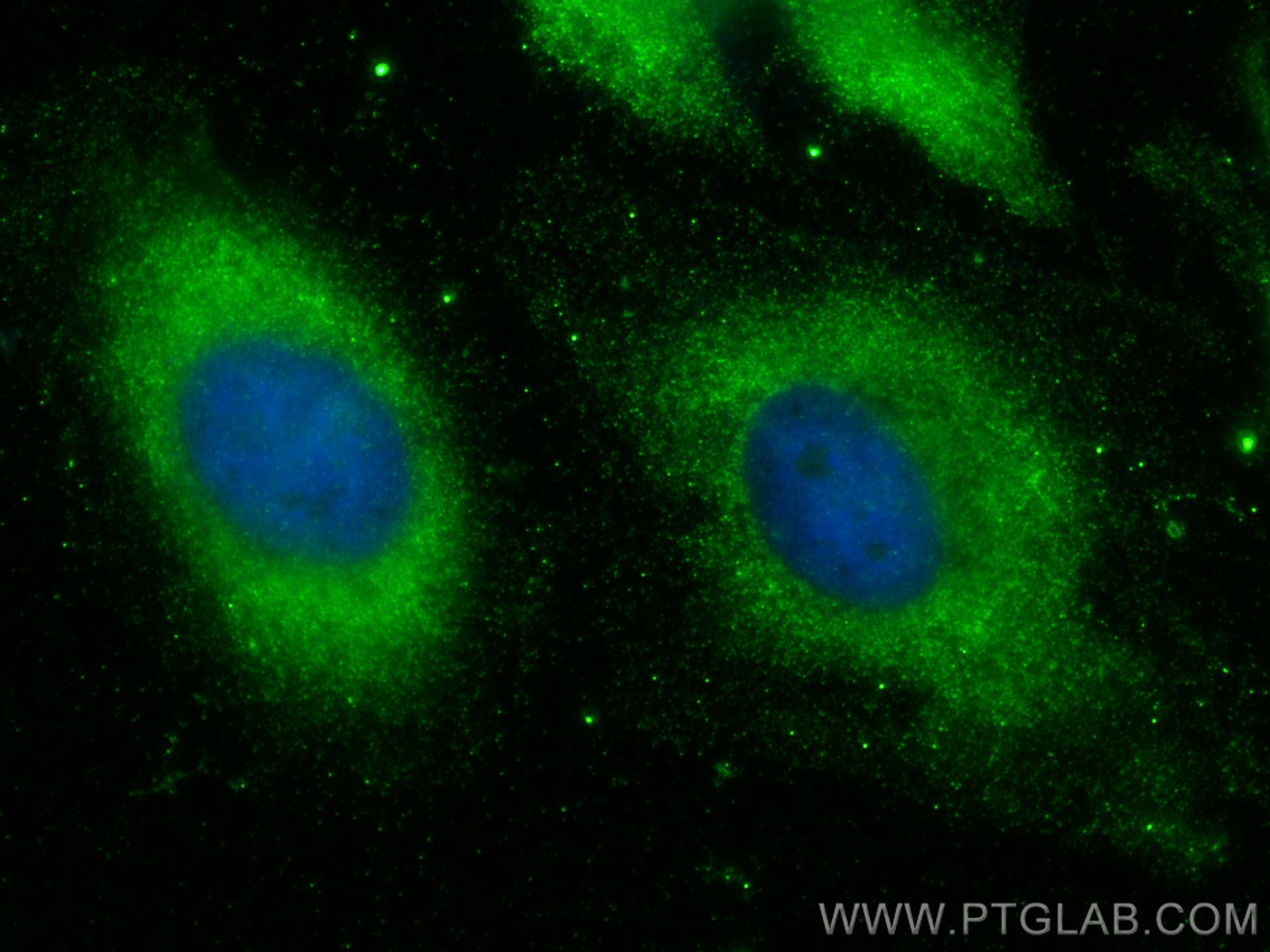
| Positive IF/ICC detected in | HeLa cells |
Recommended dilution
| Application | Dilution |
|---|---|
| Western Blot (WB) | WB : 1:5000-1:50000 |
| Immunohistochemistry (IHC) | IHC : 1:250-1:1000 |
| Immunofluorescence (IF)/ICC | IF/ICC : 1:400-1:1600 |
| It is recommended that this reagent should be titrated in each testing system to obtain optimal results. | |
| Sample-dependent, Check data in validation data gallery. | |
Product Information
67018-1-Ig targets STBD1 in WB, IHC, IF/ICC, IP, ELISA applications and shows reactivity with human, mouse samples.
| Tested Reactivity | human, mouse |
| Cited Reactivity | human, mouse |
| Host / Isotype | Mouse / IgG1 |
| Class | Monoclonal |
| Type | Antibody |
| Immunogen |
CatNo: Ag28613 Product name: Recombinant human STBD1 protein Source: e coli.-derived, PET28a Tag: 6*His Domain: 26-358 aa of BC022301 Sequence: GPGDTGKDGDAEQEKDAPLGGAAIPGGHQSGSSGLSPGPSGQELVTKPEHLQESNGHLISKTKDLGKLQAASWRLQNPSREVCDNSREHVPSGQFPDTEAPATSETSNSRSYSEVSRNESLESPMGEWGFQKGQEISAKAATCFAEKLPSSNLLKNRAKEEMSLSDLNSQDRVDHEEWEMVPRHSSWGDVGVGGSLKAPVLNLNQGMDNGRSTLVEARGQQVHGKMERVAVMPAGSQQVSVRFQVHYVTSTDVQFIAVTGDHECLGRWNTYIPLHYNKDGFWSHSIFLPADTVVEWKFVLVENGGVTRWEECSNRFLETGHEDKVVHAWWGIH Predict reactive species |
| Full Name | starch binding domain 1 |
| Calculated Molecular Weight | 41 kDa |
| Observed Molecular Weight | 38 kDa |
| GenBank Accession Number | BC022301 |
| Gene Symbol | STBD1 |
| Gene ID (NCBI) | 8987 |
| RRID | AB_2882334 |
| Conjugate | Unconjugated |
| Form | Liquid |
| Purification Method | Protein G purification |
| UNIPROT ID | O95210 |
| Storage Buffer | PBS with 0.02% sodium azide and 50% glycerol, pH 7.3. |
| Storage Conditions | Store at -20°C. Stable for one year after shipment. Aliquoting is unnecessary for -20oC storage. 20ul sizes contain 0.1% BSA. |
Background Information
STBD1 may have the capability to bind to carbohydrates. It functions as a glycogen receptor that tethers glycogen to autophagic membranes for delivery and breakdown in lysosomes. STBD1 appears molecular mass of 35-38 kDa band in mouse/rat tissues and 38-43 kDa in human tissue.
Protocols
| Product Specific Protocols | |
|---|---|
| IF protocol for STBD1 antibody 67018-1-Ig | Download protocol |
| IHC protocol for STBD1 antibody 67018-1-Ig | Download protocol |
| WB protocol for STBD1 antibody 67018-1-Ig | Download protocol |
| Standard Protocols | |
|---|---|
| Click here to view our Standard Protocols |
Publications
What published studies show
The STBD1 Monoclonal antibody (1A2G2), catalog number 67018-1-Ig, has a total of 3 citations. These appear in Nature Communications, Journal of Clinical Investigation, and Comprehensive Psychoneuroendocrinology. The associated research fields include autophagy in cancer, glycogenolysis and cancer chemoresistance, and glycophagy in astrocytes related to stress-induced hippocampal dysfunction.
| Species | Application | Title |
|---|---|---|
Nat Commun Model-based analysis uncovers mutations altering autophagy selectivity in human cancer. | ||
J Clin Invest Aryl hydrocarbon receptor sulfenylation promotes glycogenolysis and rescues cancer chemoresistance | ||
Compr Psychoneuroendocrinol Osteocalcin modulates hippocampal activities and influences glycophagy within astrocytes in a chronic unpredictable mild stress mouse model |





