
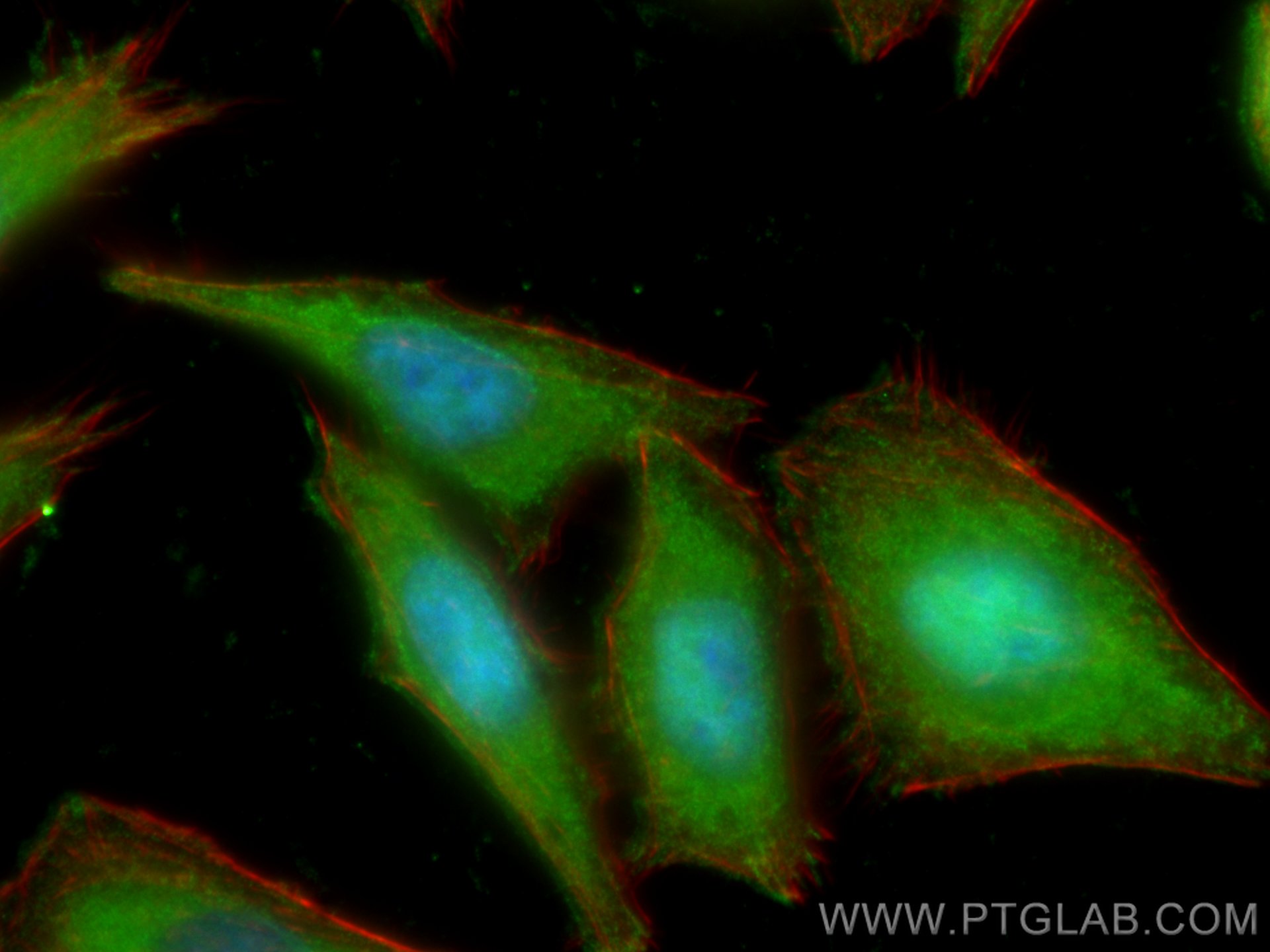

Tested Applications
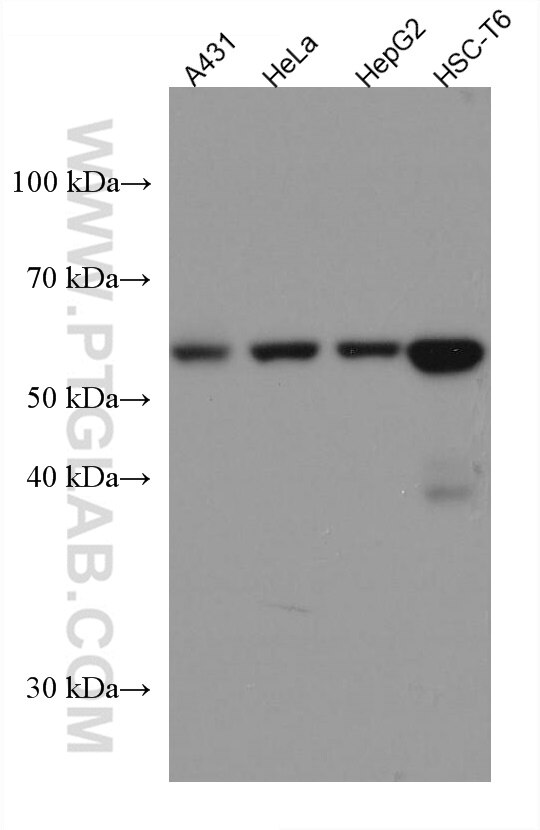
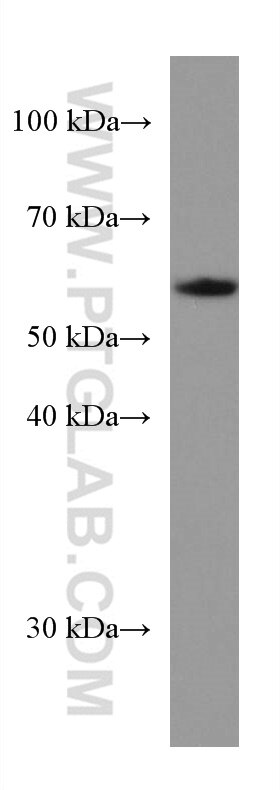
| Positive WB detected in | A431 cells, rat brain tissue, HeLa cells, HepG2 cells, HSC-T6 cells |
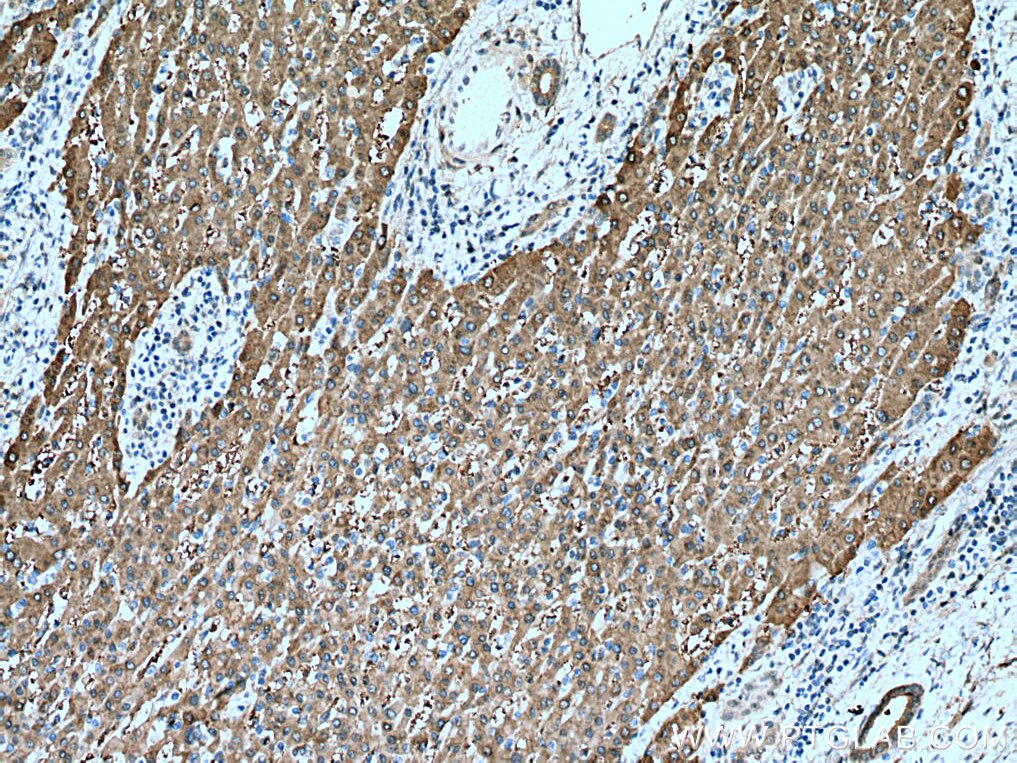
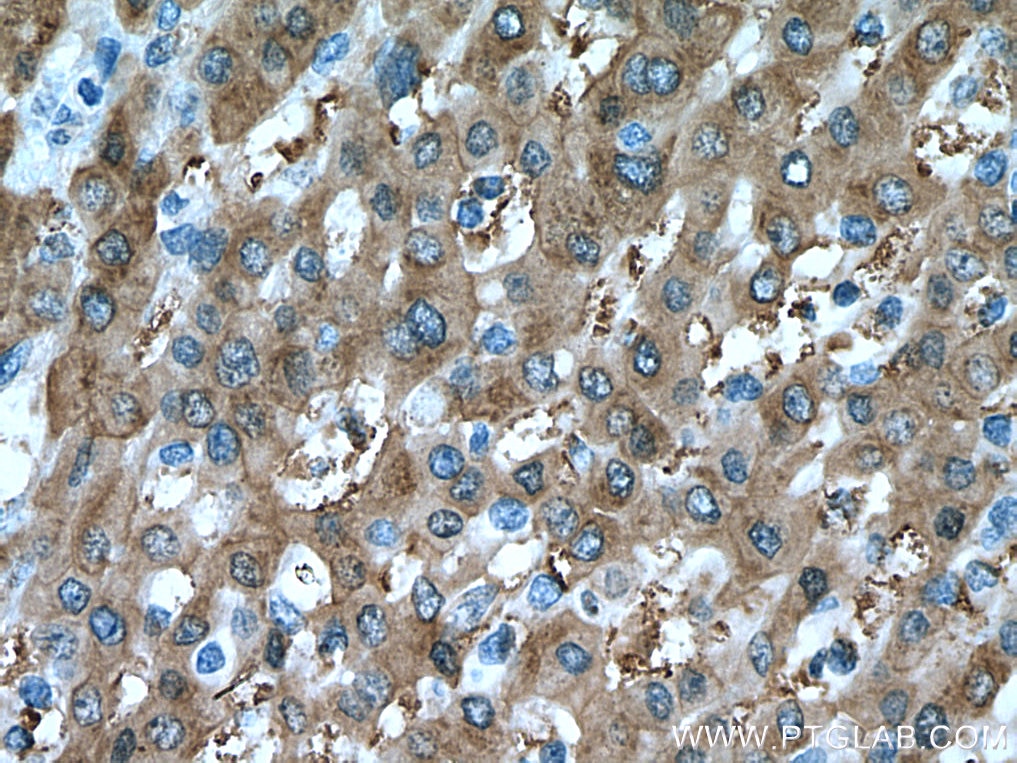
| Positive IHC detected in | human liver cancer tissue Note: suggested antigen retrieval with TE buffer pH 9.0; (*) Alternatively, antigen retrieval may be performed with citrate buffer pH 6.0 |
| Positive IF/ICC detected in | HepG2 cells |
Recommended dilution
| Application | Dilution |
|---|---|
| Western Blot (WB) | WB : 1:5000-1:50000 |
| Immunohistochemistry (IHC) | IHC : 1:500-1:2000 |
| Immunofluorescence (IF)/ICC | IF/ICC : 1:200-1:800 |
| It is recommended that this reagent should be titrated in each testing system to obtain optimal results. | |
| Sample-dependent, Check data in validation data gallery. | |
Product Information
67360-1-Ig targets UGDH in WB, IHC, IF/ICC, IP, IP-MS, ELISA applications and shows reactivity with human, mouse, rat, pig samples.
| Tested Reactivity | human, mouse, rat, pig |
| Cited Reactivity | human, mouse, rat |
| Host / Isotype | Mouse / IgG1 |
| Class | Monoclonal |
| Type | Antibody |
| Immunogen |
CatNo: Ag29747 Product name: Recombinant human UGDH protein Source: e coli.-derived, PET28a Tag: 6*His Domain: 1-301 aa of BC022781 Sequence: MFEIKKICCIGAGYVGGPTCSVIAHMCPEIRVTVVDVNESRINAWNSPTLPIYEPGLKEVVESCRGKNLFFSTNIDDAIKEADLVFISVNTPTKTYGMGKGRAADLKYIEACARRIVQNSNGYKIVTEKSTVPVRAAESIRRIFDANTKPNLNLQVLSNPEFLAEGTAIKDLKNPDRVLIGGDETPEGQRAVQALCAVYEHWVPREKILTTNTWSSELSKLAANAFLAQRISSINSISALCEATGADVEEVATAIGMDQRIGNKFLKASVGFGGSCFQKDVLNLVYLCEALNLPEVARYWQ Predict reactive species |
| Full Name | UDP-glucose dehydrogenase |
| Calculated Molecular Weight | 494 aa, 55 kDa |
| Observed Molecular Weight | 55-60 kDa |
| GenBank Accession Number | BC022781 |
| Gene Symbol | UGDH |
| Gene ID (NCBI) | 7358 |
| RRID | AB_2882612 |
| Conjugate | Unconjugated |
| Form | Liquid |
| Purification Method | Protein G purification |
| UNIPROT ID | O60701 |
| Storage Buffer | PBS with 0.02% sodium azide and 50% glycerol, pH 7.3. |
| Storage Conditions | Store at -20°C. Stable for one year after shipment. Aliquoting is unnecessary for -20oC storage. 20ul sizes contain 0.1% BSA. |
Background Information
UDP-glucose 6-dehydrogenase (UGDH) is a key enzyme in the uronic acid pathway, and converts UDP-glucose (UDP-Glc) to UDP-glucuronic acid (UDP-GlcA). UGDH is critical to the production of extracellular matrix components which are essential to the migration and connectivity of neurons early in human brain development. UDP-GlcA is an essential sugar nucleotide precursor and a key component in the synthesis and stepwise degradation of glycosaminoglycans (GAGs). The protein subunit migrates on SDS-PAGE at ~55 kDa. (PMID: 32175296, PMID: 21576248, PMID: 31243371).
Protocols
| Product Specific Protocols | |
|---|---|
| IF protocol for UGDH antibody 67360-1-Ig | Download protocol |
| IHC protocol for UGDH antibody 67360-1-Ig | Download protocol |
| WB protocol for UGDH antibody 67360-1-Ig | Download protocol |
| Standard Protocols | |
|---|---|
| Click here to view our Standard Protocols |
Publications
What published studies show
The UGDH recombinant immunoglobulin (Cat# 67360-1-Ig) has 6 citations across journals including Advanced Science, Drug Design, Development and Therapy, Scientific Reports, Journal of Natural Products, World Journal of Gastrointestinal Oncology, and Biochemical and Biophysical Research Communications. Research fields span osteoarthritis, hepatic lipid metabolism, colorectal cancer, hepatocellular carcinoma, pan-cancer analysis, cannabidiol-targeted proteomics, and sorafenib resistance via unfolded protein response modulation.
| Species | Application | Title |
|---|---|---|
Adv Sci (Weinh) UGDH Lactylation Aggravates Osteoarthritis by Suppressing Glycosaminoglycan Synthesis and Orchestrating Nucleocytoplasmic Transport to Activate MAPK Signaling | ||
Drug Des Devel Ther Gut-Derived Hippuric Acid Alleviates Hepatic Lipid Metabolism via UGDH/FOXK1/CD36 Axis in Obese Mice. | ||
Sci Rep Downregulation of UDP-glucose 6-dehydrogenase predicts adverse outcomes in patients with colorectal cancer and promotes tumorigenesis.
| ||
J Nat Prod Probe-Based Chemical Proteomics Identifies UDP-Glucose 6-Dehydrogenase as a Potential Cannabidiol-Interacting Protein. | ||
World J Gastrointest Oncol Pan-cancer analysis of UDP-glucose 6-dehydrogenase in human tumors and its function in hepatocellular carcinoma | ||
Biochem Biophys Res Commun UDP-glucose 6-dehydrogenase lessens sorafenib sensitivity via modulating unfolded protein response.
|






