

Tested Applications
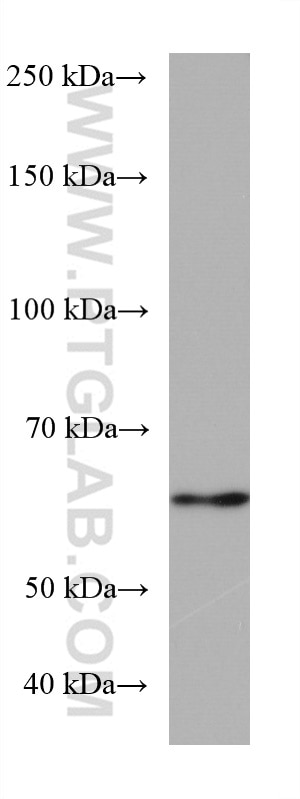
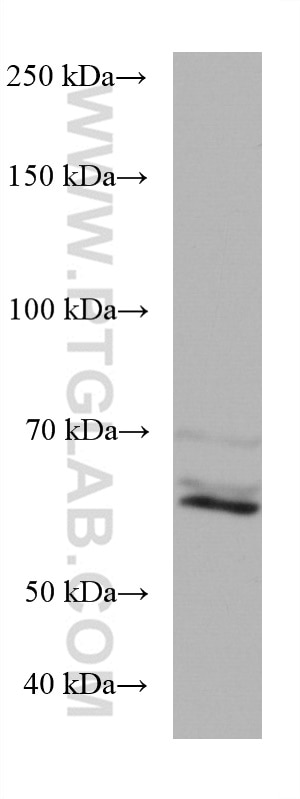
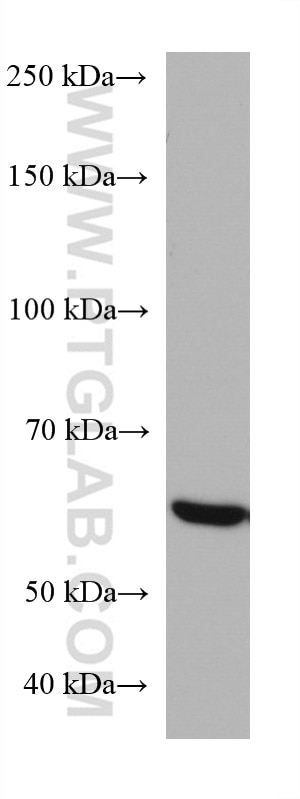
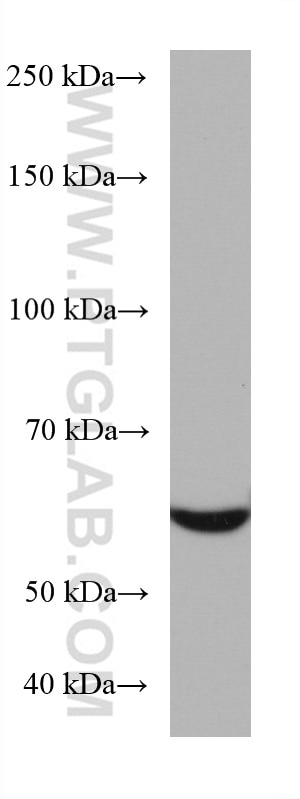
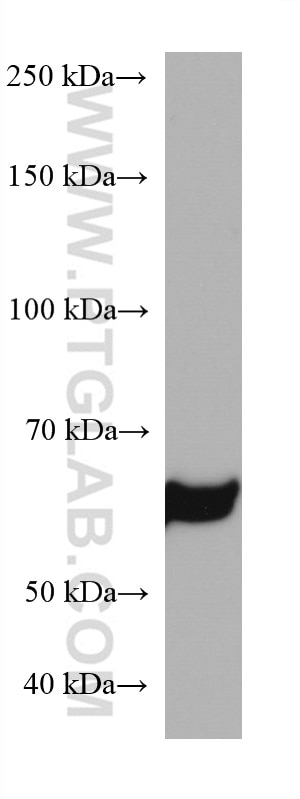
| Positive WB detected in | mouse brain tissue, HeLa cells, HEK-293 cells, Jurkat cells, NIH/3T3 cells |
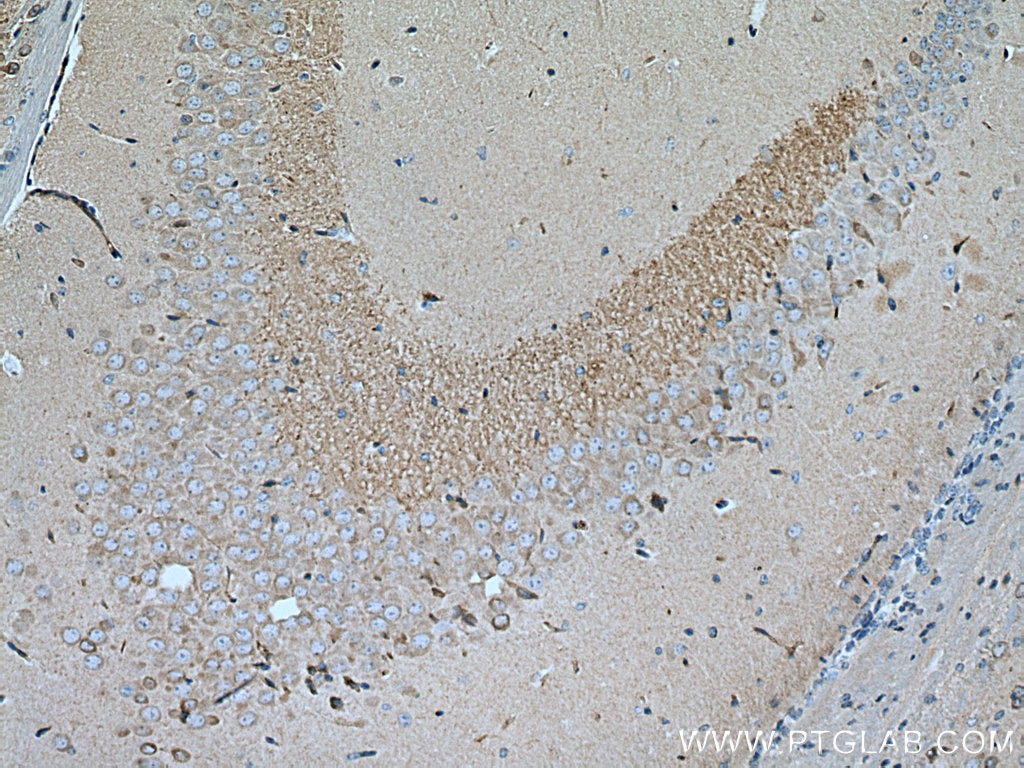
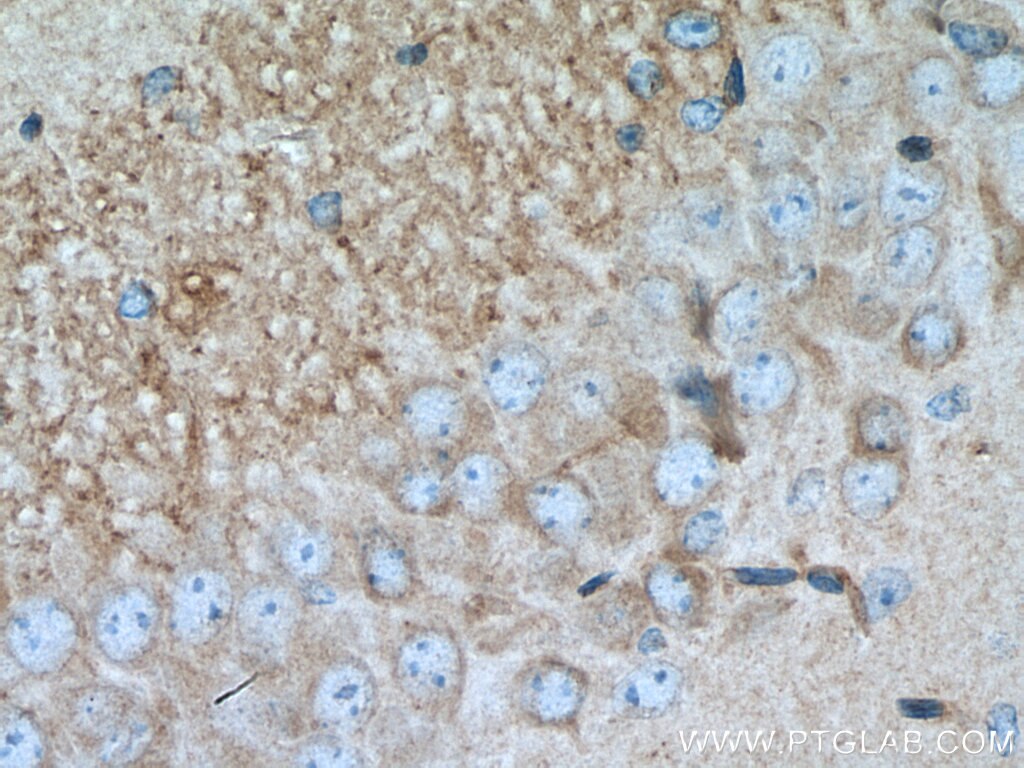
| Positive IHC detected in | mouse brain tissue Note: suggested antigen retrieval with TE buffer pH 9.0; (*) Alternatively, antigen retrieval may be performed with citrate buffer pH 6.0 |
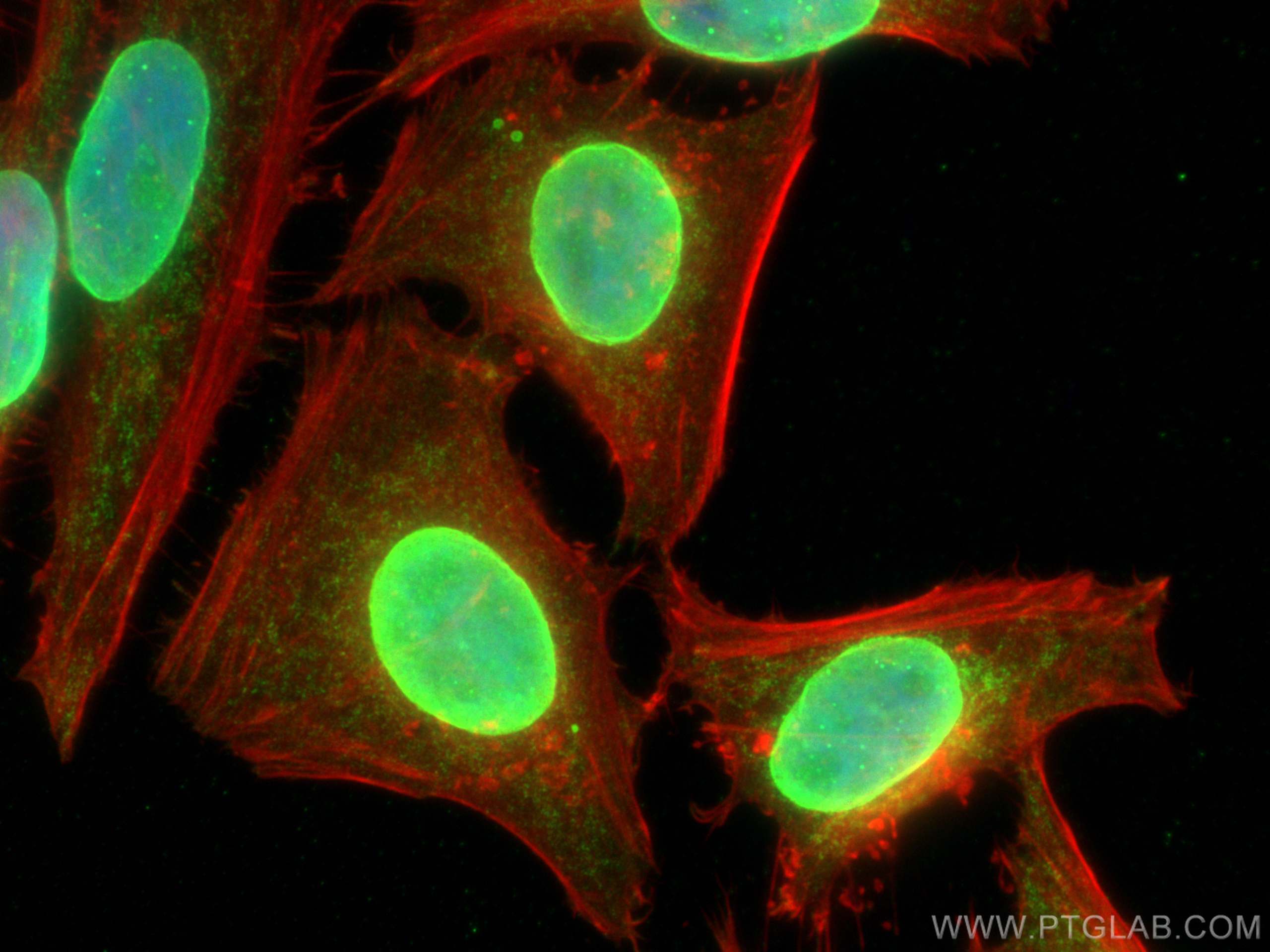
| Positive IF/ICC detected in | HeLa cells |
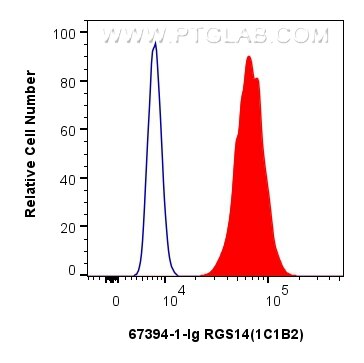
| Positive FC (Intra) detected in | HeLa cells |
Recommended dilution
| Application | Dilution |
|---|---|
| Western Blot (WB) | WB : 1:5000-1:15000 |
| Immunohistochemistry (IHC) | IHC : 1:1000-1:4000 |
| Immunofluorescence (IF)/ICC | IF/ICC : 1:1000-1:4000 |
| Flow Cytometry (FC) (INTRA) | FC (INTRA) : 0.40 ug per 10^6 cells in a 100 µl suspension |
| It is recommended that this reagent should be titrated in each testing system to obtain optimal results. | |
| Sample-dependent, Check data in validation data gallery. | |
Product Information
67394-1-Ig targets RGS14 in WB, IHC, IF/ICC, FC (Intra), ELISA applications and shows reactivity with human, mouse, rat samples.
| Tested Reactivity | human, mouse, rat |
| Cited Reactivity | human |
| Host / Isotype | Mouse / IgG1 |
| Class | Monoclonal |
| Type | Antibody |
| Immunogen |
CatNo: Ag9477 Product name: Recombinant human RGS14 protein Source: e coli.-derived, PET28a Tag: 6*His Domain: 217-566 aa of BC014094 Sequence: KSLPLGVEELGQLPPVEGPGGRPLRKSFRRELGGTANAALRRESQGSLNSSASLDLGFLAFVSSKSESHRKSLGSTEGESESRPGKYCCVYLPDGTASLALARPGLTIRDMLAGICEKRGLSLPDIKVYLVGNEQALVLDQDCTVLADQEVRLENRITFELELTALERVVRISAKPTKRLQEALQPILEKHGLSPLEVVLHRPGEKQPLDLGKLVSSVAAQRLVLDTLPGVKISKARDKSPCRSQGCPPRTQDKATHPPPASPSSLVKVPSSATGKRQTCDIEGLVELLNRVQSSGAHDQRGLLRKEDLVLPEFLQLPAQGPSSEETPPQTKSAAQPIGGSLNSTTDSAL Predict reactive species |
| Full Name | regulator of G-protein signaling 14 |
| Calculated Molecular Weight | 566 aa, 61 kDa |
| Observed Molecular Weight | 61 kDa |
| GenBank Accession Number | BC014094 |
| Gene Symbol | RGS14 |
| Gene ID (NCBI) | 10636 |
| RRID | AB_2882638 |
| Conjugate | Unconjugated |
| Form | Liquid |
| Purification Method | Protein G purification |
| UNIPROT ID | O43566 |
| Storage Buffer | PBS with 0.02% sodium azide and 50% glycerol, pH 7.3. |
| Storage Conditions | Store at -20°C. Stable for one year after shipment. Aliquoting is unnecessary for -20oC storage. 20ul sizes contain 0.1% BSA. |
Background Information
RGS14, a member of the R12 subfamily of RGS proteins, is highly expressed in the brain and is a natural suppressor of CA2 hippocampal synaptic plasticity and learning and memory. RGS14 was first identified as a complex scaffolding protein with an unconventional domain structure that allows it to interact with various protein binding partners. RGS14 contains one RGS domain, two Raf-like Ras-binding domains (RBDs), and one GoLoco domain. The protein attenuates the signaling activity of G-proteins by binding, through its GoLoco domain, to specific types of activated, GTP-bound G alpha subunits. Acting as a GTPase activating protein (GAP), the protein increases the rate of conversion of the GTP to GDP.
Protocols
| Product Specific Protocols | |
|---|---|
| FC protocol for RGS14 antibody 67394-1-Ig | Download protocol |
| IF protocol for RGS14 antibody 67394-1-Ig | Download protocol |
| IHC protocol for RGS14 antibody 67394-1-Ig | Download protocol |
| WB protocol for RGS14 antibody 67394-1-Ig | Download protocol |
| Standard Protocols | |
|---|---|
| Click here to view our Standard Protocols |
Publications
What published studies show
The RGS14 Monoclonal antibody (Cat# 67394-1-Ig) has 1 citation to date. It appears in Cancer Genetics (2025), where it was used in WB and IF applications to demonstrate that RGS14 promotes cancer growth in hepatocellular carcinoma. The associated research field is oncology, specifically liver cancer biology.
| Species | Application | Title |
|---|---|---|
Cancer Genet Regulator of G-protein signaling 14 (RGS14) promotes cancer growth in hepatocellular carcinoma
|











