
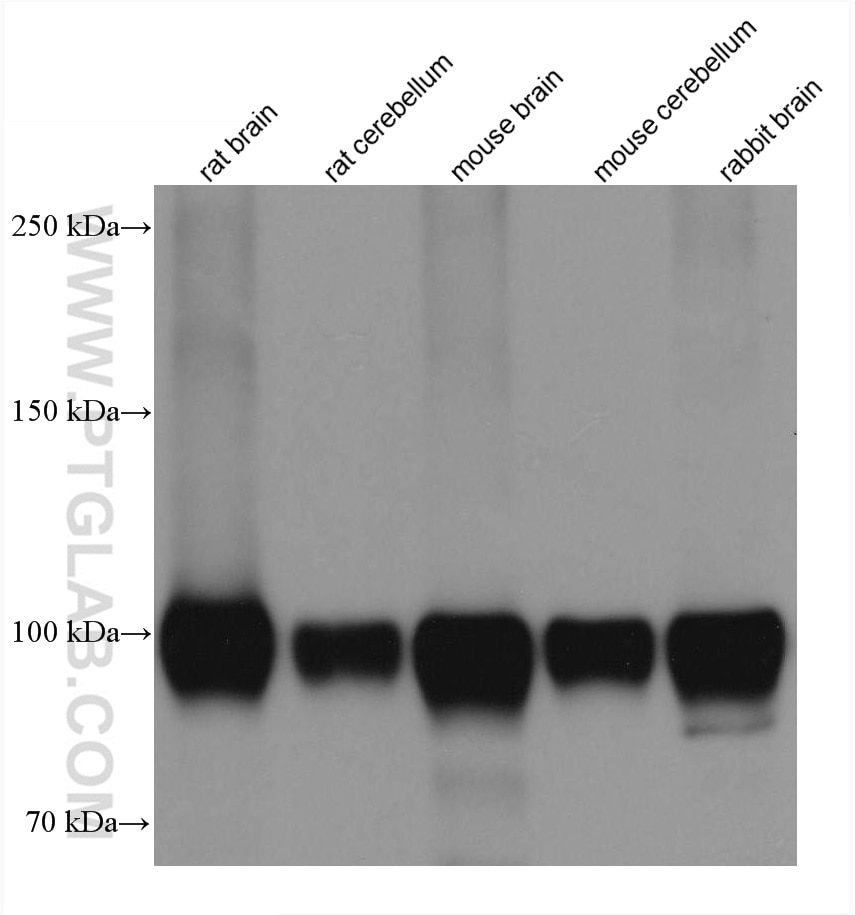
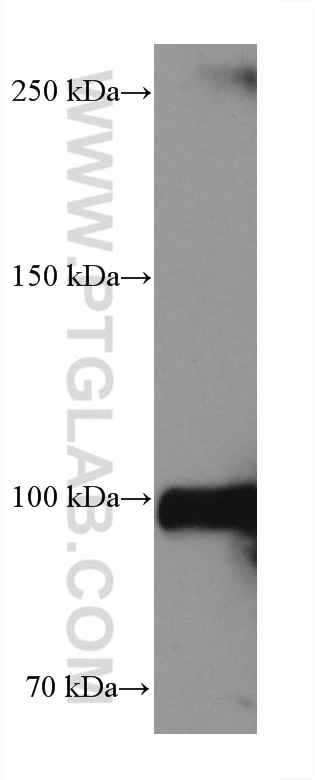
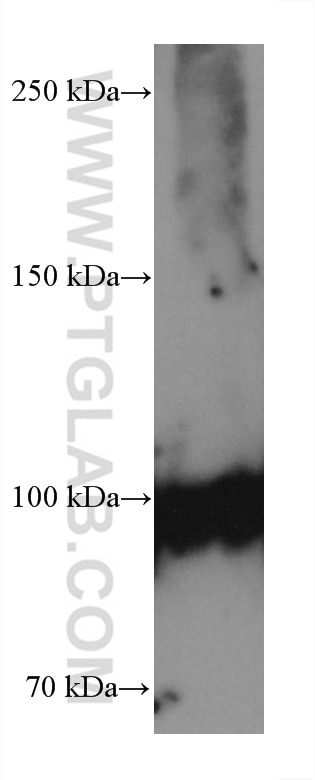
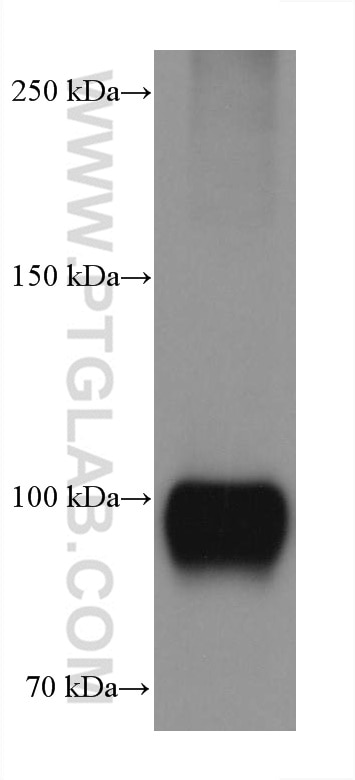

Tested Applications
| Positive WB detected in | rat brain tissue, pig spinal cord tissue, pig cerebellum tissue, pig brain tissue, rat cerebellum tissue, mouse brain tissue, mouse cerebellum tissue, rabbit brain tissue |
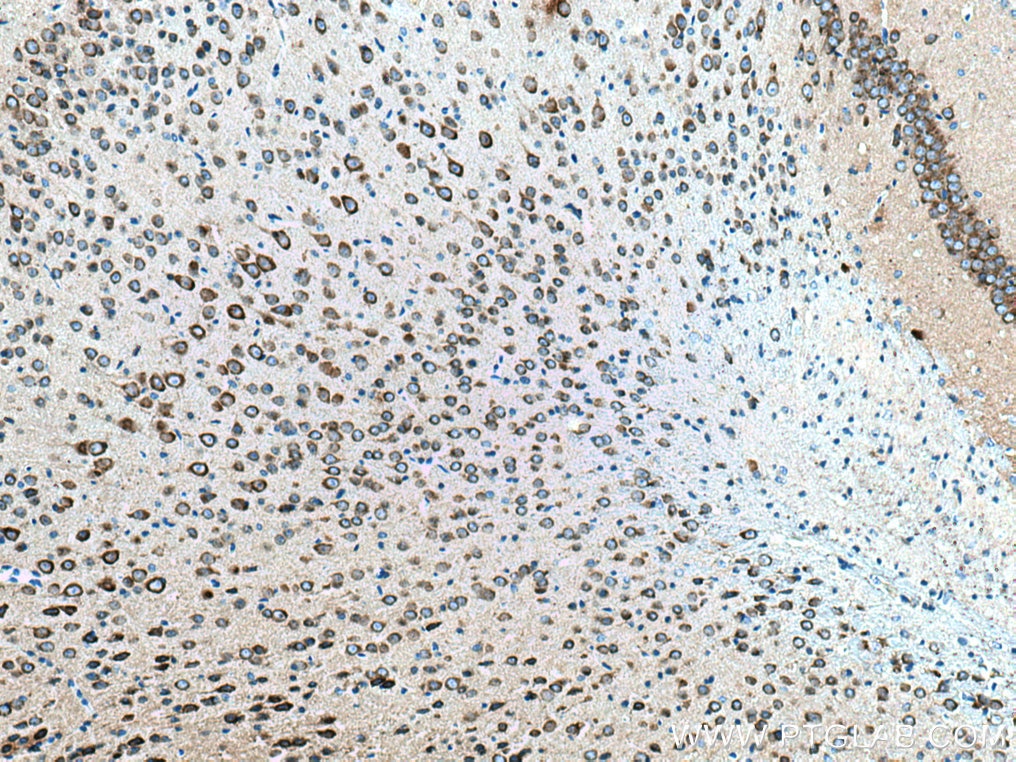
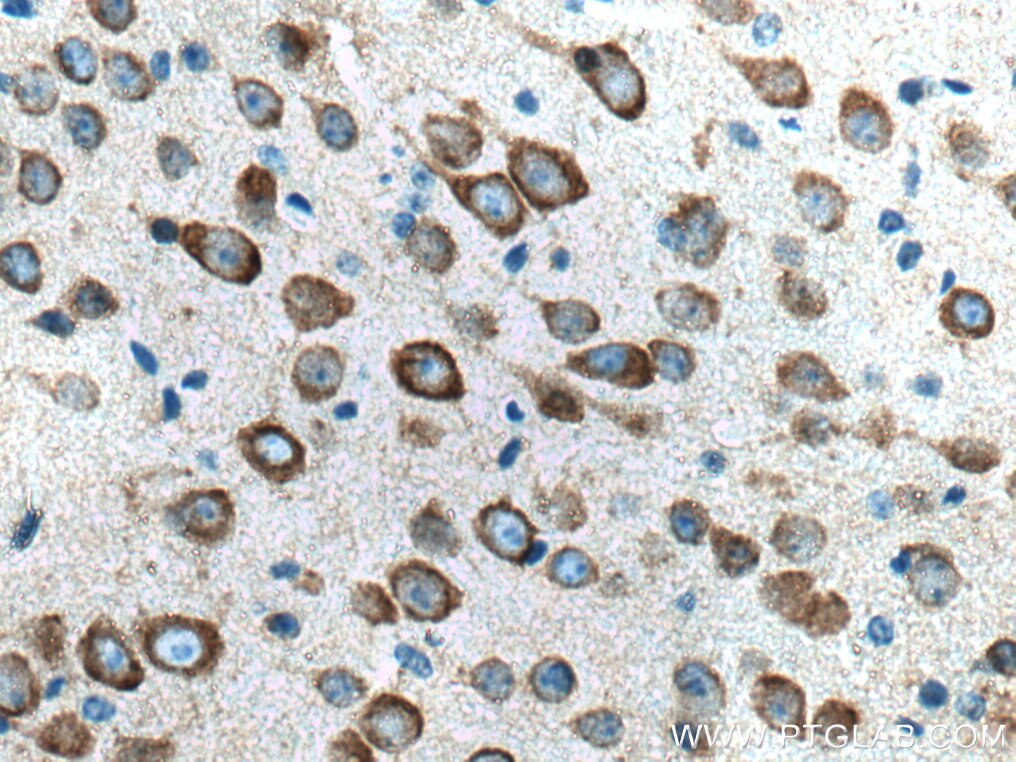
| Positive IHC detected in | mouse brain tissue Note: suggested antigen retrieval with TE buffer pH 9.0; (*) Alternatively, antigen retrieval may be performed with citrate buffer pH 6.0 |
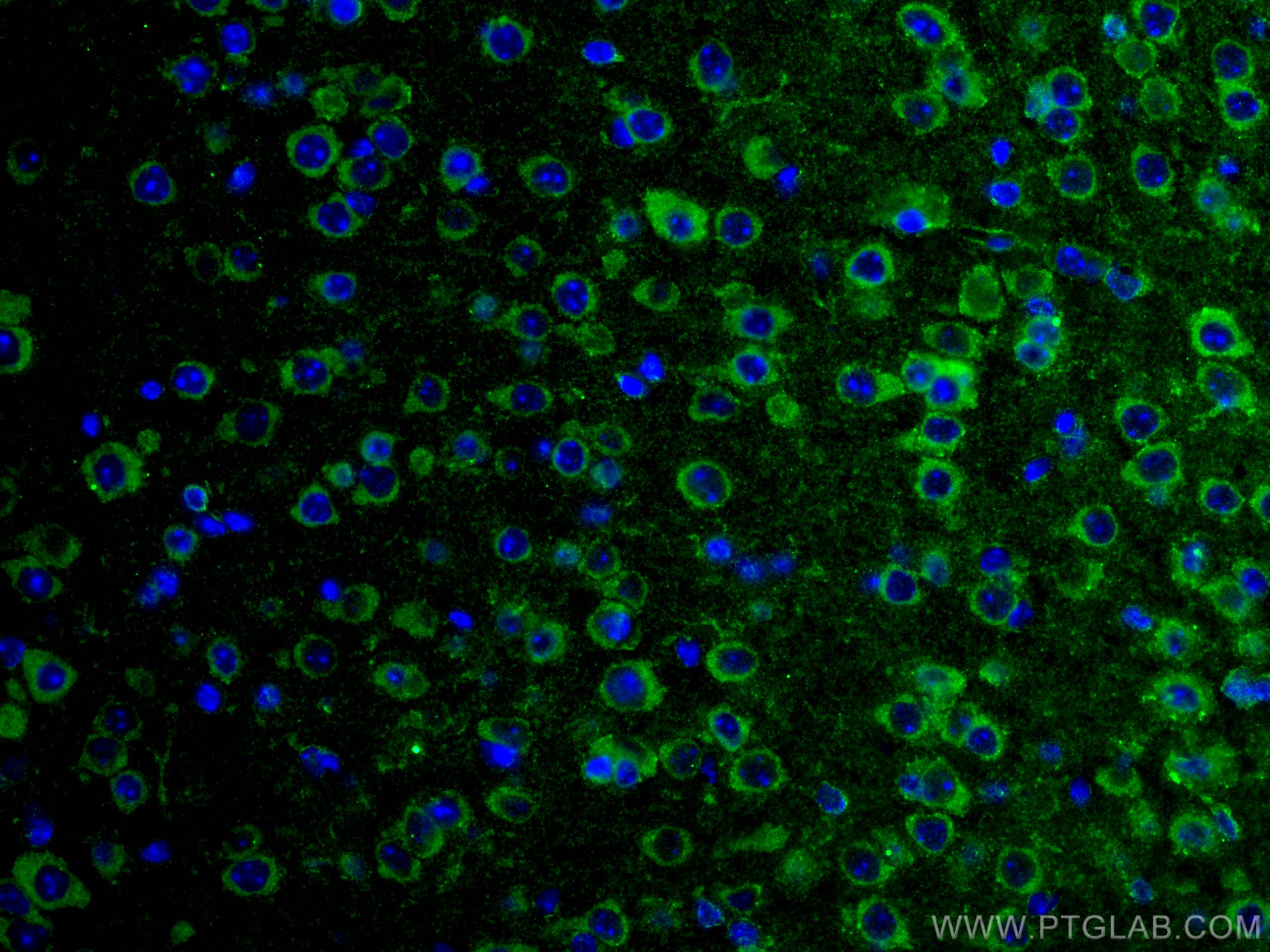
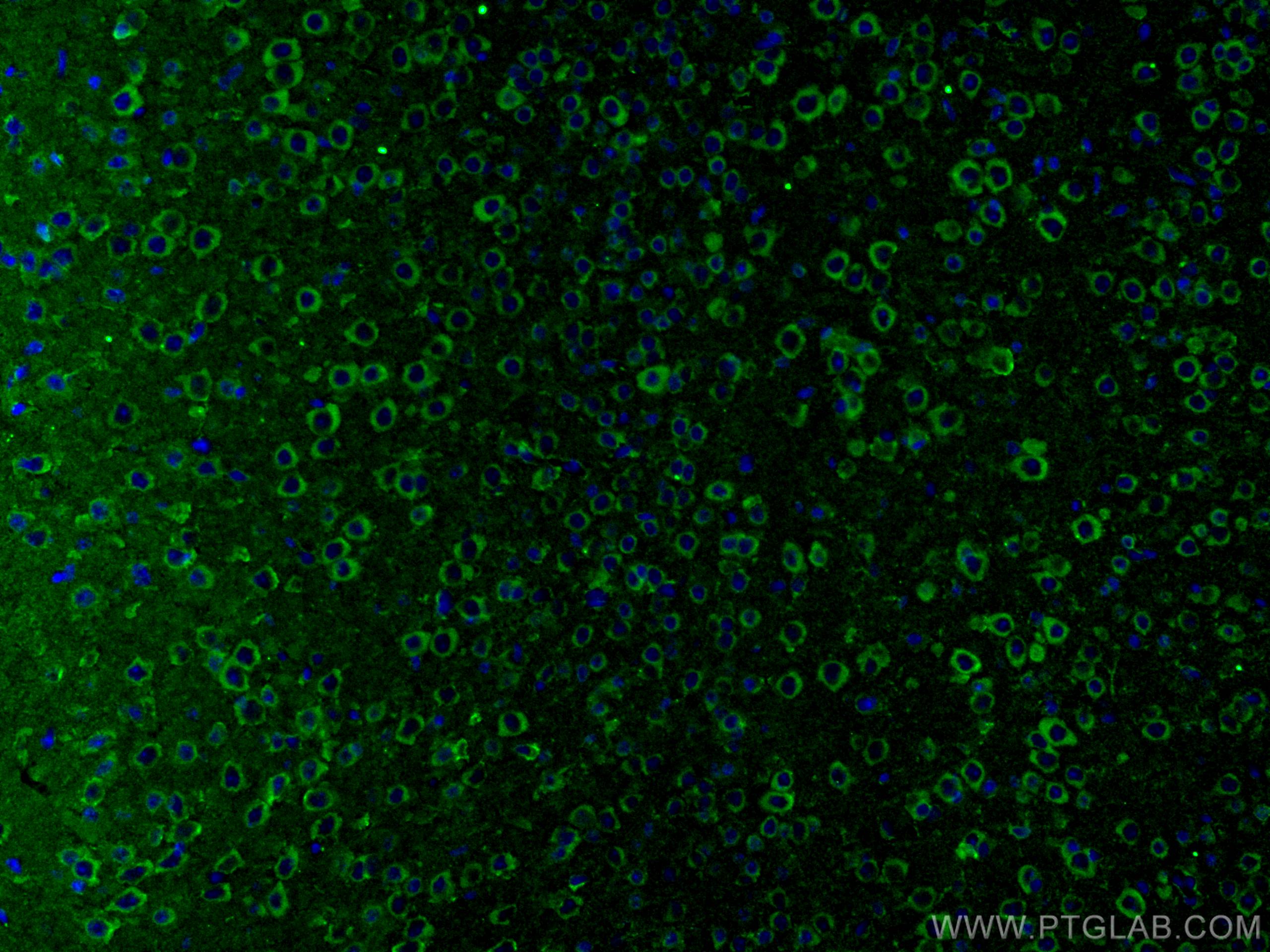
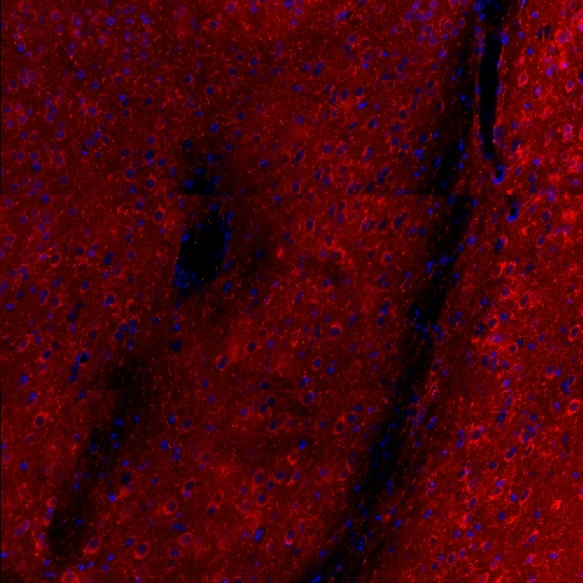
| Positive IF-P detected in | mouse brain tissue |
Recommended dilution
| Application | Dilution |
|---|---|
| Western Blot (WB) | WB : 1:20000-1:100000 |
| Immunohistochemistry (IHC) | IHC : 1:5000-1:20000 |
| Immunofluorescence (IF)-P | IF-P : 1:200-1:800 |
| It is recommended that this reagent should be titrated in each testing system to obtain optimal results. | |
| Sample-dependent, Check data in validation data gallery. | |
Product Information
67642-1-Ig targets GRIA1 in WB, IHC, IF-P, IP, ELISA applications and shows reactivity with human, mouse, rat, pig, rabbit samples.
| Tested Reactivity | human, mouse, rat, pig, rabbit |
| Cited Reactivity | human, mouse, rat |
| Host / Isotype | Mouse / IgG2b |
| Class | Monoclonal |
| Type | Antibody |
| Immunogen |
CatNo: Ag28932 Product name: Recombinant human GRIA1 protein Source: e coli.-derived, PET28a Tag: 6*His Domain: 631-906 aa of BC111734 Sequence: TANLAAFLTVERMVSPIESAEDLAKQTEIAYGTLEAGSTKEFFRRSKIAVFEKMWTYMKSAEPSVFVRTTEEGMIRVRKSKGKYAYLLESTMNEYIEQRKPCDTMKVGGNLDSKGYGIATPKGSALRNPVNLAVLKLNEQGLLDKLKNKWWYDKGECGSGGGDSKDKTSALSLSNVAGVFYILIGGLGLAMLVALIEFCYKSRSESKRMKGFCLIPQQSINEAIRTSTLPRNSGAGASSGGSGENGRVVSHDFPKSMQSIPCMSHSSGMPLGATGL Predict reactive species |
| Full Name | glutamate receptor, ionotropic, AMPA 1 |
| Calculated Molecular Weight | 906 aa, 102 kDa |
| Observed Molecular Weight | 100 kDa |
| GenBank Accession Number | BC111734 |
| Gene Symbol | GRIA1 |
| Gene ID (NCBI) | 2890 |
| RRID | AB_2882842 |
| Conjugate | Unconjugated |
| Form | Liquid |
| Purification Method | Protein A purification |
| UNIPROT ID | P42261 |
| Storage Buffer | PBS with 0.02% sodium azide and 50% glycerol, pH 7.3. |
| Storage Conditions | Store at -20°C. Stable for one year after shipment. Aliquoting is unnecessary for -20oC storage. 20ul sizes contain 0.1% BSA. |
Protocols
| Product Specific Protocols | |
|---|---|
| IF protocol for GRIA1 antibody 67642-1-Ig | Download protocol |
| IHC protocol for GRIA1 antibody 67642-1-Ig | Download protocol |
| WB protocol for GRIA1 antibody 67642-1-Ig | Download protocol |
| Standard Protocols | |
|---|---|
| Click here to view our Standard Protocols |
Publications
What published studies show
The GRIA1 Monoclonal antibody (Cat# 67642-1-Ig) has 47 citations published in journals including Molecular Psychiatry, Cell Discovery, Advanced Science, Science Advances, Molecular Neurodegeneration, EMBO Molecular Medicine, Cell Reports, Journal of Neuroscience, Journal of Biological Chemistry, Neurochemistry International, Neuropharmacology, Brain Research, and others. Research fields span synaptic plasticity, AMPA receptor signaling, Alzheimer's disease, epilepsy, depression, autism, stroke, chronic pain, and neurodegeneration, primarily using WB, IF, IP, and IHC applications in mouse and rat models.
| Species | Application | Title |
|---|---|---|
Mol Neurodegener Increased expression of mesencephalic astrocyte-derived neurotrophic factor (MANF) contributes to synapse loss in Alzheimer's disease | ||
Cell Discov Postsynaptic lncRNA Sera/Pkm2 pathway orchestrates the transition from social competition to rank by remodeling the neural ensemble in mPFC | ||
Adv Sci (Weinh) An Anterior Cingulate Cortex-Anterior Insular Cortex Glutamatergic Circuit Gates Stress-Induced Visceral Hypersensitivity and Anxiety via Ionotropic Glutamate Receptors Trafficking. | ||
Adv Sci (Weinh) Allele-Specific Regulation of PAXIP1-AS1 by SMC3/CEBPB at rs112651172 in Psychiatric Disorders Drives Synaptic and Behavioral Dysfunctions in Mice | ||
Sci Adv Cpeb1 remodels cell type-specific translational program to promote fear extinction | ||
Mol Psychiatry Downregulation of integrin α3 in ADHD mirrored in mutant mouse model by dopamine-dependent hippocampal AMPAR expression. |
Reviews
What customers say
All three reviews are 5-star. Users tested the antibody in mouse brain tissue and hiPSC-derived neurons across WB, IHC, and IF applications. Dilutions ranged from 1:500 to 1:10,000. One user noted that ETDA (pH 9) antigen retrieval worked well for IHC. The antibody was described as producing a very strong and clean signal, and was highly recommended overall.
The reviews below have been submitted by verified Proteintech customers who received an incentive for providing their feedback.
April (Verified Customer) (09-23-2025) | For IHC, ETDA (pH 9) antigen retrieval worked well. Tested in mouse brain tissues for both WB and IHC.
|
Pegah (Verified Customer) (02-03-2023) | I used a concentration of 1:500 of GRIA1 Monoclonal antibody (67642-1-Ig) for paraformaldehyde fixed mouse brain tissue with 40um diameter.
 |
Lisa (Verified Customer) (10-04-2021) | The antibody signal is very strong and clean. Highly recommended.
|









