
Product Information
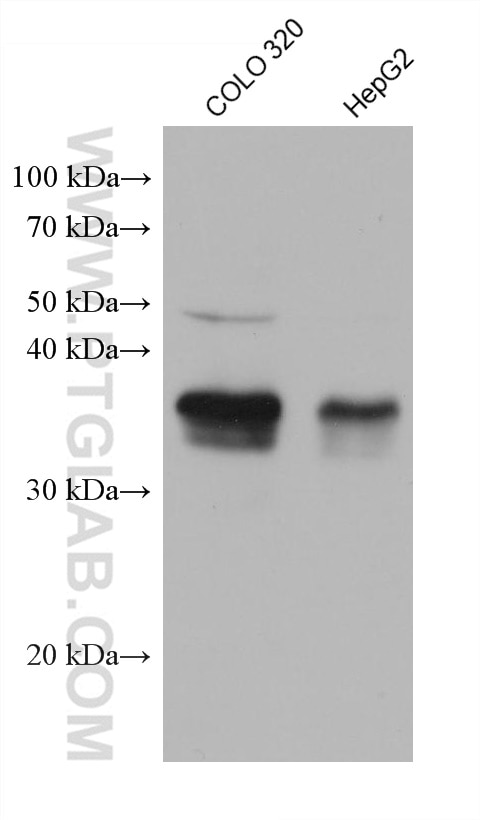
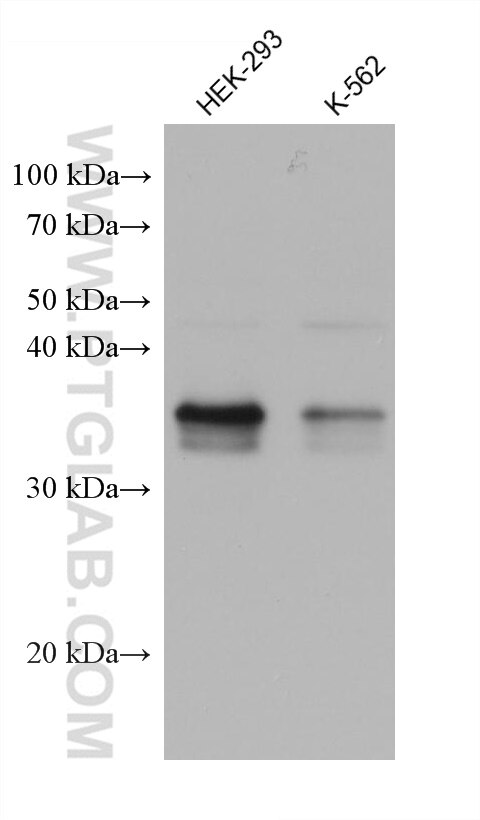
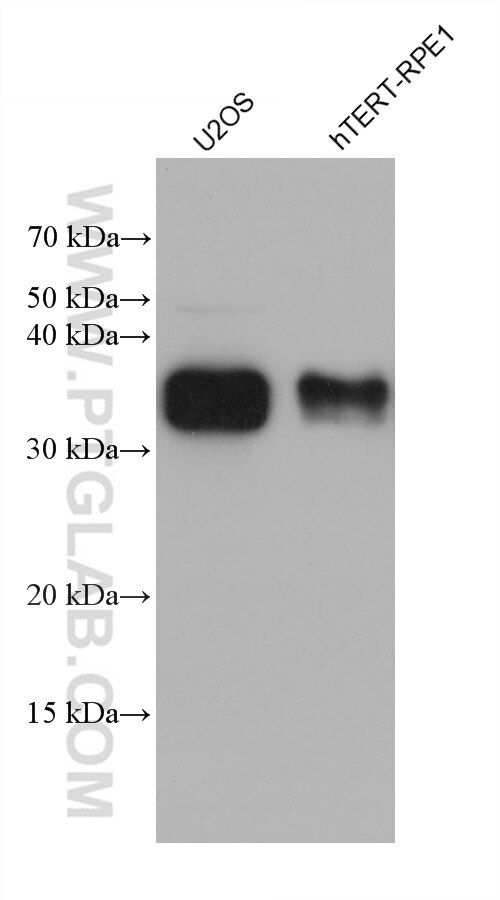
68346-1-PBS targets ZMAT3 as part of a matched antibody pair:
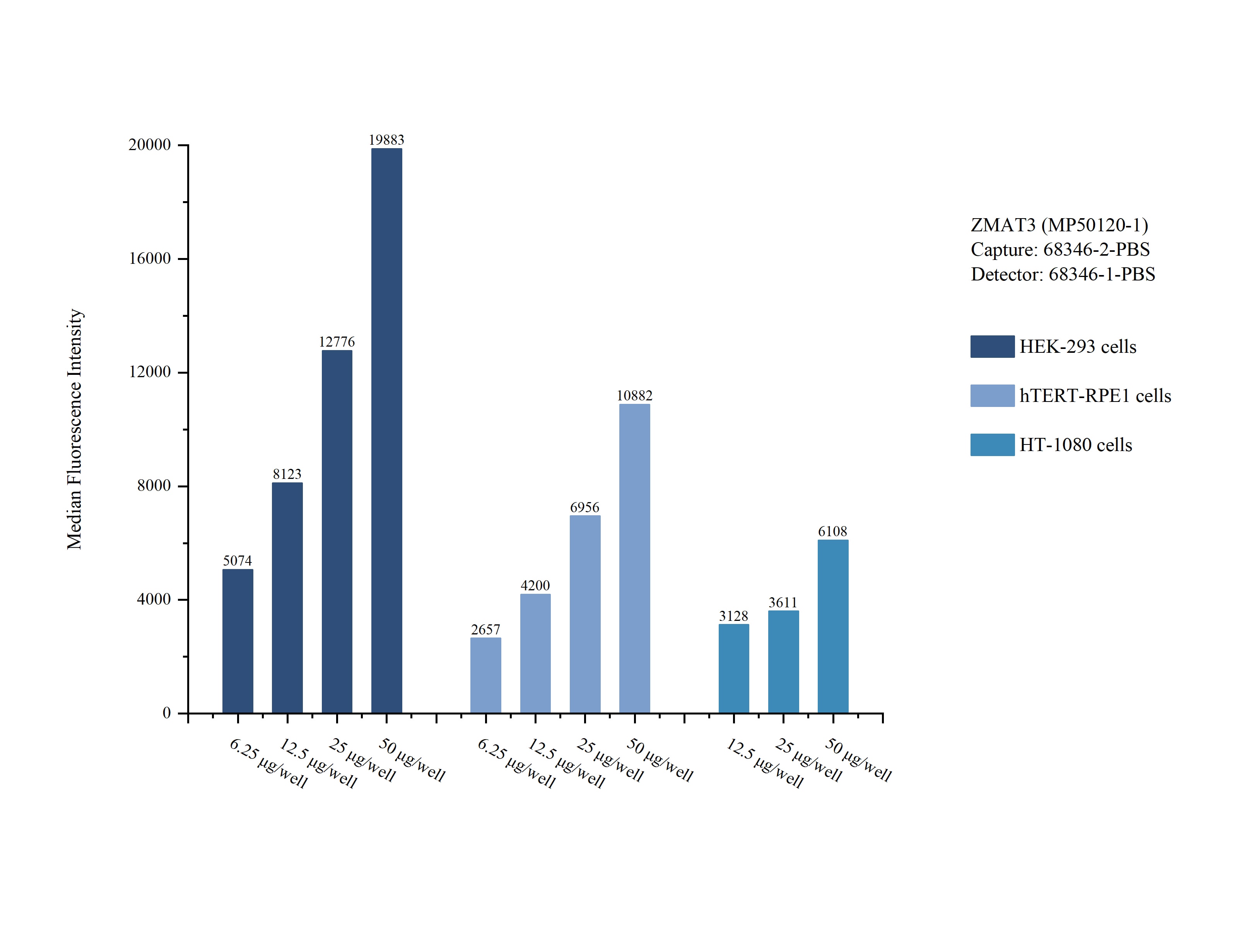
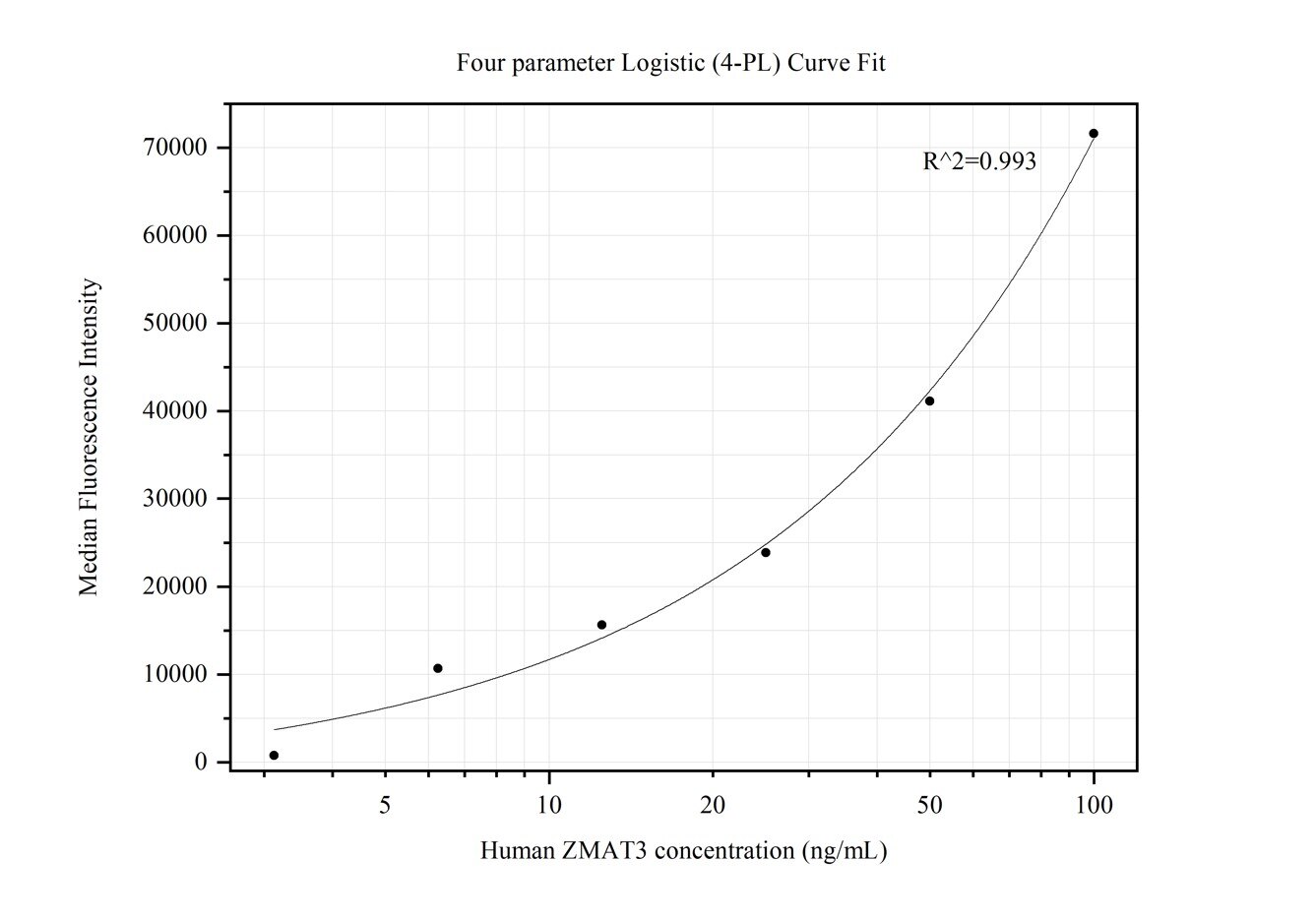
MP50120-1: 68346-2-PBS capture and 68346-1-PBS detection (validated in Cytometric bead array)
Unconjugated mouse monoclonal antibody pair in PBS only (BSA and azide free) storage buffer at a concentration of 1 mg/mL, ready for conjugation.
This conjugation ready format makes antibodies ideal for use in many applications including: ELISAs, multiplex assays requiring matched pairs, mass cytometry, and multiplex imaging applications.Antibody use should be optimized by the end user for each application and assay.
| Tested Reactivity | human |
| Host / Isotype | Mouse / IgG1 |
| Class | Monoclonal |
| Type | Antibody |
| Immunogen |
CatNo: Ag20552 Product name: Recombinant human ZMAT3 protein Source: e coli.-derived, PET28a Tag: 6*His Domain: 1-289 aa of BC002896 Sequence: MILLQHAVLPPPKQPSPSPPMSVATRSTGTLQLPPQKPFGQEASLPLAGEEELSKGGEQDCALEELCKPLYCKLCNVTLNSAQQAQAHYQGKNHGKKLRNYYAANSCPPPARMSNVVEPAATPVVPVPPQMGSFKPGGRVILATENDYCKLCDASFSSPAVAQAHYQGKNHAKRLRLAEAQSNSFSESSELGQRRARKEGNEFKMMPNRRNMYTVQNNSAGPYFNPRSRQRIPRDLAMCVTPSGQFYCSMCNVGAGEEMEFRQHLESKQHKSKVSEQRYRNEMENLGYV Predict reactive species |
| Full Name | zinc finger, matrin type 3 |
| Calculated Molecular Weight | 32 kDa |
| Observed Molecular Weight | ~32 kDa |
| GenBank Accession Number | BC002896 |
| Gene Symbol | ZMAT3 |
| Gene ID (NCBI) | 64393 |
| RRID | AB_3085069 |
| Conjugate | Unconjugated |
| Form | Liquid |
| Purification Method | Protein G purification |
| UNIPROT ID | Q9HA38 |
| Storage Buffer | PBS only, pH 7.3. |
| Storage Conditions | Store at -80°C. |
Background Information
ZMAT3 is a p53-induced zinc finger protein, and a role in the TP53-dependent growth regulatory pathway, contribute to TP53-mediated apoptosis by regulation of TP53 expression and translocation to the nucleus and nucleolus. Acts as a bona fide target gene of p53/TP53.






