
Tested Applications
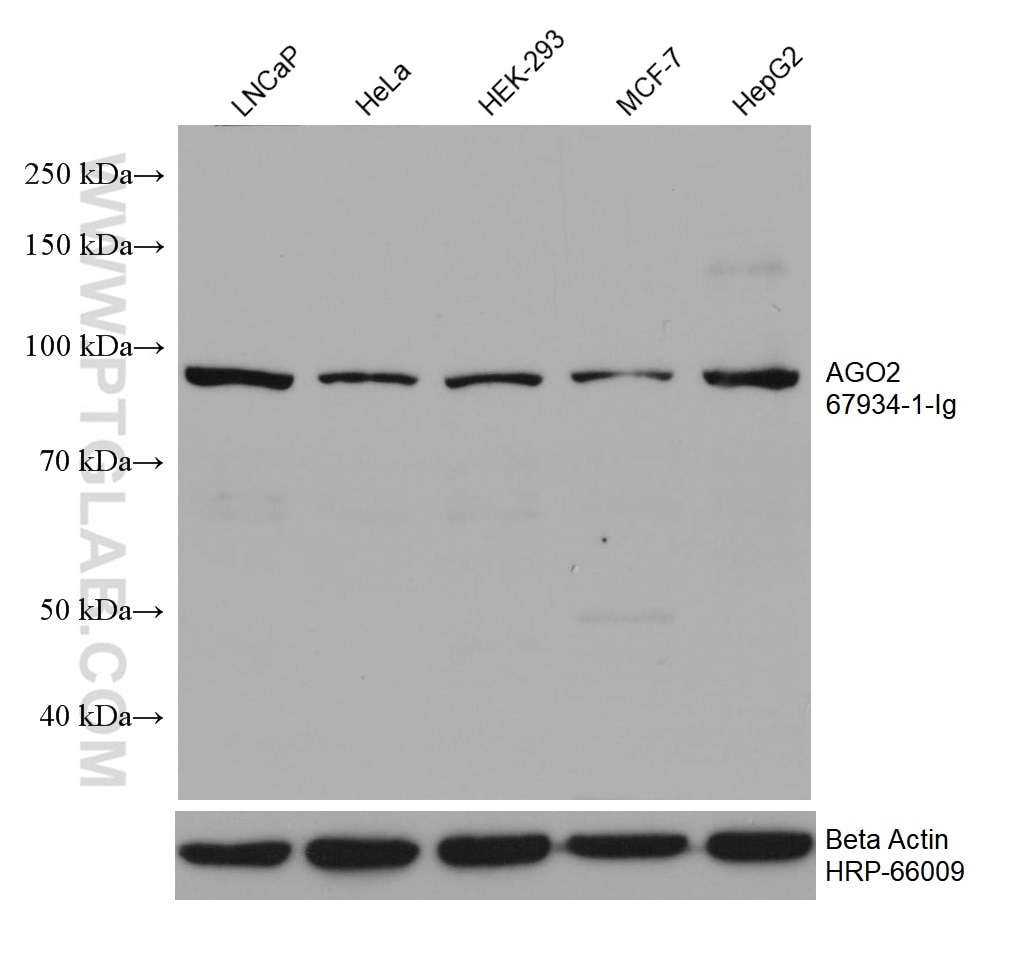
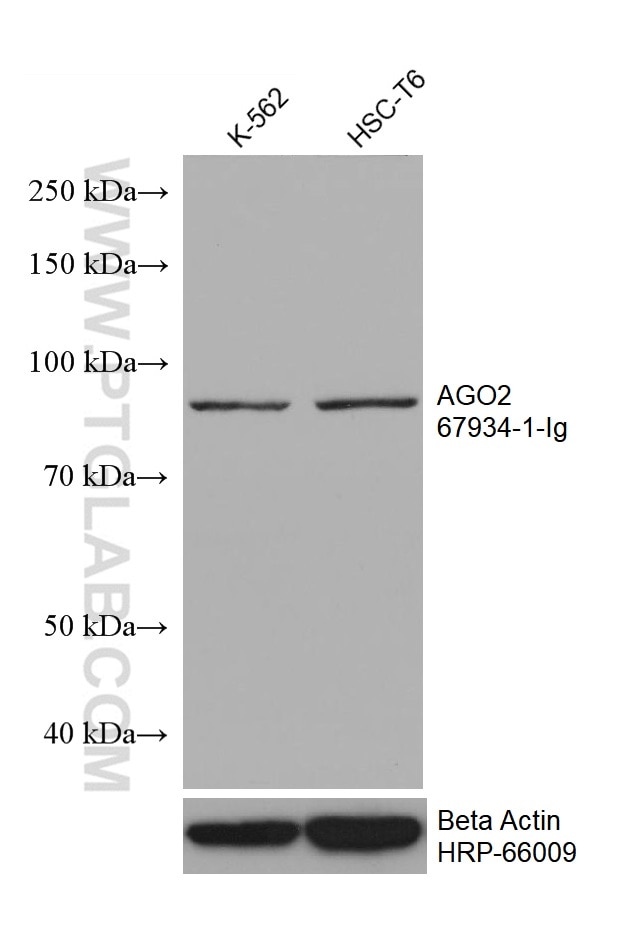
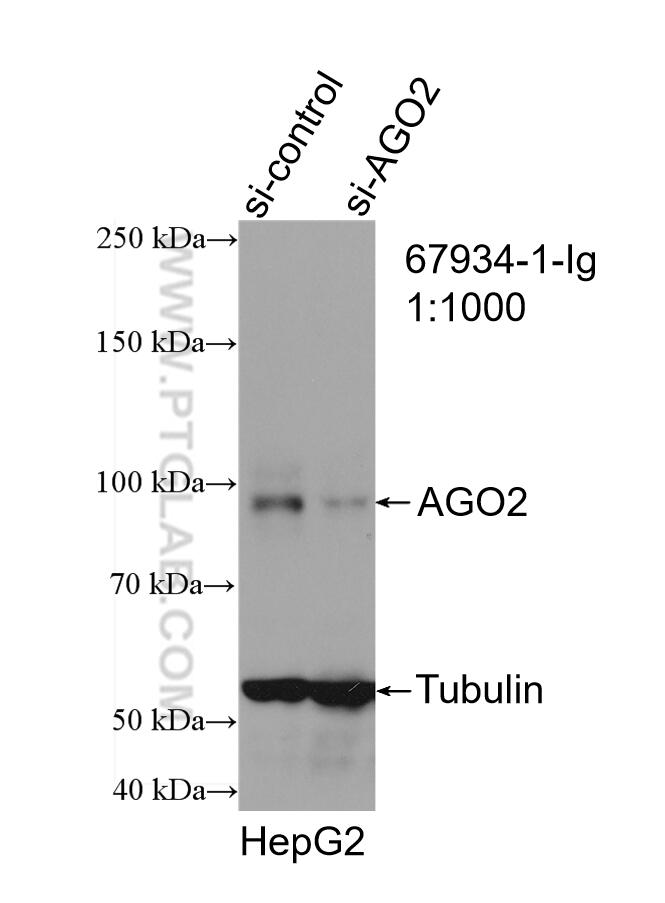
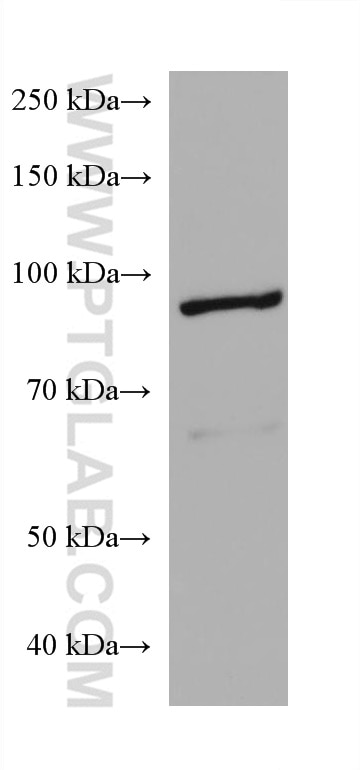
| Positive WB detected in | LNCaP cells, K-562 cells, 4T1 cells, HepG2 cells, HeLa cells, HEK-293 cells, MCF-7 cells, HSC-T6 cells |
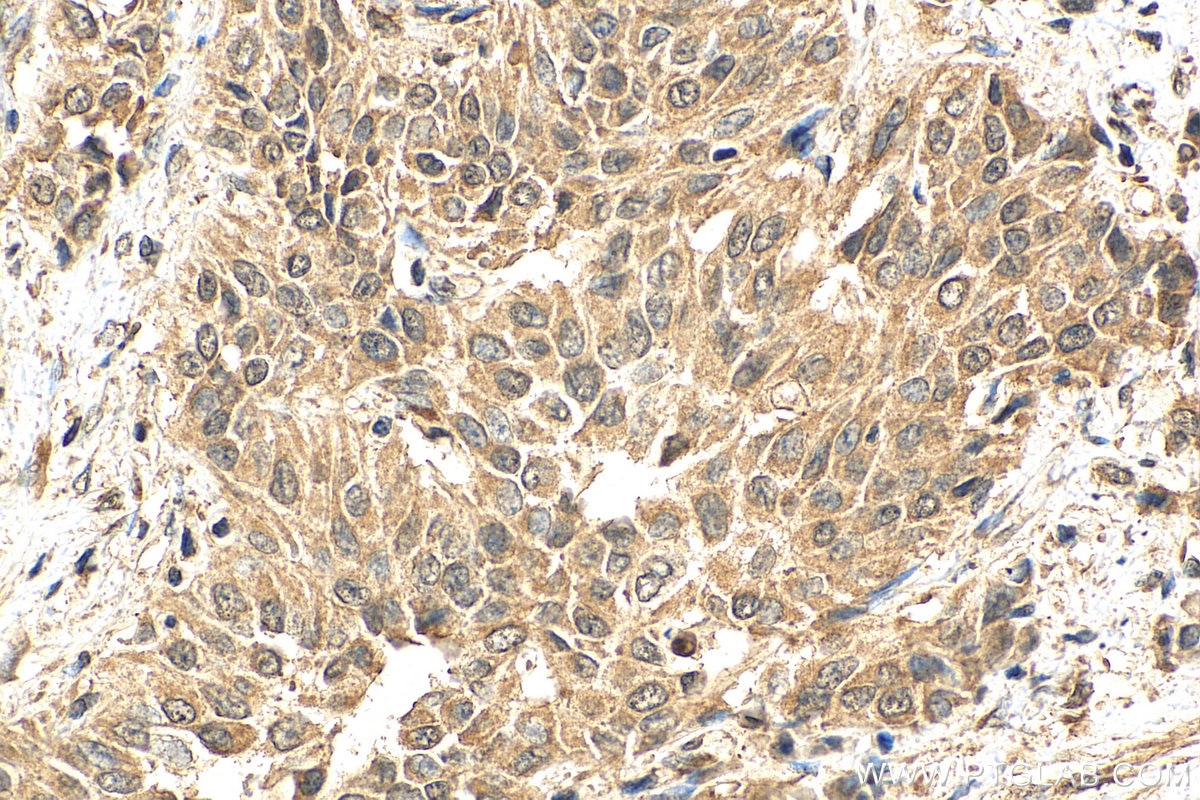
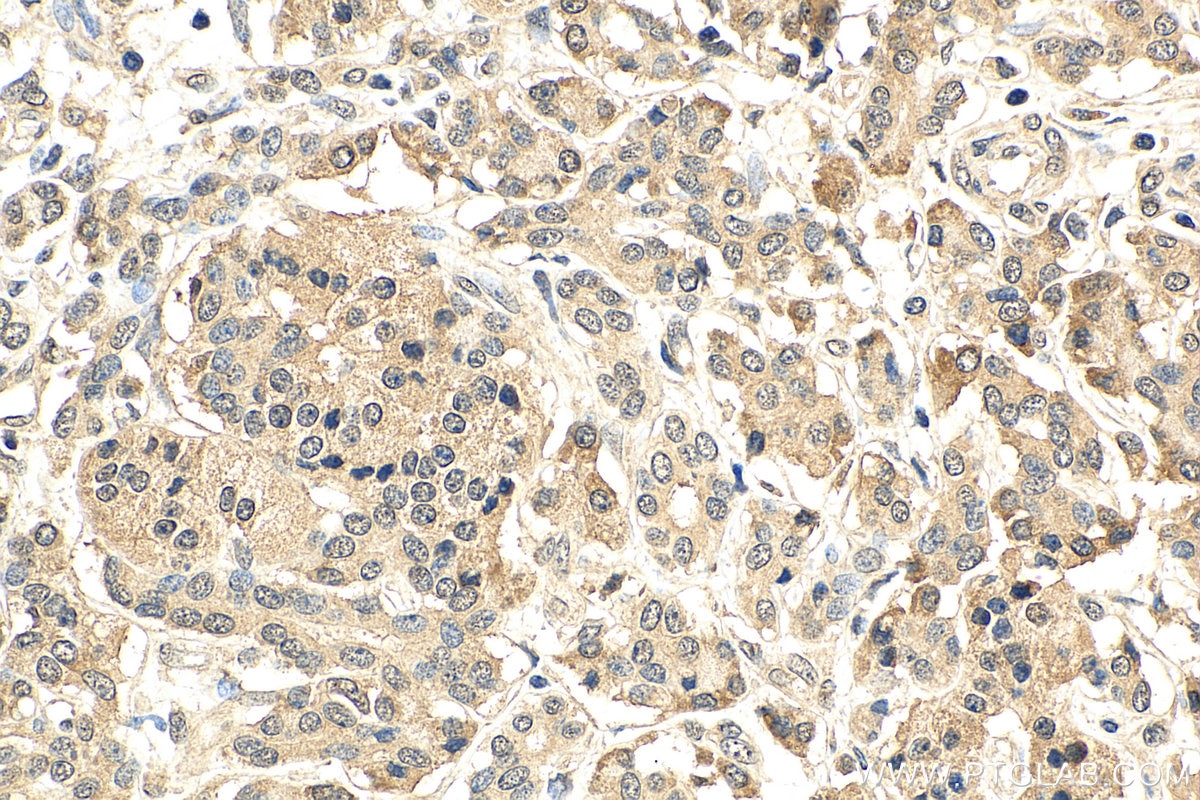
| Positive IHC detected in | human pancreas cancer tissue, human urothelial carcinoma tissue Note: suggested antigen retrieval with TE buffer pH 9.0; (*) Alternatively, antigen retrieval may be performed with citrate buffer pH 6.0 |
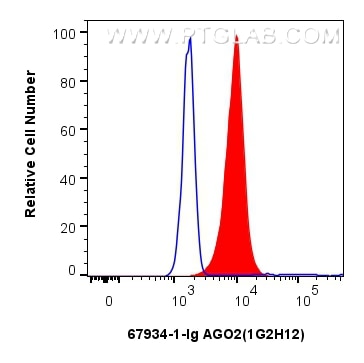
| Positive FC (Intra) detected in | HeLa cells |
Recommended dilution
| Application | Dilution |
|---|---|
| Western Blot (WB) | WB : 1:1000-1:5000 |
| Immunohistochemistry (IHC) | IHC : 1:200-1:800 |
| Flow Cytometry (FC) (INTRA) | FC (INTRA) : 0.25 ug per 10^6 cells in a 100 µl suspension |
| It is recommended that this reagent should be titrated in each testing system to obtain optimal results. | |
| Sample-dependent, Check data in validation data gallery. | |
Product Information
67934-1-Ig targets AGO2 in WB, IHC, IF, FC (Intra), IP, ChIP, RIP, ELISA applications and shows reactivity with human, mouse, rat samples.
| Tested Reactivity | human, mouse, rat |
| Cited Reactivity | human, mouse, rat, pig, chicken |
| Host / Isotype | Mouse / IgG1 |
| Class | Monoclonal |
| Type | Antibody |
| Immunogen |
CatNo: Ag27772 Product name: Recombinant human AGO2 protein Source: e coli.-derived, PET28a Tag: 6*His Domain: 603-780 aa of BC007633 Sequence: AGDGKKPSIAAVVGSMDAHPNRYCATVRVQQHRQEIIQDLAAMVRELLIQFYKSTRFKPTRIIFYRDGVSEGQFQQVLHHELLAIREACIKLEKDYQPGITFIVVQKRHHTRLFCTDKNERVGKSGNIPAGTTVDTKITHPTEFDFYLCSHAGIQGTSRPSHYHVLWDDNRFSSDELQ Predict reactive species |
| Full Name | eukaryotic translation initiation factor 2C, 2 |
| Calculated Molecular Weight | 97 kDa |
| Observed Molecular Weight | 90 kDa |
| GenBank Accession Number | BC007633 |
| Gene Symbol | EIF2C2 |
| Gene ID (NCBI) | 27161 |
| RRID | AB_2918686 |
| Conjugate | Unconjugated |
| Form | Liquid |
| Purification Method | Protein G purification |
| UNIPROT ID | Q9UKV8 |
| Storage Buffer | PBS with 0.02% sodium azide and 50% glycerol, pH 7.3. |
| Storage Conditions | Store at -20°C. Stable for one year after shipment. Aliquoting is unnecessary for -20oC storage. 20ul sizes contain 0.1% BSA. |
Background Information
EIF2C2, also named as AGO2, belongs to the argonaute family and Ago subfamily. It is required for RNA-mediated gene silencing (RNAi) by the RNA-induced silencing complex (RISC). The 'minimal RISC' appears to include EIF2C2/AGO2 bound to a short guide RNA such as a microRNA (miRNA) or short interfering RNA (siRNA). EIF2C2 may inhibit translation initiation by binding to the 7-methylguanosine cap, thereby preventing the recruitment of the translation initiation factor eIF4-E. It also inhibit translation initiation via interaction with EIF6, which itself binds to the 60S ribosomal subunit and prevents its association with the 40S ribosomal subunit. EIF2C2 can also upregulate the translation of specific mRNAs under certain growth conditions.
Protocols
| Product Specific Protocols | |
|---|---|
| FC protocol for AGO2 antibody 67934-1-Ig | Download protocol |
| IHC protocol for AGO2 antibody 67934-1-Ig | Download protocol |
| WB protocol for AGO2 antibody 67934-1-Ig | Download protocol |
| Standard Protocols | |
|---|---|
| Click here to view our Standard Protocols |
Publications
What published studies show
| Species | Application | Title |
|---|---|---|
Mol Cancer Hsa_circ_0125356 promotes gemcitabine resistance by modulating WNT canonical and non-canonical pathways via miR-582-5p/FGF9 axis in non-small cell lung cancer | ||
Mol Cancer EIF4A3/circPTGR1/miR-4725-5p positive- feedback loop promotes colorectal cancer progression via FAK/AKT signaling pathway. | ||
Nat Cell Biol Psychological stress-induced ALKBH5 deficiency promotes tumour innervation and pancreatic cancer via extracellular vesicle transfer of RNA | ||
Cancer Res Extracellular Vesicles Containing circMYBL1 Induce CD44 in Adenoid Cystic Carcinoma Cells and Pulmonary Endothelial Cells to Promote Lung Metastasis | ||
Nat Commun LncRNA MIR200CHG inhibits EMT in gastric cancer by stabilizing miR-200c from target-directed miRNA degradation | ||
J Nanobiotechnology LNP-enclosed NamiRNA inhibits pancreatic cancer proliferation and migration via dual pathways. |








