

Tested Applications
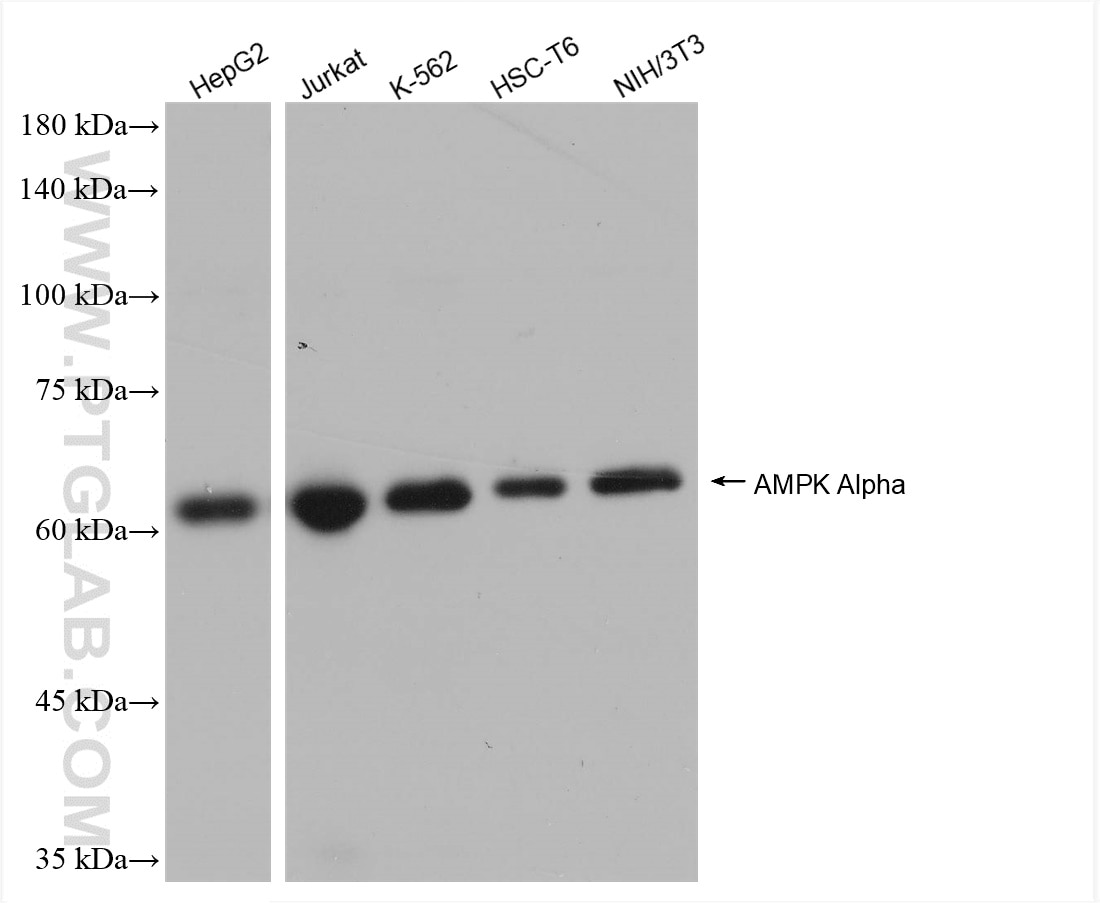
| Positive WB detected in | HepG2 cells, Jurkat cells, K-562 cells, HSC-T6 cells, NIH/3T3 cells |
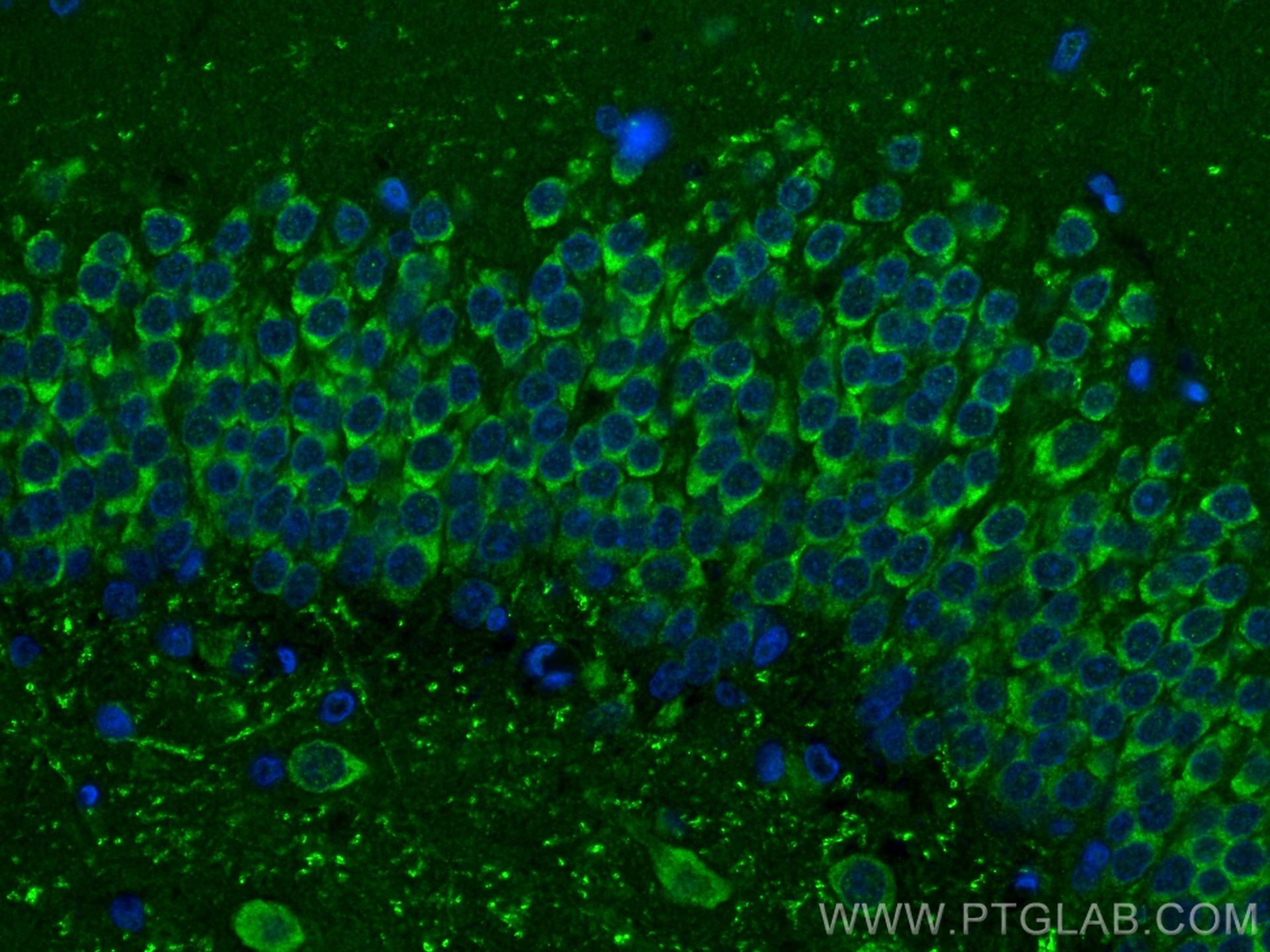
| Positive IF-P detected in | rat brain tissue |
Recommended dilution
| Application | Dilution |
|---|---|
| Western Blot (WB) | WB : 1:2000-1:10000 |
| Immunofluorescence (IF)-P | IF-P : 1:200-1:800 |
| It is recommended that this reagent should be titrated in each testing system to obtain optimal results. | |
| Sample-dependent, Check data in validation data gallery. | |
Product Information
80209-5-RR targets AMPK Alpha in WB, IF-P, ELISA applications and shows reactivity with human, mouse, rat samples.
| Tested Reactivity | human, mouse, rat |
| Cited Reactivity | human, mouse, rat, bovine |
| Host / Isotype | Rabbit / IgG |
| Class | Recombinant |
| Type | Antibody |
| Immunogen |
CatNo: Ag1367 Product name: Recombinant human AMPK alpha protein Source: e coli.-derived, PGEX-4T Tag: GST Domain: 1-207 aa of BC012622 Sequence: MATAEKQKHDGRVKIGHYILGDTLGVGTFGKVKVGKHELTGHKVAVKILNRQKIRSLDVVGKIRREIQNLKLFRHPHIIKLYQVISTPSDIFMVMEYVSGGELFDYICKNGRLDEKESRRLFQQILSGVDYCHRHMVVHRDLKPENVLLDAHMNAKIADFGLSNMMSDGEFLRTSCGSPNYAAPEVISGRDCNIIRILTSQFTNYQH Predict reactive species |
| Full Name | protein kinase, AMP-activated, alpha 1 catalytic subunit |
| Calculated Molecular Weight | 63 kDa |
| Observed Molecular Weight | 64 kDa |
| GenBank Accession Number | BC012622 |
| Gene Symbol | AMPK Alpha 1 |
| Gene ID (NCBI) | 5562 |
| RRID | AB_3670471 |
| Conjugate | Unconjugated |
| Form | Liquid |
| Purification Method | Protein A purification |
| UNIPROT ID | Q13131 |
| Storage Buffer | PBS with 0.02% sodium azide and 50% glycerol, pH 7.3. |
| Storage Conditions | Store at -20°C. Stable for one year after shipment. Aliquoting is unnecessary for -20oC storage. 20ul sizes contain 0.1% BSA. |
Background Information
The mammalian 5-prime-AMP-activated protein kinase (AMPK) appears to play a role in protecting cells from stresses that cause ATP depletion by switching off ATP-consuming biosynthetic pathways. PRKAA1 is also named as AMPK1, ACACA kinase, HMGCR kinase. It is a mammalian homologue of sucrose non-fermenting protein kinase (SNF-1), which belongs to a serine/threonine protein kinase family. It has 2 isoforms with molecular mass of 63-66 kDa produced by alternative splicing. 80209-5-RR can recognize both AMPK Alpha 1 and AMPK Alpha 2.
Protocols
| Product Specific Protocols | |
|---|---|
| IF protocol for AMPK Alpha antibody 80209-5-RR | Download protocol |
| WB protocol for AMPK Alpha antibody 80209-5-RR | Download protocol |
| Standard Protocols | |
|---|---|
| Click here to view our Standard Protocols |
Publications
What published studies show
AMPK Alpha Recombinant monoclonal antibody (4N5), catalog number 80209-5-RR, has 6 total citations. These appear in journals including Autophagy, Advanced Healthcare Materials, Antioxidants, Life Sciences, Animal Models and Experimental Medicine, and Biomedical Chromatography. The research fields span autophagy and lipid metabolism in age-related macular degeneration, obesity and adipose tissue browning, oxidative stress, mitochondrial function in prion disease, urinary incontinence via AMPK activation, and non-alcoholic fatty liver disease.
| Species | Application | Title |
|---|---|---|
Autophagy FASN mediates crosstalk between autophagy and lipid metabolism via the AMPK-MTOR pathway in early age-related macular degeneration. | ||
Adv Healthc Mater Near-Infrared-II Photothermal Agents Targeting Lipid Droplets to Ameliorate Obesity Through Induction of Adipose Tissue Browning. | ||
Antioxidants (Basel) Development of an AAPH-Induced Oxidative Stress Model in Bovine Mammary Epithelial Cells and Investigation of Its Molecular Mechanisms. | ||
Life Sci Idebenone improves mitochondrial respiratory activity and attenuates oxidative damage via the SIRT3-SOD2 pathway in a prion disease cell model | ||
Animal Model Exp Med Metformin enhances external urethral sphincter integrity and restores continence via AMPK activation in a rat model of stress urinary incontinence. | ||
Biomed Chromatogr Untargeted Metabolomic Analysis Reveals the Mechanism Underlying Swertia mussotii Treatment on Rats With Non-Alcoholic Fatty Liver Disease Using UPLC-Q-TOF/MS. |




