

Product Information
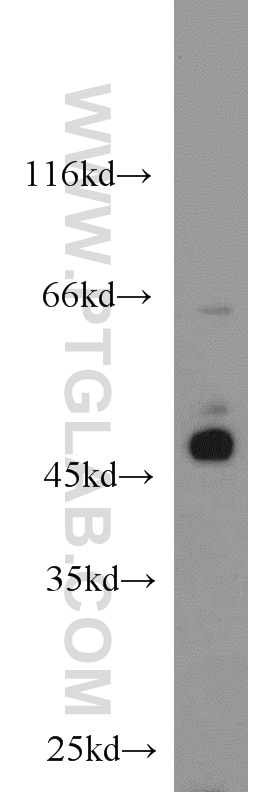
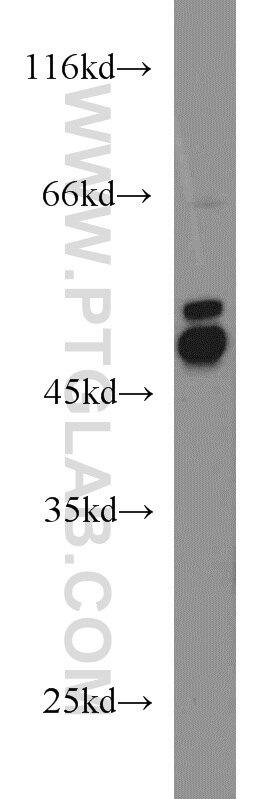
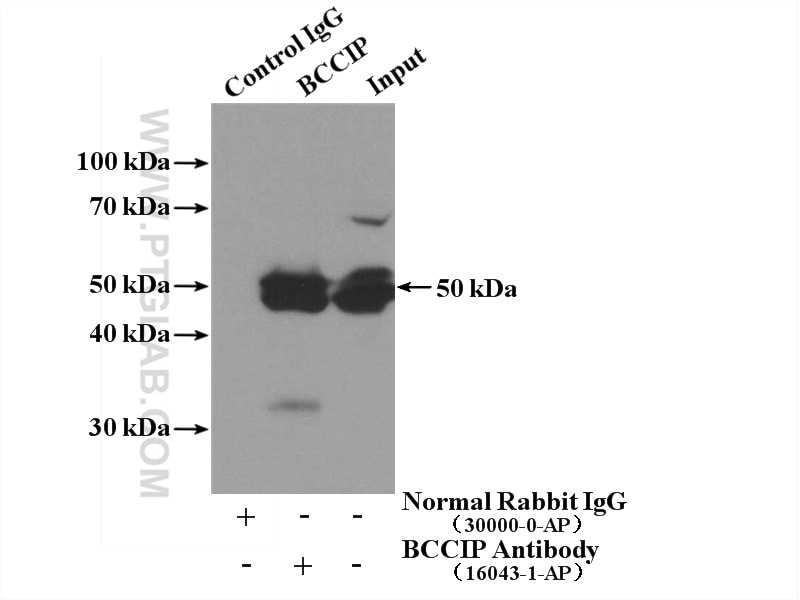
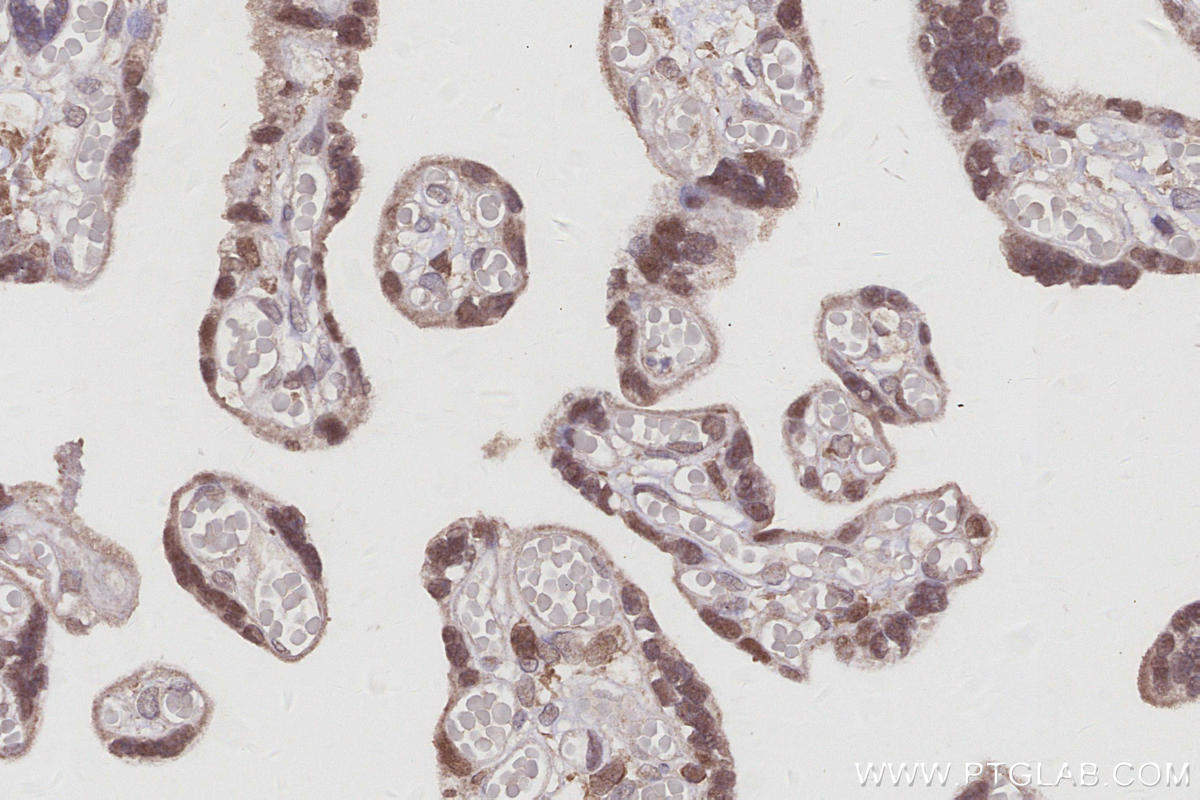
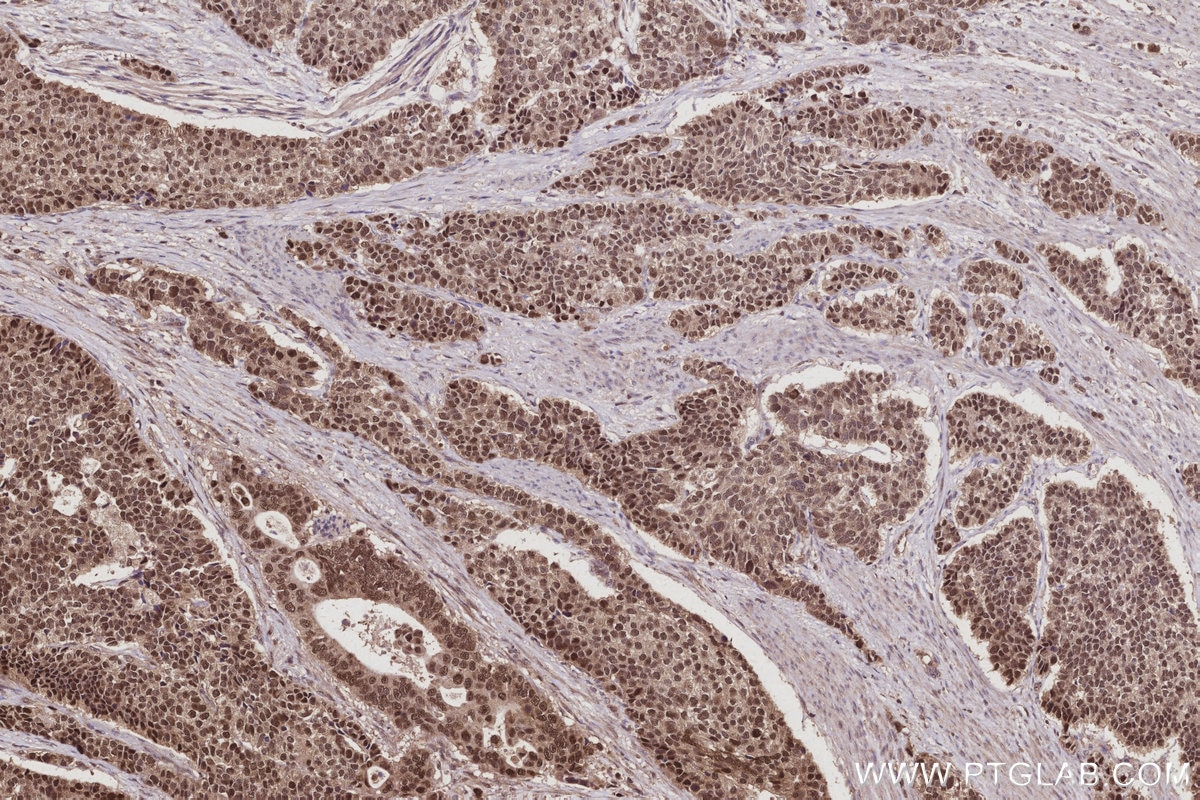
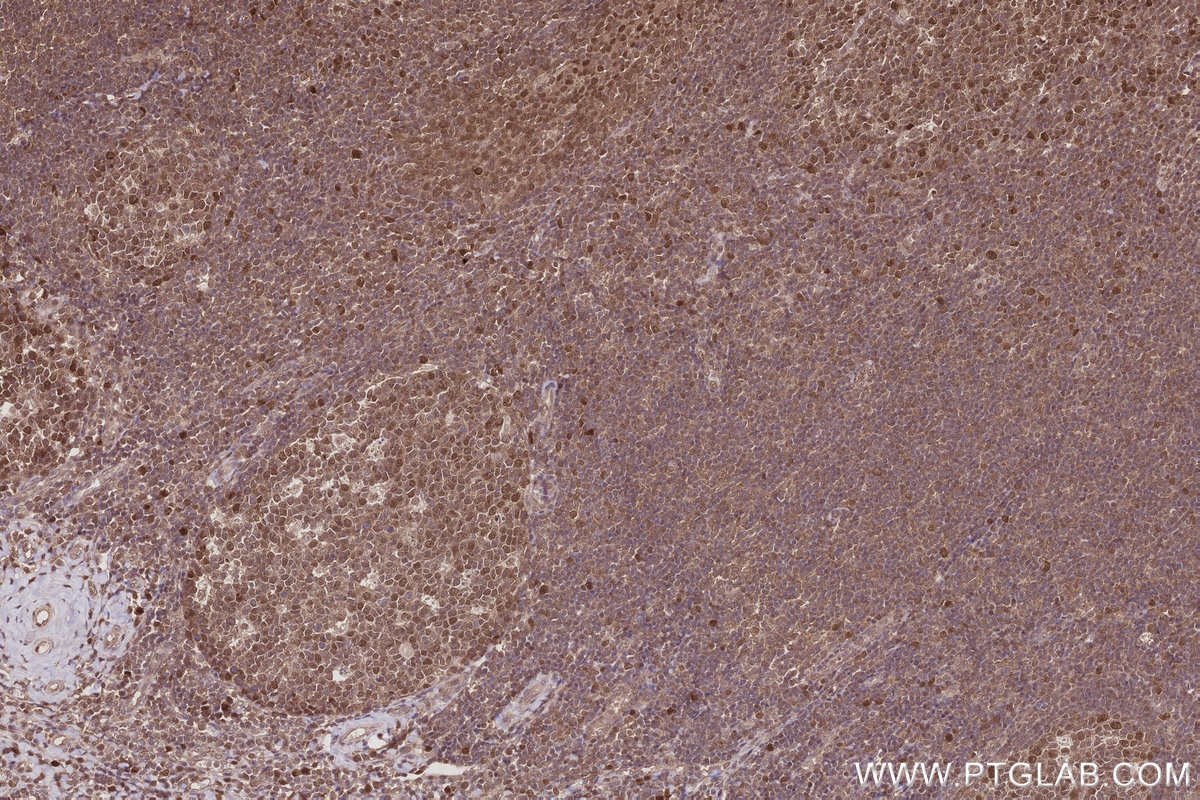
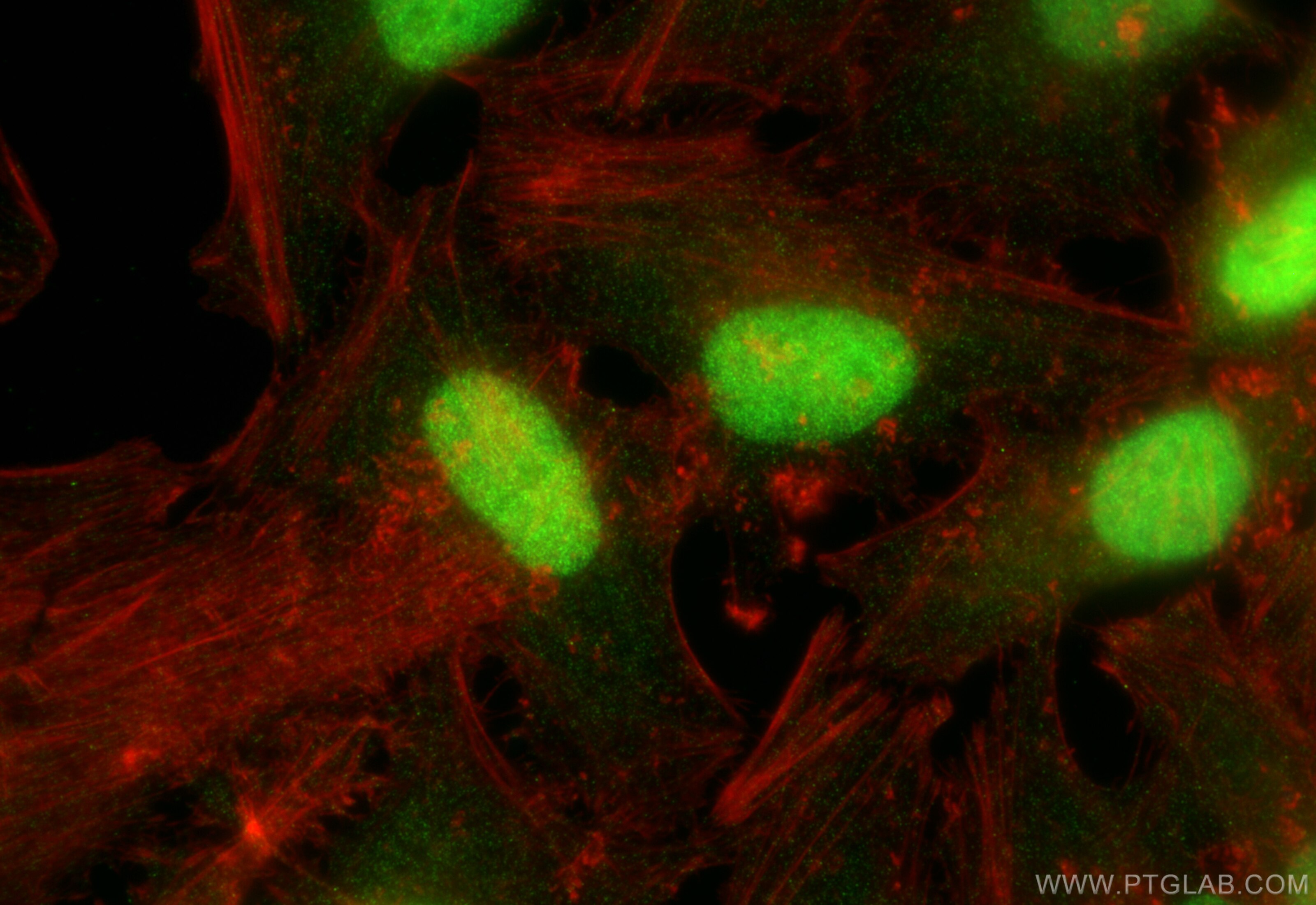
16043-1-PBS targets BCCIP in WB, IHC, IF/ICC, IP, Indirect ELISA applications and shows reactivity with human, mouse, rat samples.
| Tested Reactivity | human, mouse, rat |
| Host / Isotype | Rabbit / IgG |
| Class | Polyclonal |
| Type | Antibody |
| Immunogen |
CatNo: Ag8934 Product name: Recombinant human BCCIP protein Source: e coli.-derived, PGEX-4T Tag: GST Domain: 1-314 aa of BC009771 Sequence: MASRSKRRAVESGVPQPPDPPVQRDEEEEKEVENEDEDDDDSDKEKDEEDEVIDEEVNIEFEAYSLSDNDYDGIKKLLQQLFLKAPVNTAELTDLLIQQNHIGSVIKQTDVSEDSNDDMDEDEVFGFISLLNLTERKGTQCVEQIQELVLRFCEKNCEKSMVEQLDKFLNDTTKPVGLLLSERFINVPPQIALPMYQQLQKELAGAHRTNKPCGKCYFYLLISKTFVEAEKNNSKKKPSNKKKAALMFANAEEEFFYEKAILKFNYSVQEESDTCLGGKWSFDDVPMTPLRTVMLIPGDKMNEIMDKLKEYLSV Predict reactive species |
| Full Name | BRCA2 and CDKN1A interacting protein |
| Calculated Molecular Weight | 314 aa, 36 kDa |
| Observed Molecular Weight | 50-58 kDa |
| GenBank Accession Number | BC009771 |
| Gene Symbol | BCCIP |
| Gene ID (NCBI) | 56647 |
| RRID | AB_2063712 |
| Conjugate | Unconjugated |
| Form | Liquid |
| Purification Method | Antigen affinity purification |
| UNIPROT ID | Q9P287 |
| Storage Buffer | PBS only, pH 7.3. |
| Storage Conditions | Store at -80°C. |
Background Information
BCCIP (or TOK1) is isolated as a BRCA2- and CDKN1A (p21)-interacting protein and is implicated in homologous recombination (HR) pathway and inhibition of DNA replication stress. BCCIP is an evolutionarily conserved nuclear protein with multiple interacting domains. BCCIP deficiency in mice impaired embryonic and postnatal neural development, causing severe ataxia, cerebral and cerebellar defects, and microcephaly, which are associated with spontaneous DNA damage and subsequent cell death in the proliferative cell populations of the neural system during embryogenesis. BCCIP is essential for maintaining the transactivation activity of wild type p53 suggesting a potential role of BCCIP in cancer etiology.








