

Tested Applications
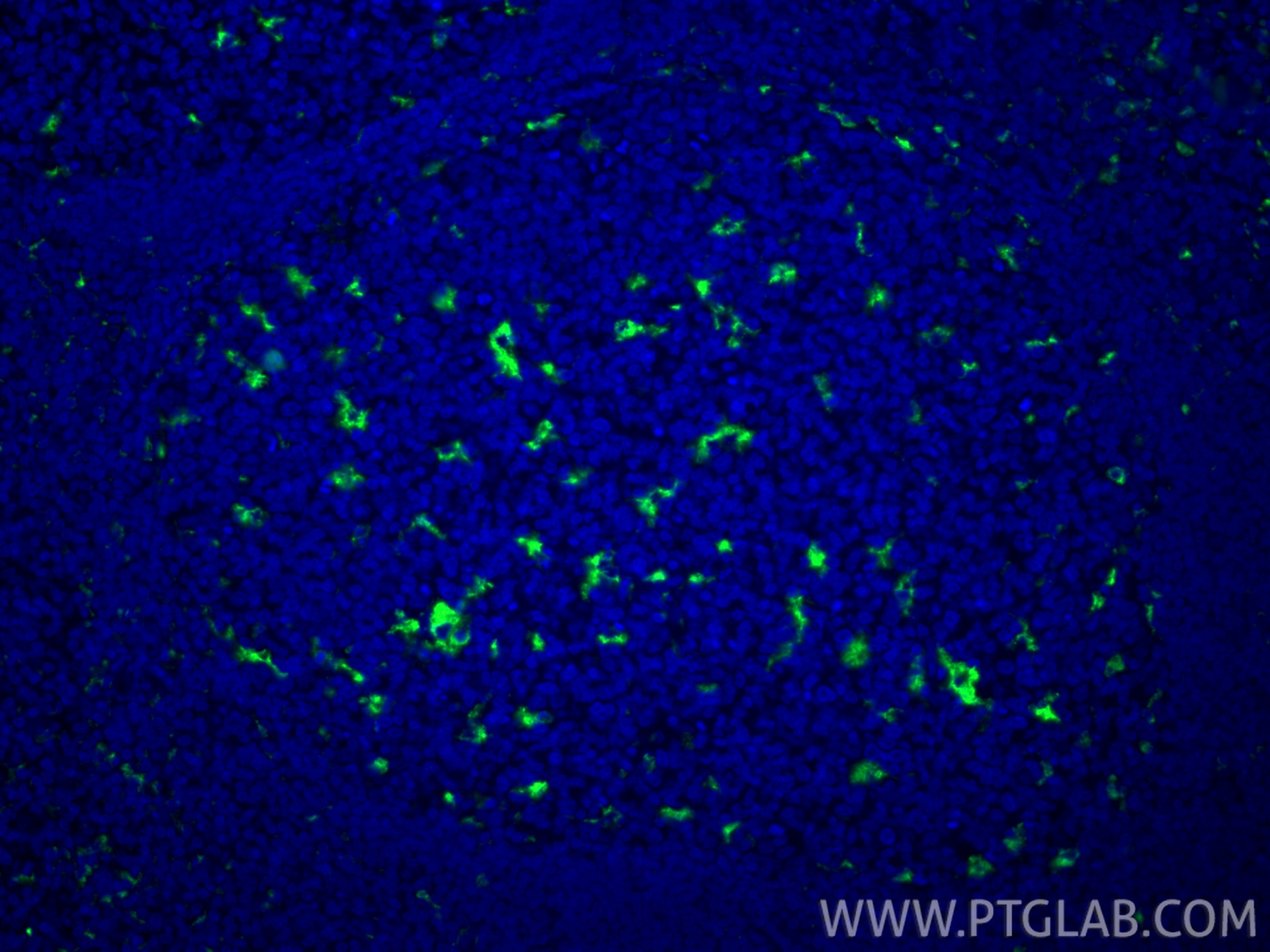
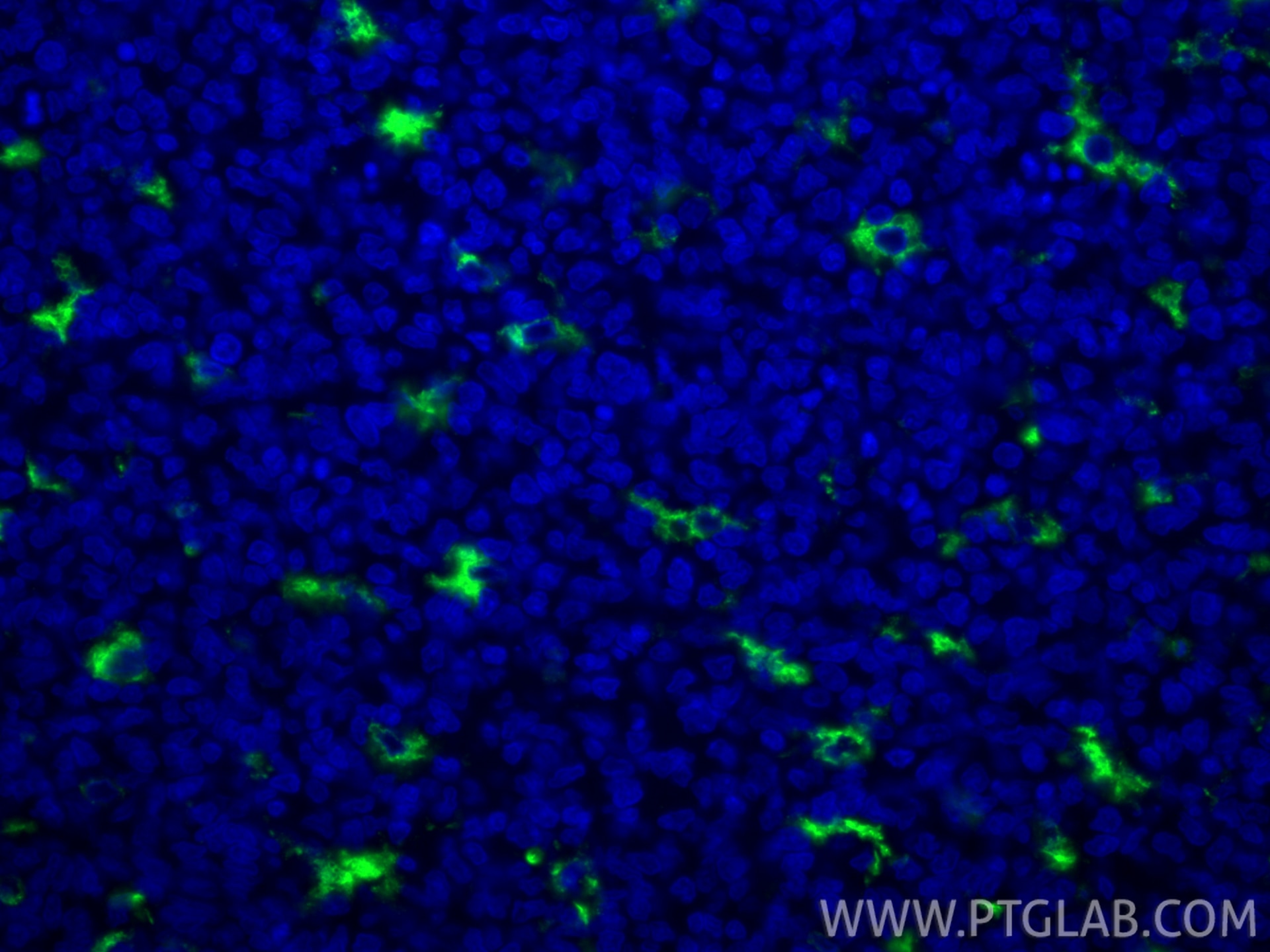
| Positive IF-P detected in | human tonsillitis tissue |
Recommended dilution
| Application | Dilution |
|---|---|
| Immunofluorescence (IF)-P | IF-P : 1:50-1:500 |
| It is recommended that this reagent should be titrated in each testing system to obtain optimal results. | |
| Sample-dependent, Check data in validation data gallery. | |
Product Information
CL488-25747 targets CD68 in IF-P applications and shows reactivity with human, mouse samples.
| Tested Reactivity | human, mouse |
| Cited Reactivity | human |
| Host / Isotype | Rabbit / IgG |
| Class | Polyclonal |
| Type | Antibody |
| Immunogen |
CatNo: Ag22815 Product name: Recombinant human CD68 protein Source: e coli.-derived, PET28a Tag: 6*His Domain: 29-319 aa of BC015557 Sequence: SATLLPSFTVTPTVTESTGTTSHRTTKSHKTTTHRTTTTGTTSHGPTTATHNPTTTSHGNVTVHPTSNSTATSQGPSTATHSPATTSHGNATVHPTSNSTATSPGFTSSAHPEPPPPSPSPSPTSKETIGDYTWTNGSQPCVHLQAQIQIRVMYTTQGGGEAWGISVLNPNKTKVQGSCEGAHPHLLLSFPYGHLSFGFMQDLQQKVVYLSYMAVEYNVSFPHAAQWTFSAQNASLRDLQAPLGQSFSCSNSSIILSPAVHLDLLSLRLQAAQLPHTGVFGQSFSCPSDRS Predict reactive species |
| Full Name | CD68 molecule |
| Calculated Molecular Weight | 37 kDa |
| Observed Molecular Weight | 60 kDa |
| GenBank Accession Number | BC015557 |
| Gene Symbol | CD68 |
| Gene ID (NCBI) | 968 |
| RRID | AB_2919205 |
| Conjugate | CoraLite® Plus 488 Fluorescent Dye |
| Excitation/Emission Maxima Wavelengths | 493 nm / 522 nm |
| Excitation Laser | Blue laser (488 nm) |
| Form | Liquid |
| Purification Method | Antigen affinity purification |
| UNIPROT ID | P34810 |
| Storage Buffer | PBS with 50% glycerol, 0.05% Proclin300, 0.5% BSA, pH 7.3. |
| Storage Conditions | Store at -20°C. Avoid exposure to light. Stable for one year after shipment. Aliquoting is unnecessary for -20oC storage. |
Background Information
CD68 is a type I transmembrane glycoprotein that is highly expressed by human monocytes and tissue macrophages. It belongs to the lysosomal/endosomal-associated membrane glycoprotein (LAMP) family and primarily localizes to lysosomes and endosomes with a smaller fraction circulating to the cell surface. CD68 is also a member of the scavenger receptor family. It may play a role in phagocytic activities of tissue macrophages. The apparent molecular weight of CD68 is larger than calculated molecular weight due to post-translation modification.
Protocols
| Product Specific Protocols | |
|---|---|
| IF protocol for CL Plus 488 CD68 antibody CL488-25747 | Download protocol |
| Standard Protocols | |
|---|---|
| Click here to view our Standard Protocols |
Publications
What published studies show
CD68 Polyclonal antibody (CoraLite® Plus 488), catalog number CL488-25747, has 4 citations. These appear in Nature Communications, Journal of Neuroinflammation, PeerJ, and bioRxiv. The research fields span alcohol-induced hepatocyte ferroptosis, T cell-mediated neuroinflammation in SIV infection, immunosuppressive macrophages in hepatocellular carcinoma, and macrophage PD-1 regulation in immunotherapy.
| Species | Application | Title |
|---|---|---|
Nat Commun ACSS2 protects against alcohol-induced hepatocyte ferroptosis through regulation of hepcidin expression | ||
J Neuroinflammation T cell-mediated SIV dissemination into the CNS: a single-cell transcriptomic analysis | ||
PeerJ Integrated multiomics analysis highlights the immunosuppressive role of granulin precursor positive macrophages in hepatocellular carcinoma | ||
bioRxiv An Endocytic Checkpoint Controls Macrophage PD-1 Function and Immunotherapy Fate. |
Reviews
What customers say
One reviewer, Jyoti Chhimwal, gave a 5-star rating for using this antibody in immunofluorescence on human liver tissue. They reported excellent performance at a 1:100 dilution with 5% goat serum as the diluent, noting that the antibody "worked really nice." The review was posted on July 17, 2026, and used lot 21020071.
The reviews below have been submitted by verified Proteintech customers who received an incentive for providing their feedback.
Jyoti (Verified Customer) (07-17-2026) | I used this antibody for immunofluorescence in human liver tissue. It worked really nice at a dilution of 1:100. I used 5% goat serum for the dilution.
|



