

Tested Applications
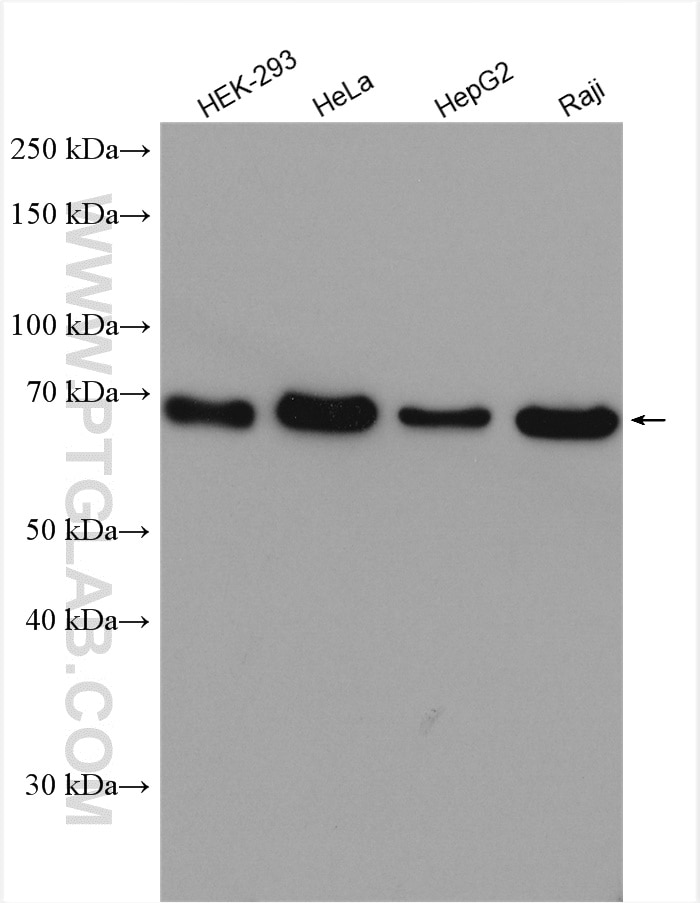
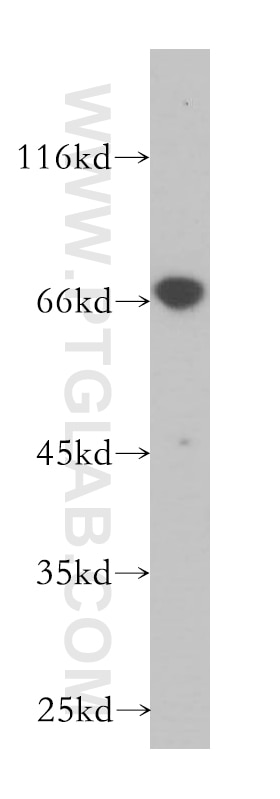
| Positive WB detected in | HEK-293 cells, HeLa cells, HepG2 cells, Raji cells |
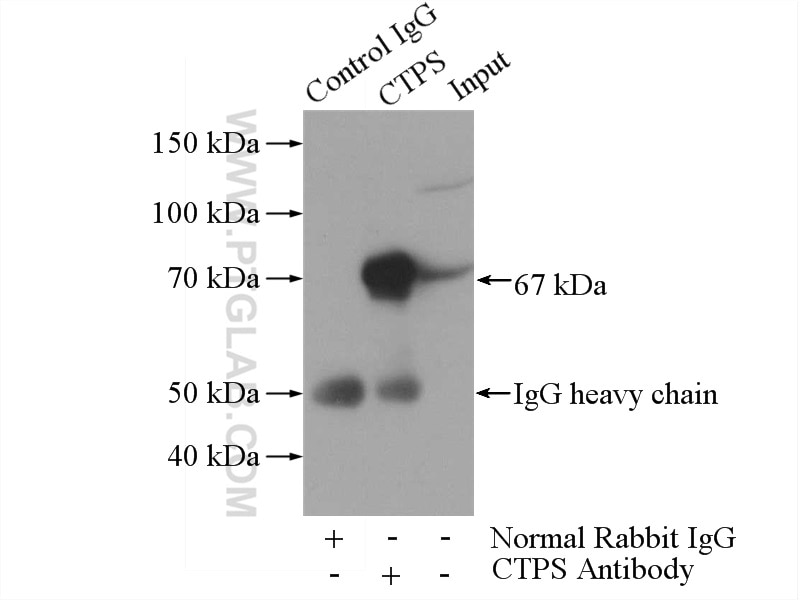
| Positive IP detected in | HeLa cells |
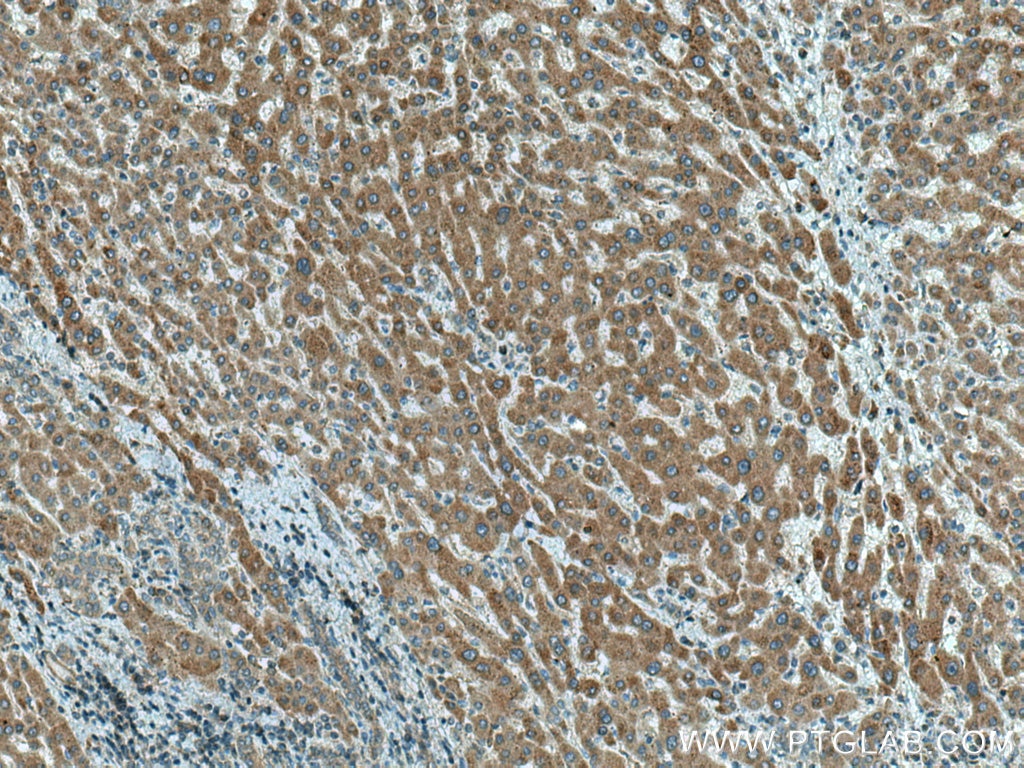
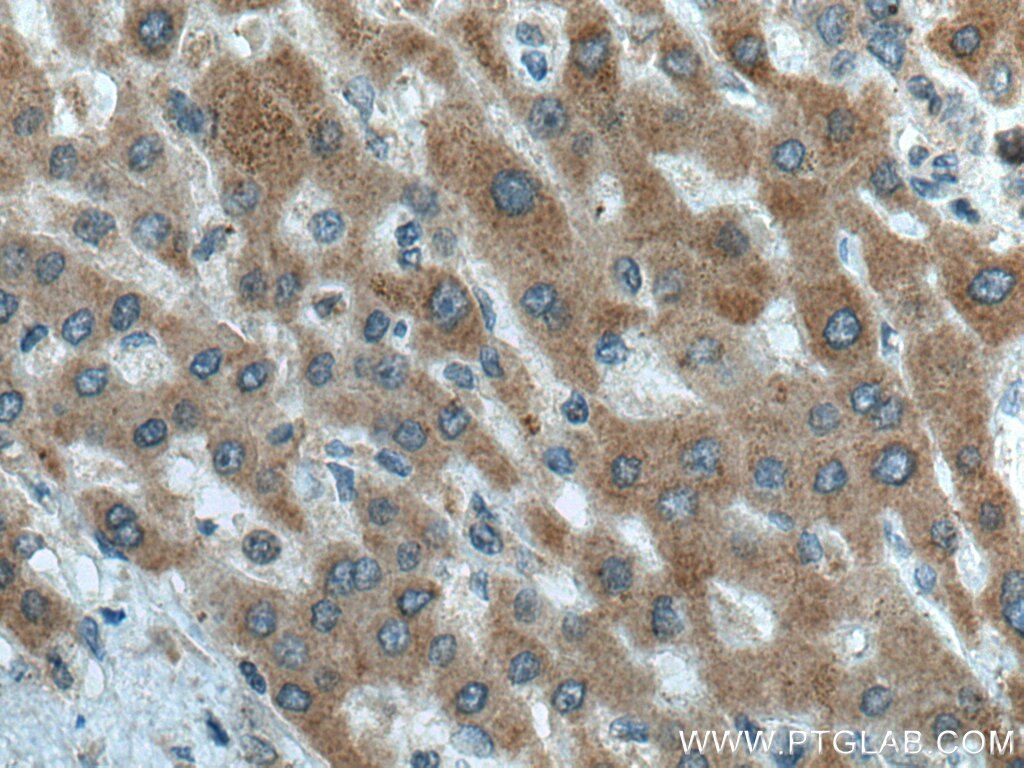
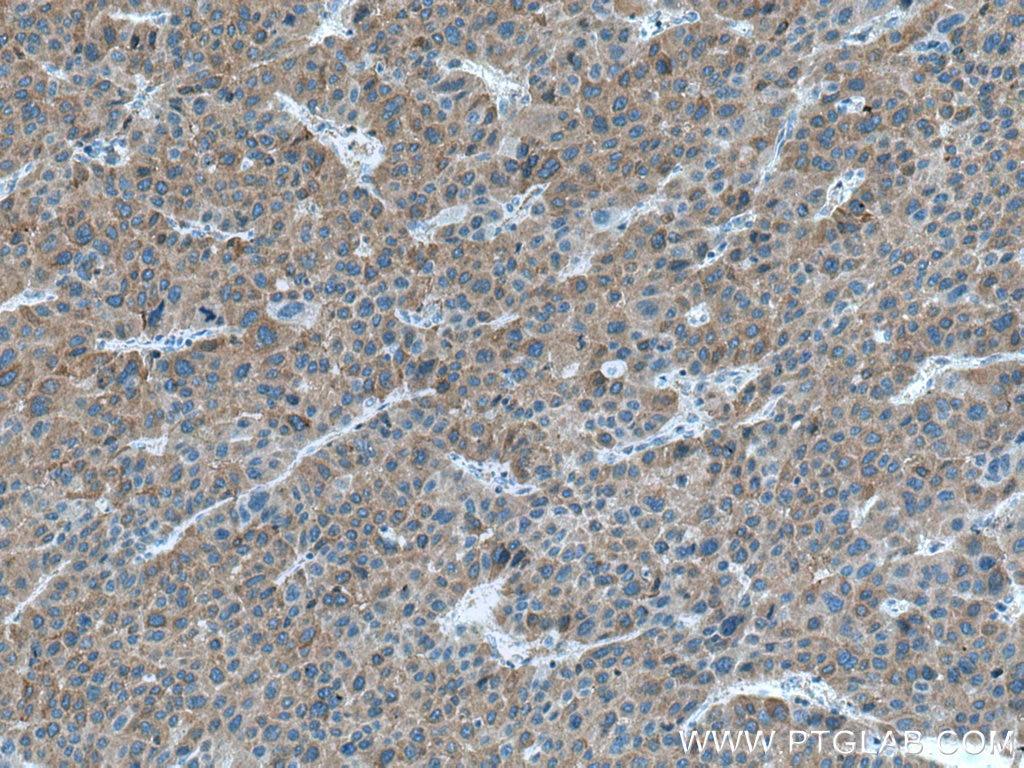
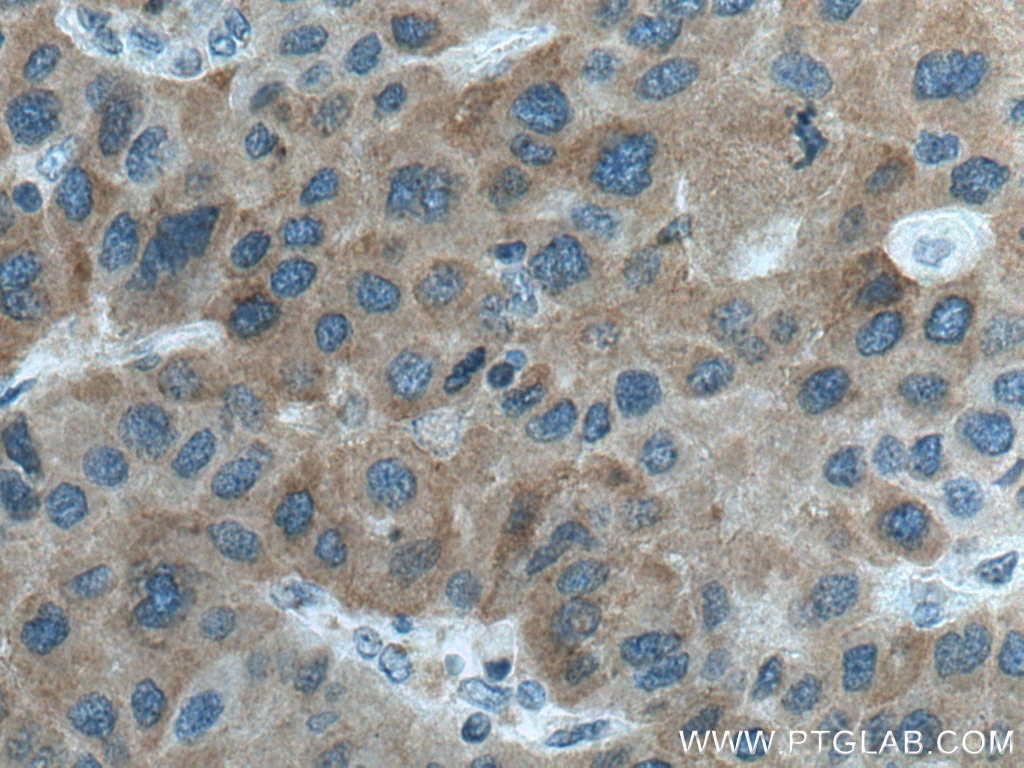
| Positive IHC detected in | human liver cancer tissue Note: suggested antigen retrieval with TE buffer pH 9.0; (*) Alternatively, antigen retrieval may be performed with citrate buffer pH 6.0 |
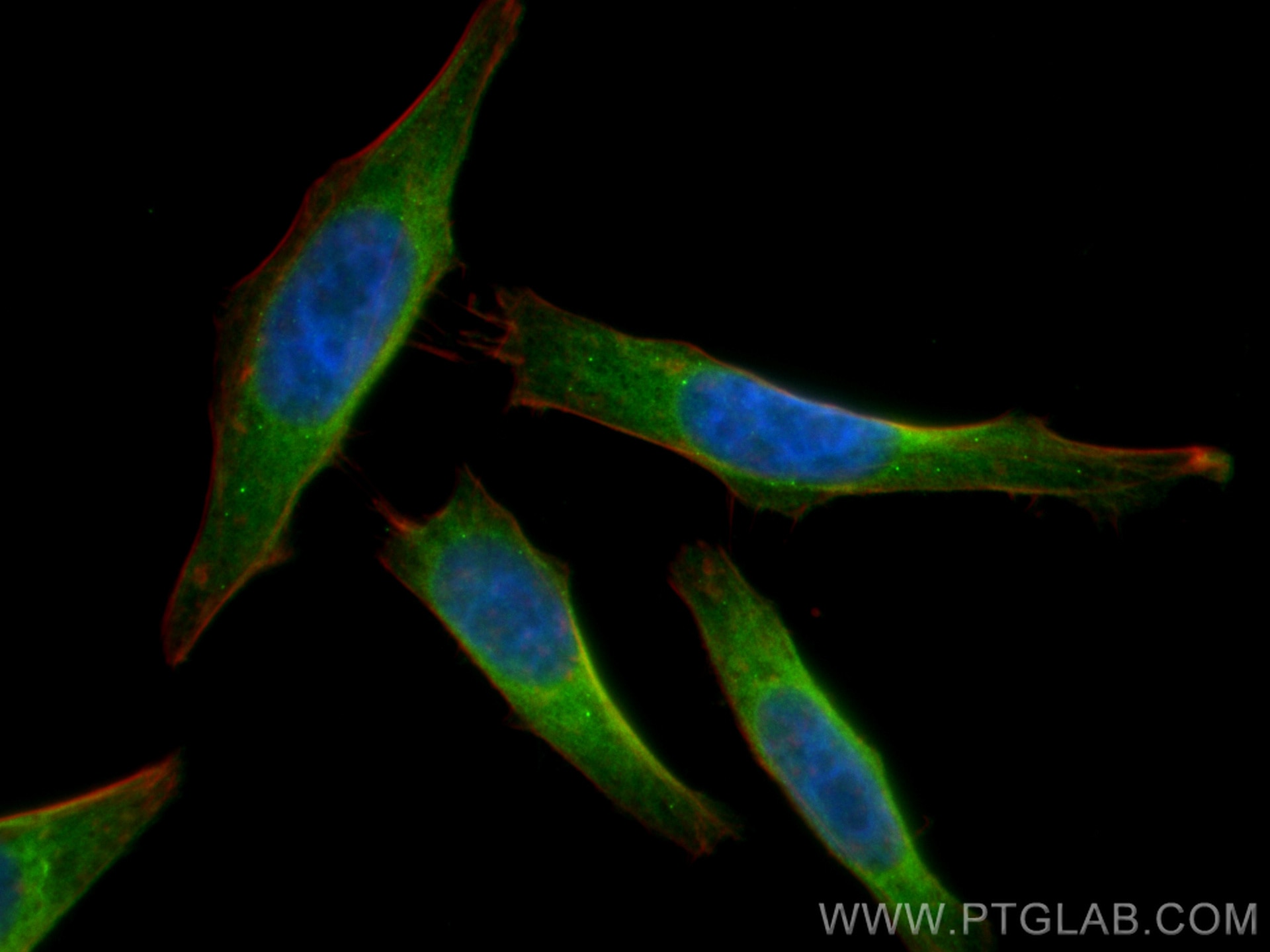
| Positive IF/ICC detected in | HepG2 cells |
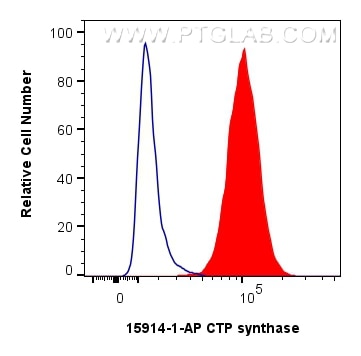
| Positive FC (Intra) detected in | HepG2 cells |
Recommended dilution
| Application | Dilution |
|---|---|
| Western Blot (WB) | WB : 1:1000-1:6000 |
| Immunoprecipitation (IP) | IP : 0.5-4.0 ug for 1.0-3.0 mg of total protein lysate |
| Immunohistochemistry (IHC) | IHC : 1:50-1:500 |
| Immunofluorescence (IF)/ICC | IF/ICC : 1:50-1:500 |
| Flow Cytometry (FC) (INTRA) | FC (INTRA) : 0.40 ug per 10^6 cells in a 100 µl suspension |
| It is recommended that this reagent should be titrated in each testing system to obtain optimal results. | |
| Sample-dependent, Check data in validation data gallery. | |
Product Information
15914-1-AP targets CTP synthase in WB, IHC, IF/ICC, FC (Intra), IP, CoIP, ELISA applications and shows reactivity with human samples.
| Tested Reactivity | human |
| Cited Reactivity | human, mouse, zebrafish, mosquito |
| Host / Isotype | Rabbit / IgG |
| Class | Polyclonal |
| Type | Antibody |
| Immunogen |
CatNo: Ag8707 Product name: Recombinant human CTPS protein Source: e coli.-derived, PGEX-4T Tag: GST Domain: 242-591 aa of BC009408 Sequence: ICVHDVSSIYRVPLLLEEQGVVDYFLRRLDLPIERQPRKMLMKWKEMADRYDRLLETCSIALVGKYTKFSDSYASVIKALEHSALAINHKLEIKYIDSADLEPITSQEEPVRYHEAWQKLCSAHGVLVPGGFGVRGTEGKIQAIAWARNQKKPFLGVCLGMQLAVVEFSRNVLGWQDANSTEFDPTTSHPVVVDMPEHNPGQMGGTMRLGKRRTLFQTKNSVMRKLYGDADYLEERHRHRFEVNPVWKKCLEEQGLKFVGQDVEGERMEIVELEDHPFFVGVQYHPEFLSRPIKPSPPYFGLLLASVGRLSHYLQKGCRLSPRDTYSDRIGSSSPDSEITELKFPSINHD Predict reactive species |
| Full Name | CTP synthase |
| Calculated Molecular Weight | 591 aa, 67 kDa |
| Observed Molecular Weight | 67 kDa |
| GenBank Accession Number | BC009408 |
| Gene Symbol | CTPS |
| Gene ID (NCBI) | 1503 |
| RRID | AB_2086513 |
| Conjugate | Unconjugated |
| Form | Liquid |
| Purification Method | Antigen affinity purification |
| UNIPROT ID | P17812 |
| Storage Buffer | PBS with 0.02% sodium azide and 50% glycerol, pH 7.3. |
| Storage Conditions | Store at -20°C. Stable for one year after shipment. Aliquoting is unnecessary for -20oC storage. 20ul sizes contain 0.1% BSA. |
Background Information
CTP synthase(CTPS) is also named as CTPS1 and belongs to the CTP synthase family. It catalyses the ATP-dependent formation of CTP from UTP using either L-glutamine or NH3 as the nitrogen source(PMID:12752439). It is important in the biosynthesis of phospholipids and nucleic acids, and plays a key role in cell growth, development, and tumorigenesis (PMID:8813694). CTP synthetase exists as a dimer in the absence of its substrates ATP and UTP, but in the presence of saturating concentrations of these substrates the enzyme exists as a tetramer.(PMID:18439916)
Protocols
| Product Specific Protocols | |
|---|---|
| FC protocol for CTP synthase antibody 15914-1-AP | Download protocol |
| IF protocol for CTP synthase antibody 15914-1-AP | Download protocol |
| IHC protocol for CTP synthase antibody 15914-1-AP | Download protocol |
| IP protocol for CTP synthase antibody 15914-1-AP | Download protocol |
| WB protocol for CTP synthase antibody 15914-1-AP | Download protocol |
| Standard Protocols | |
|---|---|
| Click here to view our Standard Protocols |
Publications
What published studies show
The anti-CTPS1 antibody (Cat# 15914-1-AP) has 27 citations across journals including Immunity, Cancer Research, Oncogene, Experimental Cell Research, FEBS Journal, Journal of Genetics and Genomics, mBio, Oncotarget, and others. Research fields span antiviral interferon signaling, cancer biology (ovarian, pancreatic, breast, lung, and hematologic malignancies), cytoophidium assembly, pyrimidine metabolism, pre-eclampsia, osteoporosis, epithelial-to-mesenchymal transition, and developmental biology.
| Species | Application | Title |
|---|---|---|
Immunity Pyrimidine synthesis enzyme CTP synthetase 1 suppresses antiviral interferon induction by deamidating IRF3 | ||
Cancer Res Combined inactivation of CTPS1 and ATR is synthetically lethal to MYC-overexpressing cancer cells. | ||
Oncogene Spliceosomal component SNRPE drives cell proliferation by regulating CTP synthase 1 mRNA splicing in ovarian cancer.
| ||
J Genet Genomics Assembly of IMPDH2-based, CTPS-based, and mixed rod/ring structures is dependent on cell type and conditions of induction. | ||
Cancer Cell Int INHBA promotes chemoresistance in pancreatic cancer by enhancing CTPS1 stability and mediating pyrimidine metabolism.
|










