

Tested Applications
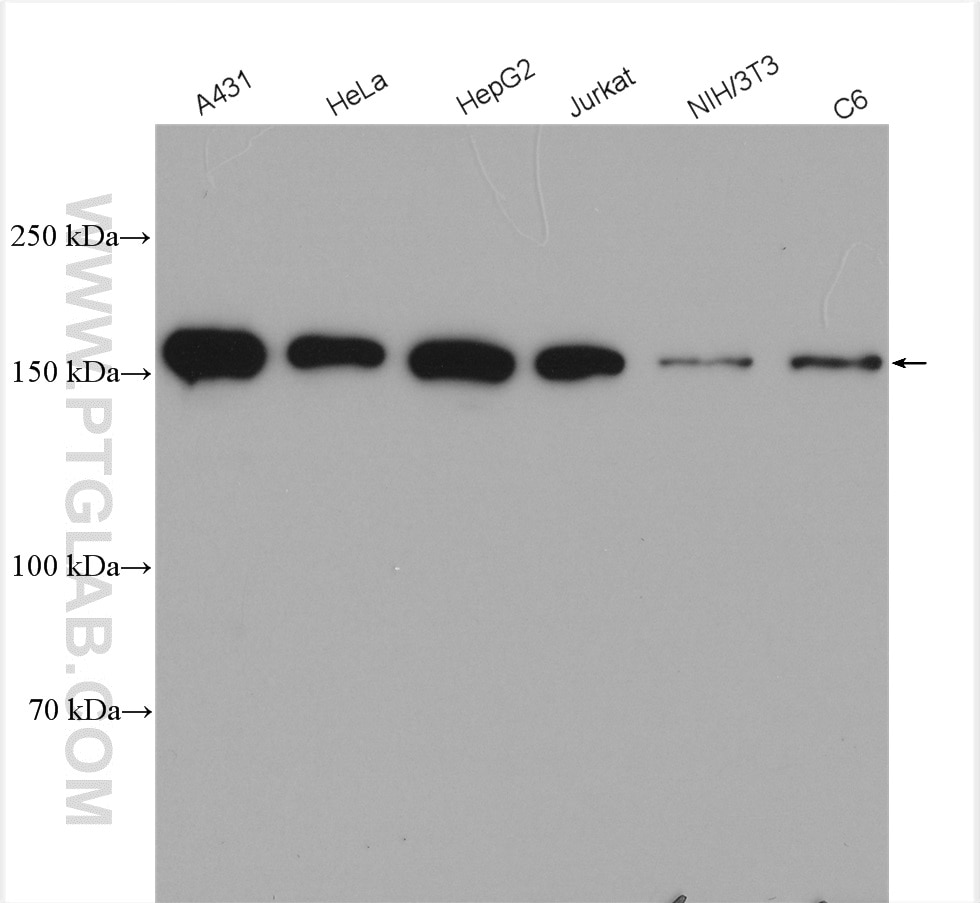
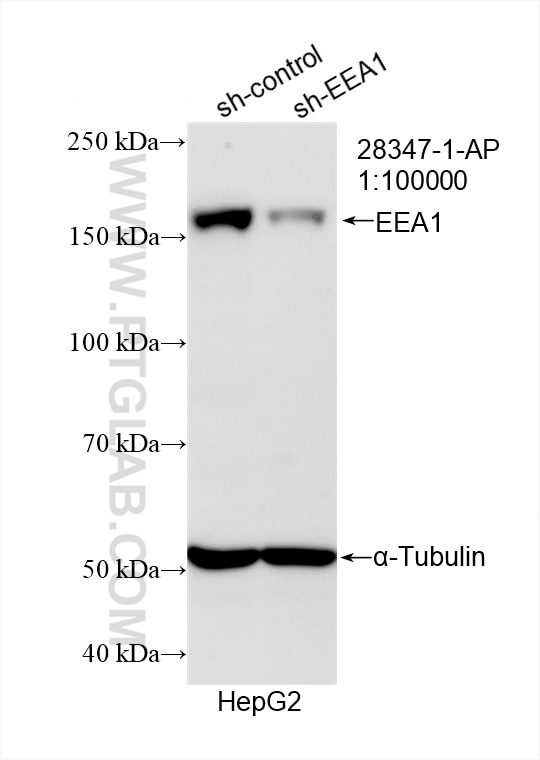
| Positive WB detected in | A431 cells, HepG2 cells, HeLa cells, Jurkat cells, NIH/3T3 cells, C6 cells |
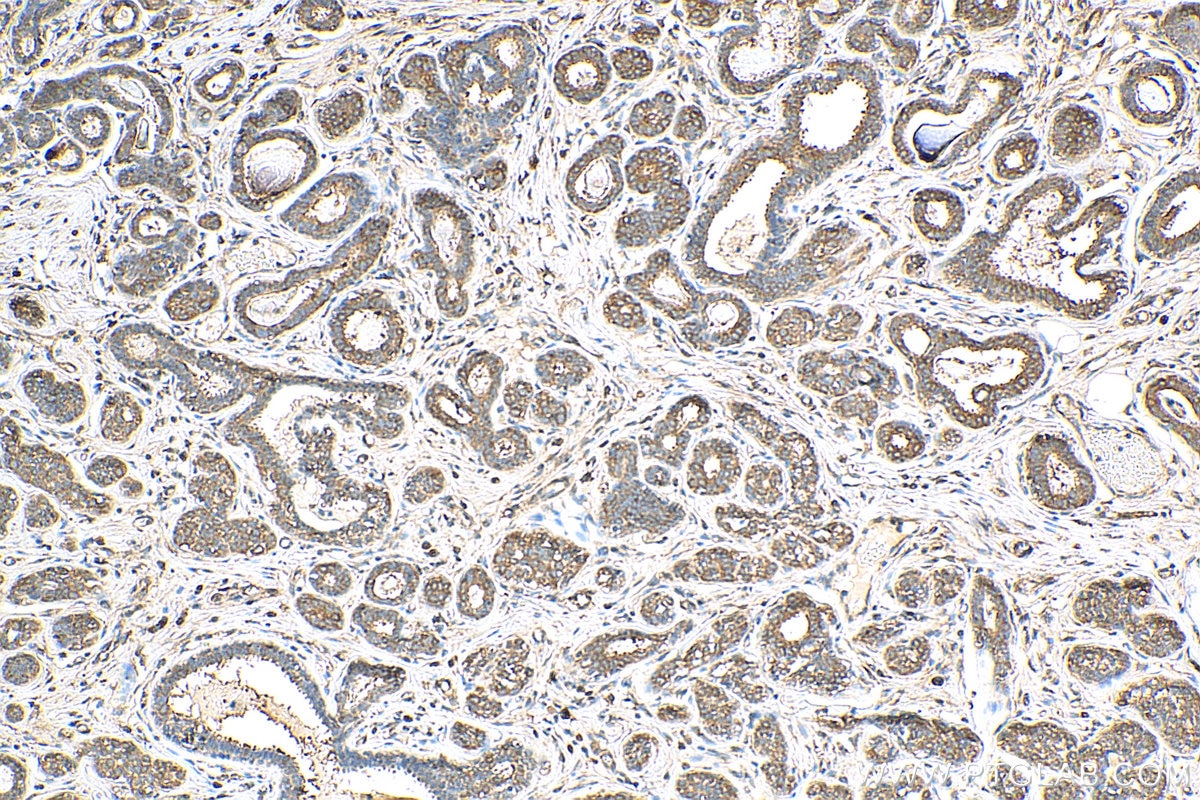
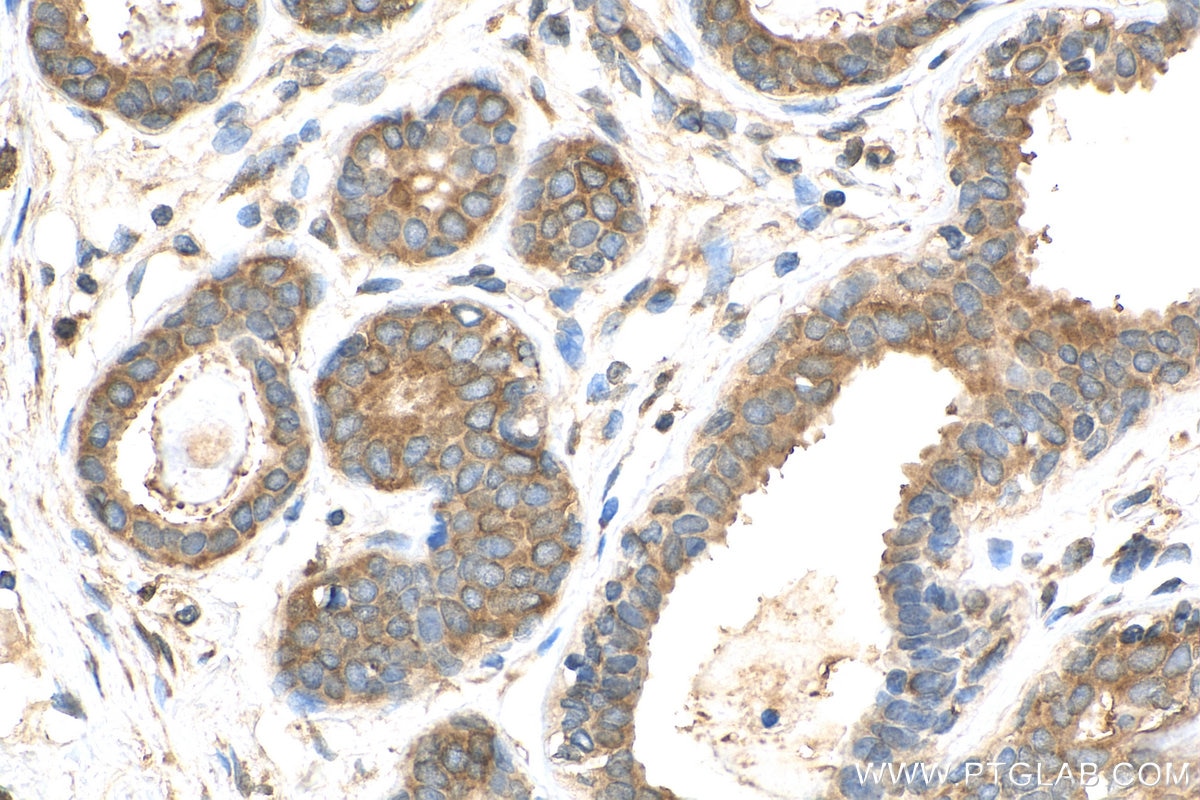
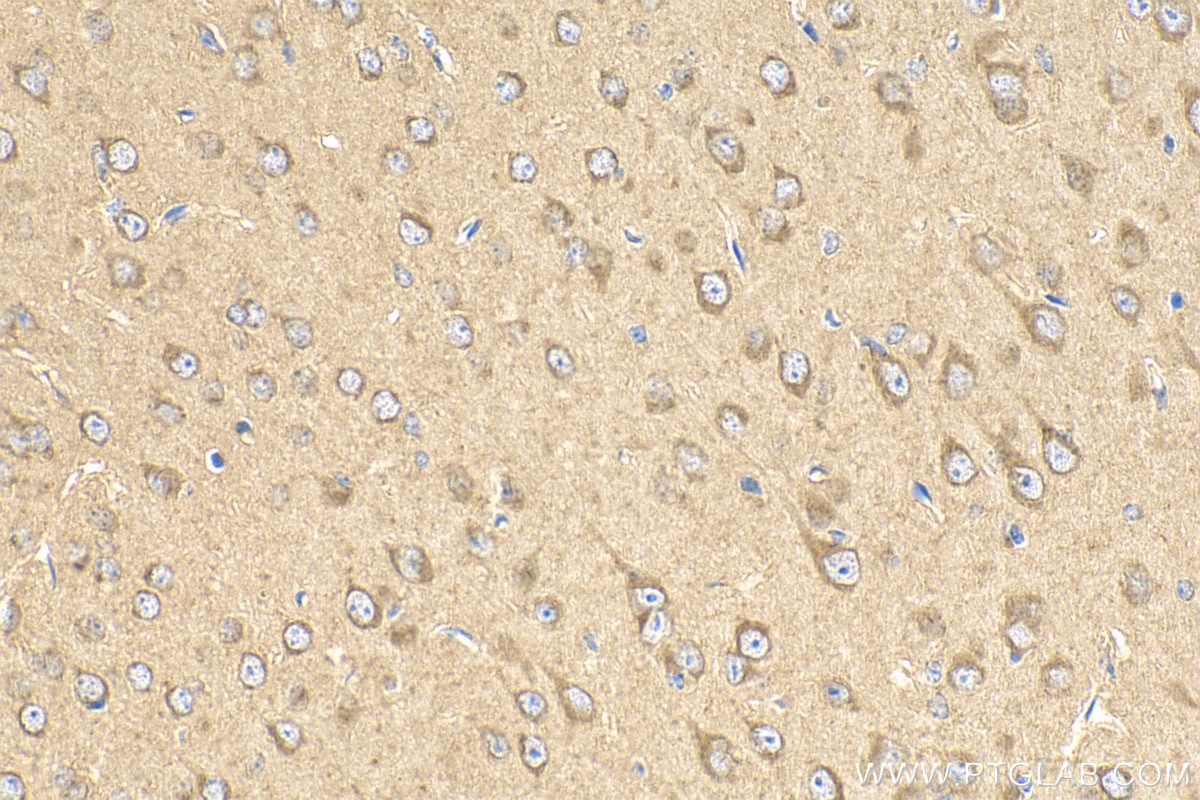
| Positive IHC detected in | human breast cancer tissue, mouse brain tissue Note: suggested antigen retrieval with TE buffer pH 9.0; (*) Alternatively, antigen retrieval may be performed with citrate buffer pH 6.0 |
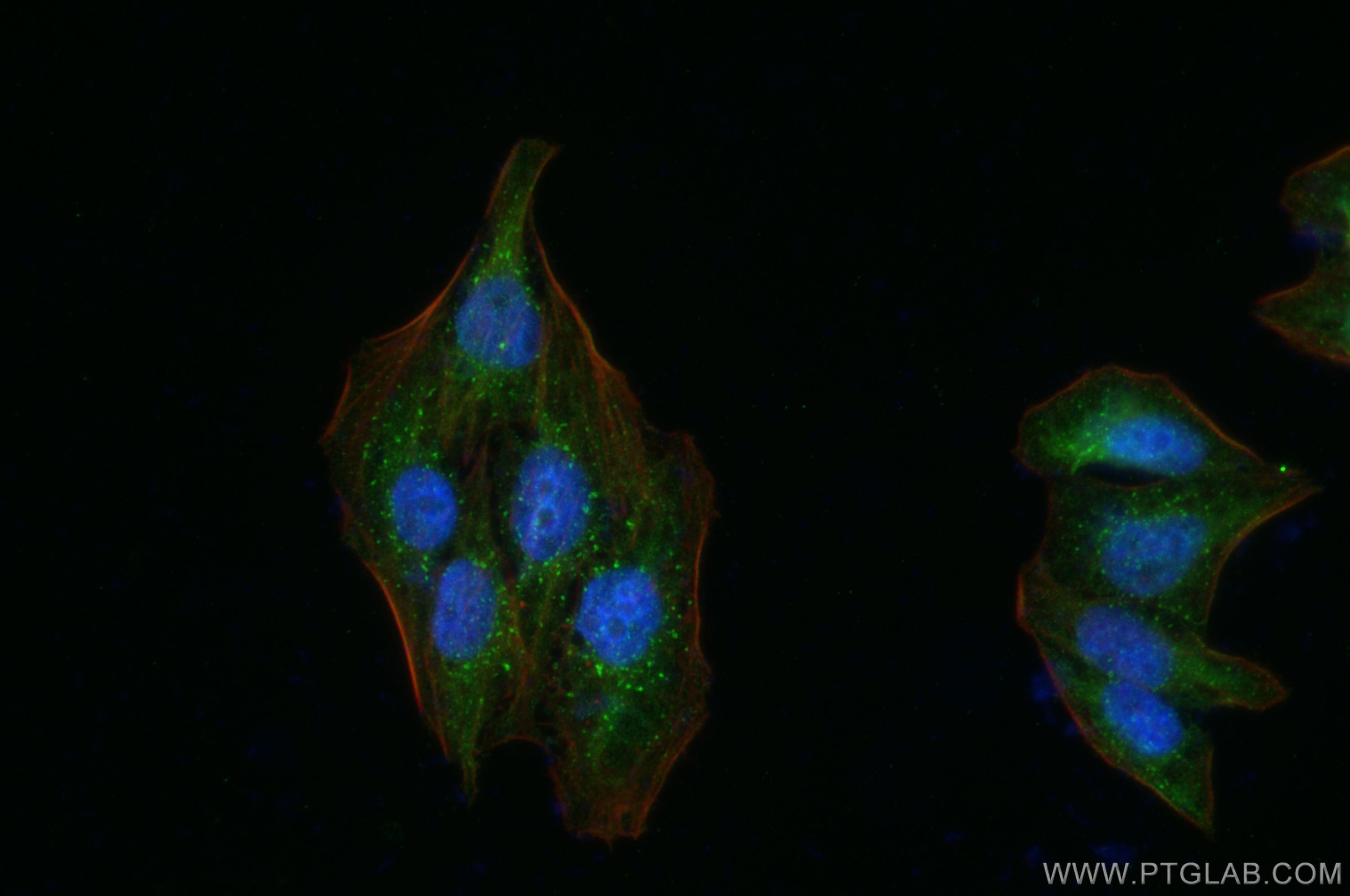
| Positive IF/ICC detected in | HepG2 cells |
Recommended dilution
| Application | Dilution |
|---|---|
| Western Blot (WB) | WB : 1:2000-1:16000 |
| Immunohistochemistry (IHC) | IHC : 1:50-1:500 |
| Immunofluorescence (IF)/ICC | IF/ICC : 1:200-1:800 |
| It is recommended that this reagent should be titrated in each testing system to obtain optimal results. | |
| Sample-dependent, Check data in validation data gallery. | |
Product Information
28347-1-AP targets EEA1 in WB, IHC, IF/ICC, ELISA applications and shows reactivity with Human, Mouse, Rat samples.
| Tested Reactivity | Human, Mouse, Rat |
| Cited Reactivity | human, mouse, pig, monkey |
| Host / Isotype | Rabbit / IgG |
| Class | Polyclonal |
| Type | Antibody |
| Immunogen |
CatNo: Ag28814 Product name: Recombinant human EEA1 protein Source: e coli.-derived, PGEX-4T Tag: GST Domain: 1151-1350 aa of NM_003566 Sequence: KLESIKEITNLKDAKQLLIQQKLELQGKADSLKAAVEQEKRNQQILKDQVKKEEEELKKEFIEKEAKLHSEIKEKEVGMKKHEENEAKLTMQITALNENLGTVKKEWQSSQRRVSELEKQTDDLRGEIAVLEATVQNNQDERRALLERCLKGEGEIEKLQTKVLELQRKLDNTTAAVQELGRENQSLQIKHTQALNRKWA Predict reactive species |
| Full Name | early endosome antigen 1 |
| Calculated Molecular Weight | 162 kDa |
| Observed Molecular Weight | 170 kDa |
| GenBank Accession Number | NM_003566 |
| Gene Symbol | EEA1 |
| Gene ID (NCBI) | 8411 |
| RRID | AB_2881117 |
| Conjugate | Unconjugated |
| Form | Liquid |
| Purification Method | Antigen affinity purification |
| UNIPROT ID | Q15075 |
| Storage Buffer | PBS with 0.02% sodium azide and 50% glycerol, pH 7.3. |
| Storage Conditions | Store at -20°C. Stable for one year after shipment. Aliquoting is unnecessary for -20oC storage. 20ul sizes contain 0.1% BSA. |
Background Information
Early endosome antigen 1 (EEA1) is a marker of early endosomes and has an important role in endosomal trafficking. EEA1 contains coiled-coil regions and an FYVE-type zinc finger which interacts with phosphatidylinositol-3-phosphate. EEA1 functions as a Rab5 effector, mediates endosome docking and, together with SNAREs, leads to membrane fusion.
Protocols
| Product Specific Protocols | |
|---|---|
| IF protocol for EEA1 antibody 28347-1-AP | Download protocol |
| IHC protocol for EEA1 antibody 28347-1-AP | Download protocol |
| WB protocol for EEA1 antibody 28347-1-AP | Download protocol |
| Standard Protocols | |
|---|---|
| Click here to view our Standard Protocols |
Publications
What published studies show
The EEA1 Polyclonal antibody (Cat# 28347-1-AP) has 25 total citations. These appear in journals including Cell Metabolism, Nature Aging, Nature Communications, Science Advances, Advanced Materials, Advanced Science, Cell Molecular Immunology, Bone Research, Nucleic Acids Research, Current Biology, eLife, and others. Research fields span endosomal trafficking, neurodegeneration, Alzheimer's disease, immunology, infectious diseases (tuberculosis, viral infections), cancer biology, cell metabolism, gene therapy, and toxin neutralization.
| Species | Application | Title |
|---|---|---|
Cell Metab Oral GLP-1 receptor agonist promotes astrocyte-neuron lactate and lipid transfer with neuroprotective effects. | ||
Adv Mater Noninvasive Optogenetics Realized by iPSC-Derived Tentacled Carrier in Alzheimer's Disease Treatment | ||
Nat Aging DNA damage in macrophages drives immune autoreactivity via nuclear antigen presentation. | ||
Cell Mol Immunol Mycobacterium tuberculosis MEM39 (Rv1977) hijacks host aldolase A (ALDOA) to subvert immunometabolism to facilitate bacterial intracellular survival. | ||
Bone Res Pak4-mediated crosstalk between necroptotic macrophages and tendon stem/progenitor cells contributes to traumatic heterotopic ossification formation. | ||
Nat Commun Sortilin-mediated translocation of mitochondrial ACSL1 impairs adipocyte thermogenesis and energy expenditure in male mice |
Reviews
What customers say
Both reviewers gave this antibody a perfect 5-star rating. One user reported excellent performance in Western Blot at 1:1000 dilution and Immunofluorescence at 1:200 on human liver cells. Another user confirmed it worked well for IF at 1:200 with just a 1-hour incubation at room temperature on HCT116 cells. Overall, users found the antibody reliable and effective across applications with straightforward protocols.
The reviews below have been submitted by verified Proteintech customers who received an incentive for providing their feedback.
K. (Verified Customer) (10-26-2023) | This antibody worked nicely for WB at 1:1000 and immunoflurecence at 1:200 dilution.
|
Sarah (Verified Customer) (02-09-2023) | Worked well for 1hr IF incubation at RT
|







