
Product Information
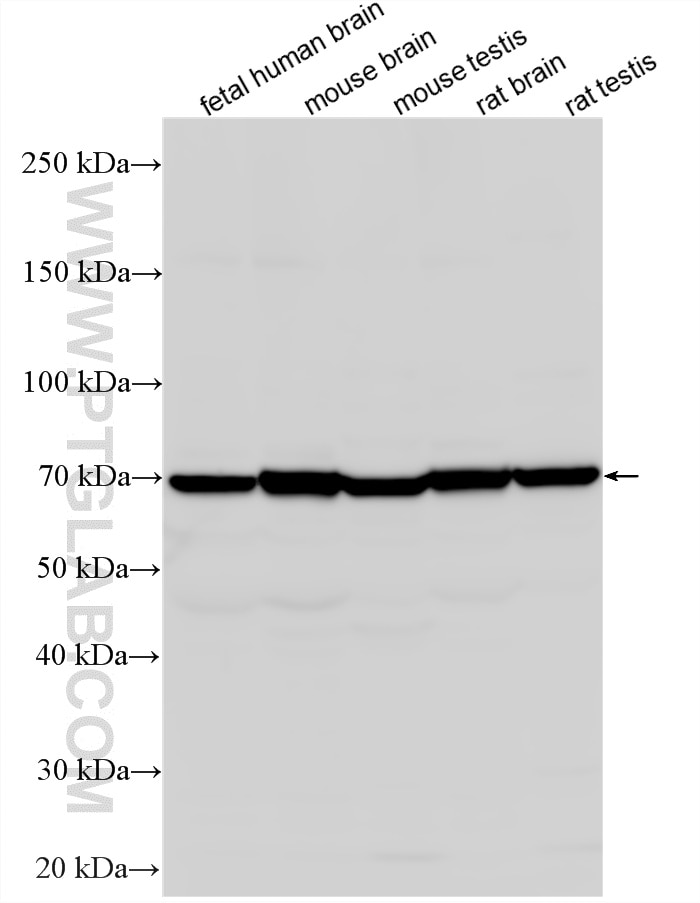
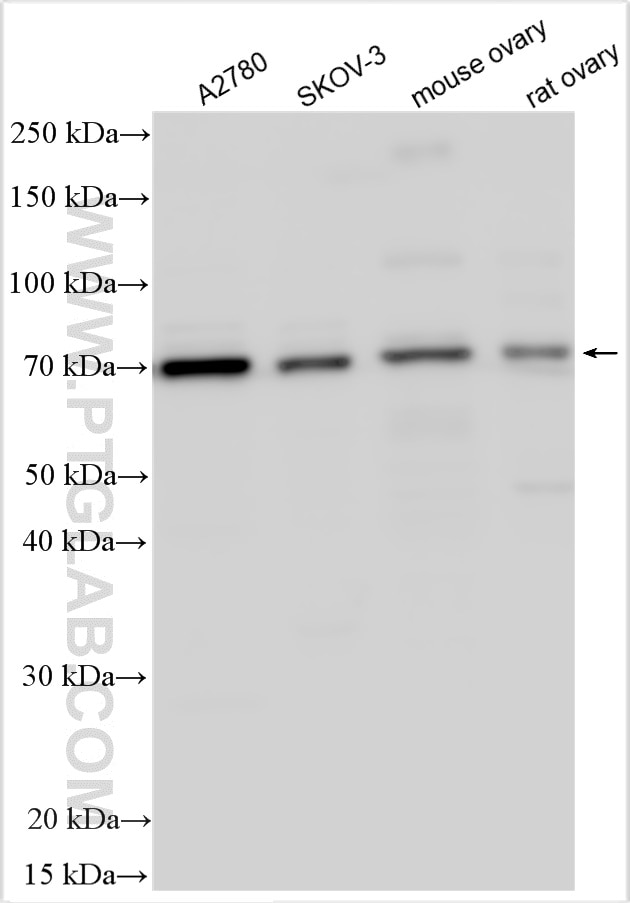
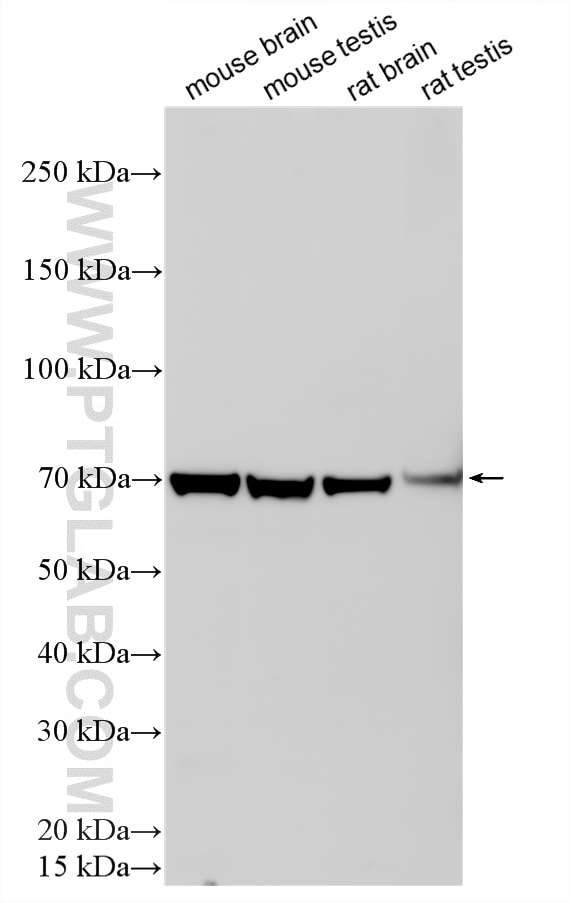
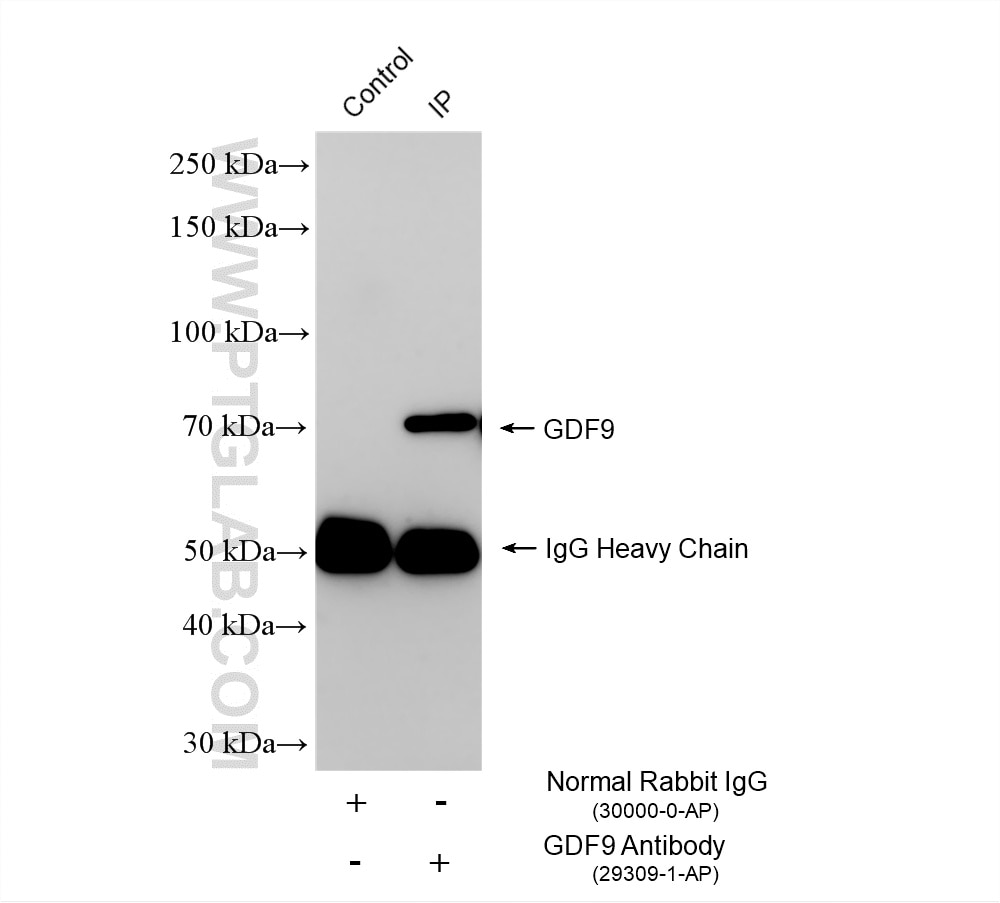
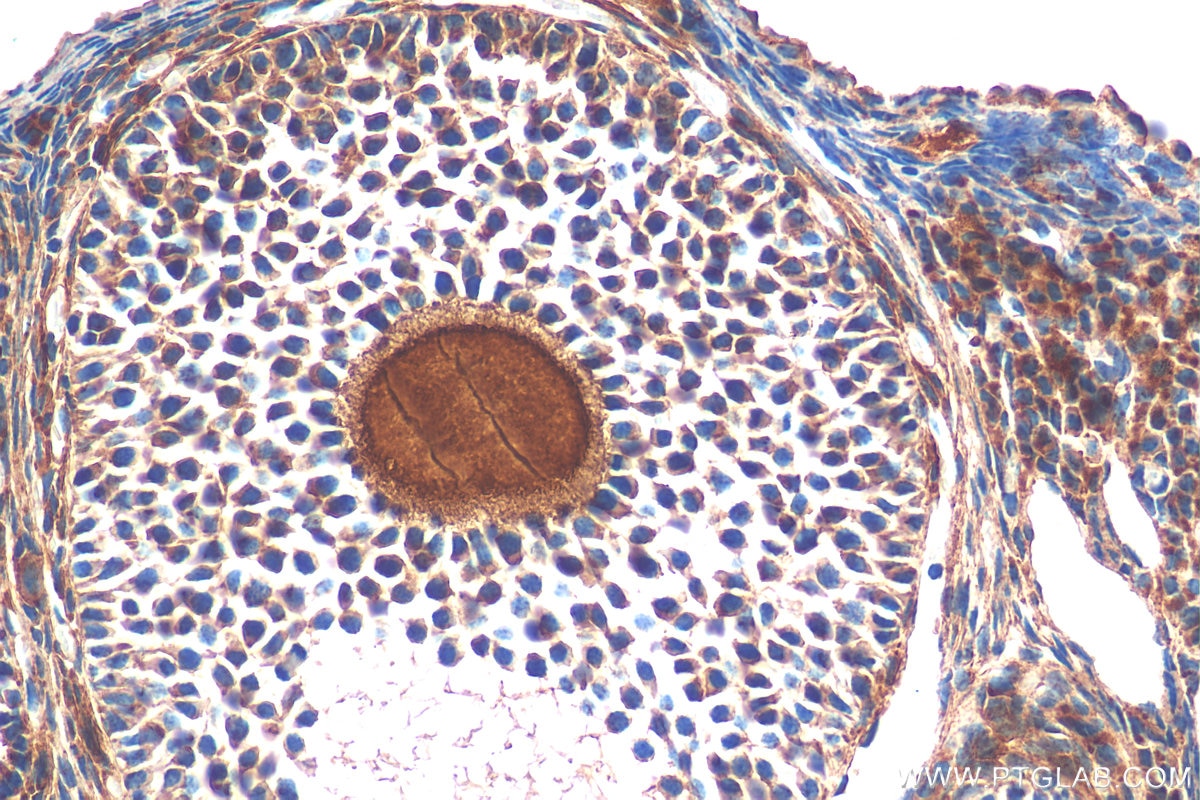
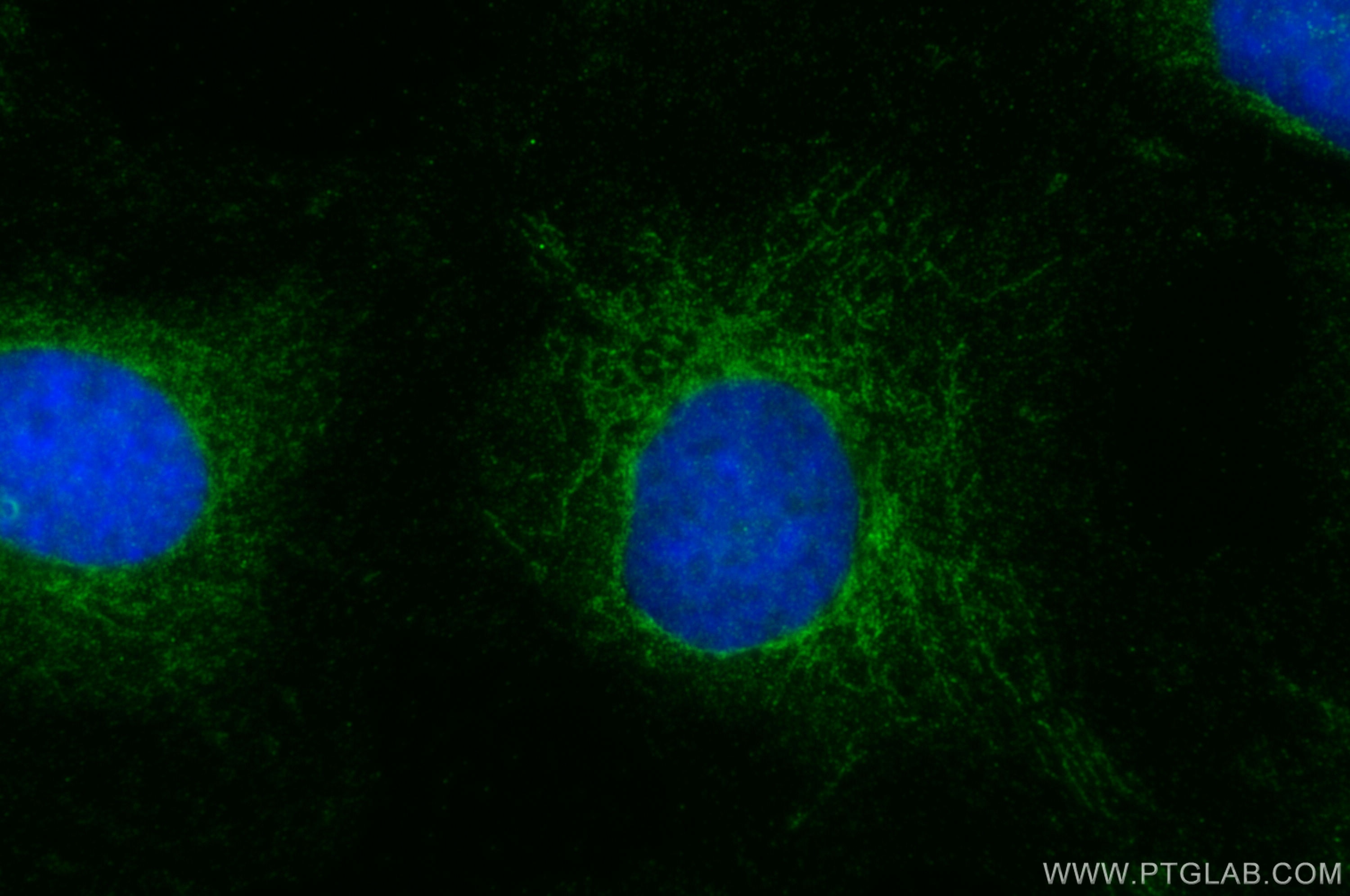
29309-1-PBS targets GDF9 in WB, IHC, IF/ICC, IP, Indirect ELISA applications and shows reactivity with human, mouse, rat samples.
| Tested Reactivity | human, mouse, rat |
| Host / Isotype | Rabbit / IgG |
| Class | Polyclonal |
| Type | Antibody |
| Immunogen |
CatNo: Ag29603 Product name: Recombinant human GDF9 protein Source: e coli.-derived, PGEX-4T Tag: GST Domain: 400-454 aa of BC096228 Sequence: TMVQNIIYEKLDSSVPRPSCVPAKYSPLSVLTIEPDGSIAYKEYEDMIATKCTCR Predict reactive species |
| Full Name | growth differentiation factor 9 |
| Calculated Molecular Weight | 454 aa, 51 kDa |
| Observed Molecular Weight | 70 kDa |
| GenBank Accession Number | BC096228 |
| Gene Symbol | GDF9 |
| Gene ID (NCBI) | 2661 |
| RRID | AB_3086112 |
| Conjugate | Unconjugated |
| Form | Liquid |
| Purification Method | Antigen affinity purification |
| UNIPROT ID | O60383 |
| Storage Buffer | PBS only, pH 7.3. |
| Storage Conditions | Store at -80°C. |
Background Information
GDF9 (Growth/differentiation factor 9) belongs to the TGF-beta family. GDF9 is required for ovarian folliculogenesis. GDF9 and BMP15 are oocyte-secreted factors with a leading role in the control of ovarian function in female reproduction, modulating both the cell fate of the somatic granulosa cells and the quality and developmental competence of the egg (PMID: 29544636). GDF9 promotes cell transition from G0/G1 to S and G2/M phases, through an increase of CCND1 and CCNE1 expression, and RB1 phosphorylation (PMID: 19366876). It regulates STAR expression and cAMP-dependent progesterone release in granulosa and thecal cells. GDF9 attenuates the suppressive effects of activin A on STAR expression and progesterone production by increasing the expression of inhibin B (PMID: 21829661). It suppresses FST and FSTL3 production in granulosa-lutein cells (PMID: 21632818, PMID: 21829661).







