

Tested Applications
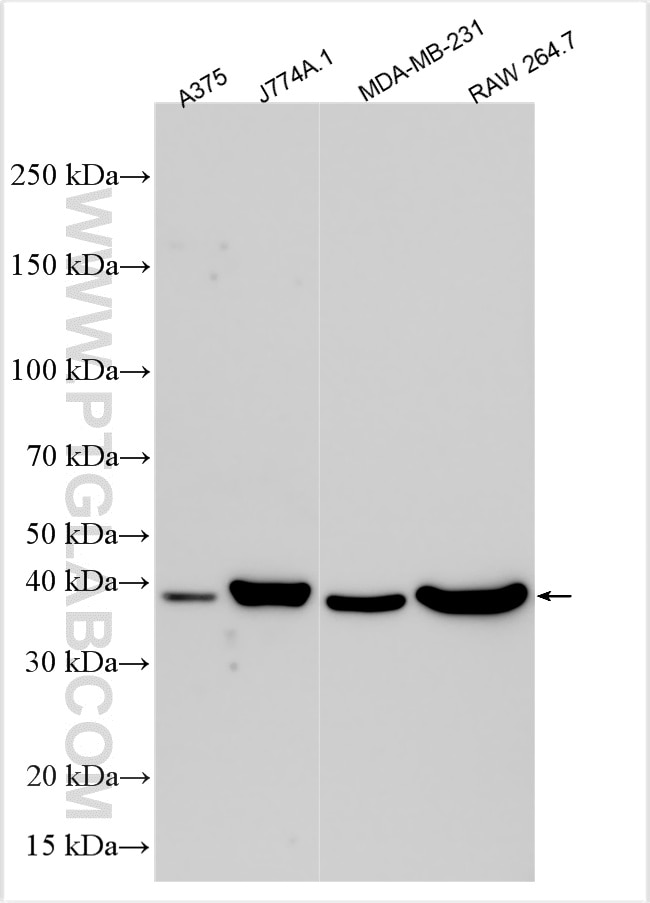
| Positive WB detected in | A375 cells, J774A.1 cells, MDA-MB-231 cells, RAW 264.7 cells |
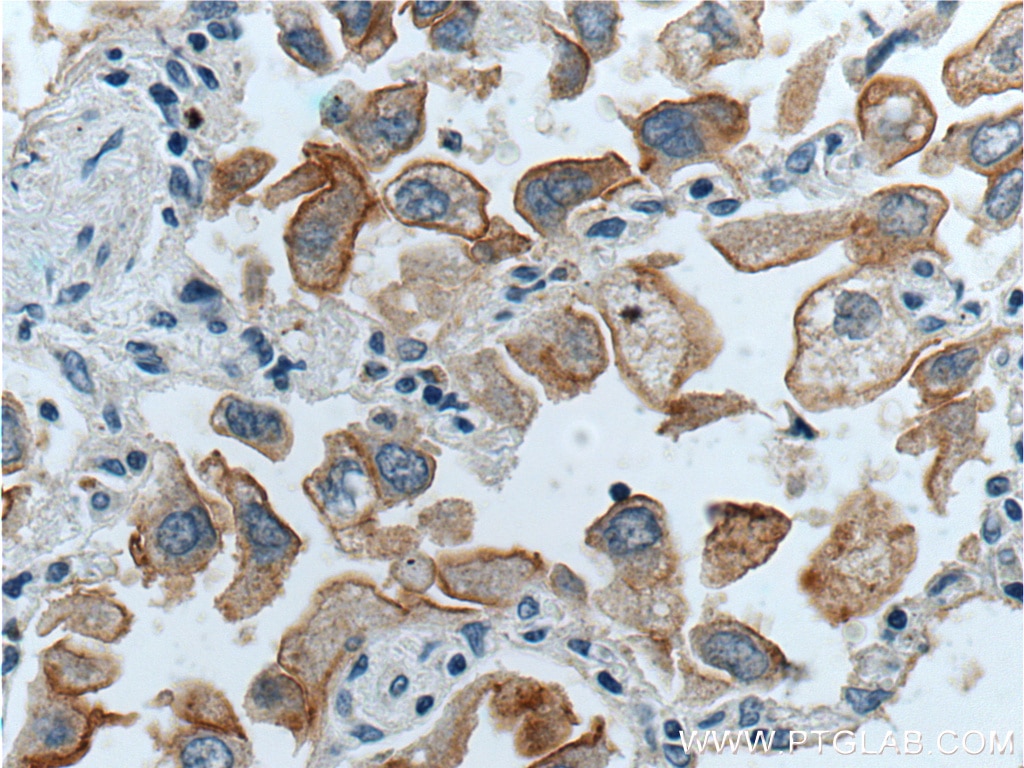
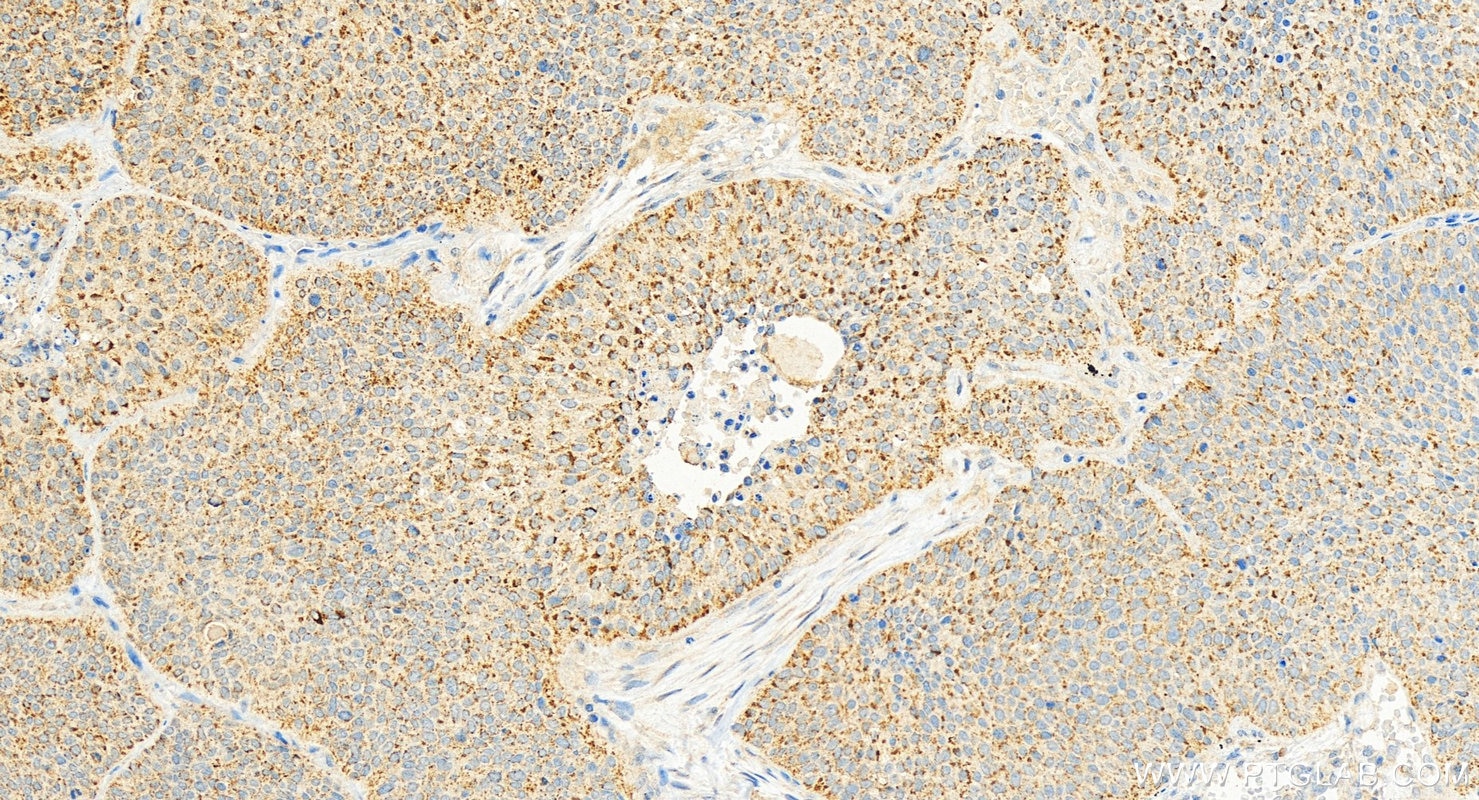
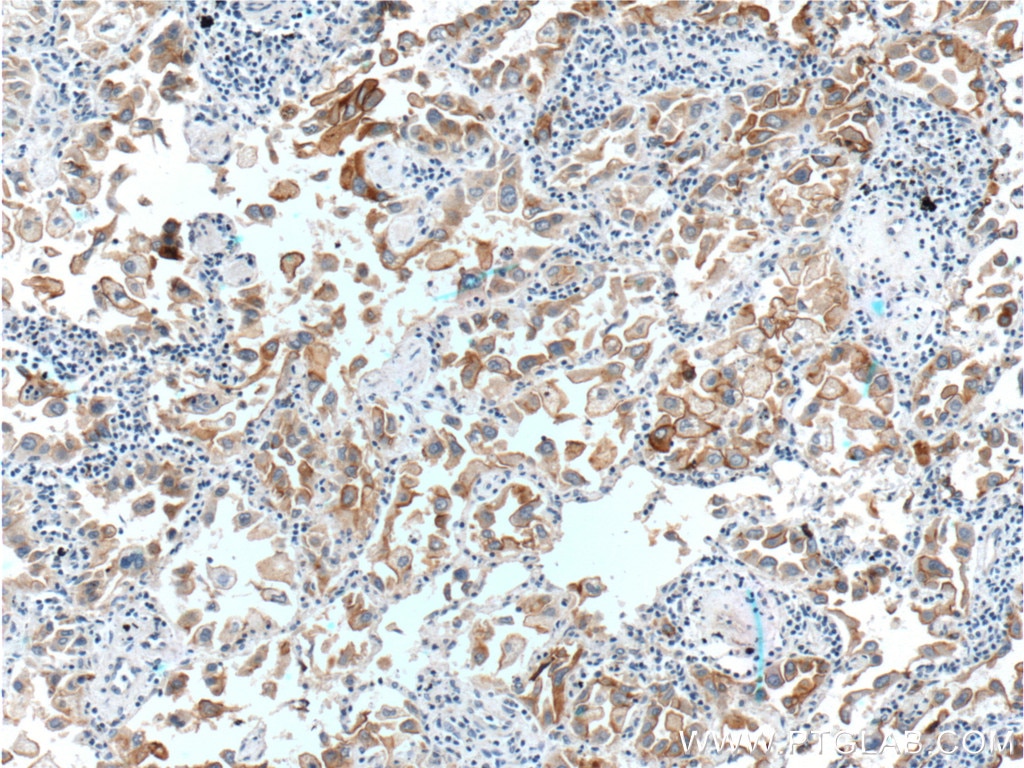
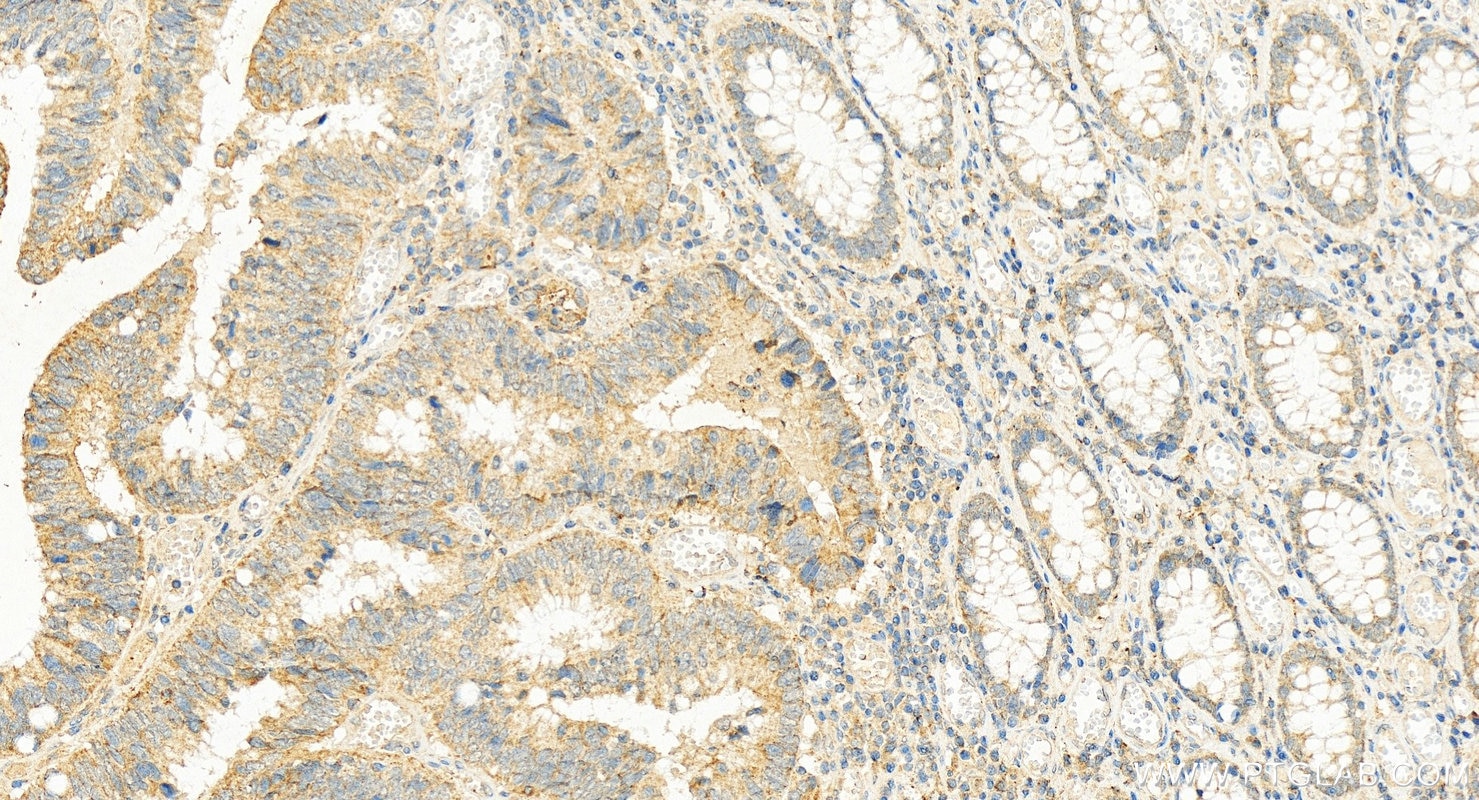
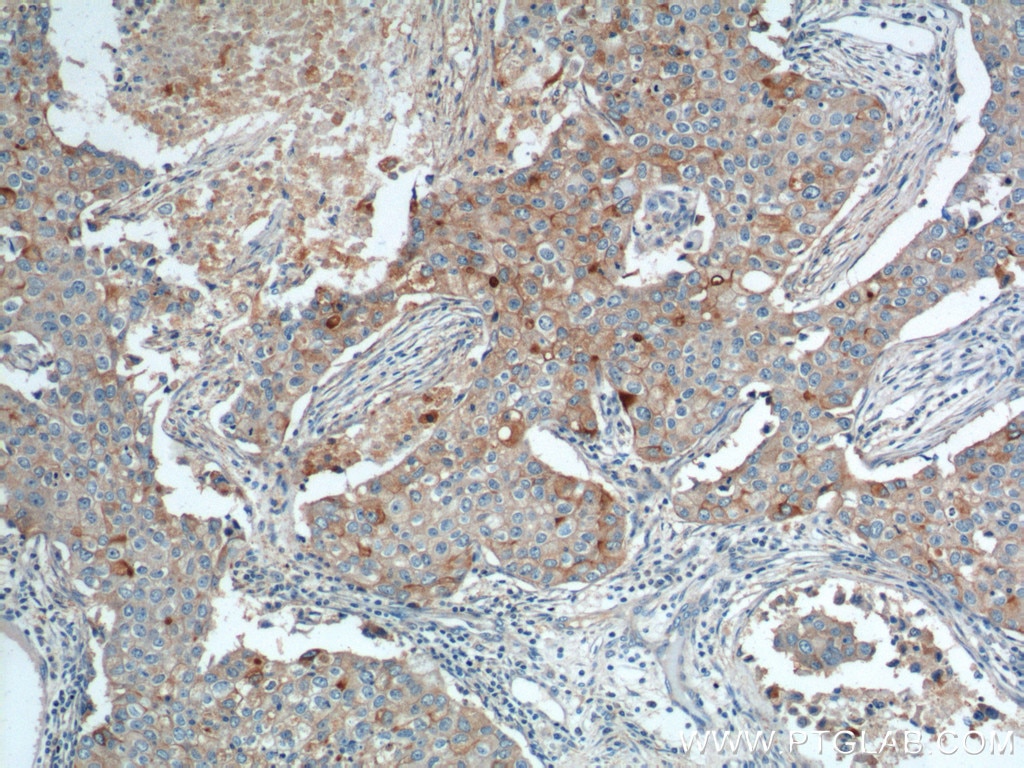
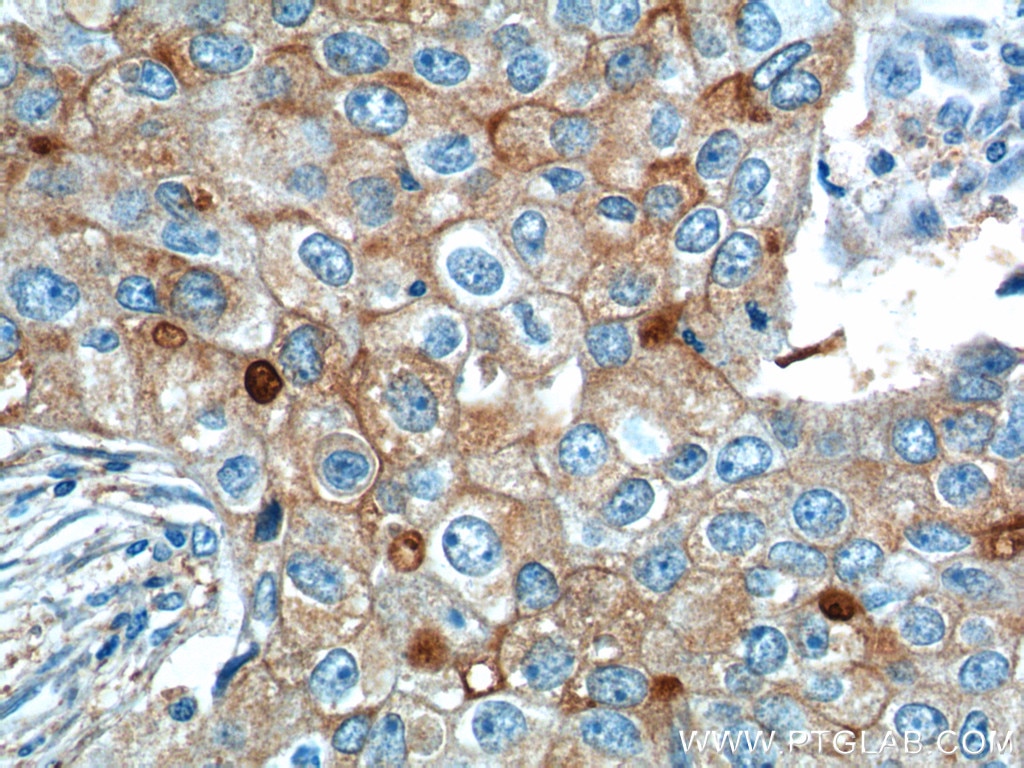
| Positive IHC detected in | human lung cancer tissue, human breast cancer tissue, human colon cancer tissue, human lung squamous cell carcinoma tissue Note: suggested antigen retrieval with TE buffer pH 9.0; (*) Alternatively, antigen retrieval may be performed with citrate buffer pH 6.0 |
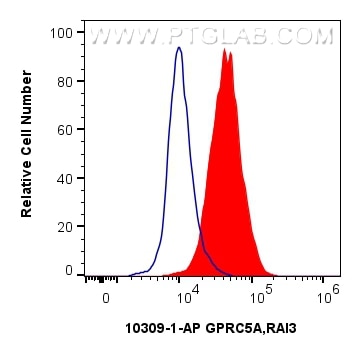
| Positive FC (Intra) detected in | HeLa cells |
Recommended dilution
| Application | Dilution |
|---|---|
| Western Blot (WB) | WB : 1:1000-1:4000 |
| Immunohistochemistry (IHC) | IHC : 1:50-1:1000 |
| Flow Cytometry (FC) (INTRA) | FC (INTRA) : 0.40 ug per 10^6 cells in a 100 µl suspension |
| It is recommended that this reagent should be titrated in each testing system to obtain optimal results. | |
| Sample-dependent, Check data in validation data gallery. | |
Product Information
10309-1-AP targets GPRC5A,RAI3 in WB, IHC, IF, FC (Intra), ELISA applications and shows reactivity with human, mouse samples.
| Tested Reactivity | human, mouse |
| Cited Reactivity | human, mouse, goat |
| Host / Isotype | Rabbit / IgG |
| Class | Polyclonal |
| Type | Antibody |
| Immunogen |
CatNo: Ag0311 Product name: Recombinant human GPRC5A,RAI3 protein Source: e coli.-derived, PGEX-4T Tag: GST Domain: 106-330 aa of BC003665 Sequence: SICFSCLLAHAVSLTKLVRGRKPLSLLVILGLAVGFSLVQDVIAIEYIVLTMNRTNVNVFSELSAPRRNEDFVLLLTYVLFLMALTFLMSSFTFCGSFTGWKRHGAHIYLTMLLSIAIWVAWITLLMLPDFDRRWDDTILSSALAANGWVFLLAYVSPEFWLLTKQRNPMDYPVEDAFCKPQLVKKSYGVENRAYSQEEITQGFEETGDTLYAPYSTHFQLQNQP Predict reactive species |
| Full Name | G protein-coupled receptor, family C, group 5, member A |
| Calculated Molecular Weight | 40 kDa |
| Observed Molecular Weight | 40 kDa |
| GenBank Accession Number | BC003665 |
| Gene Symbol | GPRC5A |
| Gene ID (NCBI) | 9052 |
| RRID | AB_2877732 |
| Conjugate | Unconjugated |
| Form | Liquid |
| Purification Method | Antigen affinity purification |
| UNIPROT ID | Q8NFJ5 |
| Storage Buffer | PBS with 0.02% sodium azide and 50% glycerol, pH 7.3. |
| Storage Conditions | Store at -20°C. Stable for one year after shipment. Aliquoting is unnecessary for -20oC storage. 20ul sizes contain 0.1% BSA. |
Background Information
GPRC5A, also named as GPCR5A, RAI3 and RAIG1, belongs to the G-protein coupled receptor 3 family. It is an orphan G-protein coupled receptor (GPCR) that has been associated with malignancy and may play a role in the proliferation of breast cancer cells. GPRC5A is a potential molecular target for treatment of breast cancers. It is suppressed in some human lung carcinoma cells. (PMID:15788639, 20563252, 19552806 )
Protocols
| Product Specific Protocols | |
|---|---|
| FC protocol for GPRC5A,RAI3 antibody 10309-1-AP | Download protocol |
| IHC protocol for GPRC5A,RAI3 antibody 10309-1-AP | Download protocol |
| WB protocol for GPRC5A,RAI3 antibody 10309-1-AP | Download protocol |
| Standard Protocols | |
|---|---|
| Click here to view our Standard Protocols |
Publications
What published studies show
The anti-GPRC5A antibody (Cat# 10309-1-AP) has 12 citations published in journals including Nature Chemical Biology, Drug Resistance Updates, Stem Cell Research & Therapy, Cell Proliferation, Science of the Total Environment, Inflammation, Molecular Medicine Reports, Cancers, Oncology Letters, Experimental Lung Research, Biology Open, and Journal of Translational Medicine. Research fields span oncology (breast, lung, pancreatic, colorectal, and endometrial cancers), pulmonary fibrosis, periodontitis, intervertebral disc degeneration, and microbiota–host interactions.
| Species | Application | Title |
|---|---|---|
Drug Resist Updat Methylation of GPRC5A promotes liver metastasis and docetaxel resistance through activating mTOR signaling pathway in triple negative breast cancer
| ||
Nat Chem Biol Chemoproteomics reveals microbiota-derived aromatic monoamine agonists for GPRC5A
| ||
Stem Cell Res Ther TMT-based quantitative proteomic analysis of spheroid cells of endometrial cancer possessing cancer stem cell properties | ||
Cell Prolif Spatially multicellular variability of intervertebral disc degeneration by comparative single-cell analysis | ||
Sci Total Environ GPRC5A reduction contributes to pollutant benzo[a]pyrene injury via aggravating murine fibrosis, leading to poor prognosis of IIP patients.
| ||









