

Product Information
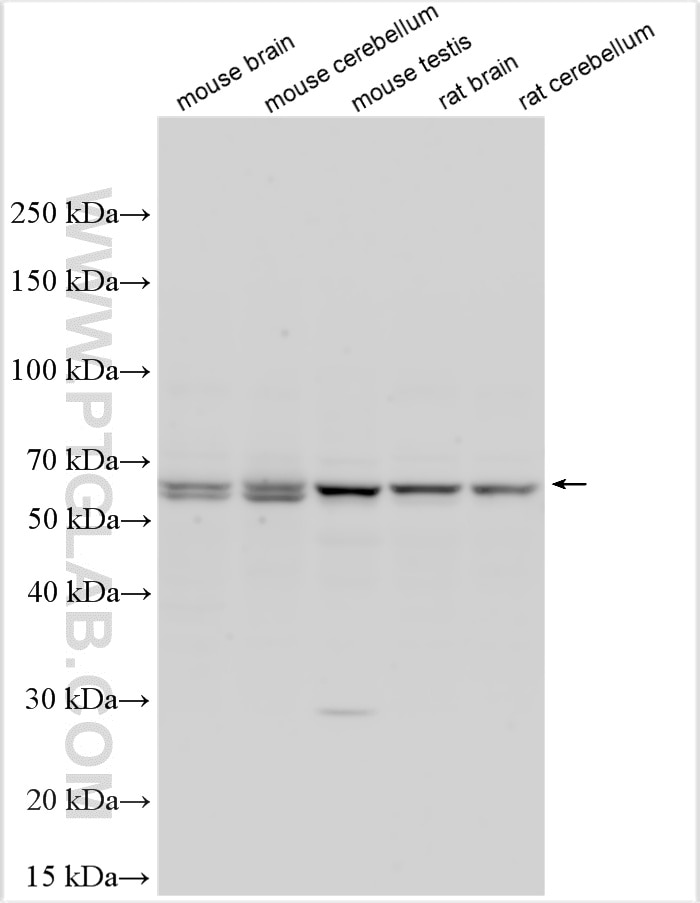
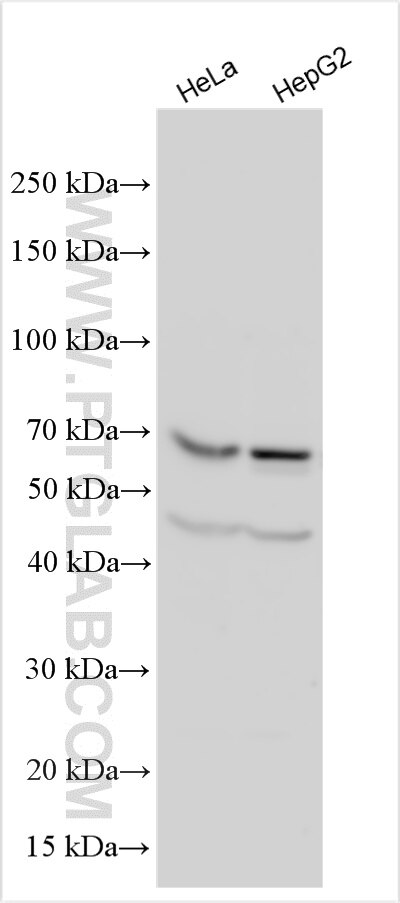
32697-1-PBS targets KLHL7 in WB, Indirect ELISA applications and shows reactivity with human, mouse, rat samples.
| Tested Reactivity | human, mouse, rat |
| Host / Isotype | Rabbit / IgG |
| Class | Polyclonal |
| Type | Antibody |
| Immunogen |
CatNo: Ag38050 Product name: Recombinant human KLHL7 protein Source: e coli.-derived, PGEX-4T Tag: GST Domain: 291-586 aa of BC039585 Sequence: HDYRIALFGGSQPQSCRYFNPKDYSWTDIRCPFEKRRDAACVFWDNVVYILGGSQLFPIKRMDCYNVVKDSWYSKLGPPTPRDSLAACAAEGKIYTSGGSEVGNSALYLFECYDTRTESWHTKPSMLTQRCSHGMVEANGLIYVCGGSLGNNVSGRVLNSCEVYDPATETWTELCPMIEARKNHGLVFVKDKIFAVGGQNGLGGLDNVEYYDIKLNEWKMVSPMPWKGVTVKCAAVGSIVYVLAGFQGVGRLGHILEYNTETDKWVANSKVRAFPVTSCLICVVDTCGANEETLET Predict reactive species |
| Full Name | kelch-like 7 (Drosophila) |
| Calculated Molecular Weight | 586 aa, 66 kDa |
| Observed Molecular Weight | 65 kDa |
| GenBank Accession Number | BC039585 |
| Gene Symbol | KLHL7 |
| Gene ID (NCBI) | 55975 |
| RRID | AB_3742714 |
| Conjugate | Unconjugated |
| Form | Liquid |
| Purification Method | Antigen affinity Purification |
| UNIPROT ID | Q8IXQ5 |
| Storage Buffer | PBS only, pH 7.3. |
| Storage Conditions | Store at -80°C. |
Background Information
KLHL7 (Kelch-like protein 7) is a member of the Kelch-like protein family and plays significant roles in various biological processes, including cell cycle regulation, protein degradation, and cytoskeleton organization. KLHL7 is highly expressed in various cancers and is associated with malignant progression and poor prognosis. In breast cancer, high expression of KLHL7 is linked to higher histological grades, estrogen receptor (ER)-negative or human epidermal growth factor receptor 2 (HER-2)-positive tumors, and triple-negative breast cancer (TNBC), and patients with high KLHL7 expression have shorter survival times. In gastric cancer, silencing KLHL7 gene expression can inhibit the proliferation, migration, and invasion of gastric cancer cells and has shown tumor-suppressive effects in in vivo models. Moreover, KLHL7 is highly expressed in colorectal cancer and ovarian cancer, among others, and is significantly associated with low patient survival rates.



