
Recombinant Mouse CGA protein (rFc Tag)
Species
Mouse
Purity
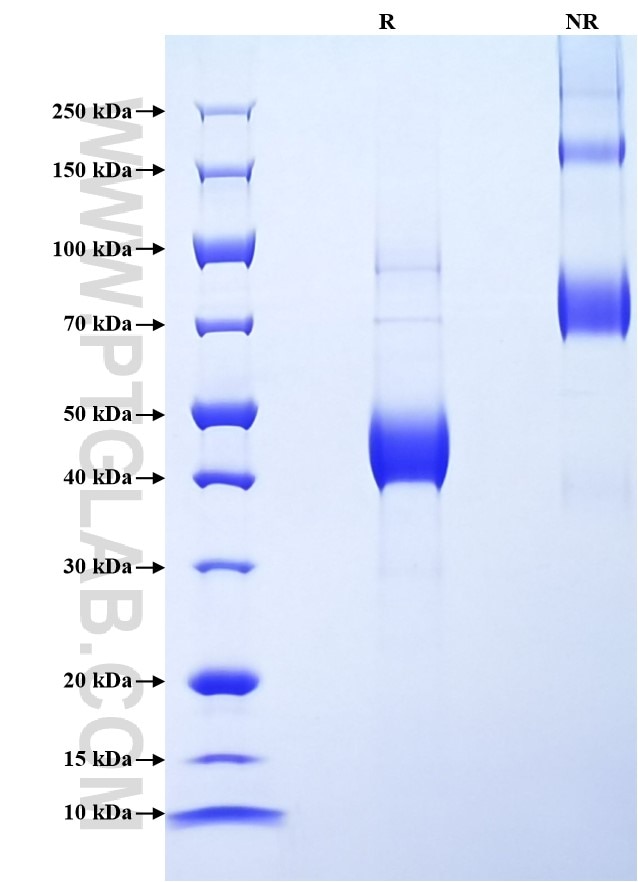
>90 %, SDS-PAGE
Tag
rFc Tag
Activity
not tested
Cat no : Eg3094
Validation Data Gallery
Product Information
| Purity | >90 %, SDS-PAGE |
| Endotoxin | <0.1 EU/μg protein, LAL method |
| Activity |
Not tested |
| Expression | HEK293-derived Mouse CGA protein Leu25-Tyr116 (Accession# P01216) with a rabbit IgG Fc tag at the C-terminus. |
| GeneID | 12640 |
| Accession | P01216 |
| PredictedSize | 36.2 kDa |
| SDS-PAGE | 40-50 kDa, reducing (R) conditions |
| Formulation | Lyophilized from 0.22 μm filtered solution in PBS, pH 7.4. Normally 5% trehalose and 5% mannitol are added as protectants before lyophilization. |
| Reconstitution | Briefly centrifuge the tube before opening. Reconstitute at 0.1-0.5 mg/mL in sterile water. |
| Storage Conditions |
It is recommended that the protein be aliquoted for optimal storage. Avoid repeated freeze-thaw cycles.
|
| Shipping | The product is shipped at ambient temperature. Upon receipt, store it immediately at the recommended temperature. |
Background
CGA (Chromogranin A), known as Chromogranin A, is an acidic, hydrophilic protein consisting of 439 amino acids with a molecular mass of approximately 48 kDa. It is a member of the neuropeptide family and is widely distributed in the neuroendocrine system. CGA has been an attractive therapeutic target and candidate biomarker for a variety of cardiovascular, neurological, and inflammatory diseases. CgA concentration is used as a diagnostic marker in hypertensive pheochromocytoma patients. (PMID: 36902417) Plasma CGA levels are diagnostic in prostate cancer and are particularly important in the monitoring and diagnosis of prostate-specific antigen-negative or progressive prostate cancer with distant metastases.
References:
1. Bralewska M, et al. Int J Mol Sci. 2023;24(5):4986.
2. Ploussard G, et al. World J Urol. 2023;41(2):361-369.
3. Laguerre F,et al. IUBMB Life. 2020;72(4):524-532.
4. Iyer DR, et al. Cell Mol Life Sci. 2023;80(9):271.