


Tested Applications
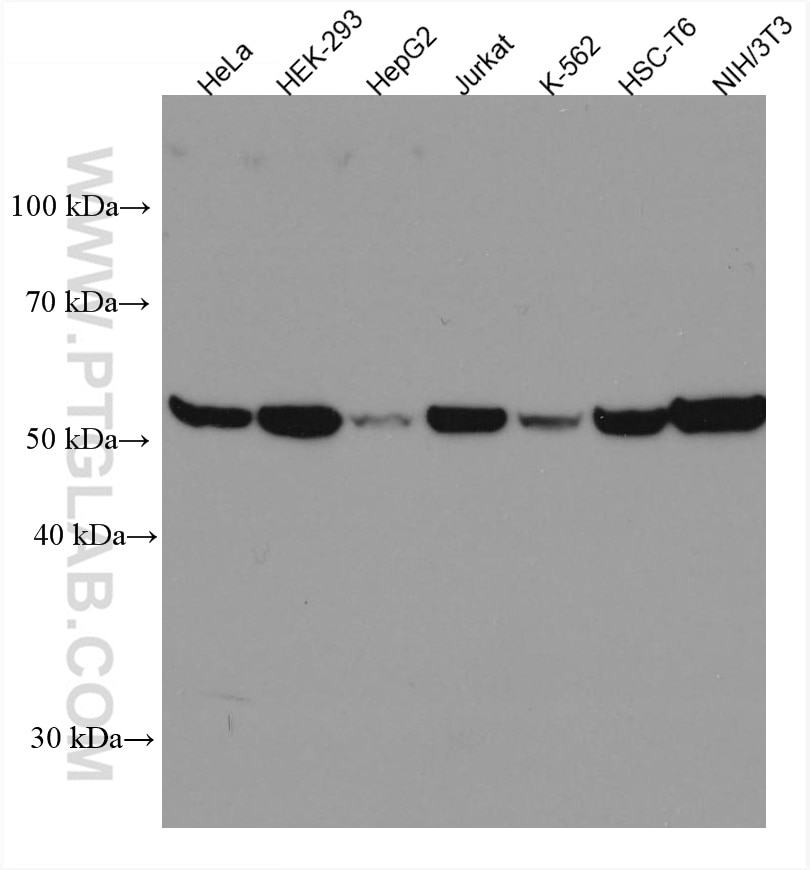
| Positive WB detected in | HeLa cells, HEK-293 cells, HepG2 cells, Jurkat cells, K-562 cells, HSC-T6 cells, NIH/3T3 cells |
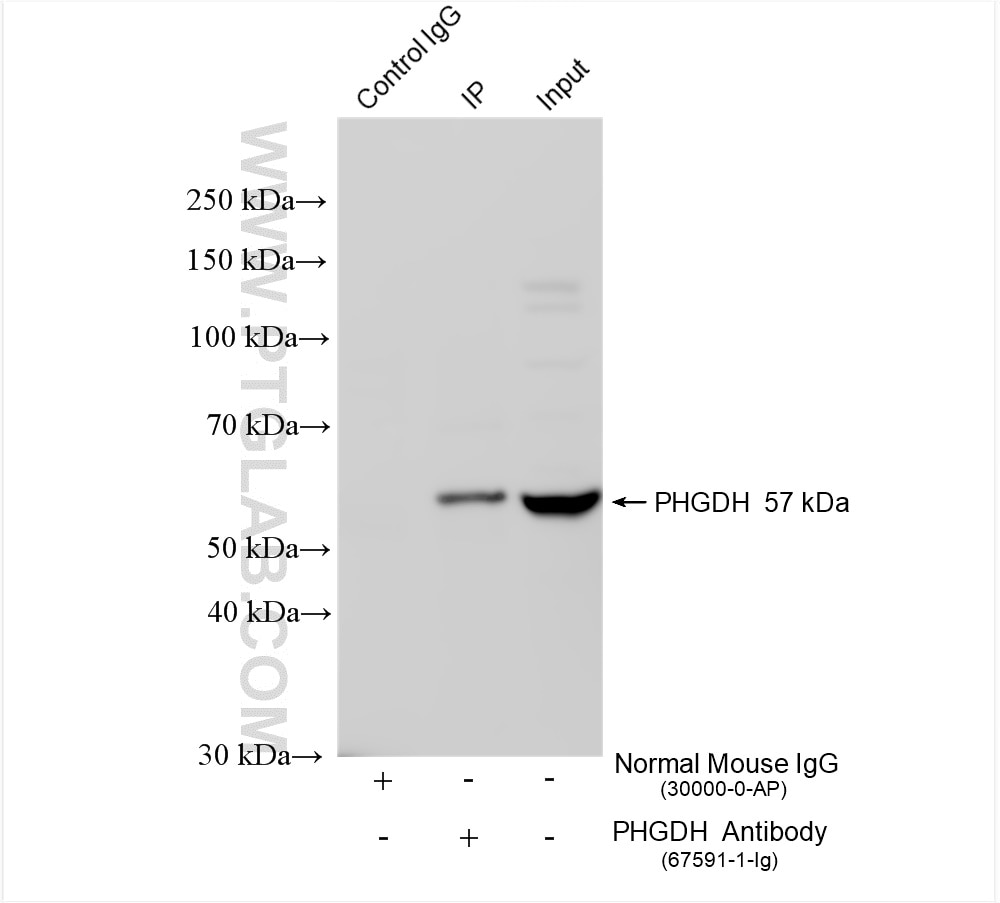
| Positive IP detected in | HeLa cells |
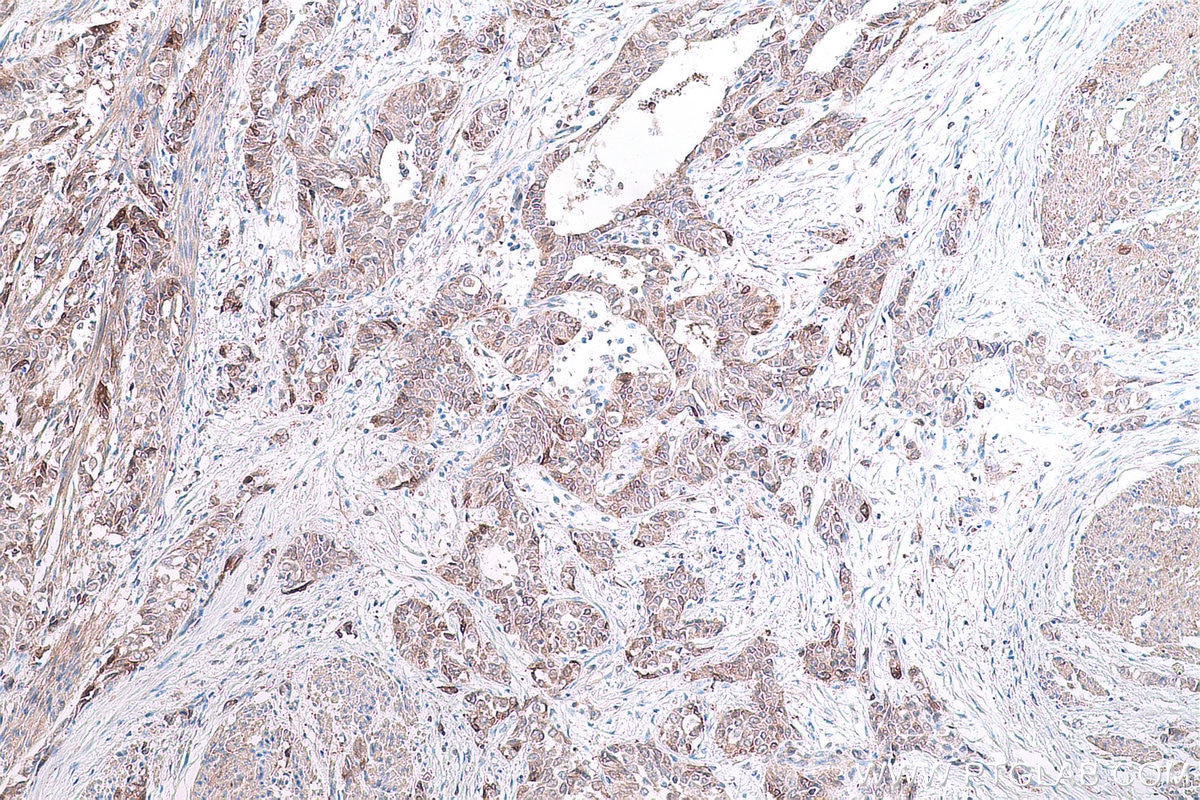
| Positive IHC detected in | human urothelial carcinoma tissue Note: suggested antigen retrieval with TE buffer pH 9.0; (*) Alternatively, antigen retrieval may be performed with citrate buffer pH 6.0 |
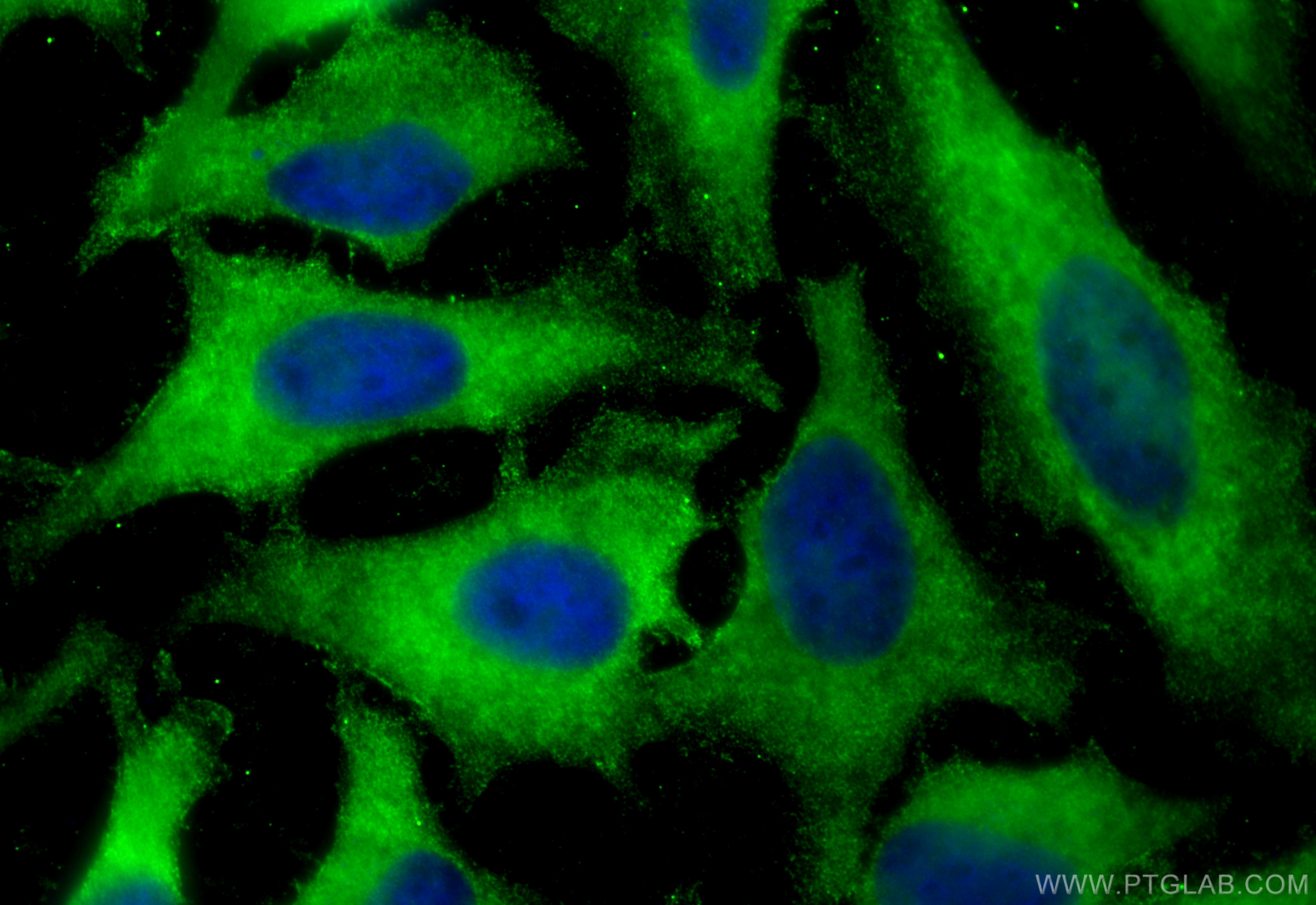
| Positive IF/ICC detected in | HeLa cells |
| Positive FC (Intra) detected in | HeLa cells |
Recommended dilution
| Application | Dilution |
|---|---|
| Western Blot (WB) | WB : 1:5000-1:50000 |
| Immunoprecipitation (IP) | IP : 0.5-4.0 ug for 1.0-3.0 mg of total protein lysate |
| Immunohistochemistry (IHC) | IHC : 1:2000-1:8000 |
| Immunofluorescence (IF)/ICC | IF/ICC : 1:400-1:1600 |
| Flow Cytometry (FC) (INTRA) | FC (INTRA) : 0.25 ug per 10^6 cells in a 100 µl suspension |
| It is recommended that this reagent should be titrated in each testing system to obtain optimal results. | |
| Sample-dependent, Check data in validation data gallery. | |
Product Information
67591-1-Ig targets PHGDH in WB, IHC, IF/ICC, FC (Intra), IP, ELISA applications and shows reactivity with human, mouse, rat samples.
| Tested Reactivity | human, mouse, rat |
| Cited Reactivity | human, mouse |
| Host / Isotype | Mouse / IgG1 |
| Class | Monoclonal |
| Type | Antibody |
| Immunogen |
CatNo: Ag6877 Product name: Recombinant human PHGDH protein Source: e coli.-derived, PET28a Tag: 6*His Domain: 186-533 aa of BC000303 Sequence: FGVQQLPLEEIWPLCDFITVHTPLLPSTTGLLNDNTFAQCKKGVRVVNCARGGIVDEGALLRALQSGQCAGAALDVFTEEPPRDRALVDHENVISCPHLGASTKEAQSRCGEEIAVQFVDMVKGKSLTGVVNAQALTSAFSPHTKPWIGLAEALGTLMRAWAGSPKGTIQVITQGTSLKNAGNCLSPAVIVGLLKEASKQADVNLVNAKLLVKEAGLNVTTSHSPAAPGEQGFGECLLAVALAGAPYQAVGLVQGTTPVLQGLNGAVFRPEVPLRRDLPLLLFRTQTSDPAMLPTMIGLLAEAGVRLLSYQTSLVSDGETWHVMGISSLLPSLEAWKQHVTEAFQFHF Predict reactive species |
| Full Name | phosphoglycerate dehydrogenase |
| Calculated Molecular Weight | 57 kDa |
| Observed Molecular Weight | 57 kDa |
| GenBank Accession Number | BC000303 |
| Gene Symbol | PHGDH |
| Gene ID (NCBI) | 26227 |
| RRID | AB_2882799 |
| Conjugate | Unconjugated |
| Form | Liquid |
| Purification Method | Protein G purification |
| UNIPROT ID | O43175 |
| Storage Buffer | PBS with 0.02% sodium azide and 50% glycerol, pH 7.3. |
| Storage Conditions | Store at -20°C. Stable for one year after shipment. Aliquoting is unnecessary for -20oC storage. 20ul sizes contain 0.1% BSA. |
Background Information
PHGDH(D-3-phosphoglycerate dehydrogenase) is also named as 3-PGDH, PGDH3 and belongs to the D-isomer specific 2-hydroxyacid dehydrogenase family. It catalyzes the transition of 3-phosphoglycerate into 3-phosphohydroxypyruvate, which is the first and rate-limiting step in the phosphorylated pathway of serine biosynthesis, using NAD+/NADH as a cofactor. 3-PGDH deficiency is a rare recessive inborn error in the biosynthesis of the amino acid L-serine characterized clinically by congenital microcephaly, psychomotor retardation, and intractable seizures(PMID:19235232 ).
Protocols
| Product Specific Protocols | |
|---|---|
| FC protocol for PHGDH antibody 67591-1-Ig | Download protocol |
| IF protocol for PHGDH antibody 67591-1-Ig | Download protocol |
| IHC protocol for PHGDH antibody 67591-1-Ig | Download protocol |
| IP protocol for PHGDH antibody 67591-1-Ig | Download protocol |
| WB protocol for PHGDH antibody 67591-1-Ig | Download protocol |
| Standard Protocols | |
|---|---|
| Click here to view our Standard Protocols |
Publications
What published studies show
The anti-PHGDH antibody (Cat# 67591-1-Ig) has 7 citations across journals including Redox Biology, Molecular Cell, Advanced Science, Oncogene, International Immunopharmacology, and PLoS Computational Biology. Research fields span serine metabolism, oxidative stress, pyroptosis in cerebral ischemia-reperfusion injury, hepatocellular carcinoma, glycolysis, nucleotide metabolism in osteosarcoma, multidrug resistance in gastric cancer, macrophage differentiation, and sarcopenic obesity linked to gut microbiota metabolites. Applications include WB and IHC in human and mouse samples.
| Species | Application | Title |
|---|---|---|
Redox Biol PHGDH-dependent serine metabolism in astrocytes: A key regulator of oxidative stress and pyroptosis in cerebral ischemia-reperfusion injury. | ||
Redox Biol XPR1 downregulation inhibits hepatocellular carcinoma progression by suppressing serine metabolism. | ||
Mol Cell The long noncoding RNA glycoLINC assembles a lower glycolytic metabolon to promote glycolysis. | ||
Adv Sci (Weinh) RFWD3 Reprograms Nucleotide Metabolism Through PHGDH to Induce Chemoresistance In Osteosarcoma | ||
Oncogene Interaction of PHGDH with IGF2BP1 facilitates m6A-dependent stabilization of TCF7L2 mRNA to confer multidrug resistance in gastric cancer | ||
Int Immunopharmacol Artesunate attenuates serum amyloid A-induced M1 macrophage differentiation through the promotion of PHGDH |
Reviews
What customers say
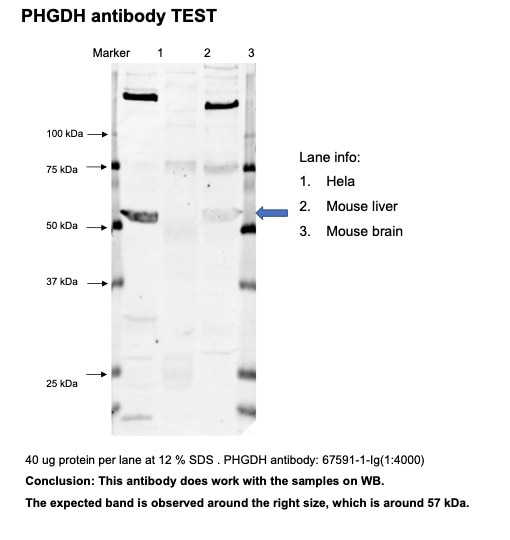
The single available review rates this antibody 5 out of 5 stars. The reviewer used it for Western Blot at a 1:4000 dilution on mouse liver, mouse brain, and HeLa cells, describing it as a good antibody with a strong signal. Overall, the feedback is positive, highlighting reliable performance and clear signal in WB applications.
The reviews below have been submitted by verified Proteintech customers who received an incentive for providing their feedback.
Hua (Verified Customer) (11-30-2022) | Good antibody for WB. Strong signal.
 |






