
Tested Applications
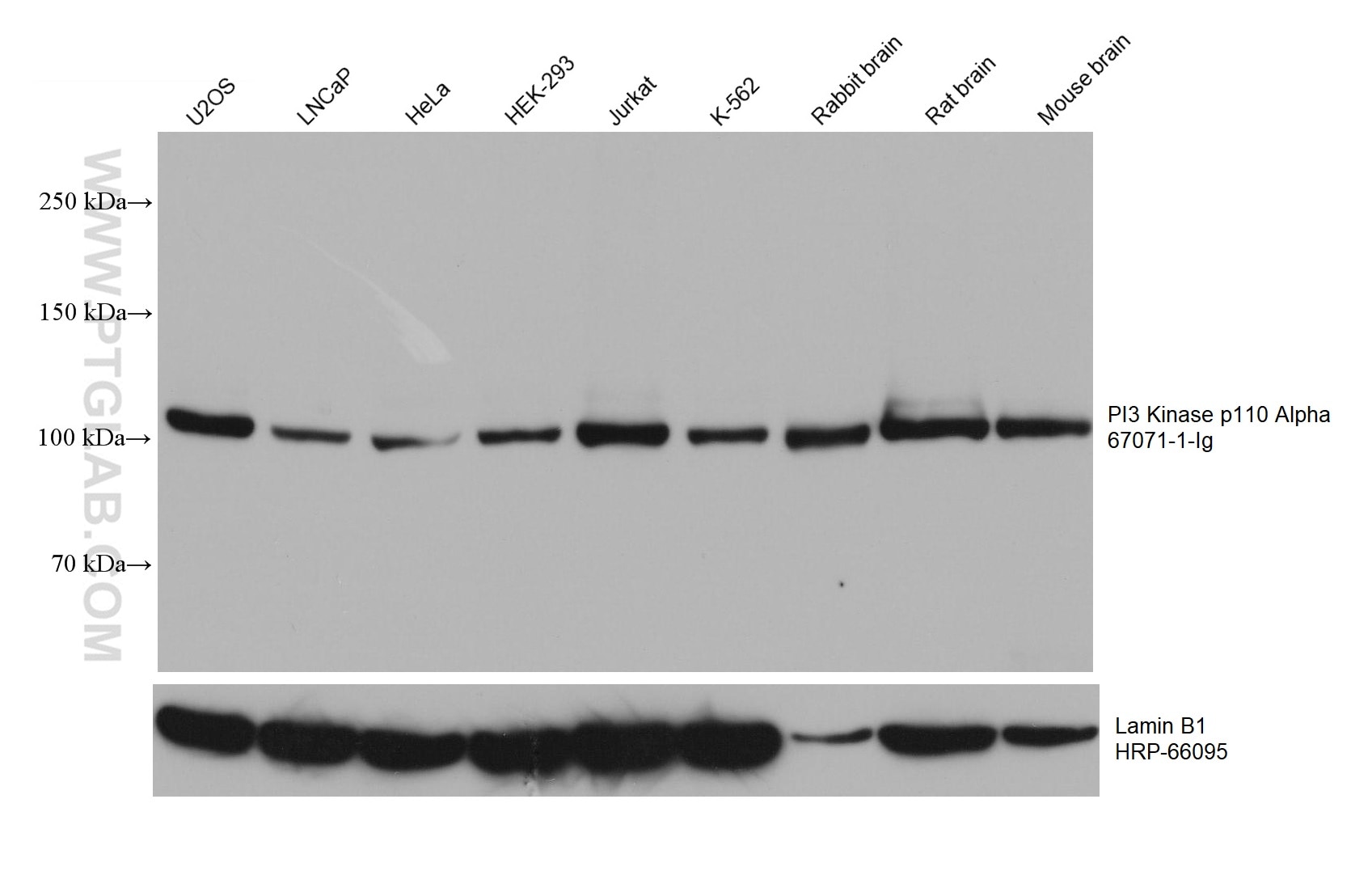
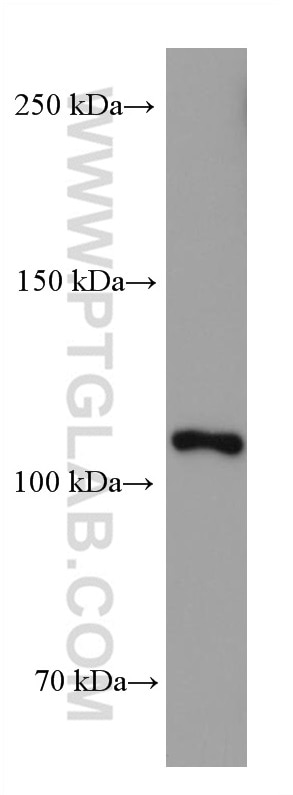
| Positive WB detected in | U2OS cells, pig brain tissue, LNCaP cells, HeLa cells, HEK-293 cells, Jurkat cells, K-562 cells, rabbit brain tissue, rat brain tissue, mouse brain tissue |
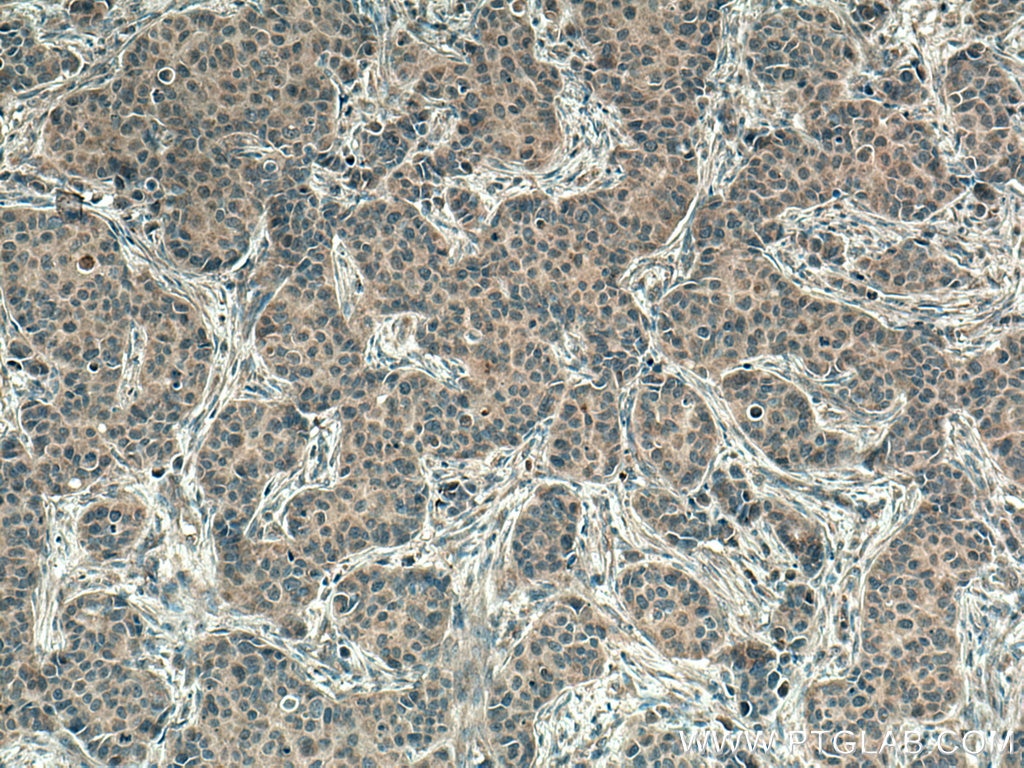
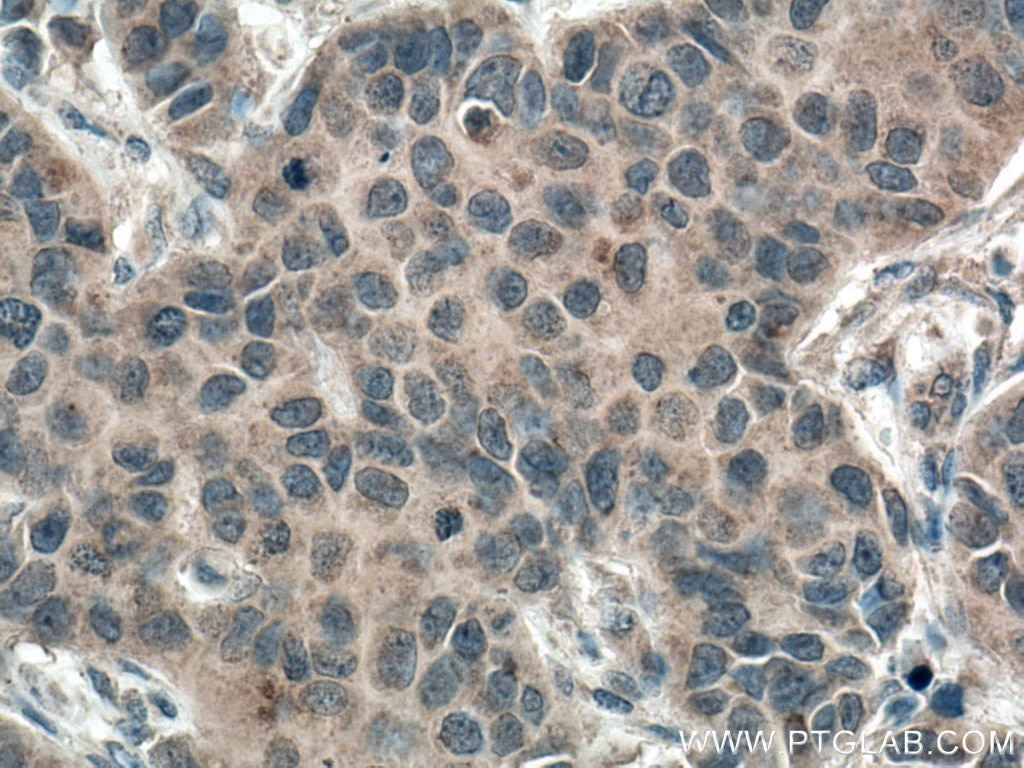
| Positive IHC detected in | human breast cancer tissue Note: suggested antigen retrieval with TE buffer pH 9.0; (*) Alternatively, antigen retrieval may be performed with citrate buffer pH 6.0 |
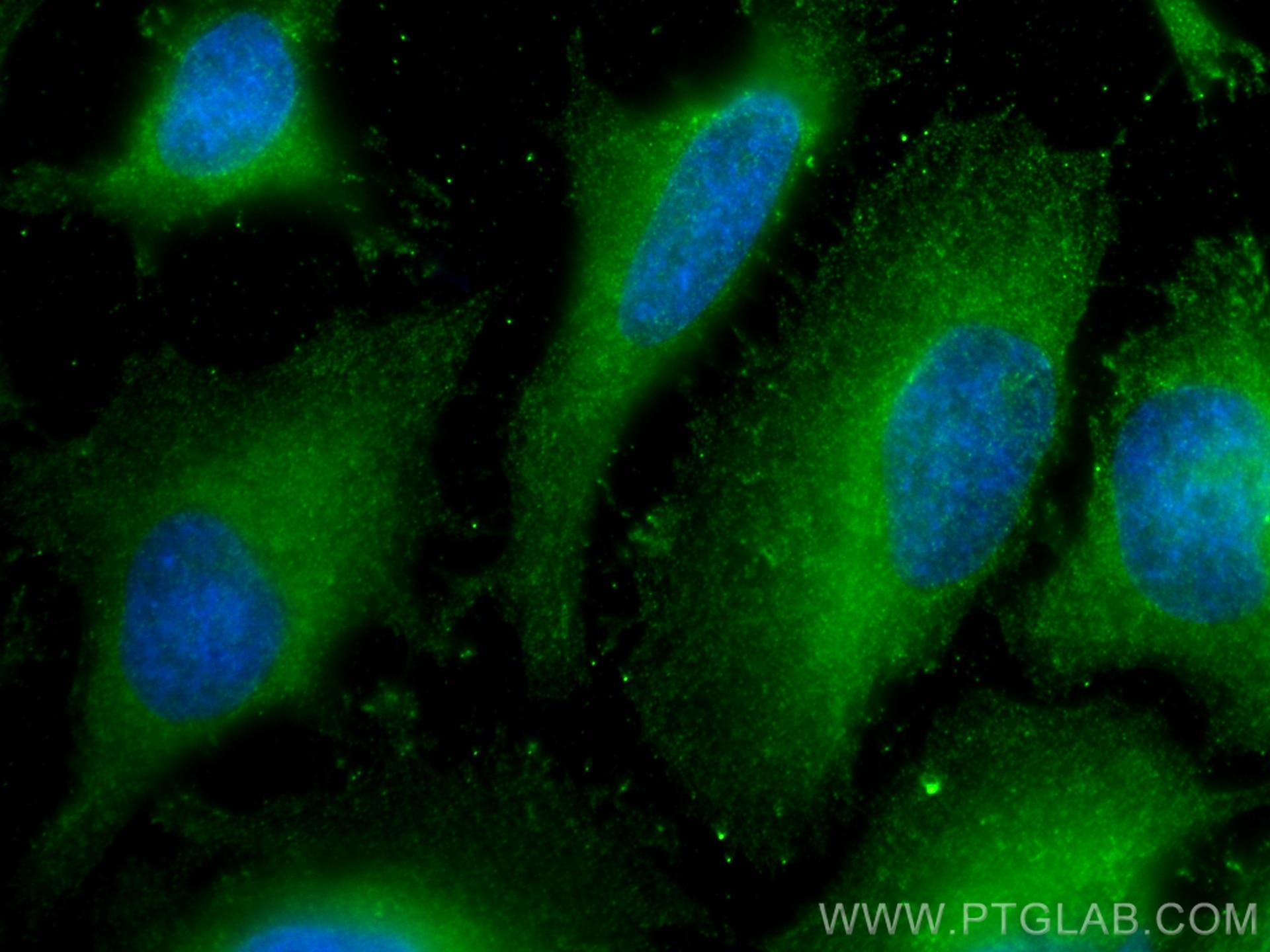
| Positive IF/ICC detected in | HeLa cells |
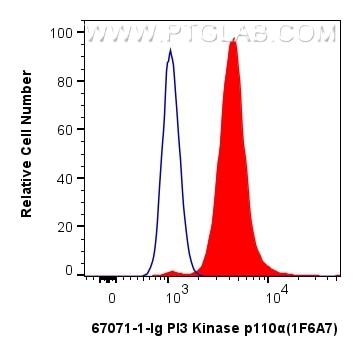
| Positive FC (Intra) detected in | Jurkat cells |
Recommended dilution
| Application | Dilution |
|---|---|
| Western Blot (WB) | WB : 1:1000-1:4000 |
| Immunohistochemistry (IHC) | IHC : 1:250-1:1000 |
| Immunofluorescence (IF)/ICC | IF/ICC : 1:200-1:800 |
| Flow Cytometry (FC) (INTRA) | FC (INTRA) : 0.40 ug per 10^6 cells in a 100 µl suspension |
| It is recommended that this reagent should be titrated in each testing system to obtain optimal results. | |
| Sample-dependent, Check data in validation data gallery. | |
Product Information
67071-1-Ig targets PI3 Kinase p110 Alpha in WB, IHC, IF/ICC, FC (Intra), IP, CoIP, RIP, ELISA applications and shows reactivity with human, mouse, rat, pig, rabbit samples.
| Tested Reactivity | human, mouse, rat, pig, rabbit |
| Cited Reactivity | human, mouse, rat, monkey, bovine, fish |
| Host / Isotype | Mouse / IgG2b |
| Class | Monoclonal |
| Type | Antibody |
| Immunogen |
CatNo: Ag17392 Product name: Recombinant human PIK3CA protein Source: e coli.-derived, PET28a Tag: 6*His Domain: 1-355 aa of BC113601 Sequence: MPPRPSSGELWGIHLMPPRILVECLLPNGMIVTLECLREATLITIKHELFKEARKYPLHQLLQDESSYIFVSVTQEAEREEFFDETRRLCDLRLFQPFLKVIEPVGNREEKILNREIGFAIGMPVCEFDMVKDPEVQDFRRNILNVCKEAVDLRDLNSPHSRAMYVYPPNVESSPELPKHIYNKLDKGQIIVVIWVIVSPNNDKQKYTLKINHDCVPEQVIAEAIRKKTRSMLLSSEQLKLCVLEYQGKYILKVCGCDEYFLEKYPLSQYKYIRSCIMLGRMPNLMLMAKESLYSQLPMDCFTMPSYSRRISTATPYMNGETSTKSLWVINSALRIKILCATYVNVNIRDIDKIY Predict reactive species |
| Full Name | phosphoinositide-3-kinase, catalytic, alpha polypeptide |
| Calculated Molecular Weight | 1068 aa, 124 kDa |
| Observed Molecular Weight | 110 kDa |
| GenBank Accession Number | BC113601 |
| Gene Symbol | PIK3CA |
| Gene ID (NCBI) | 5290 |
| RRID | AB_2882380 |
| Conjugate | Unconjugated |
| Form | Liquid |
| Purification Method | Protein A purification |
| UNIPROT ID | P42336 |
| Storage Buffer | PBS with 0.02% sodium azide and 50% glycerol, pH 7.3. |
| Storage Conditions | Store at -20°C. Stable for one year after shipment. Aliquoting is unnecessary for -20oC storage. 20ul sizes contain 0.1% BSA. |
Background Information
PIK3CA belongs to the PI3/PI4-kinase family. It phosphorylates PtdIns, PtdIns4P and PtdIns(4,5)P2 with a preference for PtdIns(4,5)P2. Defects in PIK3CA are associated with colorectal cancer (CRC). Defects in PIK3CA are associated with breast cancer. Defects in PIK3CA are associated with ovarian cancer. Defects in PIK3CA may underlie hepatocellular carcinoma (HCC). Defects in PIK3CA are a cause of keratosis seborrheic (KERSEB).
Protocols
| Product Specific Protocols | |
|---|---|
| FC protocol for PI3 Kinase p110 Alpha antibody 67071-1-Ig | Download protocol |
| IF protocol for PI3 Kinase p110 Alpha antibody 67071-1-Ig | Download protocol |
| IHC protocol for PI3 Kinase p110 Alpha antibody 67071-1-Ig | Download protocol |
| WB protocol for PI3 Kinase p110 Alpha antibody 67071-1-Ig | Download protocol |
| Standard Protocols | |
|---|---|
| Click here to view our Standard Protocols |
Publications
What published studies show
| Species | Application | Title |
|---|---|---|
Signal Transduct Target Ther Family with sequence similarity 114 member A1 orchestrates immune evasion in triple-negative breast cancer | ||
Bioact Mater Silicate biomaterials-based multicellular scaffolds with specific cellular spatial distribution for infarcted myocardium repair. | ||
Cancer Res Loss of CDKN2A Enhances the Efficacy of Immunotherapy in EGFR Mutant Non-Small Cell Lung Cancer | ||
Gut Microbes Time-restricted feeding protects against septic liver injury by reshaping gut microbiota and metabolite 3-hydroxybutyrate | ||
J Nanobiotechnology Macrophage membrane-biomimetic bimetallic manganese-platinum nanozymes ameliorate intrapulmonary oxidative stress and inflammation in experimental COPD. |
Reviews
What customers say
The reviews below have been submitted by verified Proteintech customers who received an incentive for providing their feedback.
Prakash (Verified Customer) (11-07-2025) | working good in western blot
|
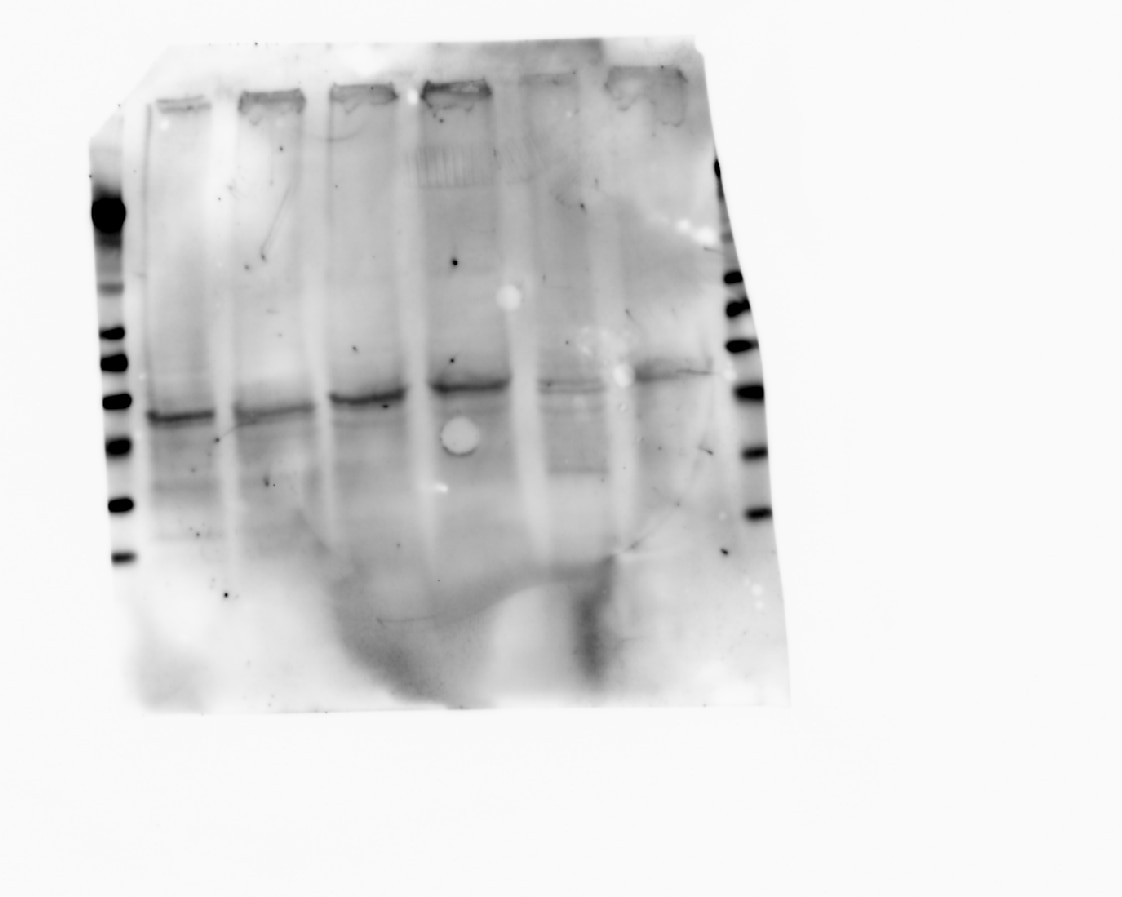
Iru (Verified Customer) (02-18-2021) | Not sure what the band is, I saw a clear band in between 38 and 50KD.
 |







